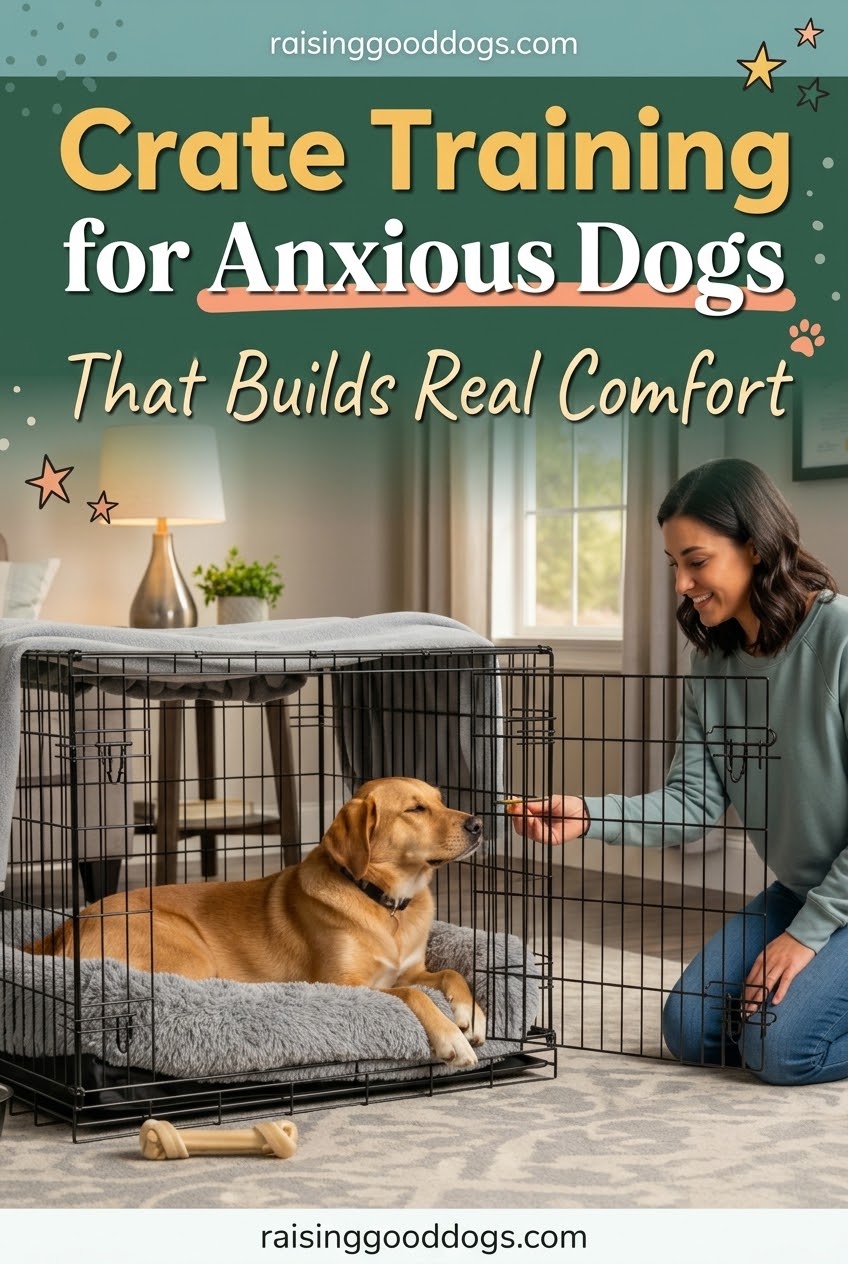
The hardest crate training cases are rarely the dogs who refuse to walk through the door. They are the dogs who walk in, freeze, and quietly tell us the whole idea feels too big. I've worked with plenty of worried dogs, and the first thing I look for is not obedience — it is whether the dog feels safe enough to learn.
With an anxious dog, crate training is a confidence project, not a confinement exercise. I move slowly, watch body language carefully, and build a history of good experiences before I ever ask for longer crate time. Current veterinary behaviour guidance also supports reward-based methods rather than fear or punishment-based approaches.
Understanding Anxiety Triggers Before Crate Training
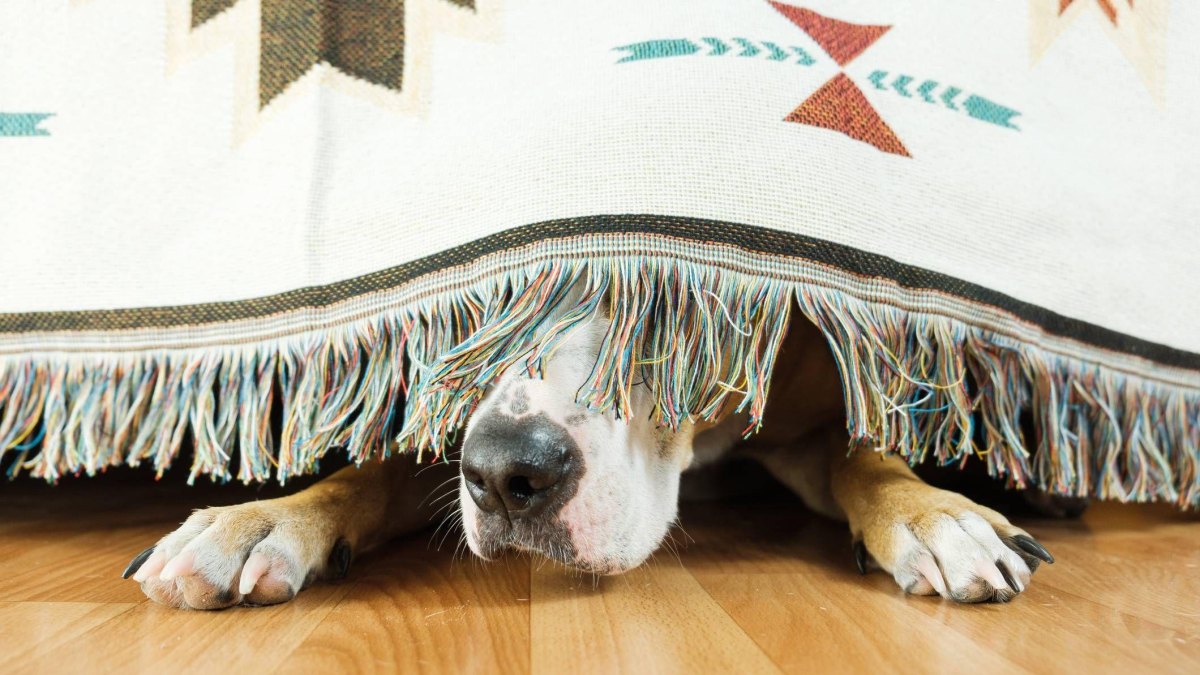
Before I introduce a crate, I want to know what is actually making the dog anxious. A crate may be the obvious thing in the room, but the real trigger might be isolation, previous confinement, unfamiliar sounds, pain, or simply a dog who has been pushed past their coping point. Finding the trigger changes the entire plan.
I watch for the small signals I learned to notice during my veterinary clinic years: weight shifting backward, ears held tightly back, lip licking, freezing, tucked tail, hard staring, or changes in breathing. Dogs often communicate discomfort through body language before the bigger behaviours arrive.
My anxiety check before crate work
- Has the dog had enough sleep and appropriate exercise?
- Could pain or a medical issue be contributing to the behaviour?
- Is the dog already stressed before the crate appears?
If a dog has a sudden behaviour change, signs of pain, or severe distress, I want a vet involved before we assume this is just a training problem.
Creating a Safe and Comfortable Crate Space
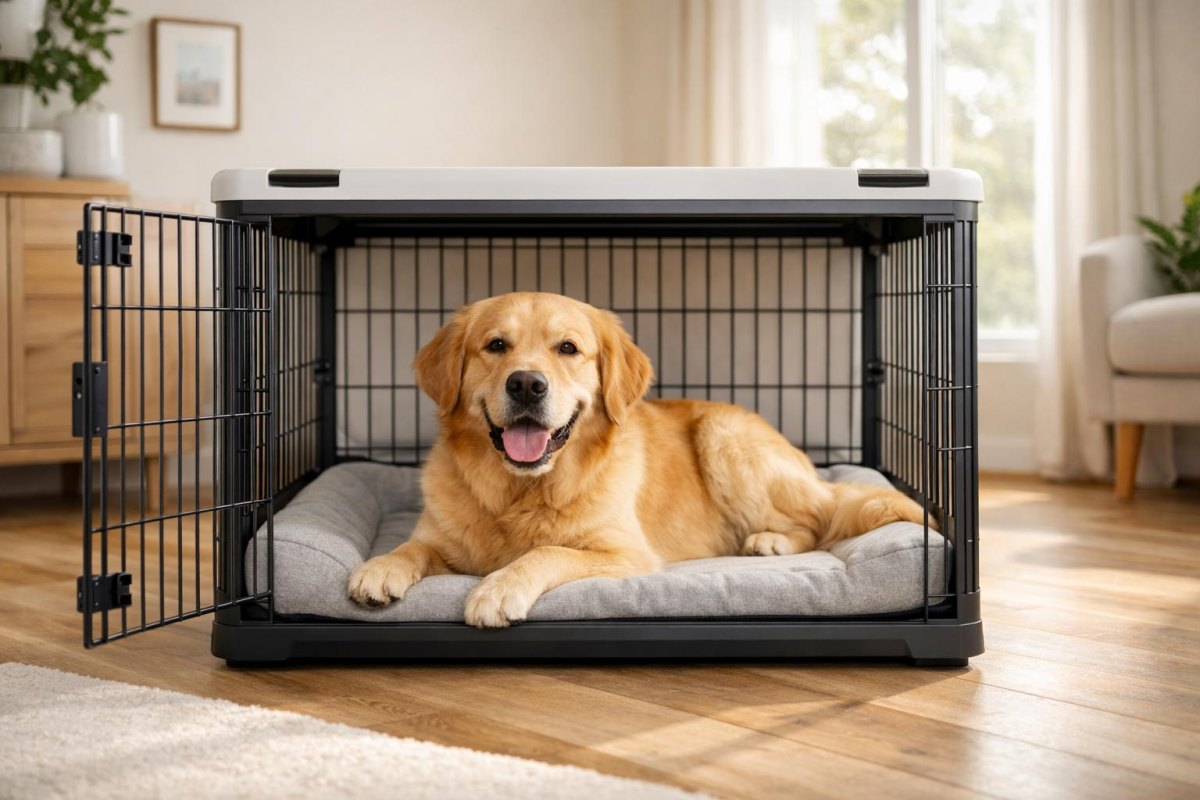
I want the crate to become the place where nothing bad happens. That means no dragging a dog inside, no using it after a scolding, and no turning it into a time-out box. A crate can be a useful resting area when the dog learns it is predictable and comfortable.
For many dogs, a comfortable crate setup starts with simple things: the right size, a quiet location, soft bedding if the dog enjoys it, and access to rewards. Some dogs want a covered den-like space; others feel trapped when covered. The dog gets a vote.
A practical tip
I often place the crate where family life happens rather than isolating a nervous dog in another room. A worried dog usually needs safety, not exile.
Introducing the Crate Slowly With Positive Reinforcement
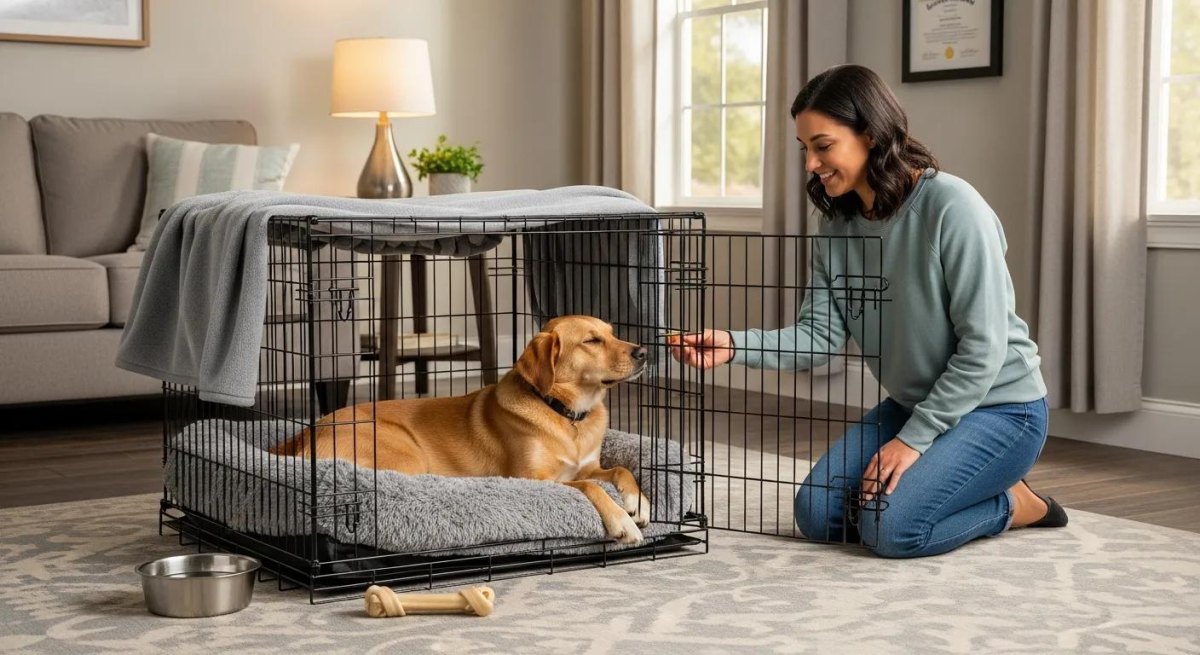
The first mistake I see is asking for too much too soon. If the dog is nervous about putting one paw inside, closing the door for ten minutes is not the next step. The next step is making the doorway feel ordinary.
I use small reward-based steps that let the dog choose success. Reward-based training is recommended by veterinary behaviour organisations because it teaches the behaviour we want without adding fear or discomfort.
- Place. Reward curiosity around the crate without asking for entry.
- Invite. Toss treats near the entrance, then gradually farther inside.
- Reward. Pay attention to calm choices like lying down or relaxing.
- Increase. Add difficulty only when the current step feels easy.
A common mistake
Do not wait until your dog is panicking and then expect learning to happen. Training works best when the dog is under their stress threshold.
Building Confidence Through Gradual Crate Time
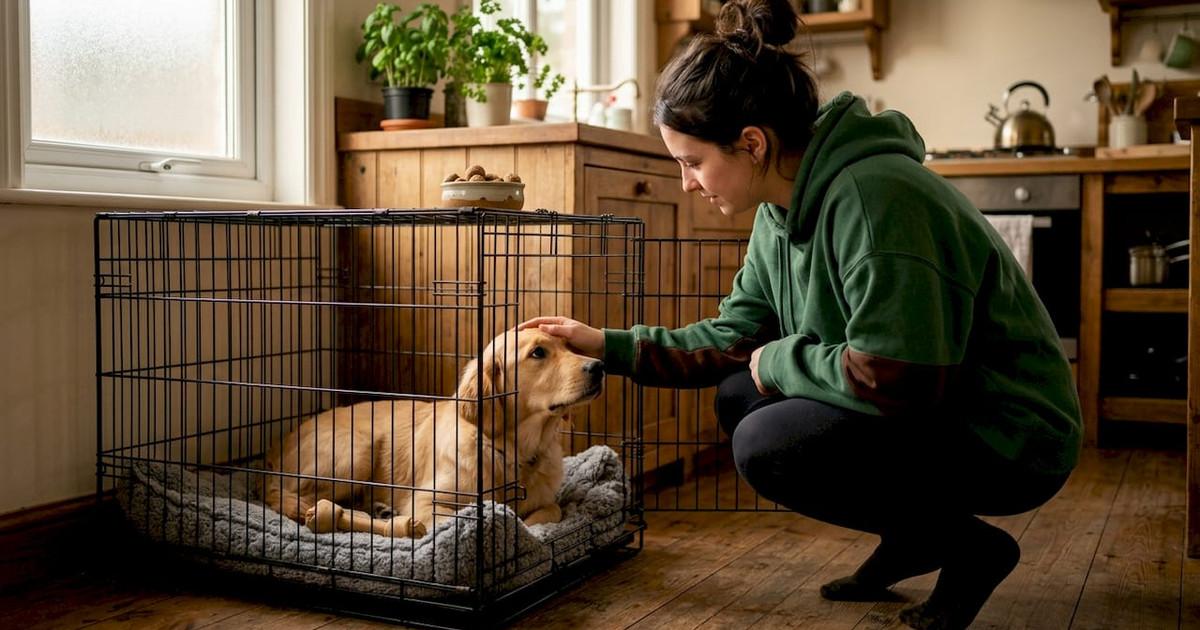
Duration is where many otherwise good plans fall apart. A dog who happily spends thirty seconds in a crate is not automatically ready for thirty minutes. I build time like I would build a muscle: slowly, consistently, and without asking for a painful jump.
With anxious dogs, realistic progress takes weeks and sometimes months. A plateau is not proof the dog cannot learn. It is usually information that the next step arrived too quickly or the environment needs adjusting.
| Stage | What I look for |
|---|---|
| Early practice | Dog enters voluntarily and stays relaxed |
| Door movement | Dog remains comfortable as the door moves |
| Short absence | Dog settles while I briefly step away |
I also remember that some dogs simply are not crate dogs. A pen, gated room, or another safe management option can be the better answer.
Avoiding Common Crate Training Mistakes With Anxious Dogs
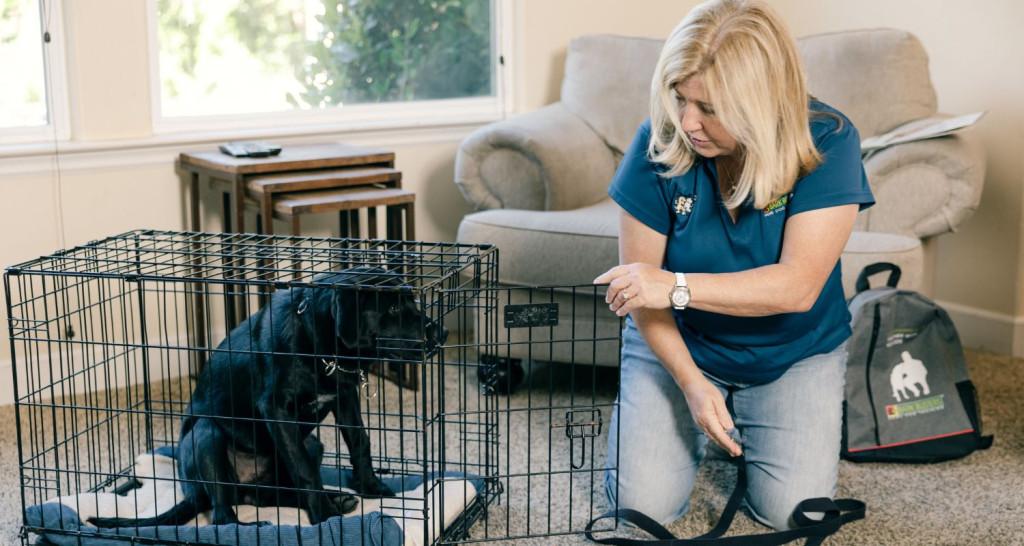
Most crate problems I see are not because owners do not care. They are because someone gave them advice designed for a different dog. An anxious dog needs a different pace, and forcing confidence usually creates the opposite result.
Helpful approaches
- Reward voluntary crate choices
- Use management to prevent panic rehearsals
- Keep sessions short and successful
Things I avoid
- Forcing the dog inside
- Using the crate after punishment
- Leaving a distressed dog to panic
I never recommend aversive tools or punishment-based approaches for anxiety cases. The goal is a dog who feels safe, not a dog who has learned that escape attempts fail.
Know when to get help
If your dog is injuring themselves trying to escape, has serious separation distress, or there is aggression involved, this is the point for an in-person qualified professional and a veterinary conversation.
Helping Your Dog Feel Calm and Secure in the Crate
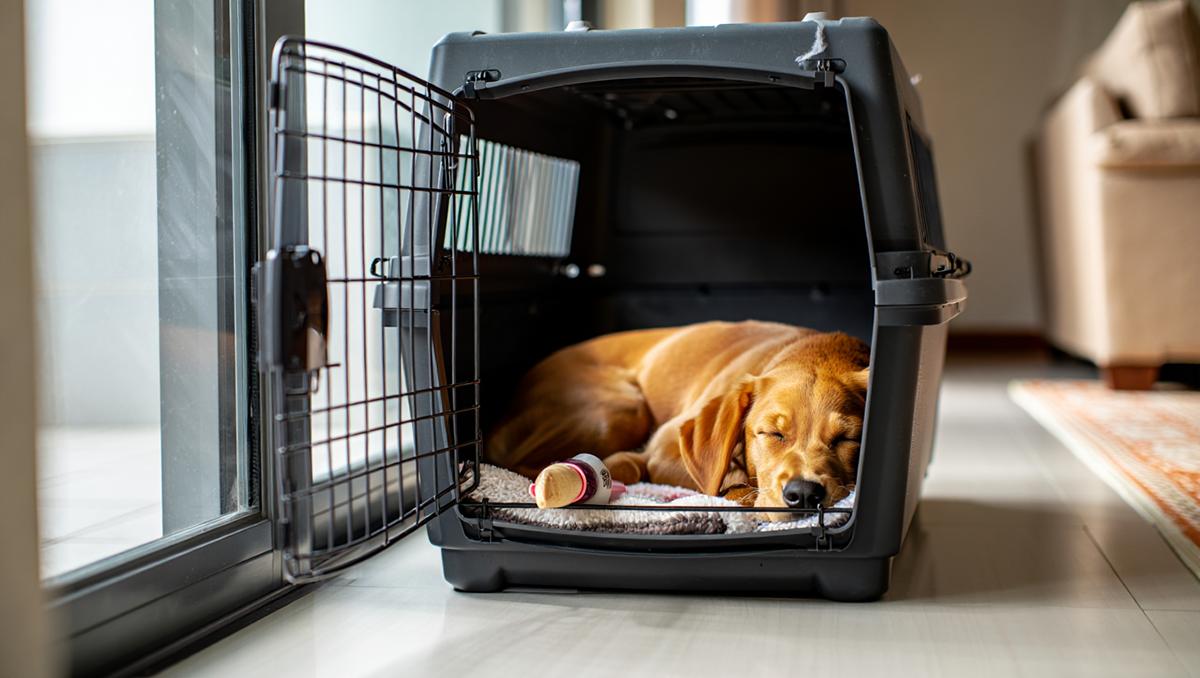
The end goal is not a dog who tolerates a crate. It is a dog who can walk in, settle, and understand that this space predicts safety. That may look different for every dog. Bruno, my old German Shepherd, improved enormously over the years, but he still has opinions about noisy places and crowded events. Progress does not have to mean becoming a different dog.
I like to finish crate plans by looking at the whole picture: sleep, enrichment, daily routine, and whether the dog has enough control over their environment. A calm crate routine grows from trust built over many small repetitions.
The question I ask every client
“Is my dog learning that the crate is safe, or simply learning that they have no choice?” That answer tells me whether we are building confidence or just managing behaviour.
The best crate training sessions are often the boring ones. A dog quietly choosing their bed on a rainy Tuesday afternoon is the result I am looking for.

More Pinterest Visuals