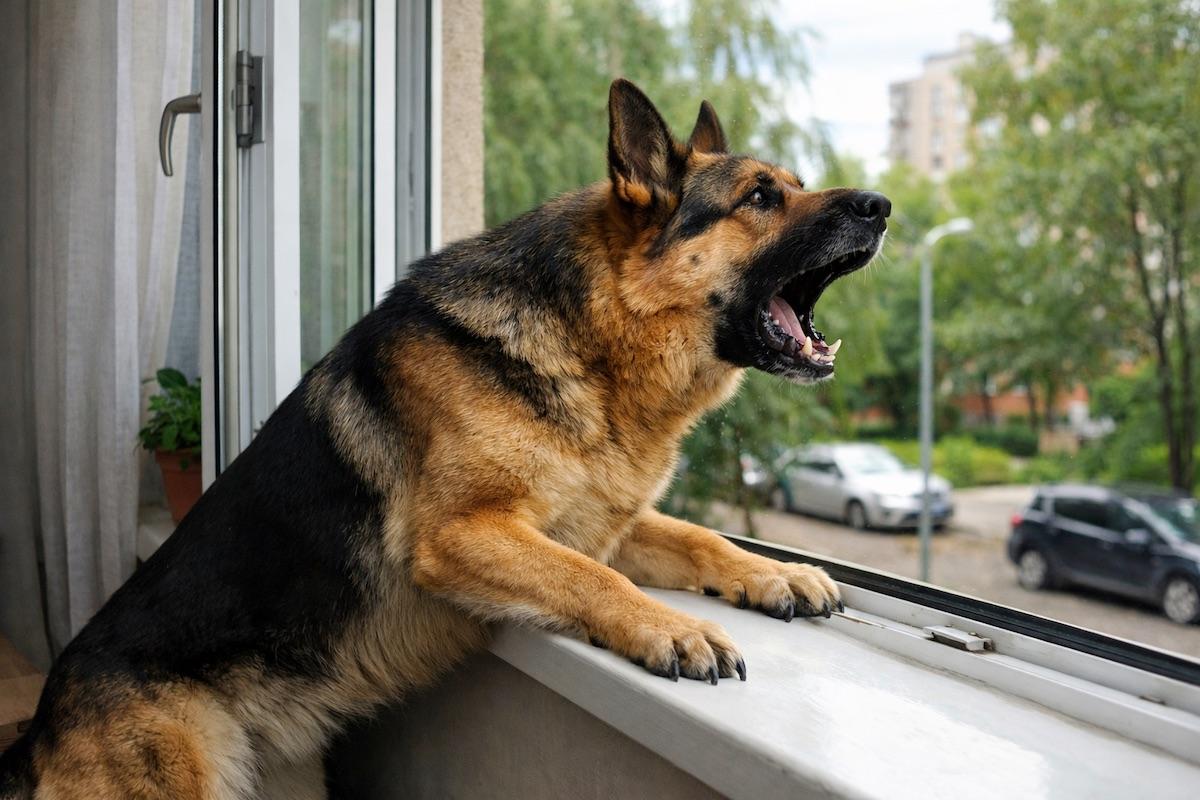
When a dog barks at 2 a.m., every delivery driver, or every leaf that moves outside the window, it is easy to focus on the noise. I focus first on the reason behind it. Barking is communication, and the fastest path to improvement is understanding what your dog is trying to say.
I have worked with plenty of dogs whose owners arrived feeling defeated. The plan is rarely about making a dog silent; it is about teaching a dog better ways to cope while making daily life calmer for everyone.
Causes of Nuisance Barking

The first question I ask is not “How do we stop the barking?” It is “What job is the barking doing?” A dog barking at the window may be alerting, a dog barking in the garden may be frustrated, and a dog barking when alone may be experiencing distress.
What I look for first
- Alert barking caused by sights, sounds, or movement.
- Boredom barking when a dog lacks enough mental or physical outlets.
- Fear or frustration barking when a dog feels overwhelmed.
I start with management before training. If a dog spends hours rehearsing a barking routine, that habit becomes stronger. Preventing practice might mean closing curtains, changing walking routes, or reducing access to a busy fence line while we build new skills.
Recognizing Problem Barking Patterns

The pattern matters more than the volume. I watch when the barking begins, what happens immediately before it, and whether the dog can recover afterward. Context tells the story because the same bark can mean excitement, fear, frustration, or a request for attention.
| Barking pattern | What I investigate |
|---|---|
| Window barking | Visual triggers, distance, and whether the dog can settle. |
| Alone-time barking | Signs of panic, distress, or unmet needs. |
| Attention barking | Whether barking reliably gets a response. |
I also pay attention to the ten seconds before the barking starts. Body language appears early: tight mouths, weight shifts, lip licking, freezing, or changes in breathing can tell me a dog is struggling before the first bark.
How to Reduce Excessive Barking

The dogs who improve are usually the ones whose owners stop trying to out-shout them. Yelling often adds more excitement, so I teach an alternative response instead. Reward quiet choices and practice them when the dog is calm enough to learn.
- Identify. Find the trigger and keep your dog below the point where they explode.
- Reward. Mark and reward calm behaviour before barking begins.
- Repeat. Build the new habit through many short successful sessions.
A training tip
My goal is not a perfect dog overnight. Real progress takes time, and most barking plans take weeks or months because we are changing an emotional response, not flipping a switch.
I use reward-based methods because they give the dog information about what to do next. Fear-based tools are not my answer; they can increase stress and make some behaviour problems harder to understand.
Environmental Changes to Prevent Barking

Before I ask a dog to make a better choice, I make that choice easier. A dog who spends all day watching the pavement outside the window is getting thousands of chances to rehearse barking. Small environment changes can remove a surprising amount of pressure.
- Block views of predictable triggers with curtains or barriers.
- Add sniffing, chewing, and problem-solving activities.
- Create quiet rest periods instead of constant stimulation.
- Adjust walks and routines around known trigger times.
A common mistake
Leaving a dog in the same stressful setup and hoping training alone fixes it usually backfires. Management protects learning while your dog practices the new behaviour.
I think of this as setting the dog up for a win. A calmer environment gives the brain room to learn instead of constantly preparing for the next alarm.
When to Seek Professional Help for Barking
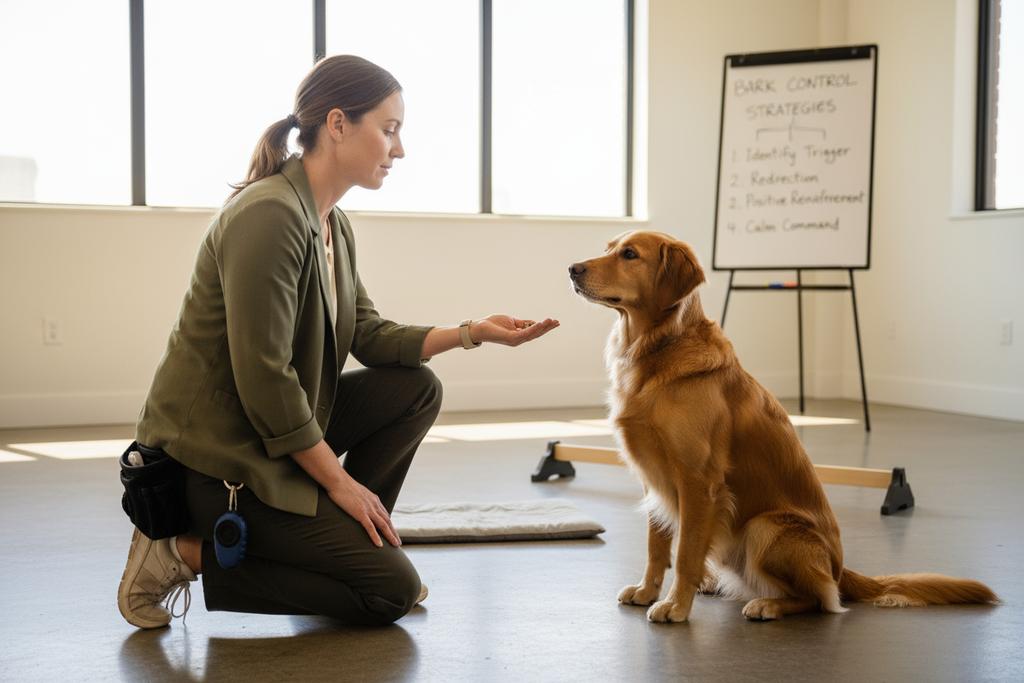
Some barking cases are perfect for a training plan at home. Others are a sign that your dog needs more support. I refer out when needed, and that is not failure; it is responsible care.
- Vet check: Sudden behaviour changes, pain concerns, or changes in an older dog should be discussed with a veterinarian first.
- Professional trainer: Fear-driven barking or escalating reactions often benefit from an experienced force-free professional.
- Veterinary behaviourist: Severe anxiety, aggression, or complex cases may need specialist support.
My rule of thumb
If barking is affecting safety, sleep, neighbours, or your relationship with your dog, get help sooner rather than later. Early support usually gives everyone a clearer path forward.
I have seen many dogs become easier to live with once their people understand the reason behind the noise. The goal is communication with boundaries, not a dog who is afraid to use their voice.