The fastest way to make “leave it” reliable is not to shout it louder. I want the dog succeeding before the temptation becomes irresistible, then I build difficulty in small pieces. The skill is useful for food, toys, rubbish, wildlife and other things your dog should not investigate.
I treat this as a beginner training skill, but not a one-afternoon guarantee. Your dog may understand the game within a few sessions; dependable responses around real-world distractions usually take weeks of short, successful practice. My rule is simple: if the dog is repeatedly failing, the exercise is too hard. I make it easier rather than repeating the cue until it becomes wallpaper.
My starting point
I train in a quiet place, use a low-value item and keep a better reward hidden in my other hand. Reward-based training is also the current recommendation from AVSAB, which continues to advise against aversive methods.
Introduce the “Leave It” Command

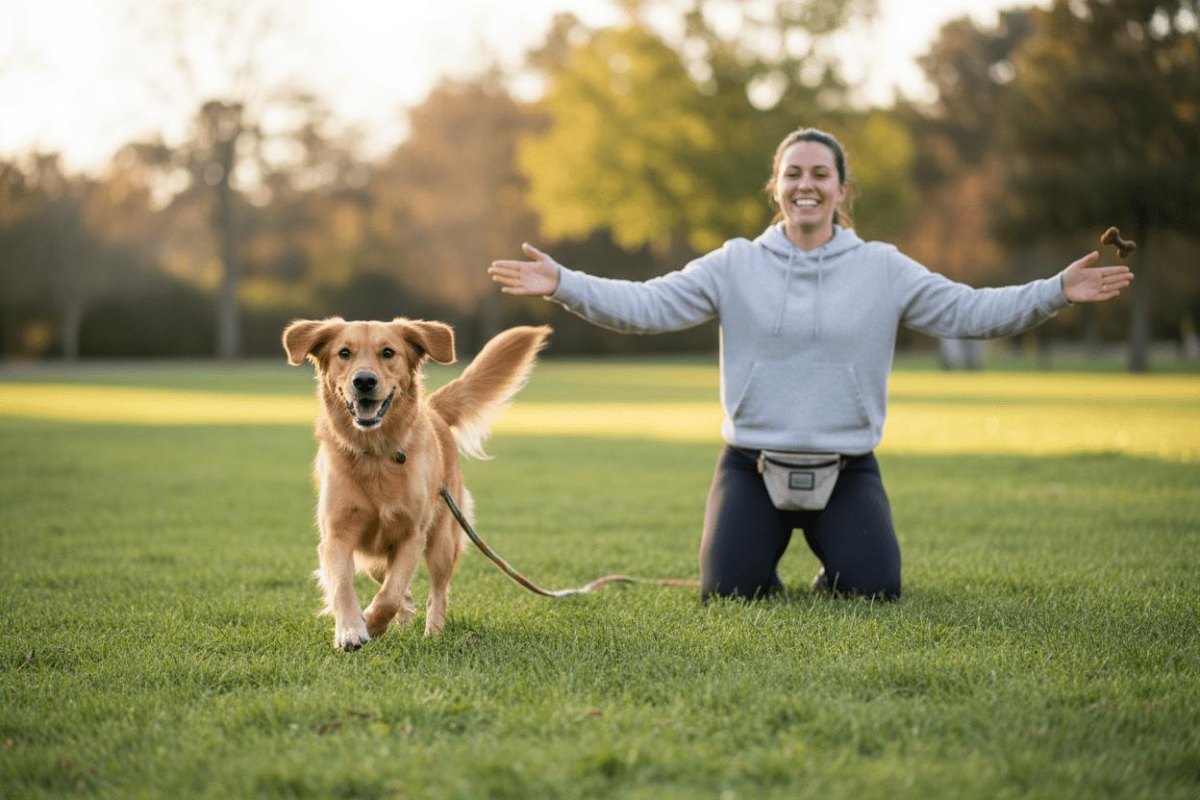
I begin with something my dog can easily resist, usually a boring piece of kibble. I hold it in a closed fist and wait. When the dog stops trying to get the food, even for a moment, I mark that choice and deliver a better treat from my other hand. I do not reward from the hand containing the forbidden food.
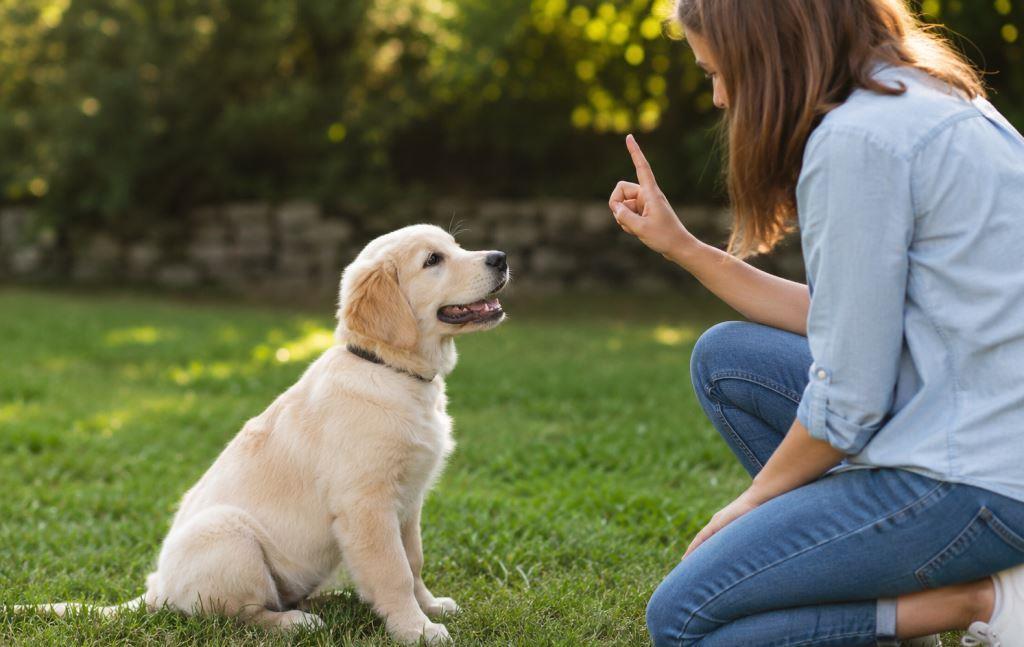
Once that response is predictable, I move to an open palm, then to an item on the floor. I add the words “leave it” at the right stage, rather than chanting the cue while my dog is still trying to grab the item. A glance away, a head turn or a small shift backward is exactly the behaviour I want.
What success looks like
- Your dog notices the item.
- Your dog chooses to disengage.
- You mark that choice immediately.
- A different, worthwhile reward arrives from you.
Build Consistency With Rewards
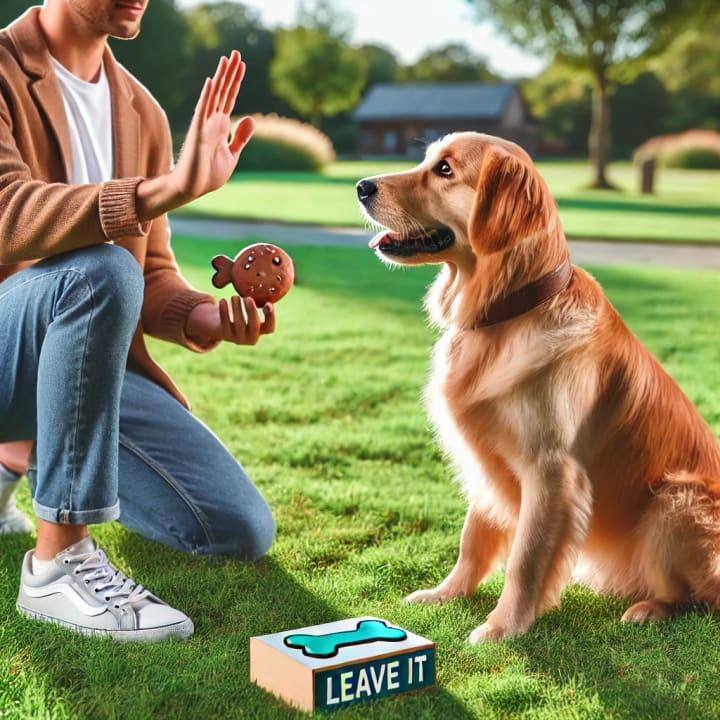
The reward is the engine of this exercise. I want my dog to discover that walking away pays well, so I often make the training reward more valuable than the thing being ignored. That distinction matters: if I ask a dog to leave medication, a chicken bone or rubbish, that original item is never going to become their prize.
I keep sessions brief and repeat easy wins rather than drilling until everyone is fed up. If the dog dives for the food, I simply cover it or remove the opportunity and lower the difficulty. I also teach “drop it” separately because “leave it” means do not take or investigate something, while “drop it” means release something already in the mouth.
- Show. Present a low-value item the dog can resist.
- Wait. Give the dog time to turn away or back off.
- Mark. Mark the instant the dog makes the desired choice.
- Reward. Give a better treat from your other hand.
- Repeat. Increase difficulty only after several easy successes.
Know when to stop
If your dog freezes, stiffens, gives a hard stare, growls, snaps or bites when you approach a valued item, I would not turn this into a DIY resource-guarding project. Get an in-person certified professional and ask your veterinarian about a veterinary behaviourist.
Increase Distractions Gradually
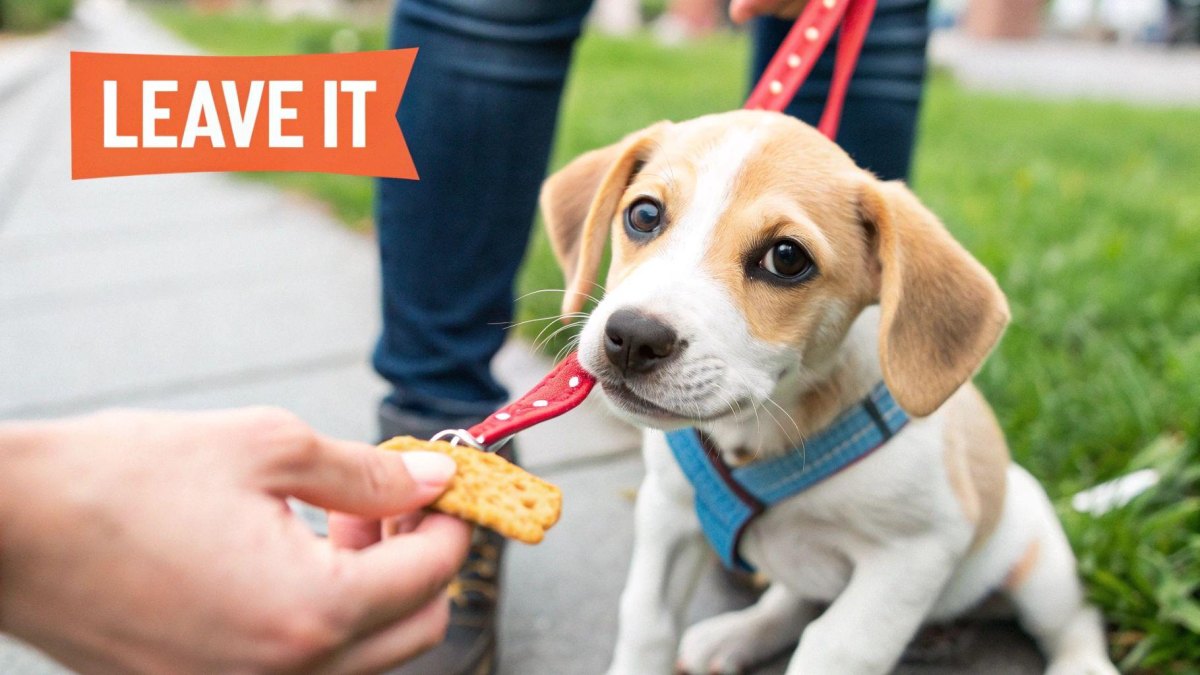
This is where people commonly jump three steps ahead. The kitchen is quiet; the pavement contains smells, movement, food scraps, birds and approximately seventeen things your dog considers urgent. I build distraction difficulty gradually, changing one variable at a time.
I might progress from an uncovered treat indoors to a dropped treat, then a toy, then an item outside. If my dog cannot respond, I do not keep saying “leave it.” I create distance, cover the item or go back to an easier version. The goal is a dog who can notice temptation without losing their ability to think.
| Training change | What I look for |
|---|---|
| Covered food | Dog disengages easily |
| Open food | Dog looks away without grabbing |
| Food on the floor | Dog stays clear of it |
| Dropped item | Dog pauses and checks in |
| Outdoor distraction | Dog can respond while staying relaxed |
The mistake I avoid
I never test a cue at the hardest possible moment just to see whether it works. If I know my dog will ignore me, I change the setup first. Every failed repetition is practice too, and I would rather rehearse success.
Practice in Real-Life Situations
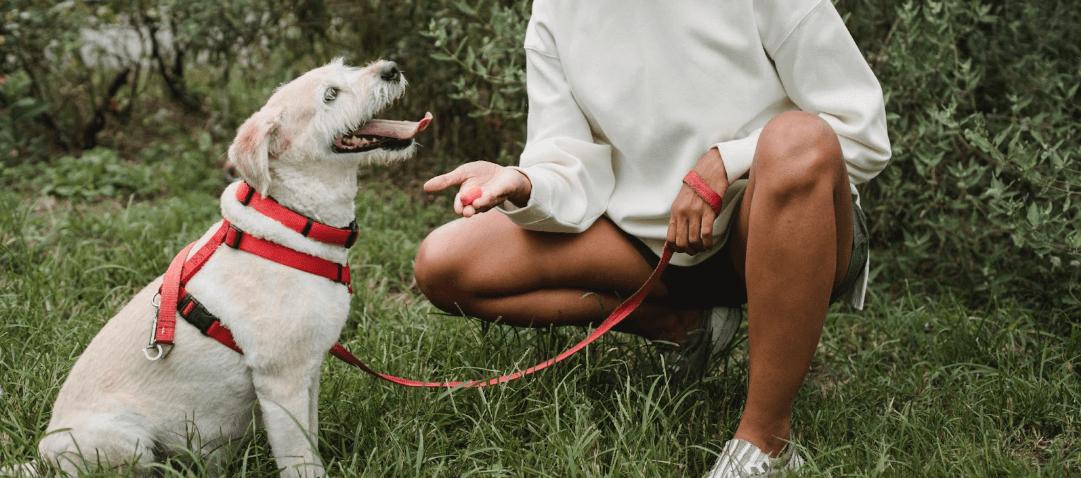
Once the behaviour works indoors, I take it outside in deliberately boring places. A quiet sidewalk or empty patch of grass is much more useful than starting beside a crowded café. I keep the dog close enough to manage safely and reward for passing low-value distractions without investigating.
I also plan for the moment when my timing fails, because it will. “Leave it” prevents an item from going into the mouth; “drop it” handles the item already there. I practise that trade separately and make giving something up a good deal for the dog.
My Tuesday test
I want the cue to work when I am carrying groceries, the weather is miserable and someone is watching me negotiate with a Labrador over a discarded sandwich. That means I practise ordinary situations, not just tidy training-room exercises.
Safety comes first
Management still matters even after training begins. I use a leash and prevent access to genuinely dangerous items rather than relying on a cue as a substitute for supervision. Training reduces risk; it does not make toxic food, medication or rubbish safe.
Reinforce and Generalize the Behavior
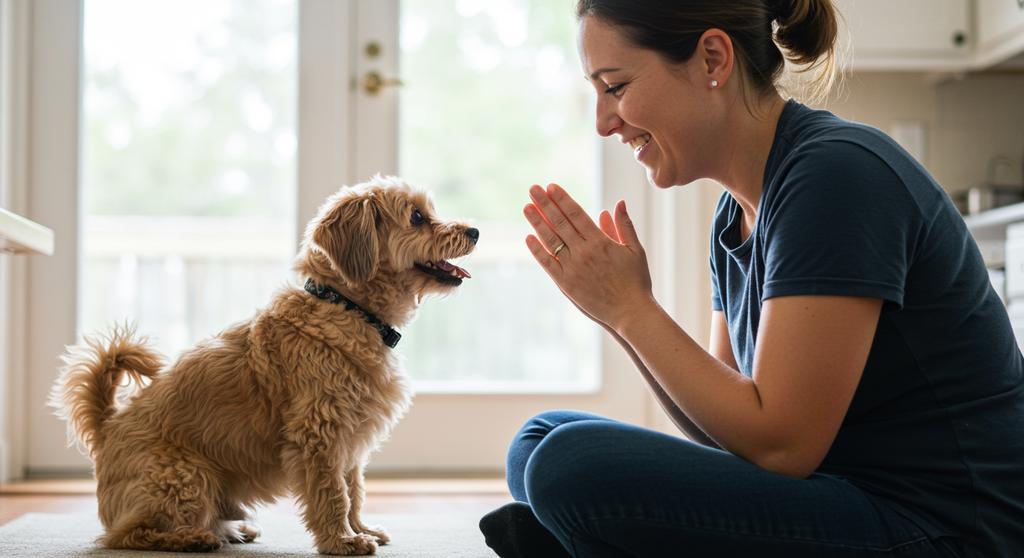
A dog does not automatically know that “leave it” in the kitchen also applies to a chip packet on the harbour path. I deliberately vary objects, locations and distractions so the cue becomes useful beyond one particular training setup. Dogs Trust and AKC both recommend expanding practice into new places and with different items.
I also keep rewarding the behaviour after my dog becomes good at it. I can gradually make food rewards less frequent and use praise, play or other appropriate rewards, but I do not rush to eliminate reinforcement. Reliable behaviour needs maintenance, particularly around genuinely exciting distractions.
- My dog responds in more than one room.
- My dog can leave food and non-food objects.
- My dog can respond while walking on leash.
- I practise with new distractions before I need the skill urgently.
- I still carry rewards when I expect a difficult situation.
- I lower the difficulty after a setback rather than treating it as failure.
Give this skill a few weeks of regular practice before judging its reliability. A setback usually tells me that the environment got harder faster than the training. I step back, collect some easy wins and build forward again. That is training, not starting over.