The first puppy walk is rarely the peaceful little stroll people picture. Usually there is a leaf to investigate, a shoelace to attack, and a puppy who has suddenly discovered that the entire world smells interesting. I start leash training before long walks, because a puppy learns much more easily when I make the first lessons simple.
My goal is not a perfect heel. I want a puppy who can move with me on a slack leash, check in voluntarily, and recover when something interesting appears. Current reward-based guidance from veterinary and welfare organizations supports teaching those behaviors with food, play, praise, and other rewards rather than pain or fear.
What I want you to remember
- Start where your puppy can actually think, usually indoors.
- Reward the behavior you want before pulling becomes a habit.
- Increase distractions gradually rather than testing your puppy in the hardest place first.
- Expect progress over weeks, not a magically transformed puppy after one weekend.
Start Indoors in a Quiet Space

I would rather spend five quiet minutes in the kitchen than drag an overwhelmed puppy around the block. A calm room gives me a chance to teach what the leash means without competing with bicycles, dogs, squirrels, traffic, and every fascinating smell known to puppyhood. Veterinary guidance recommends introducing the leash at home and practicing there before gradually moving outdoors.
First, I make the leash predict something pleasant. Clip it on, offer a small reward, walk a few steps, and reward again. I watch the puppy's body language as I go. If the mouth closes, the body stiffens, the puppy freezes, or the leash suddenly becomes something to chew, I make the exercise easier rather than pushing through it.
My starting rule
I begin with movement the puppy can succeed at. If I cannot get a loose leash for two or three steps indoors, I have no business expecting it beside a busy road.
Reward Calm Behavior With Treats
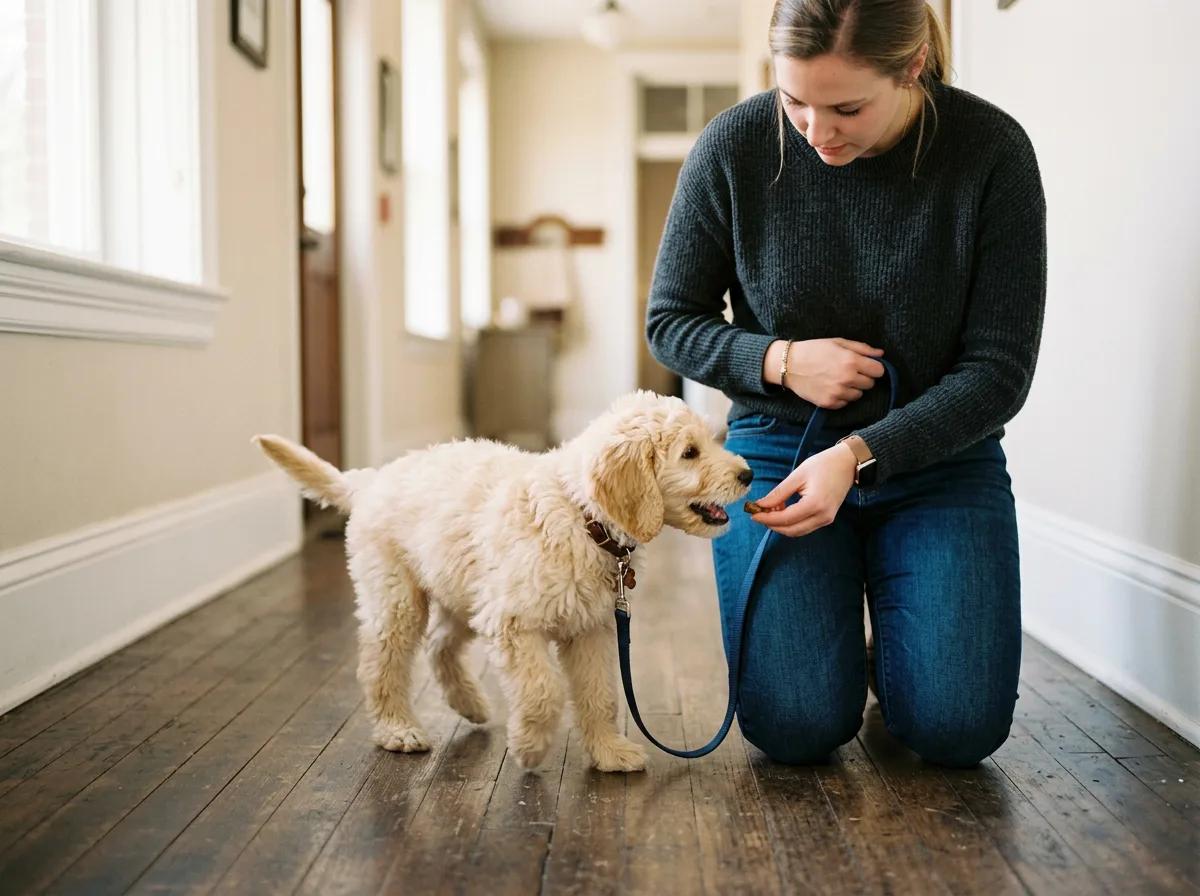
I keep the treats tiny and frequent at first. The puppy gets paid for being near me calmly, looking toward me, walking a few steps without tension, or choosing to disengage from something interesting. Reward-based training is recommended by AVSAB, and both veterinary and welfare guidance emphasize reinforcing behaviors we want to see again.
Timing matters more than quantity. I want the reward to arrive immediately after the behavior, not thirty seconds later when the puppy is doing something entirely different. Over time, I can space rewards farther apart, but I do not rush that part. Frequent early reinforcement is how I make walking with me worth choosing.
- Mark. Use a consistent word such as “yes” the instant the puppy gives me the behavior I want.
- Reward. Deliver the treat close to my side rather than luring the puppy several feet ahead.
- Repeat. Practice enough successful repetitions that the puppy begins offering the behavior without being asked.
Teach Your Puppy to Follow You
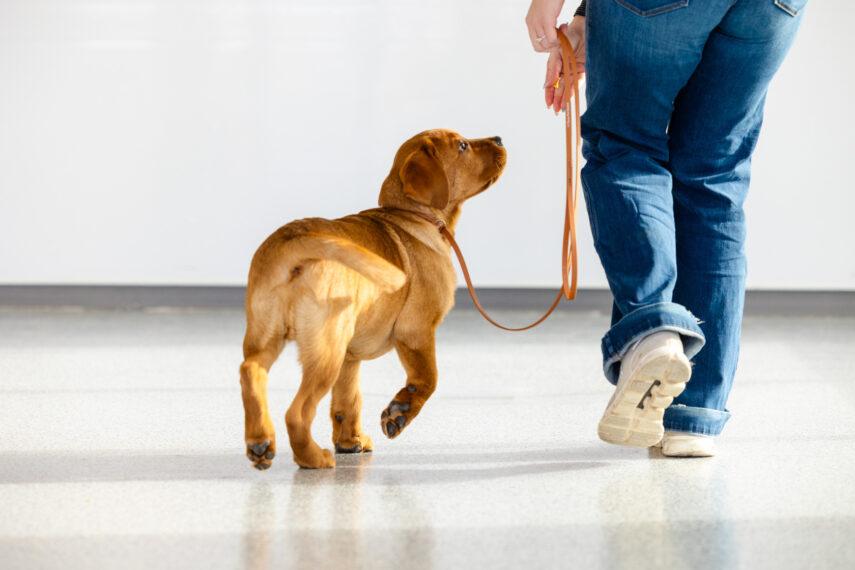
Before I worry about distance, I teach the puppy that following me is a good game. I take one or two steps, encourage the puppy to come along, and reward when they catch up. I might change direction gently so the puppy learns to notice where I am moving instead of simply pulling toward whatever caught their eye.
I also reward spontaneous check-ins. If the puppy looks at me without being called, that is excellent information: they are learning that paying attention pays. AKC guidance similarly recommends building attention and eye contact and using directional cues to help puppies stay engaged with their handler.
- Easy cue: Use “let's go” as I begin moving.
- Good choice: Reward the puppy for turning with me rather than racing ahead.
- Natural check-in: Reward eye contact or returning toward me even when I did not ask for it.
Practice Loose-Leash Walking
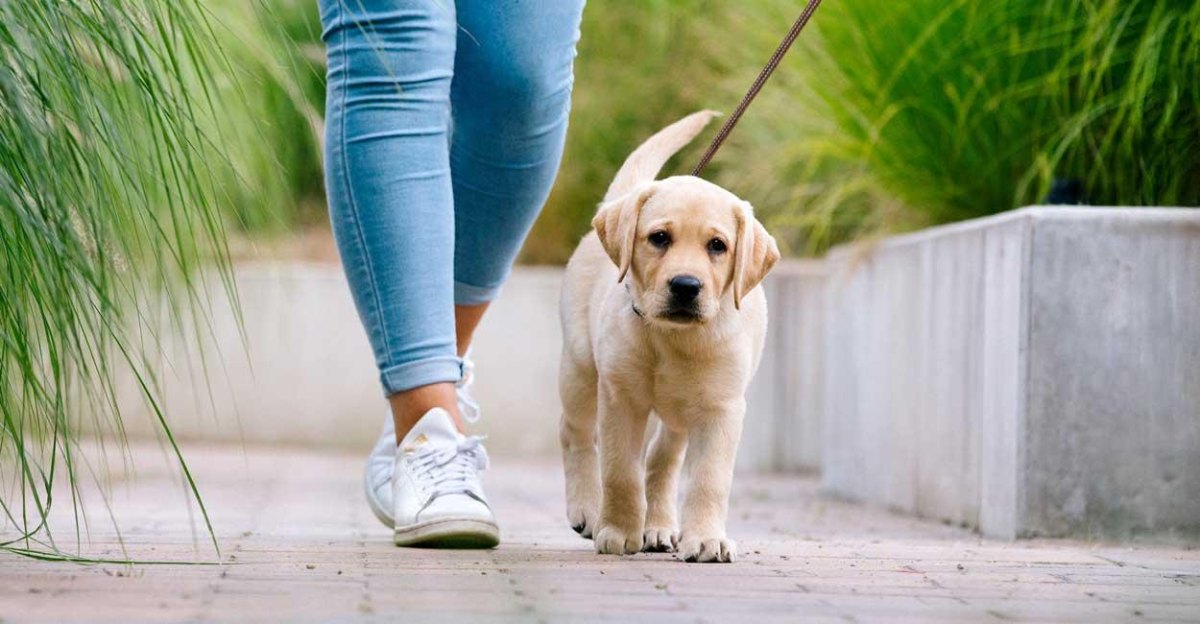
Loose-leash walking is different from formal heelwork. I am not asking a puppy to glue their shoulder to my leg for an entire walk. I am teaching a comfortable slack leash and a habit of staying reasonably close. AKC describes polite leash walking in much the same way, with the puppy able to walk near the handler without pulling.
Once the puppy can manage this indoors, I add a yard or another quiet area. I reward every few steps at first, then gradually increase the distance between rewards. If the leash tightens, I do not get into a tug-of-war. I stop, wait for slack or a return toward me, reward, and continue. RSPCA and Dogs Trust both recommend this basic consequence: loose leash keeps the walk moving, while pulling does not.
| What I see | What I do |
|---|---|
| Loose leash | Keep moving and reward periodically |
| Puppy checks in | Reward the check-in |
| Leash begins tightening | Stop before pulling becomes successful |
| Puppy cannot disengage | Increase distance or reduce distractions |
Stop When Your Puppy Pulls
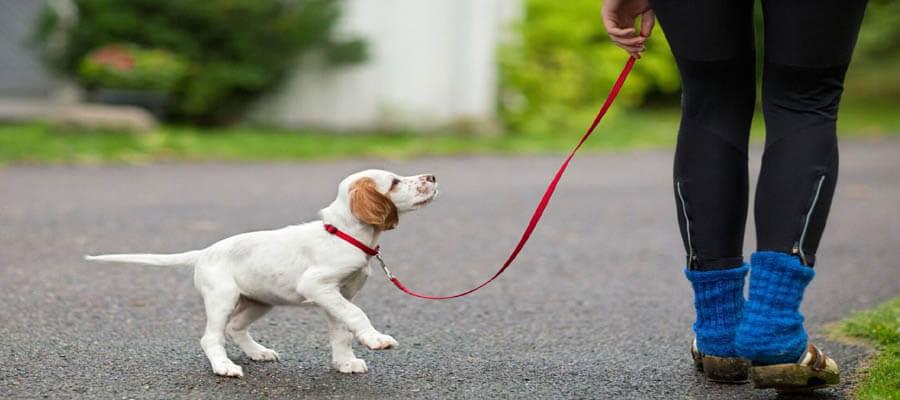
This is the part that sounds simple until you are late for work and your puppy has decided the mailbox is an emergency. Still, the principle matters. If pulling consistently gets the puppy closer to the thing they want, pulling has been rewarded. I stop when the leash becomes tight and wait for slack to return before moving forward.
I do not yank backward, jerk the leash, or scold. AVSAB recommends reward-based training and specifically advises against leash corrections and equipment that relies on pain or fear. If the puppy cannot reconnect with me, I help by changing direction or increasing distance. Management is part of training, not a sign that training has failed.
The mistake I see most
Walking forward while the leash is tight, then expecting the puppy to understand that pulling is wrong. Dogs learn from what works. If pulling gets them there, pulling has just received a very convincing lesson.
Keep Training Sessions Short and Fun
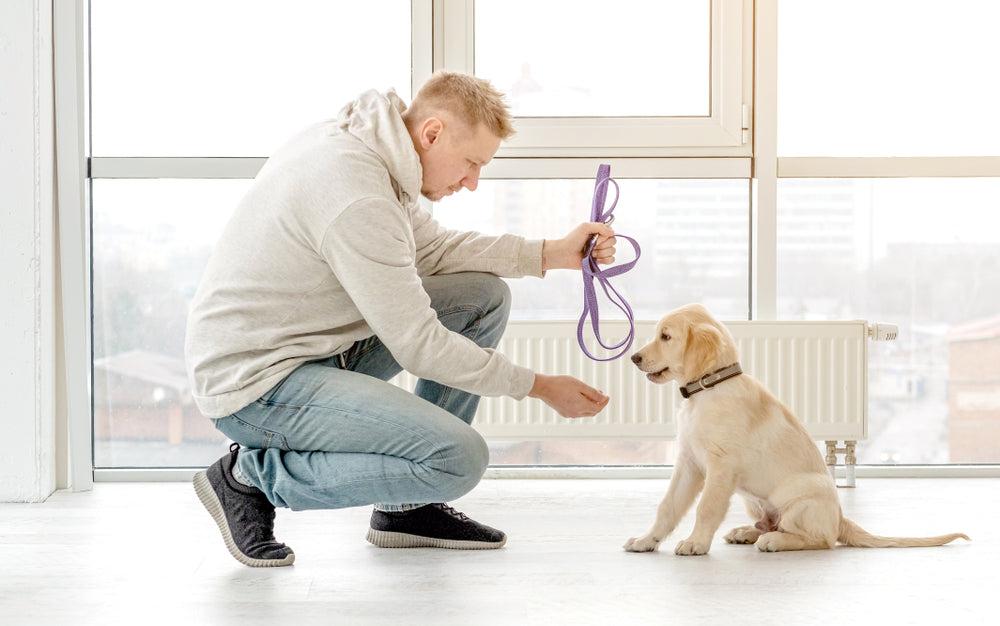
A puppy's first leash lesson does not need to cover a mile. In fact, I would much rather finish while the puppy is still enthusiastic. Puppies have limited attention spans, and AKC and RSPCA guidance both recommend short, regular sessions rather than overwhelming the dog.
For a very young puppy, I may train for only a few minutes at a time, several times across the day. I finish after a good repetition instead of waiting for the inevitable flop, bite-the-leash episode, or frantic sniffing. Progress is measured in quality, not how many sidewalks I cover.
- My puppy can still take treats.
- The leash is mostly loose.
- My puppy can respond to my voice or movement.
- The body looks loose rather than stiff or frantic.
- I stop before either of us is thoroughly fed up.
Gradually Add Distractions
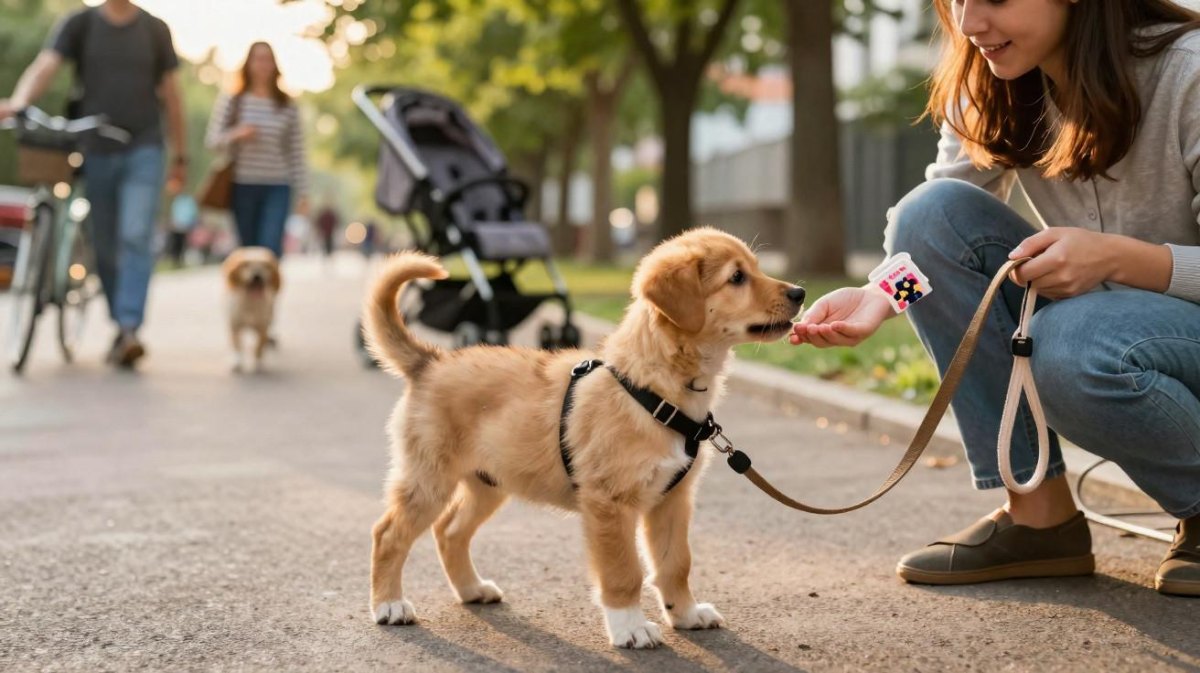
The outside world is where many perfectly competent kitchen puppies suddenly forget their names. That is normal. I increase difficulty one piece at a time, moving from the house to a quiet yard, then a calm outdoor area, and eventually places with more movement and smells. VCA recommends gradually increasing the distance and distractions as leash skills develop.
I pay close attention to the puppy's stress and arousal level. A puppy who is staring, leaning hard into the leash, freezing, panting unusually, or unable to eat is telling me the environment is too difficult right now. I create distance and make the next repetition easier. Controlled exposure at the puppy's pace is far more useful than throwing them into the busiest possible park.
A better test of progress
Instead of asking, “Can my puppy walk past everything?” I ask, “Can my puppy notice something interesting and then reconnect with me?” That is the skill I can build on.
Practice Consistently on Every Walk
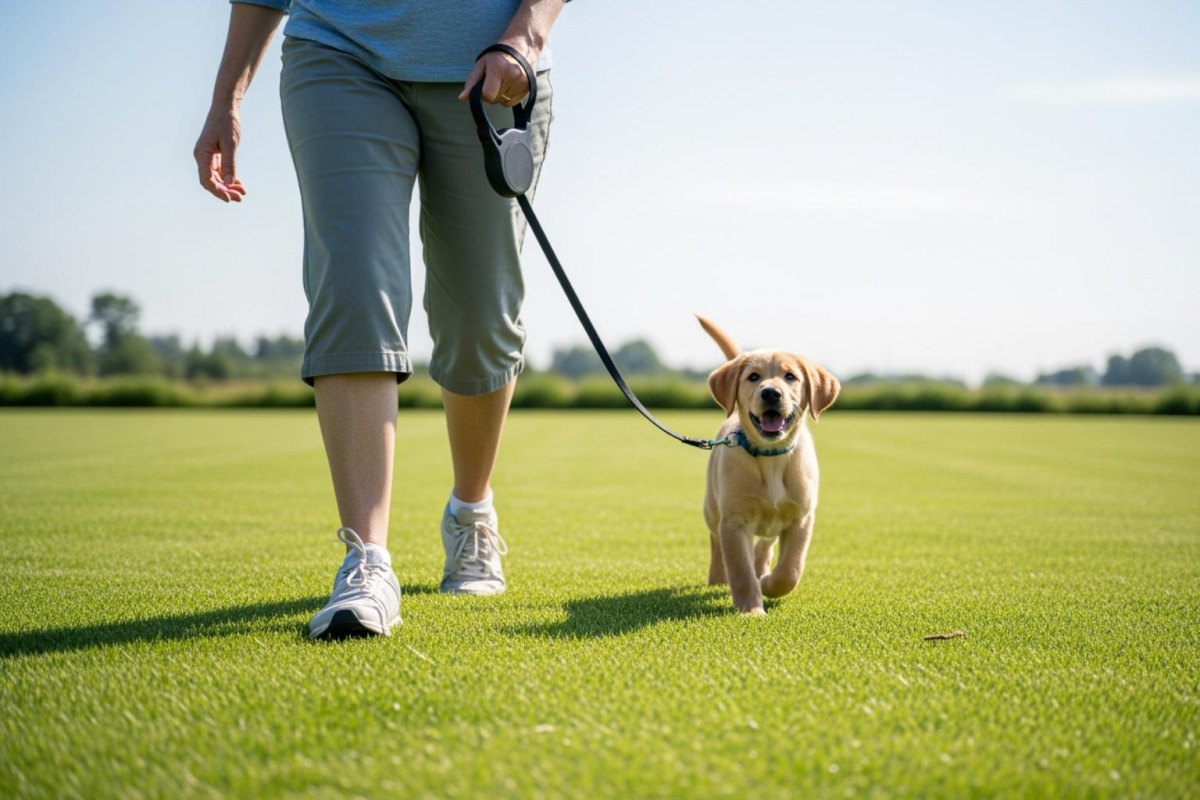
Consistency does not mean every walk must become a formal training session. It means I avoid teaching two conflicting lessons: pulling sometimes works and sometimes does not. Dogs Trust notes that even a single step forward while a dog pulls can reinforce the behavior, which is why predictable consequences make learning clearer.
I also let walks be walks. Sniffing, exploring, and moving at a puppy's pace are valuable parts of the outing, and AKC recommends incorporating sniffing and other life rewards into leash work. Over the first few weeks, I expect uneven progress: a great morning, a terrible Tuesday, then a surprisingly good Thursday. A setback is information, not a verdict on the puppy or the person holding the leash.
Give it time
Think in weeks rather than days. If your puppy is improving indoors but struggling outside, that usually means the environment has jumped ahead of the training, not that your puppy is stubborn.