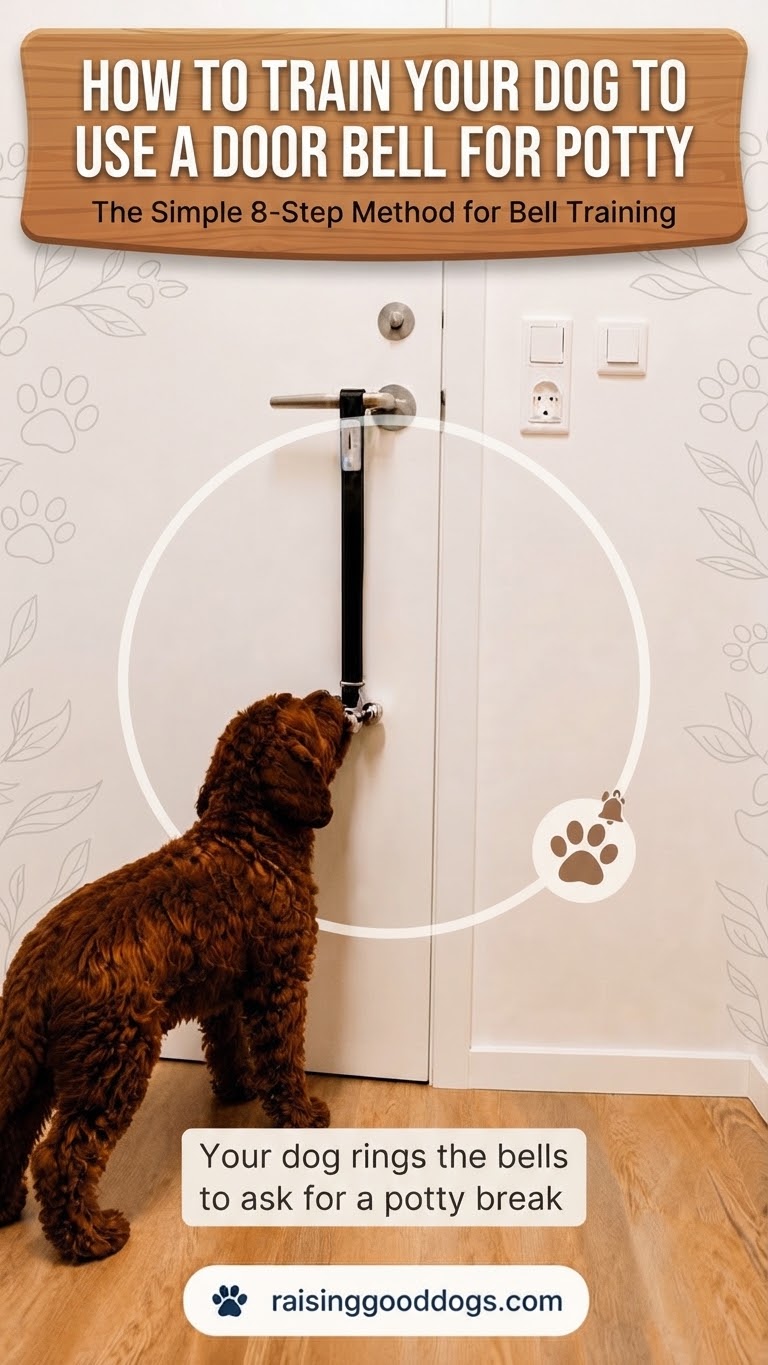
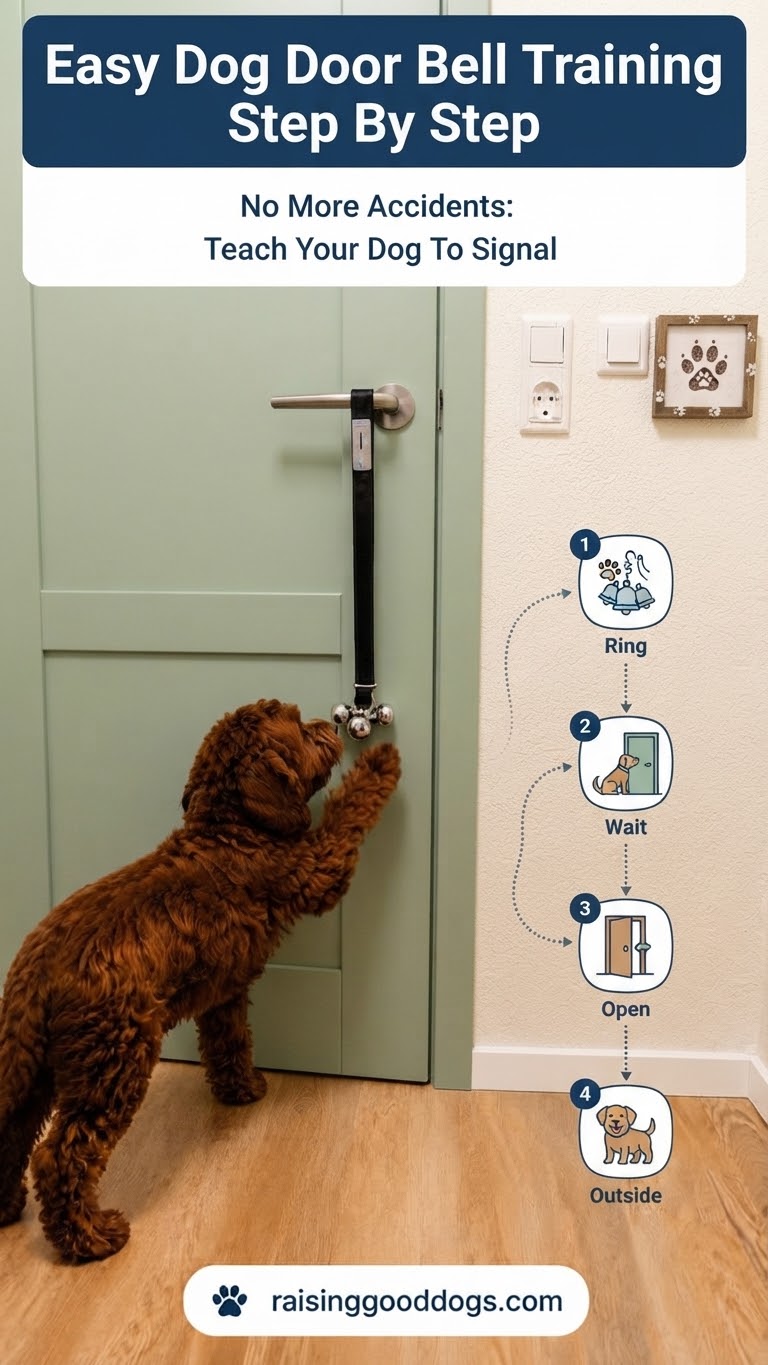
I get some version of this question from clients constantly: their dog scratches the door, barks at it, or just has an accident because nobody caught the signal in time. Bell training gives a dog a clean, unmistakable way to say ‘I need to go out,’ and it's one of the few pieces of equipment I recommend without hesitation, because it works with the dog's nose and curiosity instead of against them. It's also slower than the internet makes it look — expect one to three weeks of short, boring, repeated sessions, not one afternoon.
Start With the Bells at Nose Height, Nothing Else
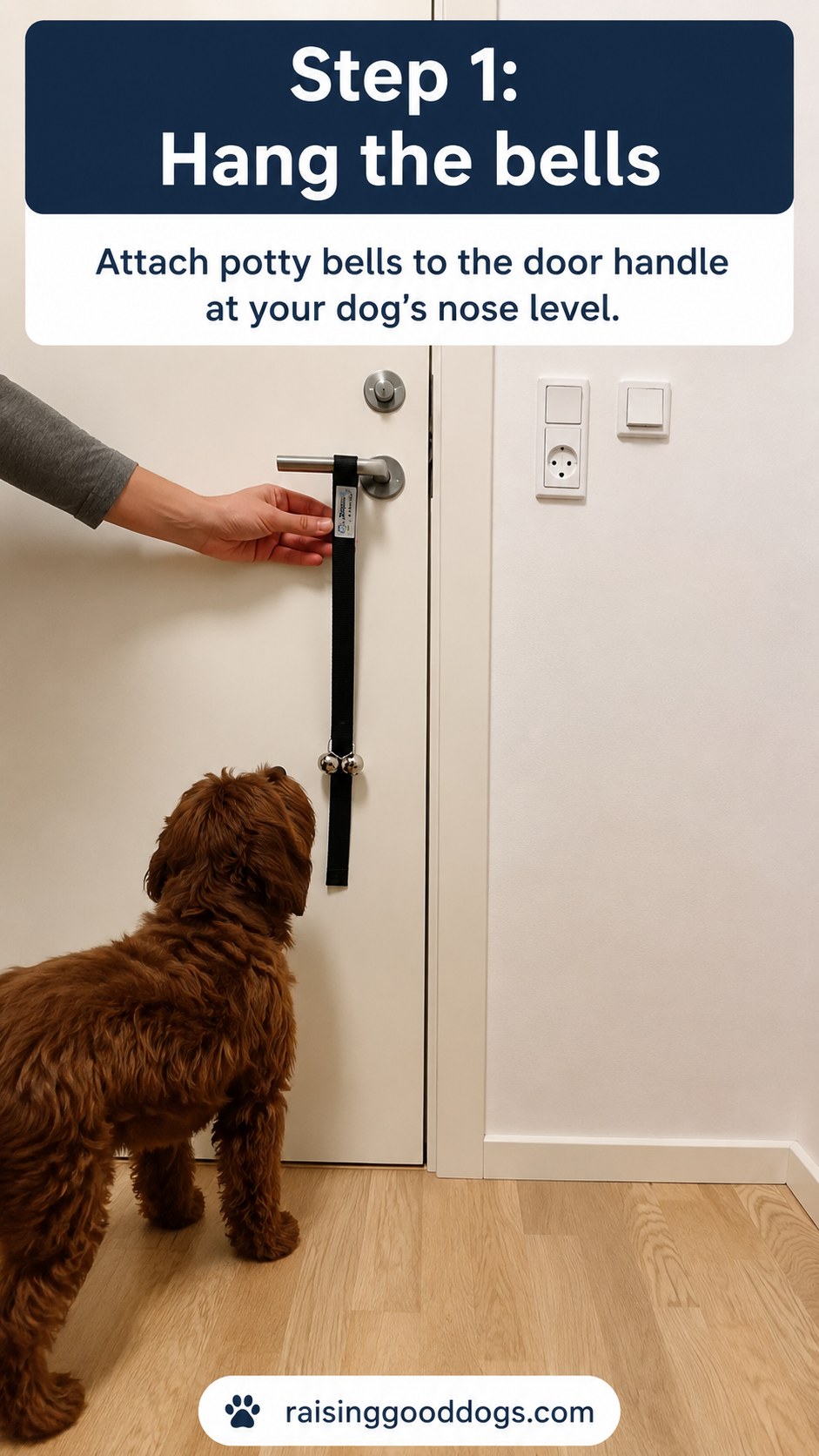
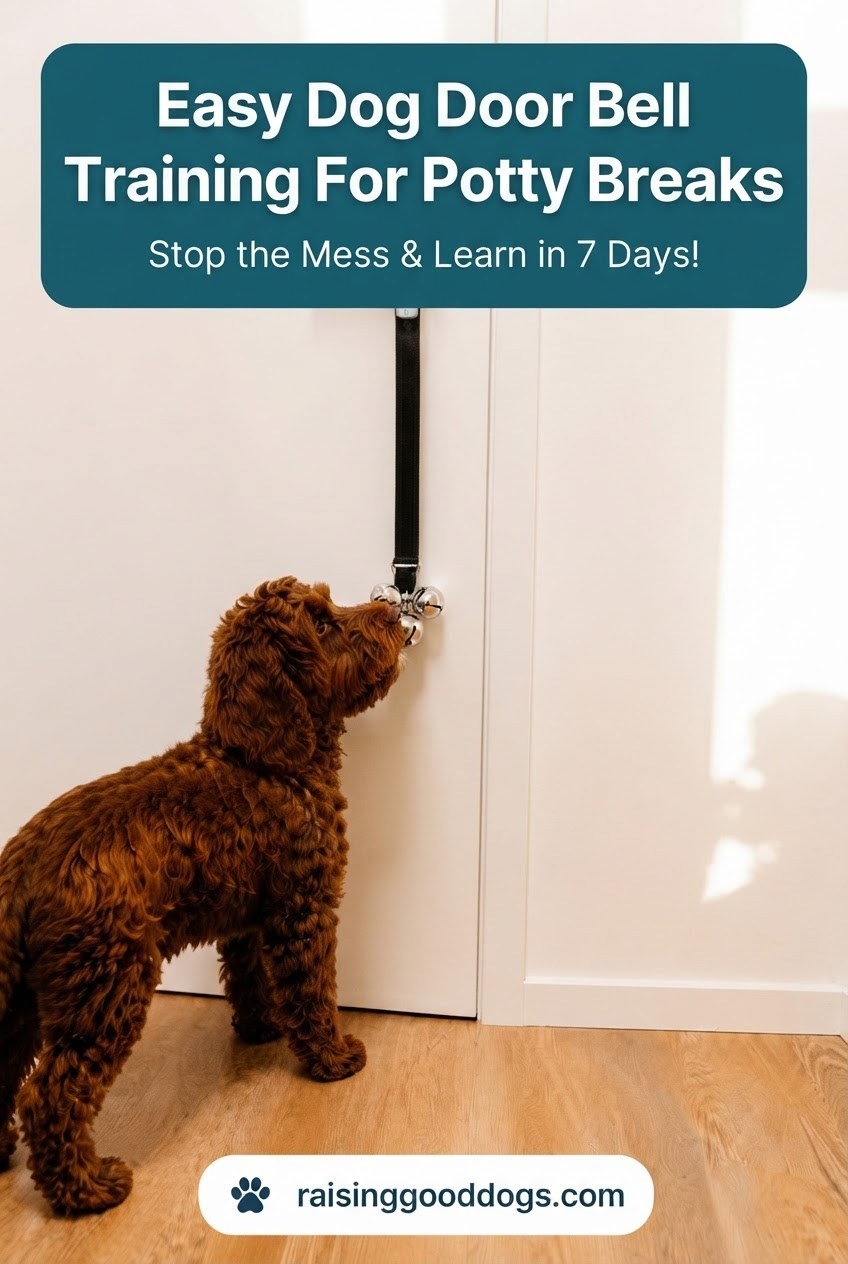
Before any training happens, the bells just need to exist. Hang them from the door handle at your dog's nose level — not shoulder height, not somewhere convenient for you — because the whole system depends on the strap being an easy, natural target for the face they already bring to that door every day.
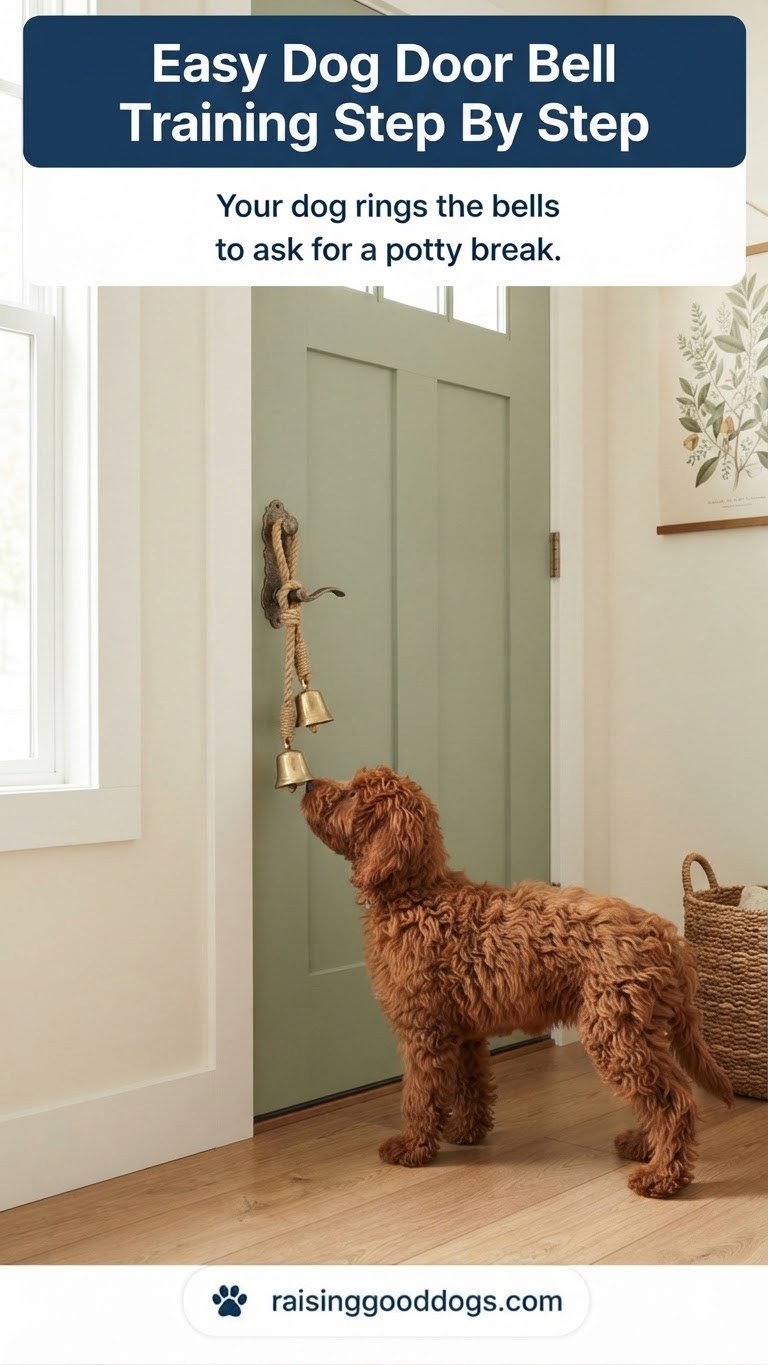
I don't ask for anything in this first step. No cue, no lure, nothing. The dog in these photos hasn't touched them yet and that's exactly right — a strange jingling object appearing on his door is enough new information for one day.
- Use a soft strap, not a stiff one that swings out of reach.
- Pick the exit door your dog already uses for potty trips, not a second door for convenience.
Let Them Investigate Before You Ask for Anything
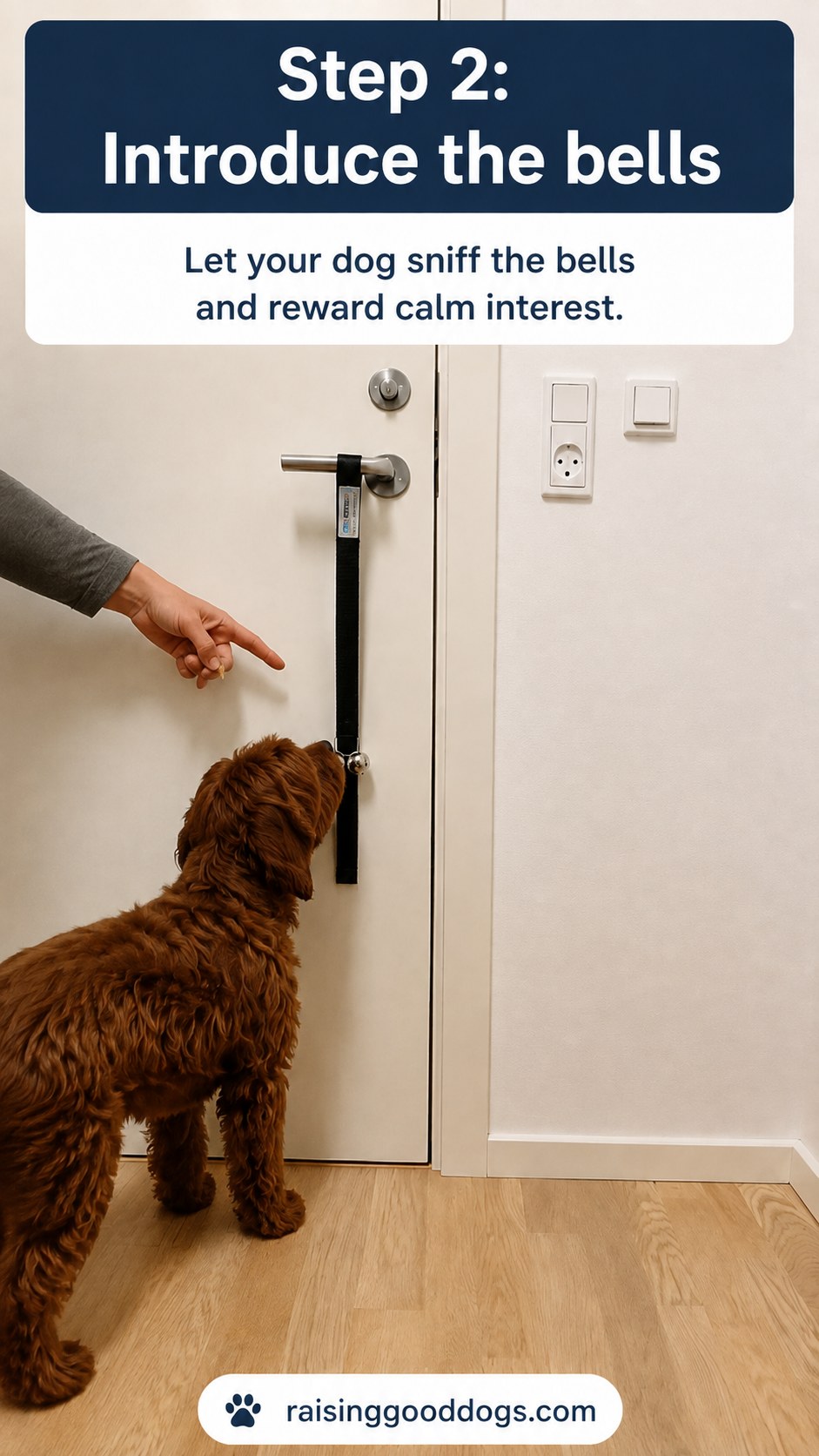
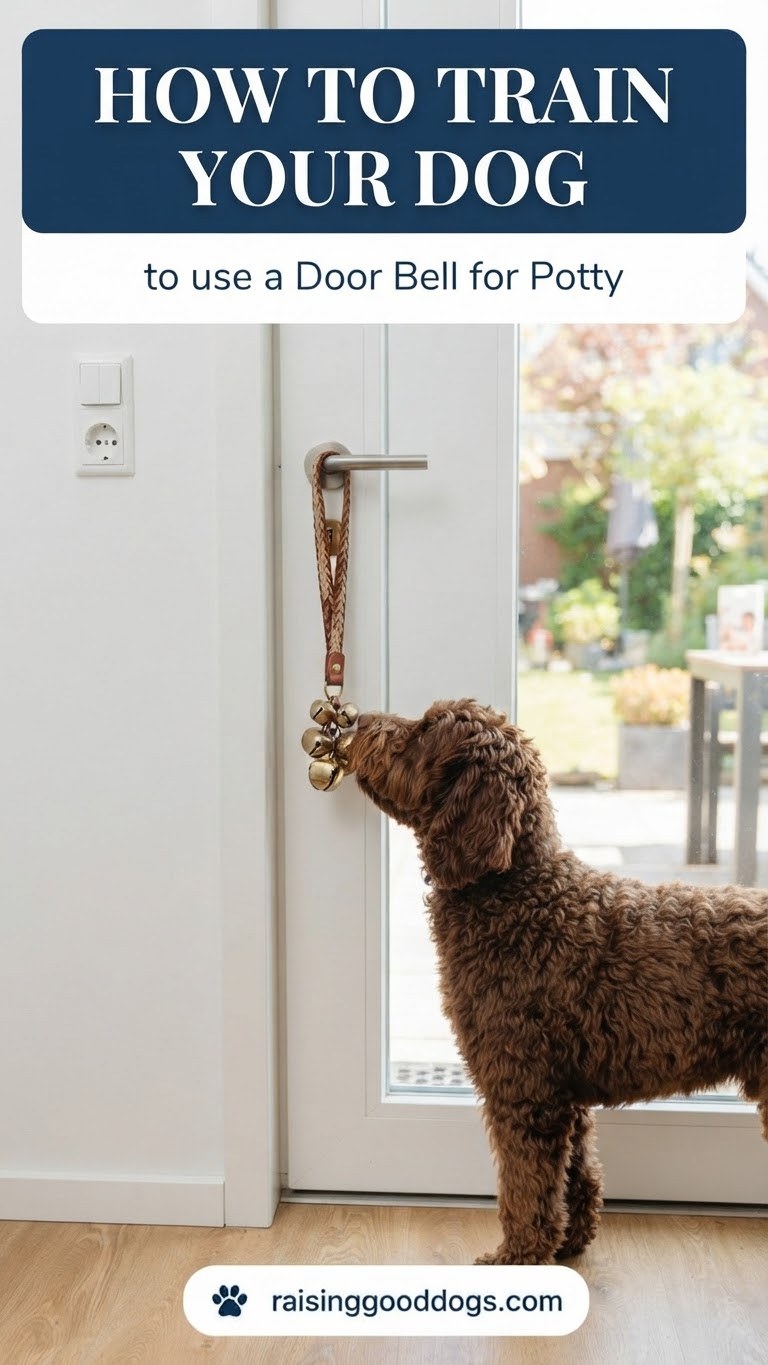
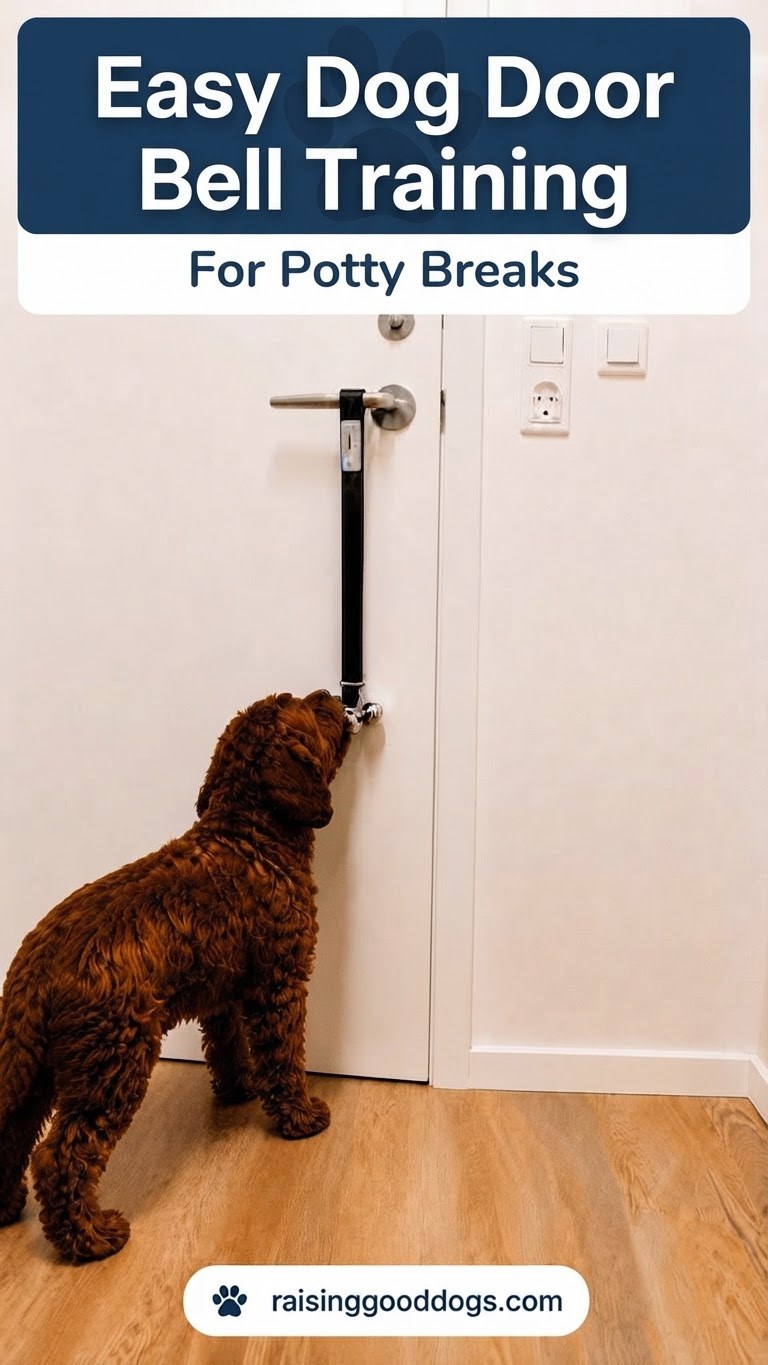
This is the step people skip, and it's the one that saves you time later. Watch the dog in this photo — head up, ears forward, leaning in on his own — that's calm curiosity, and it's what you're rewarding here, not a specific behaviour yet.
From my vet-assistant years I still default to reading the face before anything else: if a dog backs off the bells, stiffens, or won't approach, that's not stubbornness, that's the strap being genuinely startling, and I'll pad it or swap it for something quieter before pushing on.
A dog that's afraid of the bells will never ring them on purpose. Comfort comes before cue, every time.
Mark and treat any voluntary sniff or glance, even a brief one.
Luring the First Nose Touch
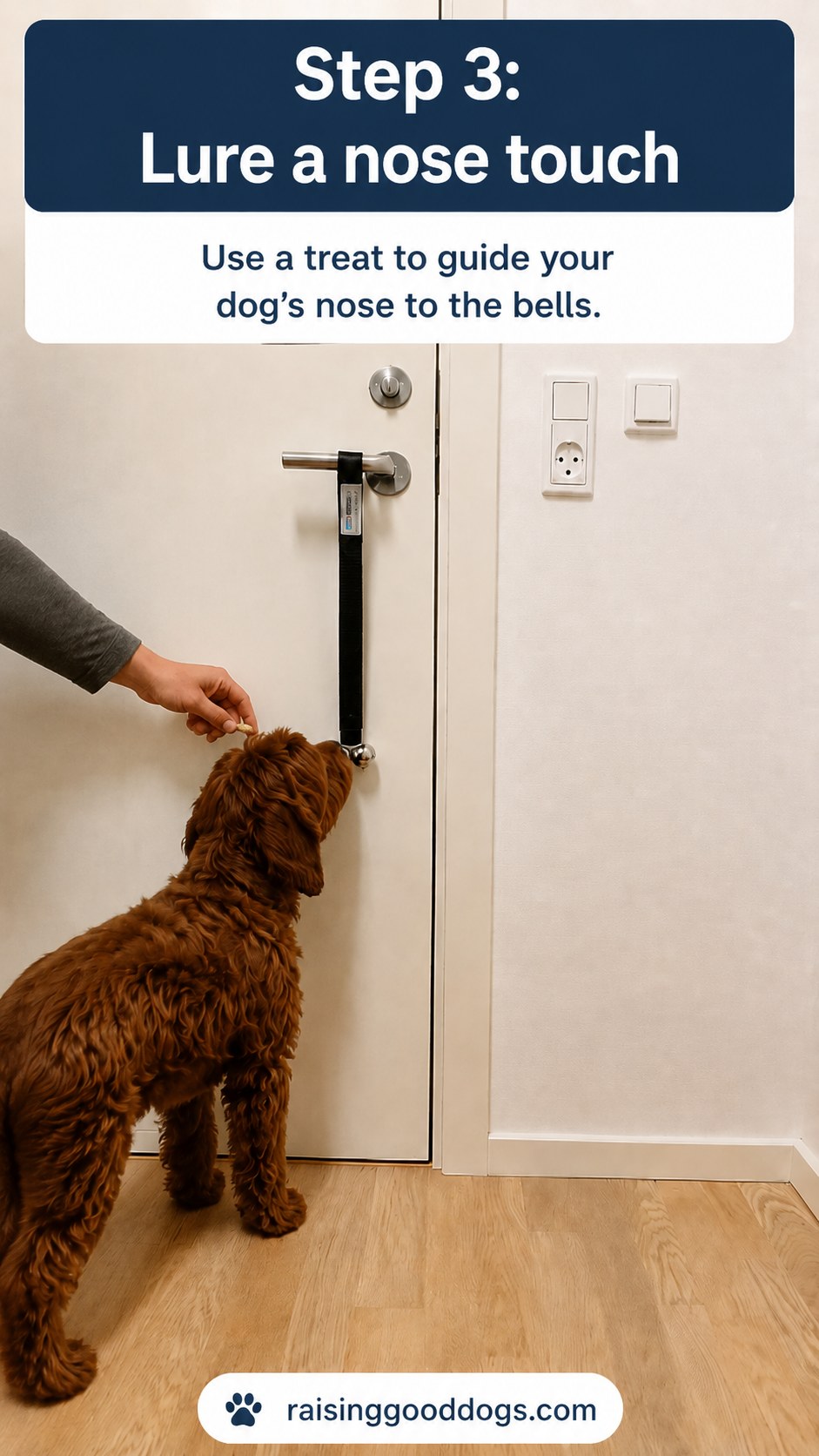
Once your dog is relaxed around the bells, bring a treat right up to the strap so their nose has to follow it in. You're not asking for a ring yet — you're building the physical habit of nose-to-bell contact, the way you'd lure any target behaviour.
- Hold the treat an inch from the bells, letting the nose brush the strap on the way to it.
- Mark the contact, not the treat-taking — say your marker word the instant nose meets bell.
- Repeat five to eight times, then stop. Short sessions beat long ones here.
Some dogs get there in one session. Others need three or four days of this exact step before anything makes noise, and that's completely normal — the strap in the photo barely moves at this stage, and that's fine.
Paying the Ring, Every Single Time
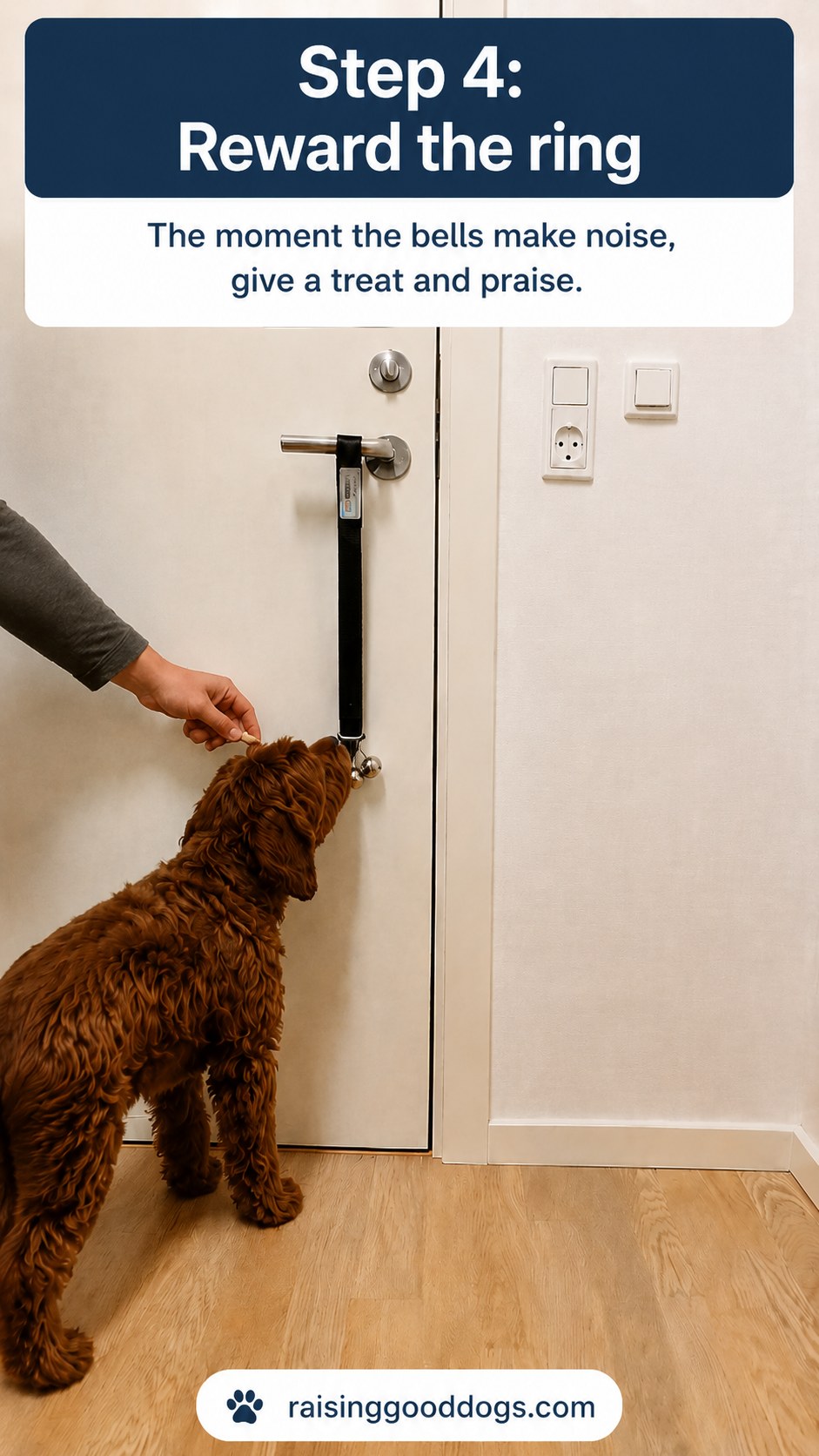
The moment the bells actually jingle — even a faint clink — treat and praise immediately, no matter how accidental it looked. This is the payload step: your dog needs to learn that sound equals payoff, full stop, before you attach any meaning to it.
I tell clients to keep treats staged right by the door for this week, because fumbling in a pocket costs you the half-second timing that makes this stick. Reward within one to two seconds of the ring or the connection gets muddy.
- Reward every ring, deliberate or clumsy.
- Keep sessions to five minutes, two or three times a day.
- Don't ask for more noise — one clear ring is enough to pay.
Naming It: Adding the Word ‘Bells’
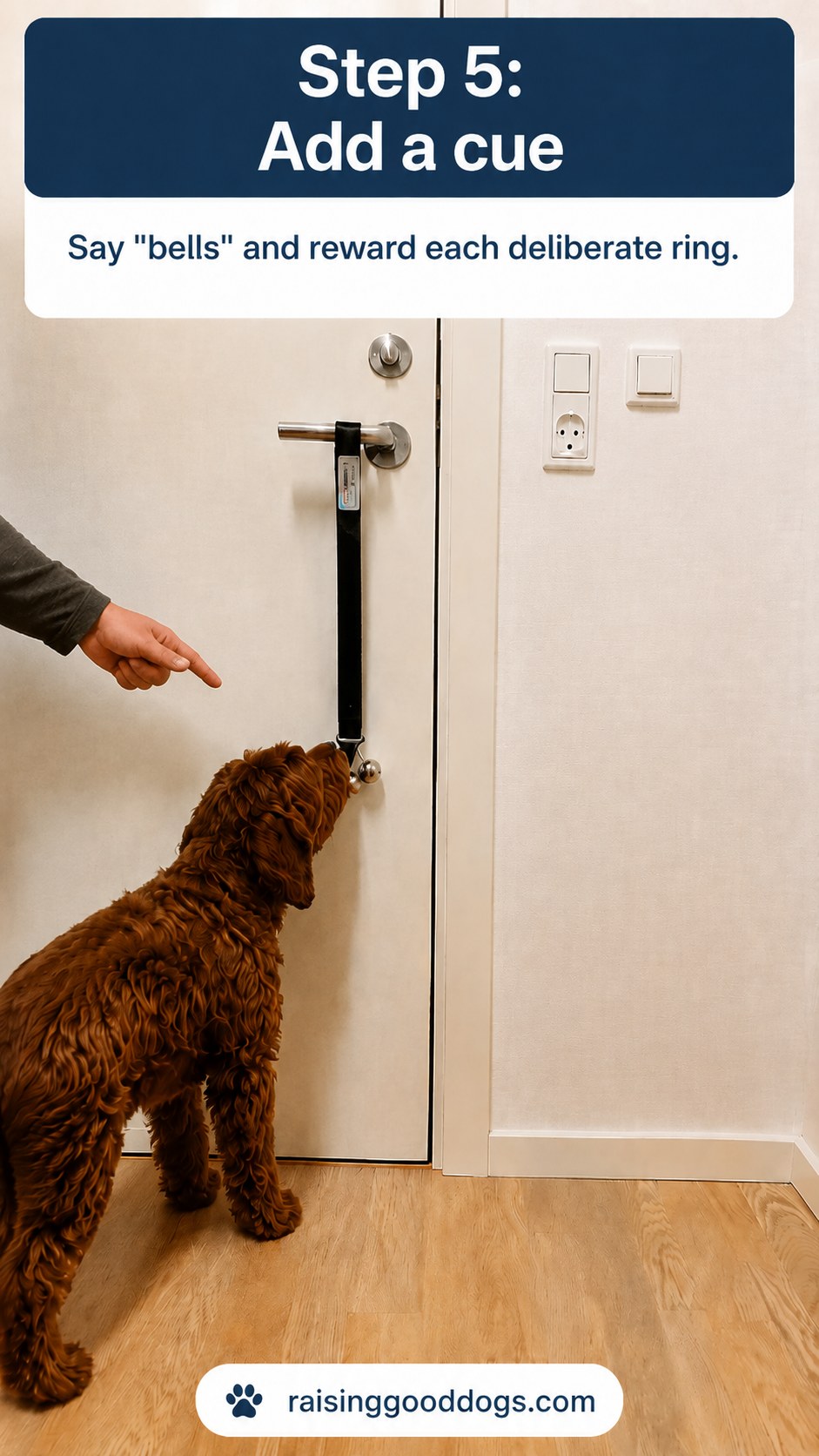
Only once your dog is reliably ringing for a treat do you start pairing the word — say “bells” right as they're about to touch the strap, so the word predicts the action instead of interrupting it. Say it once, quietly; repeating it doesn't speed anything up, it just teaches your dog to tune out the first four attempts.
This is the same order of operations I use for any new cue: behaviour first, word second. Slapping a cue onto a behaviour that isn't happening reliably yet is how you end up with a word that means nothing.
By the end of this stage your dog should ring within a second or two of hearing “bells,” most of the time — not perfectly, most of the time.
Connecting the Ring to Going Outside
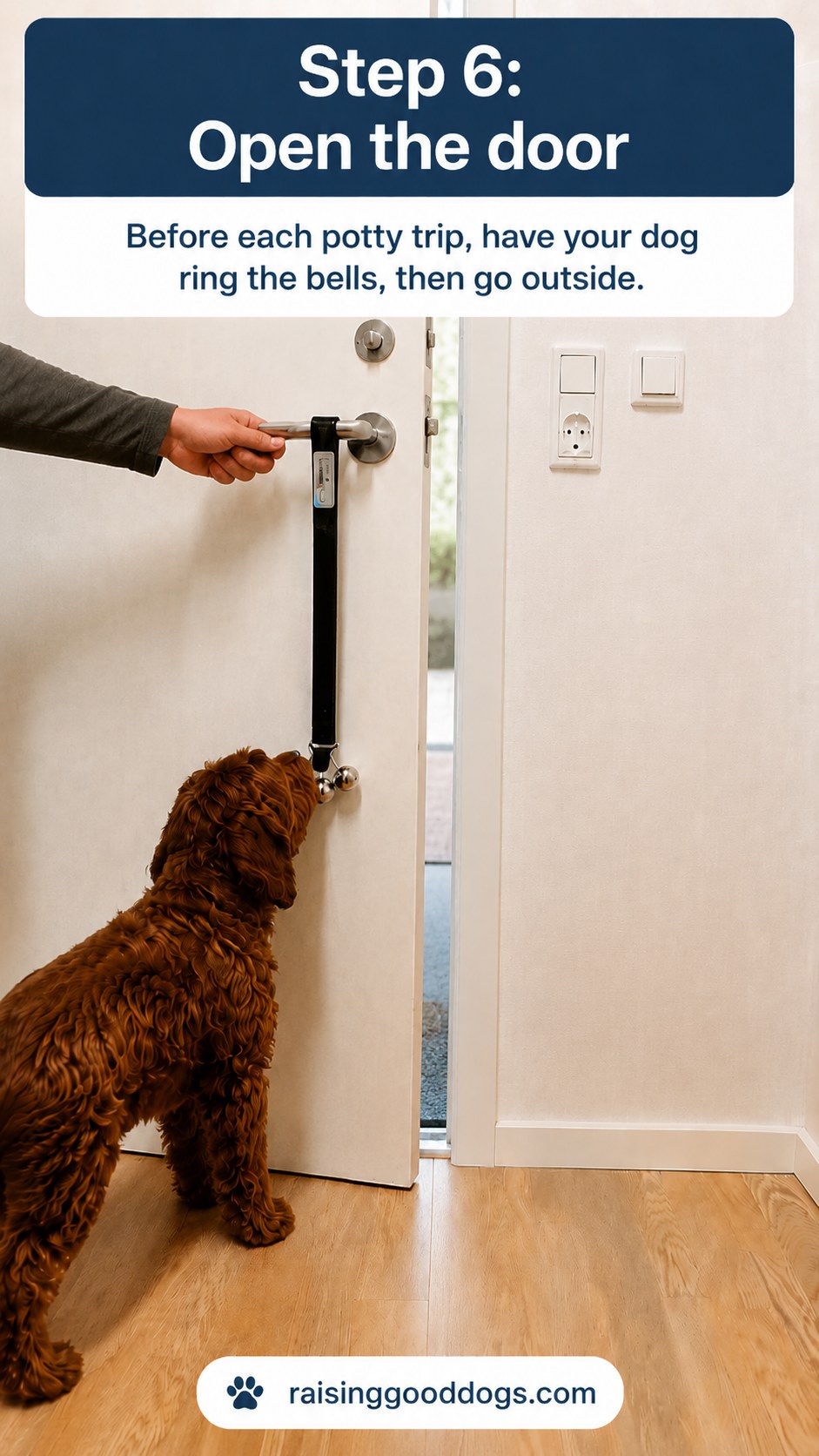
Now the payoff changes: instead of a treat for every ring, a deliberate ring gets the door opened and a trip outside. This is where bell-ringing stops being a party trick and becomes functional communication.
Only take your dog out immediately after a ring during this stage — no exceptions, even if you suspect they don't actually need to go. You're building an association, and an unreliable one teaches an unreliable dog.
Do this for every single potty trip for one to two weeks. If your dog forgets and scratches or whines instead, prompt them back to the bells rather than opening the door anyway — otherwise scratching just became the easier option.
Fading the Lure: The Step Everyone Rushes
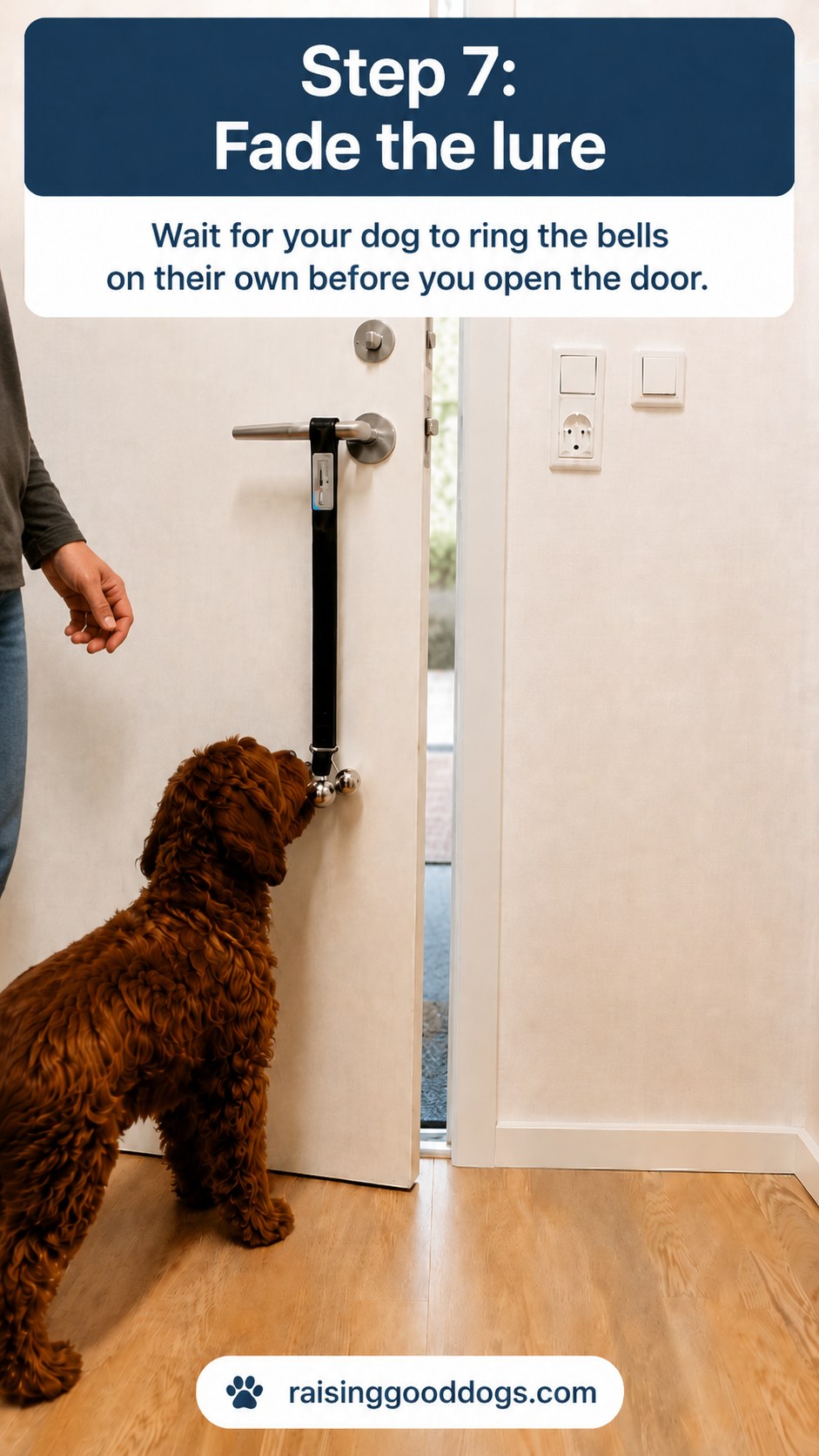
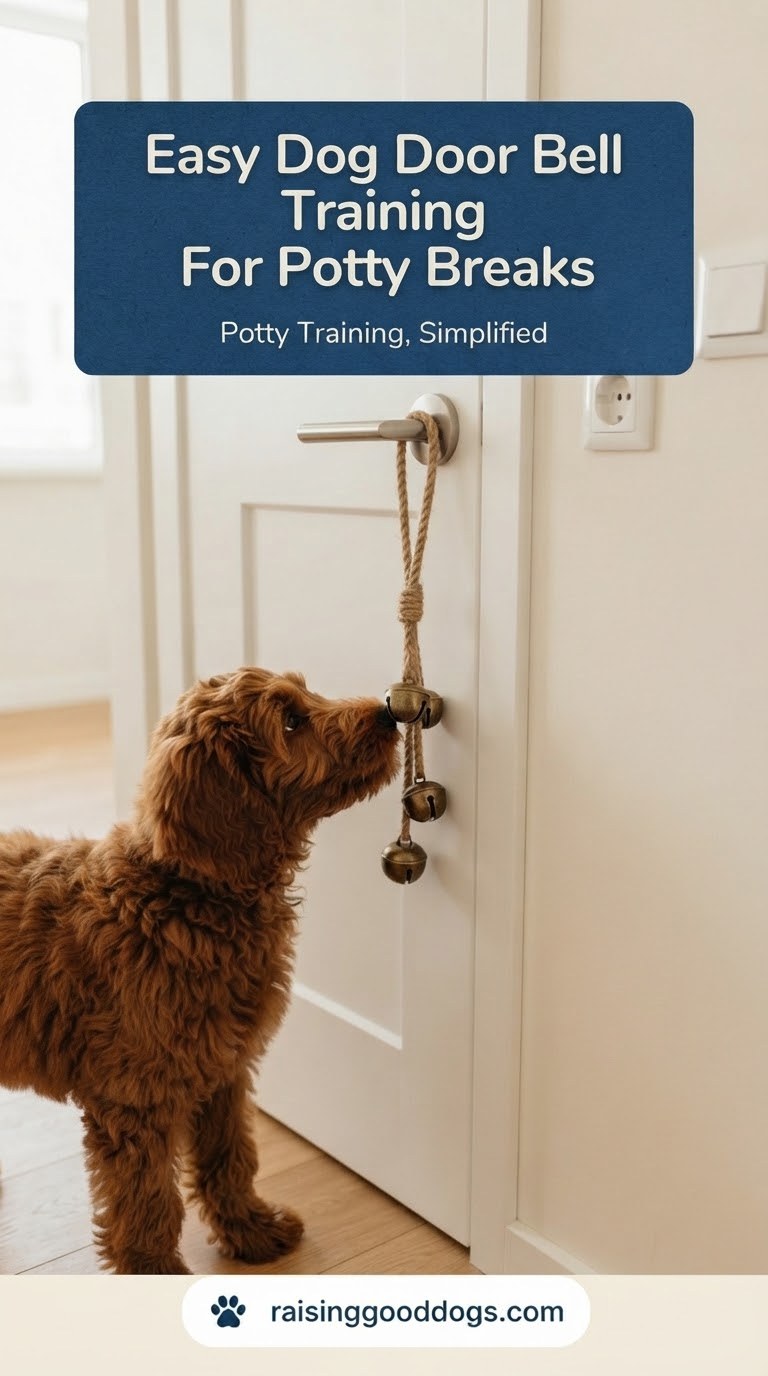
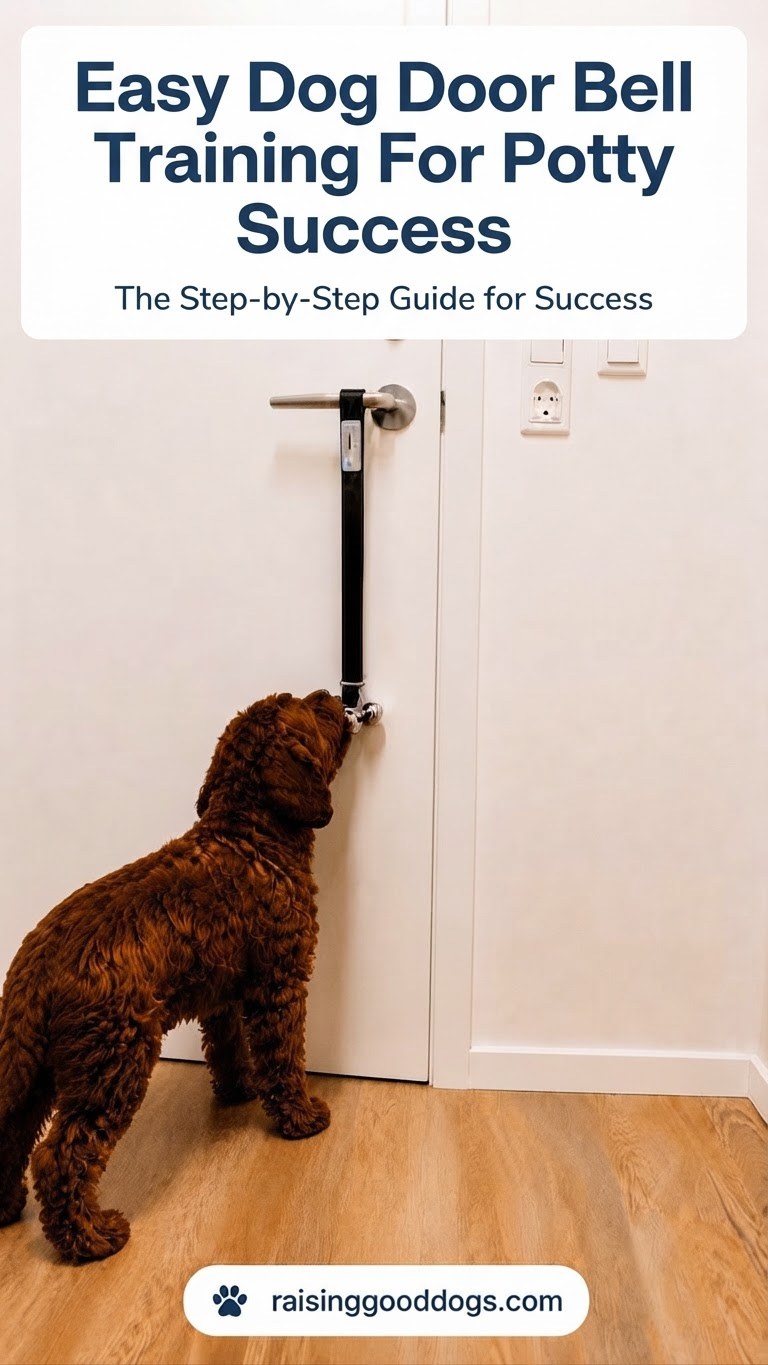
This is the hinge point of the whole plan. Stand by the door as usual, but wait — hand near the strap, not touching it — and give your dog a few seconds to ring on their own before you help. This dog is doing exactly that in the photo, working it out under a hovering hand rather than a guiding treat.
Expect a plateau here. Days six through ten are often the slowest part of the process, where dogs seem to “forget” a behaviour they had solid a week earlier — that's not regression, that's the lure being removed and the dog figuring out what actually earns the outcome.
- Wait it out for five to ten seconds before helping.
- Reward generously the first few unprompted rings.
- Don't rush this stage — most setbacks I see in this training come from skipping straight to independence.
What a Finished Bell-Trained Dog Actually Looks Like
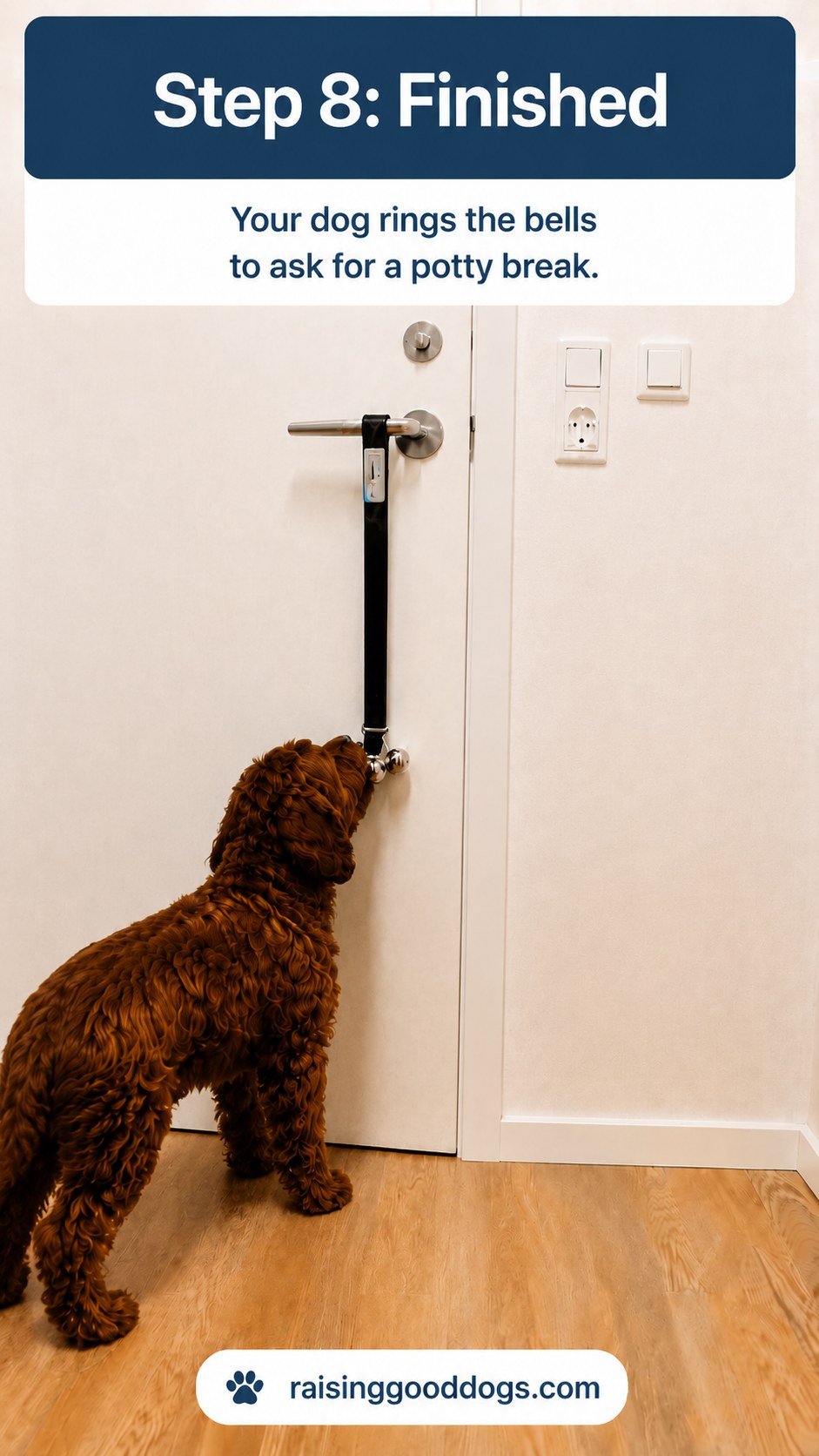
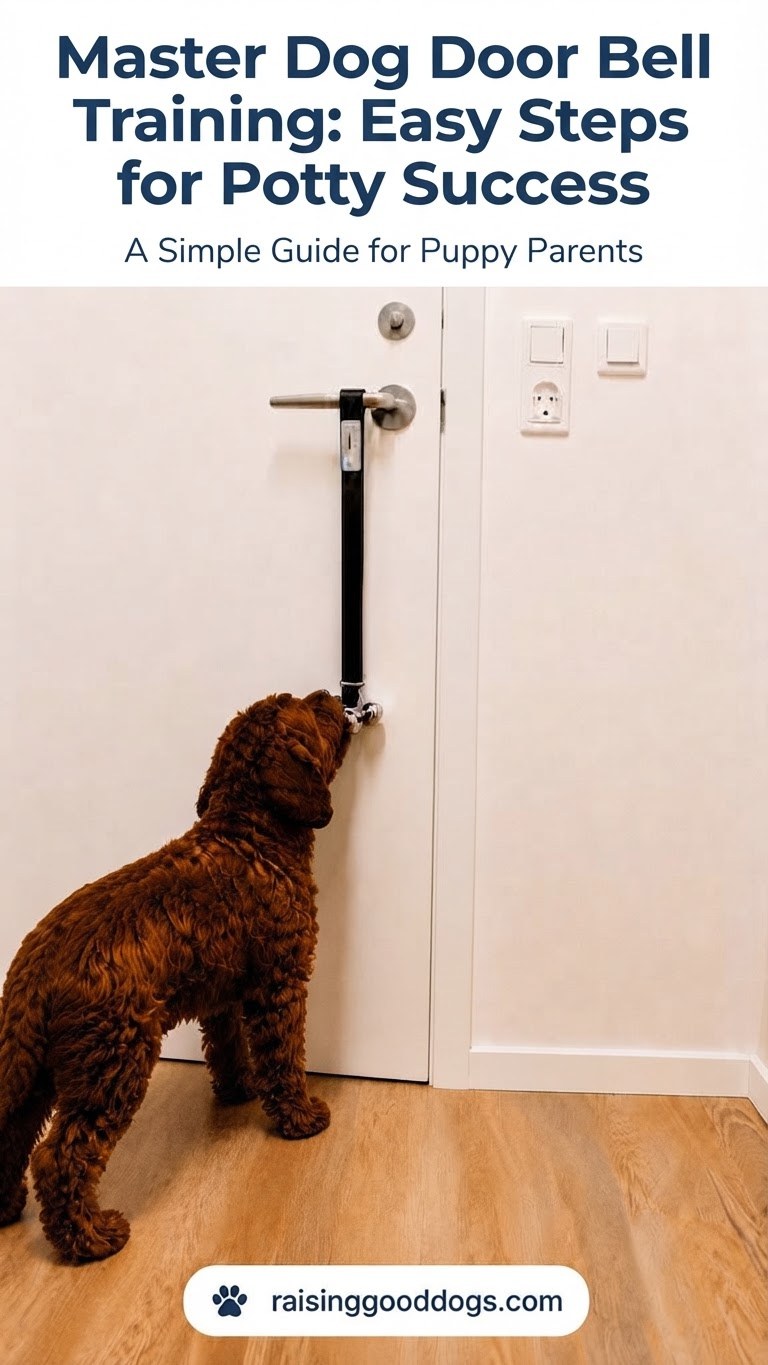
A finished dog walks to the door on their own and rings, without a hand nearby, without a treat visible, without a verbal cue. That's the whole goal, and it looks almost anticlimactic in person — just a dog quietly asking, the way this one is here.
It won't be flawless forever. Dogs regress around house guests, holidays, or a change in schedule, and an older dog can even ring more or less depending on arthritis or a change in routine — if ringing suddenly stops or a housetrained dog starts having accidents, that's a conversation for your vet before it's a training problem.
Once it's solid, this becomes one of the lowest-maintenance systems in the house — quieter than barking, clearer than scratching, and it's stayed reliable for most of my clients' dogs for years.
Bells are a small piece of equipment doing a big job — giving your dog a clear voice instead of a guess on your part. Go slow through the fading stage, expect a flat week in the middle, and you'll end up with something quieter and far more reliable than a scratch at the door.

- Products





Your Questions, Answered
My dog rings the bells constantly, just to go outside and play. What now?
That's actually a training success turning into a new habit — the bells worked so well your dog is using them as a general ‘open the door’ button. Go back to only opening the door for genuine potty trips, and redirect other requests to a different cue, like sitting at the door for a walk instead.
How long does this whole process realistically take?
Most dogs I've worked with get from hanging the bells to reliable independent ringing in two to four weeks of short daily sessions. Puppies with smaller bladders and less impulse control often need closer to a month, and that's completely normal.
My dog won't go near the bells at all. Is something wrong?
Some dogs are genuinely startled by a new jingling object on their door. Don't push through it — pad the bells, use a softer strap, or move the whole setup a few feet away and work back toward the door gradually. Forcing contact just teaches avoidance.