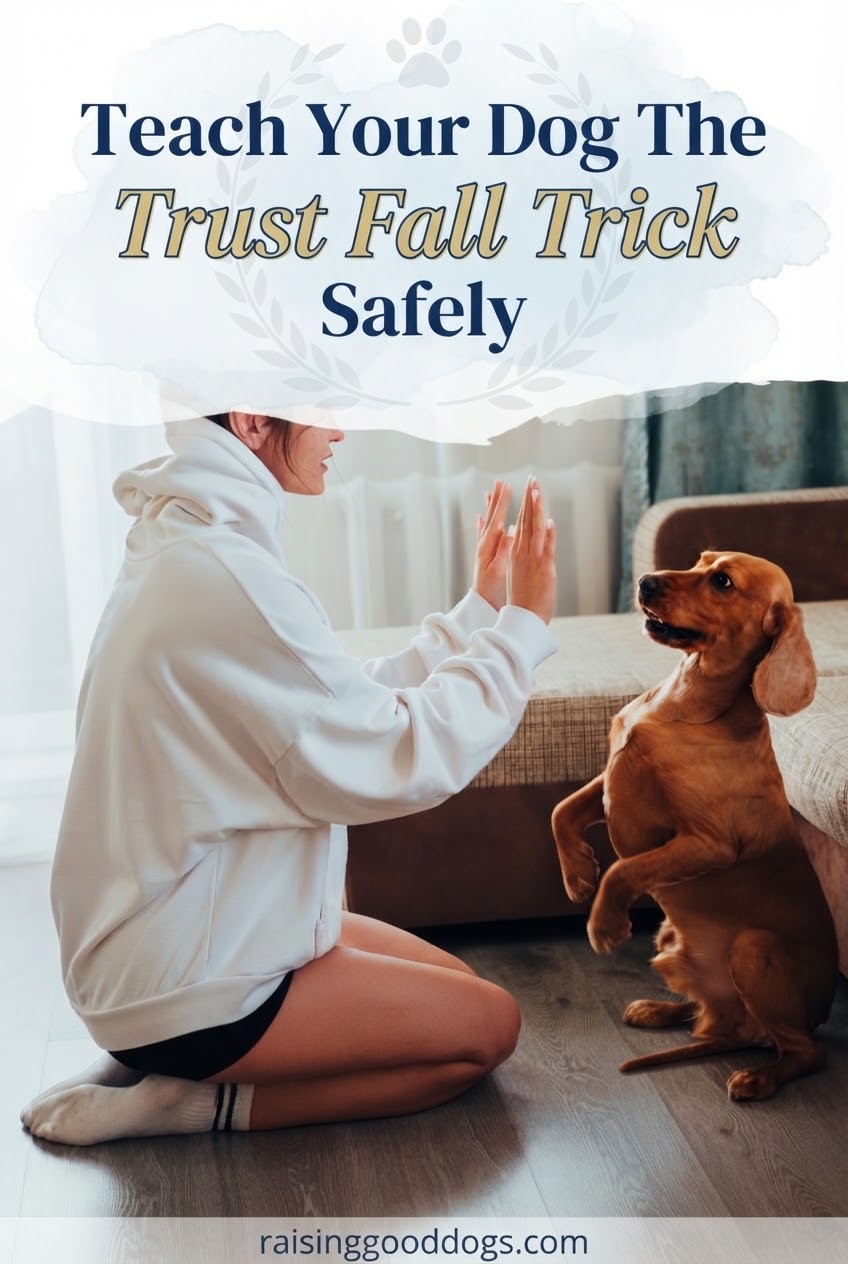
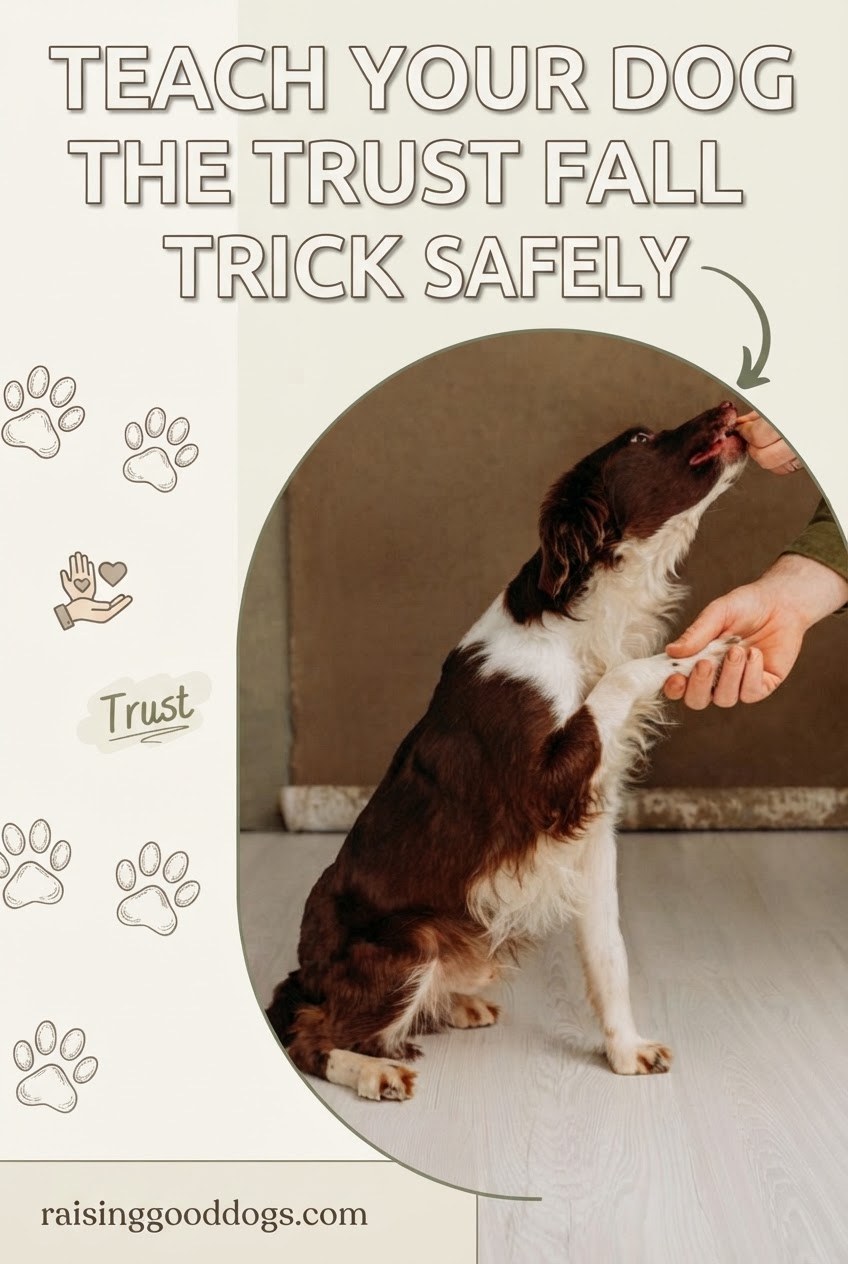
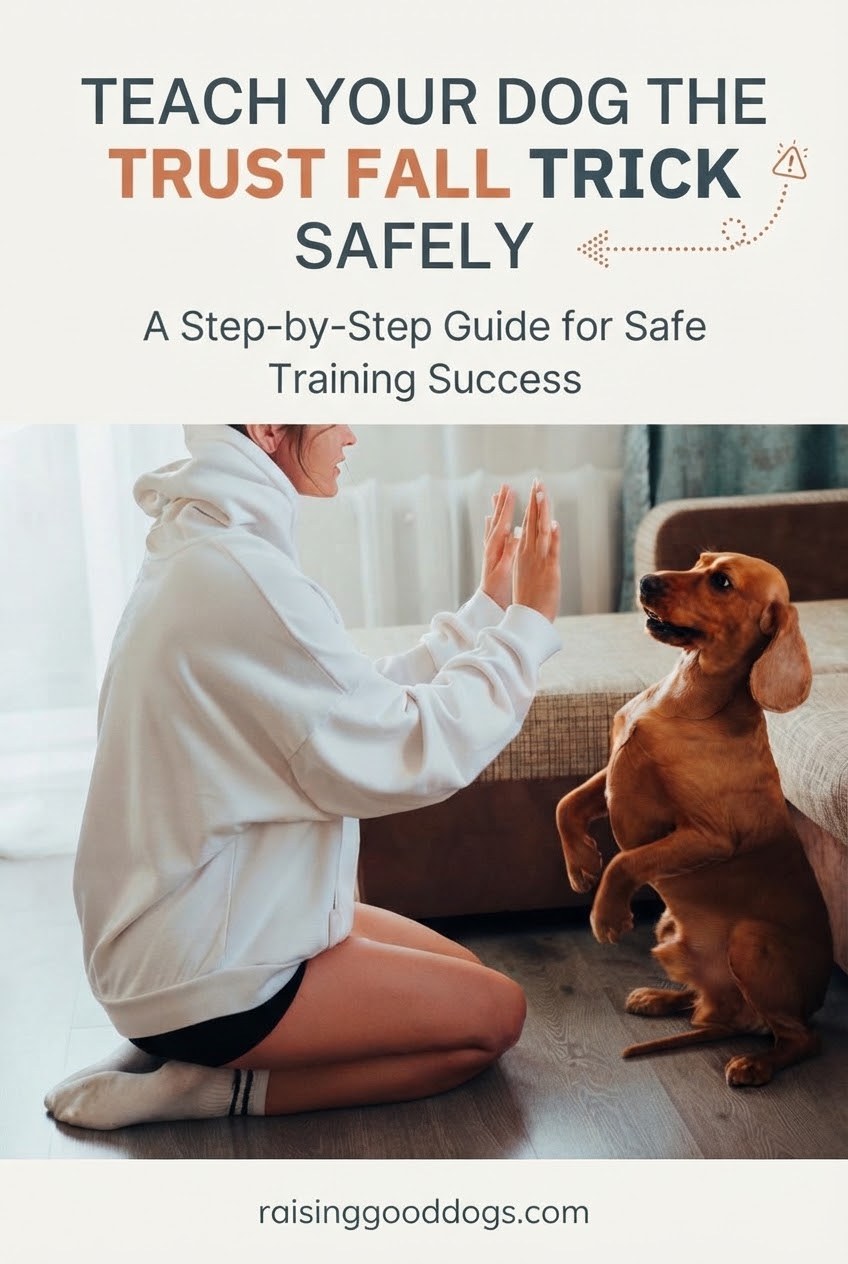
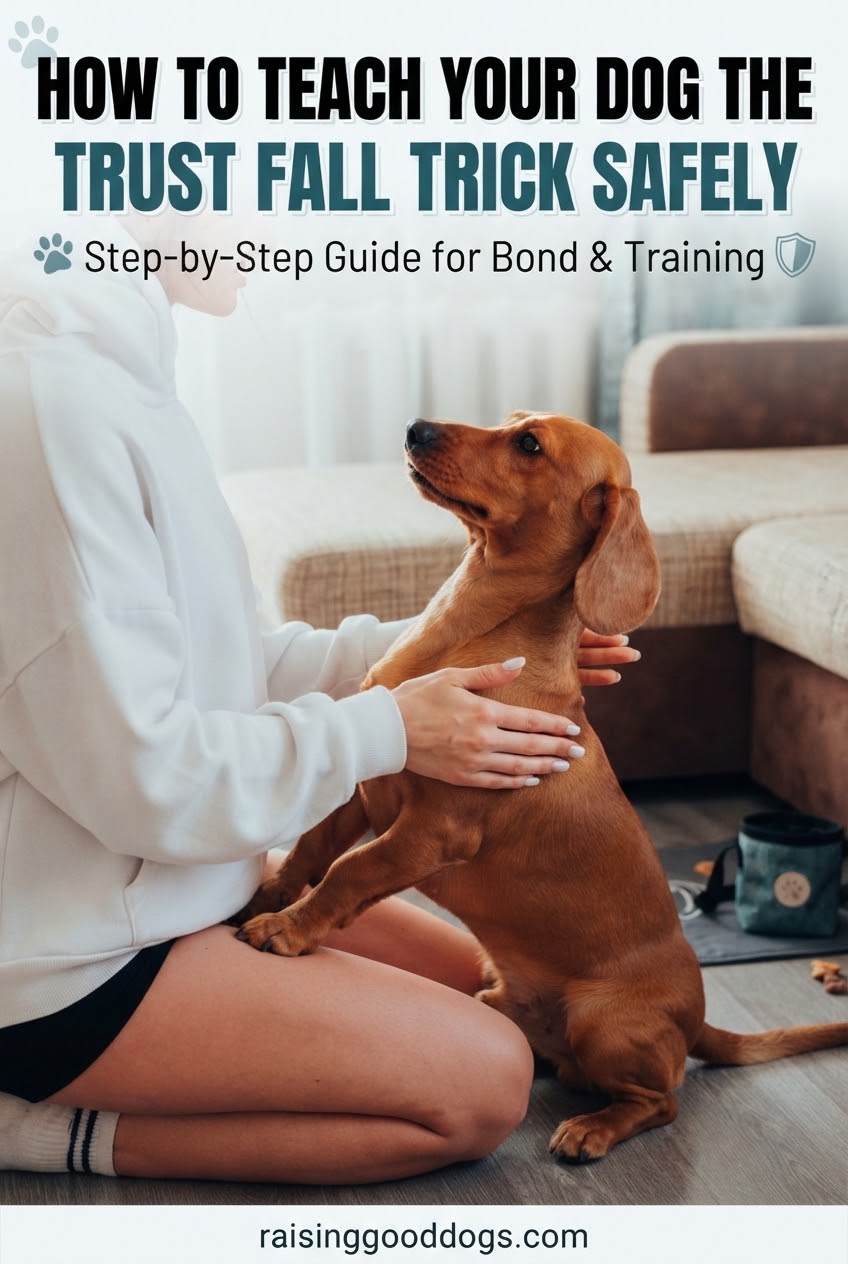
The dog trust fall trick looks like a party moment, but the real skill underneath is a dog who feels safe enough to follow your guidance. I have taught plenty of silly-looking tricks that are actually exercises in communication, and this one is no different. The goal is not a dramatic fall; it is a calm choice from your dog and a handler who knows when to stop.
I always start by making the environment easy and the expectations small. Reward-based training is the approach recommended by the American Veterinary Society of Animal Behavior for canine training.
Teaching Your Dog the Trust Fall Trick Safely
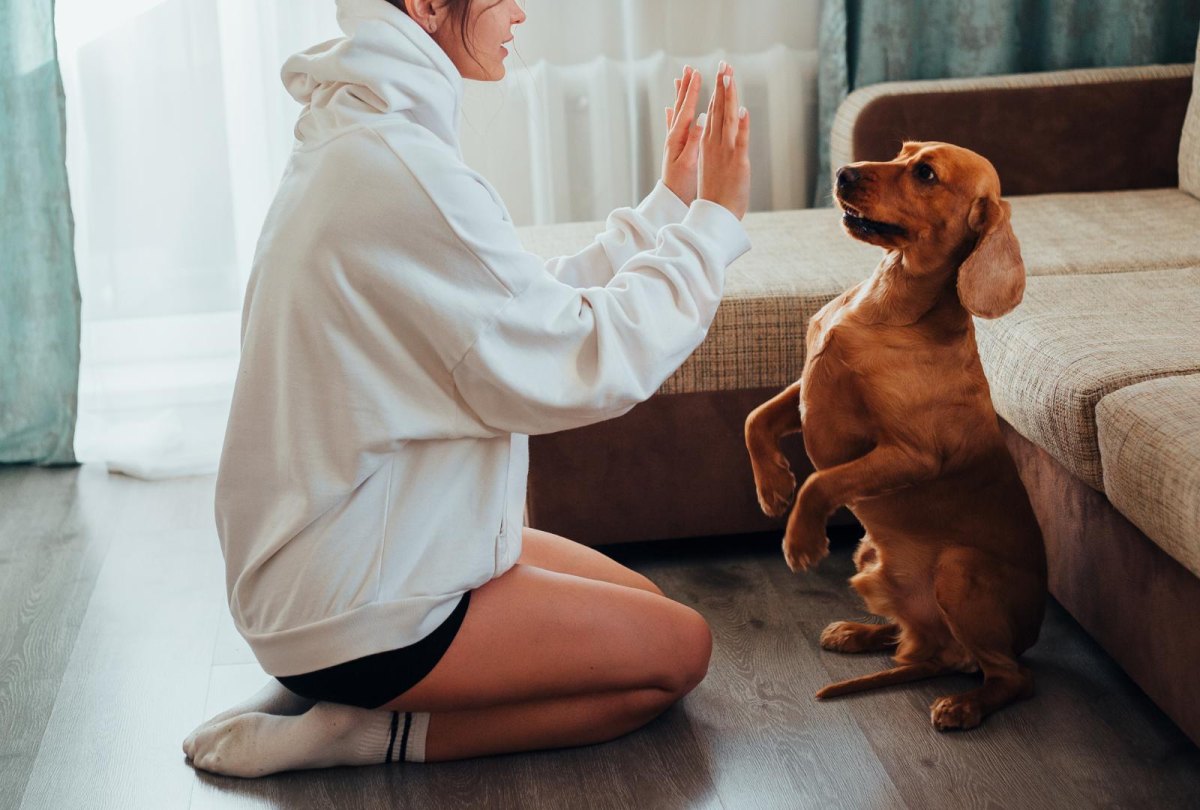
Before I teach a dog this trick, I make sure we are not rehearsing a scary experience. A trust fall should never involve pushing, pulling, or surprising a dog into position. The first lesson is simply that being near my hands feels safe.
What I want before starting
- A dog who willingly comes close and relaxes beside me.
- A quiet space with enough room to move without slipping.
- Short sessions where success matters more than the finished pose.
I use treats, praise, and tiny progressions rather than pressure. Reward-based methods focus on reinforcing behaviours we want to see more often.
Building Confidence Before the Trust Fall
Most dogs do not need more enthusiasm; they need more information. I build confidence by letting the dog investigate the movement and choose to participate. A dog who freezes, turns away, licks lips, or shifts weight back is giving me useful feedback, not being stubborn.
With Bruno, I learned that trust is built in ordinary moments. The flashy tricks come later; the relationship comes first. A realistic timeline is usually several short sessions over weeks, not one afternoon of repetition.
Practicing the Lean Back Movement Step by Step
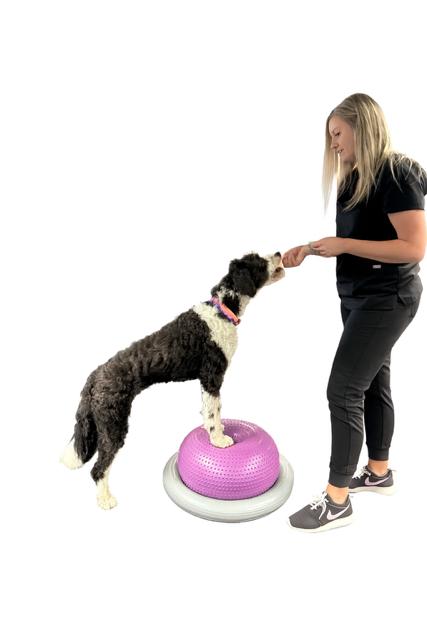
I teach the lean before I ever ask for a trust fall. The dog needs to understand each piece separately so the final movement feels predictable. Shaping small steps is a common way to build new behaviours gradually.
- Reward. Mark and reward your dog for standing comfortably close.
- Guide. Encourage a tiny backward weight shift without forcing movement.
- Build. Increase the lean only when your dog remains relaxed.
The difficulty label here is intermediate. If your dog avoids touch, startles easily, or has pain concerns, I would work on those foundations first rather than adding a trick.
Creating a Safe Setup for the Dog Trust Fall
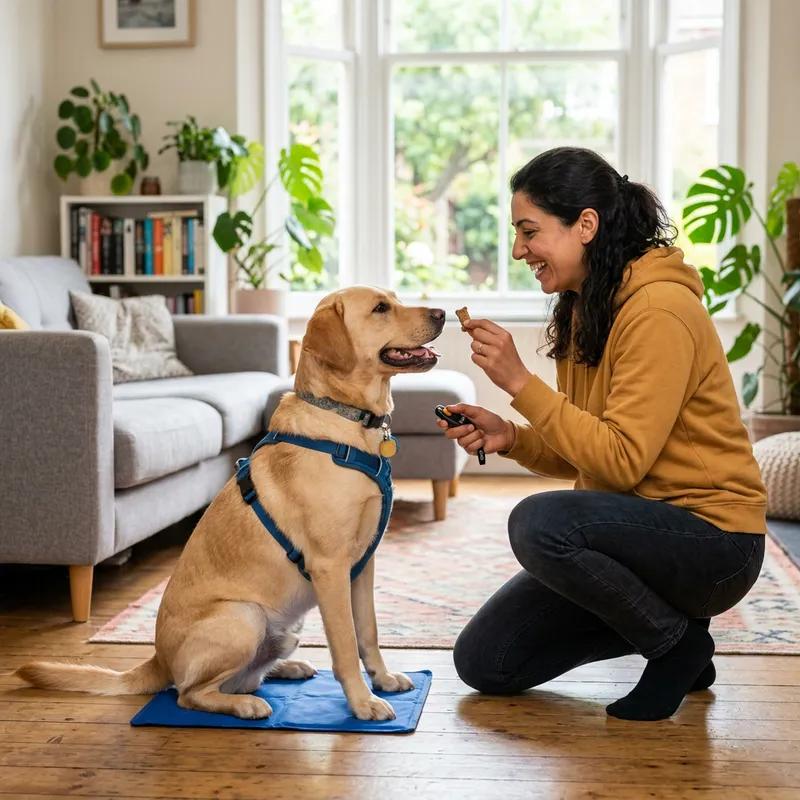
The room matters more than people expect. I have seen dogs fail simple behaviours because the floor was slippery or the space felt crowded. A safe setup lets the dog focus on learning instead of worrying about balance.
| Setup choice | Why I use it |
|---|---|
| Non-slip surface | Helps your dog feel stable during movement |
| Quiet area | Reduces distractions and pressure |
| Soft landing nearby | Adds safety while practising |
Avoid this mistake
Never catch, drop, or tip a dog backward to create the trick. The dog should always control the movement.
Sudden reluctance, pain signals, or behaviour changes deserve a veterinary check before more training. I am a trainer, not a veterinarian, and I do not want a medical problem mistaken for a training issue.
Improving the Trick With Timing and Rewards
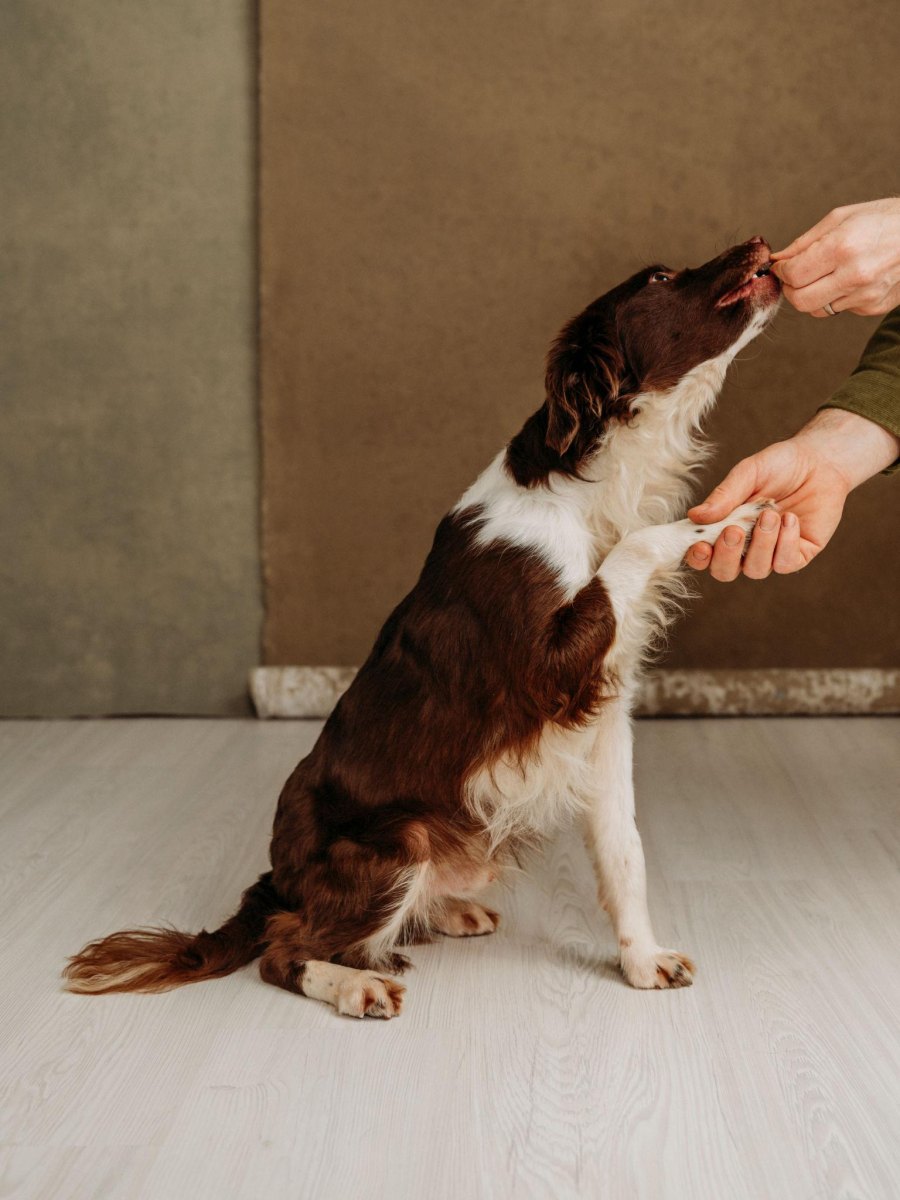
The difference between a confusing trick and a clear trick is usually timing. I reward the exact moment I want repeated, not five seconds later when the dog is wondering what earned the treat. Positive reinforcement works by strengthening behaviours after they happen.
What helps
- Short practice sessions
- High-value rewards your dog actually wants
- Clear signals and predictable steps
What slows progress
- Rushing to the final pose
- Repeating after the dog is tired
- Using pressure instead of guidance
My favourite version of this trick is not the one that looks impressive online. It is the one where the dog says, in their own quiet way, I understand this game. That is the piece worth keeping.


More Pinterest Visuals