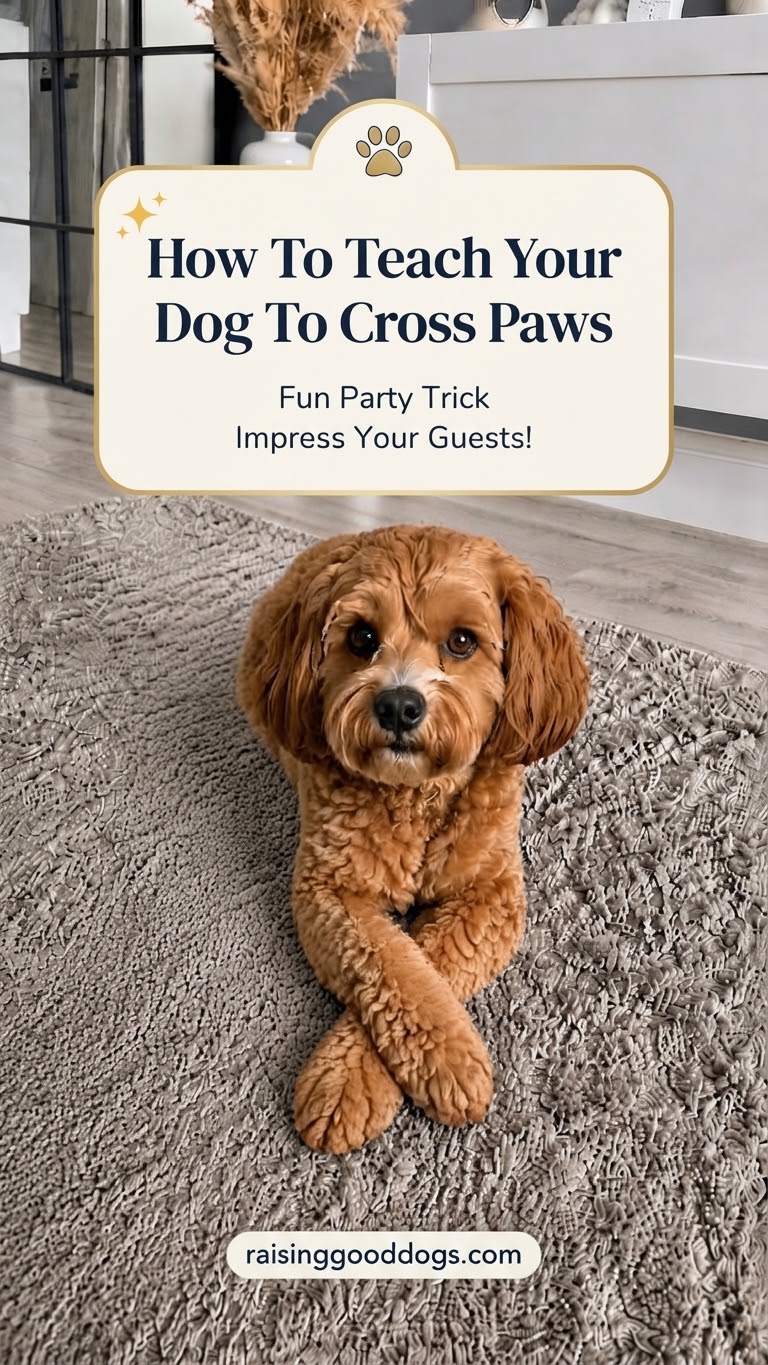
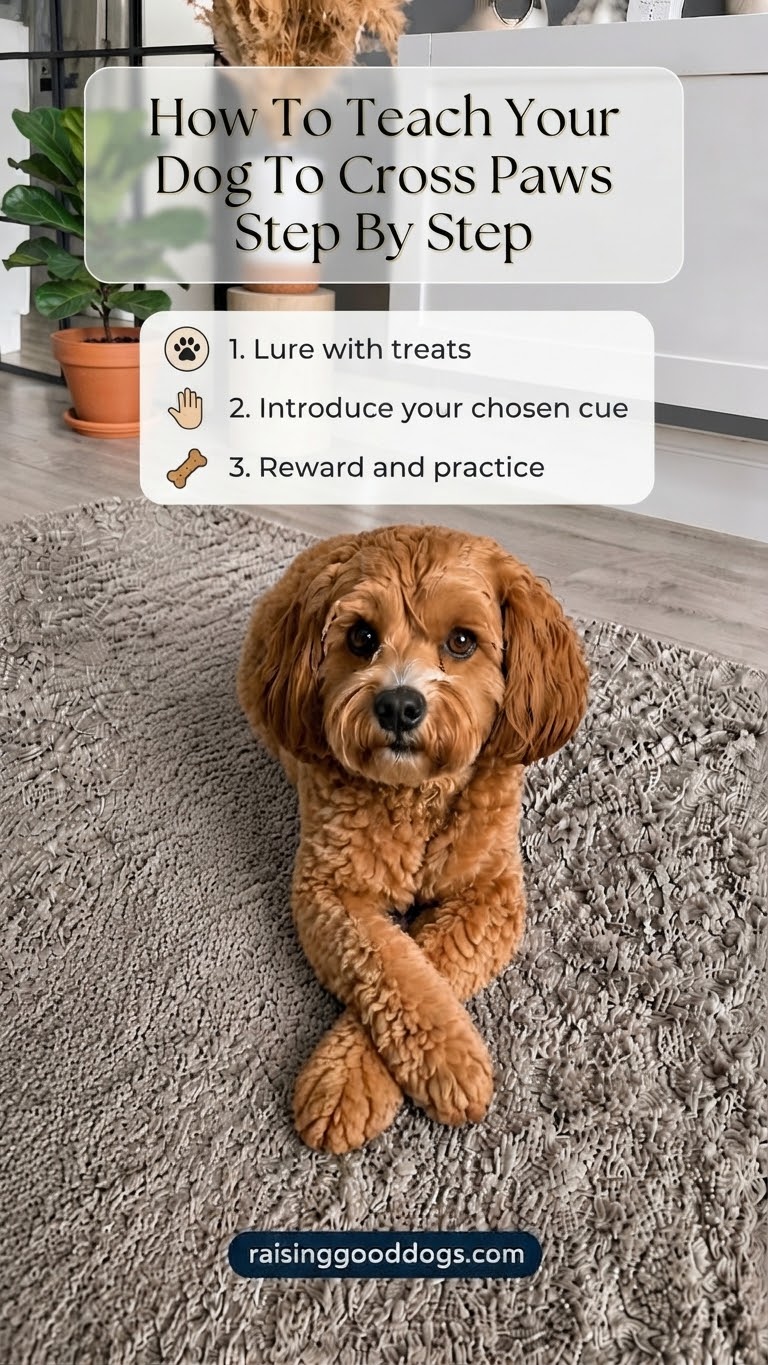
Not every post on this site is about a dog losing his mind at the end of a leash — sometimes it's just a fun, low-stakes trick that happens to teach your dog something real about paying attention to your hands. Cross paws is one of my favourites for exactly that reason: it's mechanically simple, entirely force-free, and it rewards patience more than talent. I taught this to a curly, treat-motivated client dog on a grey rug in about a week of short sessions, and the photos here follow that exact progression, lure by lure.
Before You Start
This is one of the gentlest tricks I teach, but it still has a real prerequisite: your dog needs a solid, comfortable down-stay before you touch the paw work at all. If your dog pops up the second you reach for a treat, spend a few sessions just rewarding a settled down first — you're not behind, you're building the floor the rest of this stands on.
- Check the hips and spine. Crossing paws asks a dog to hold weight on one shoulder while shifting the other, which is fine for most healthy dogs but not something I'd ask of an arthritic senior — my own Bruno is twelve now, and this is a trick his hips get to skip.
- Use pea-sized, high-value treats so you can do many reps without a full dog.
- Pick a quiet room with a non-slip surface, so paws aren't sliding out from under him mid-lure.
Rule of thumb: if your dog is older, recently stiff, or you've noticed any sudden reluctance to lie down, that's a vet conversation before it's a trick-training session.
Start in a Down
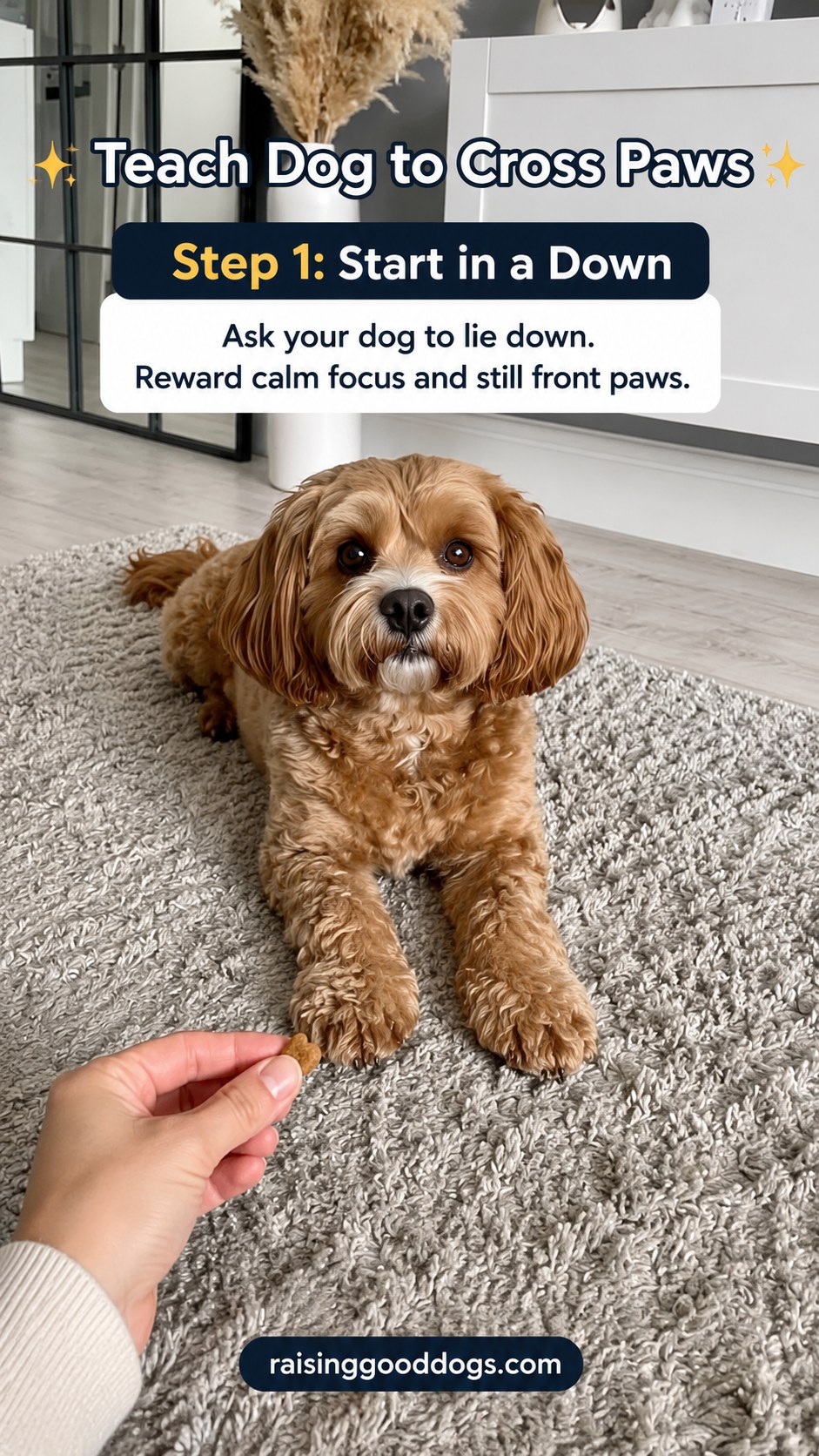
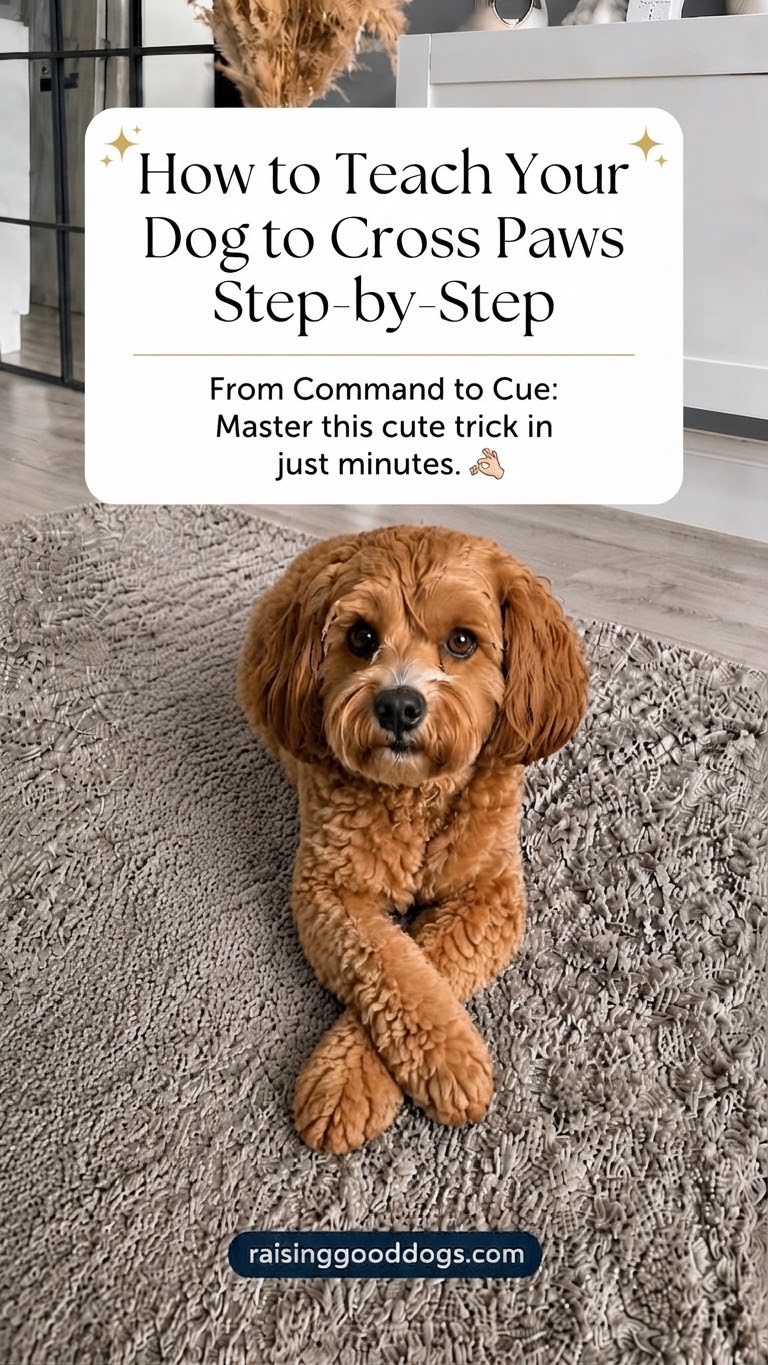
Everything begins with the dog you see in the first photo: front paws still, weight settled, eyes locked on the treat in my hand rather than scrambling for it. I'm not asking for the cross yet — I'm rewarding the stillness, because a dog who's shifting and fidgeting in the down can't feel the small paw movements we need later.
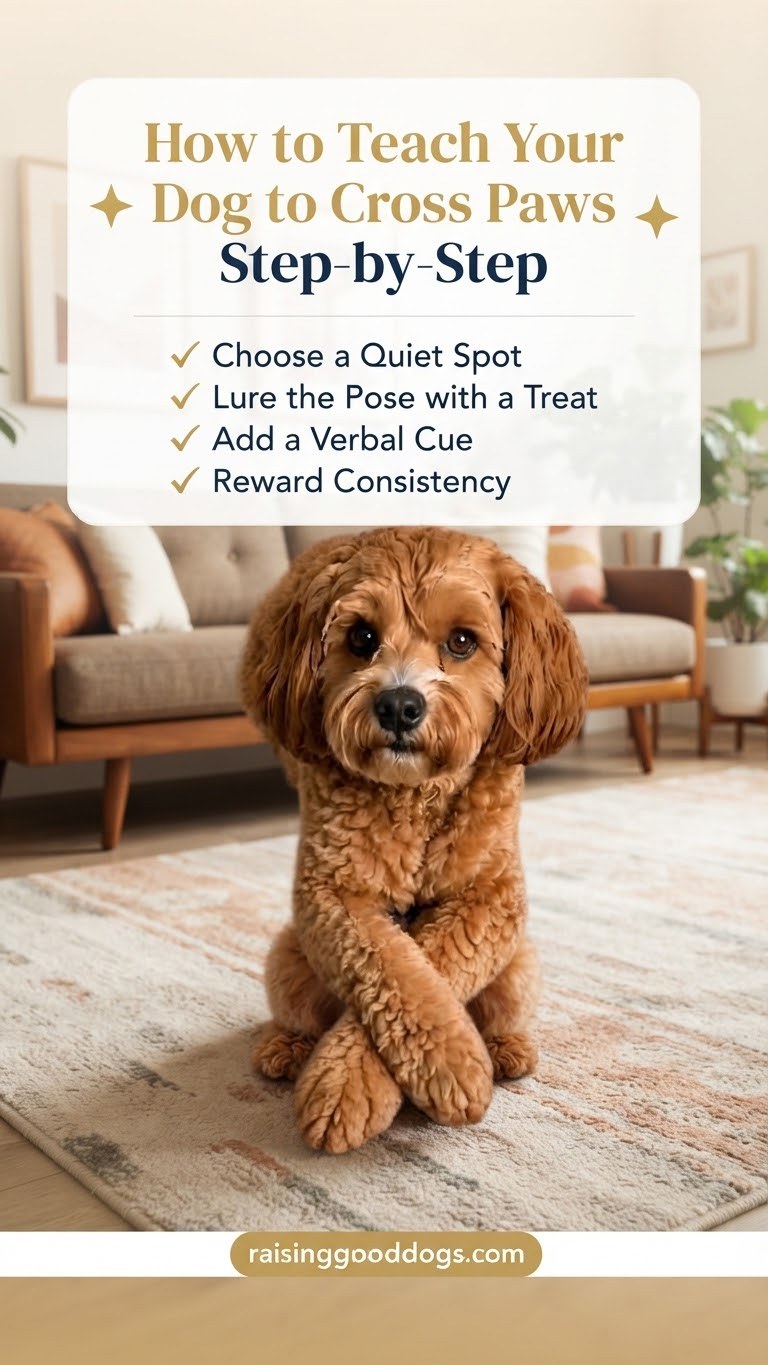
Ask for a down on a cue your dog already knows well. Wait a beat. If the front paws stay quiet and calm for even one or two seconds, mark that with a word like “yes” and deliver the treat low, right between the paws. Repeat until your dog is reliably settling into the down without breaking position to grab at your hand — that calm baseline is what makes step two possible at all.
Lure One Paw Inward
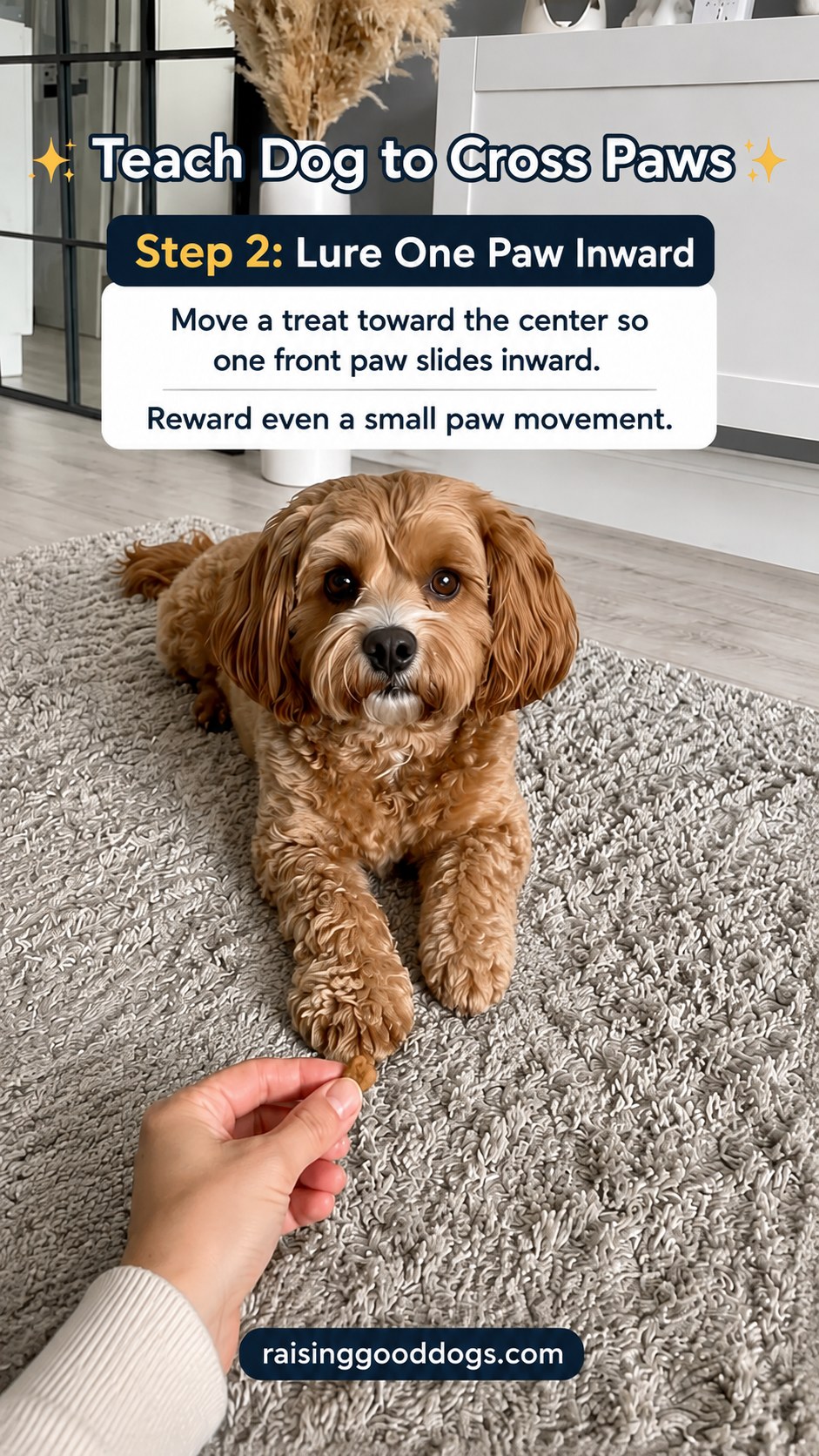
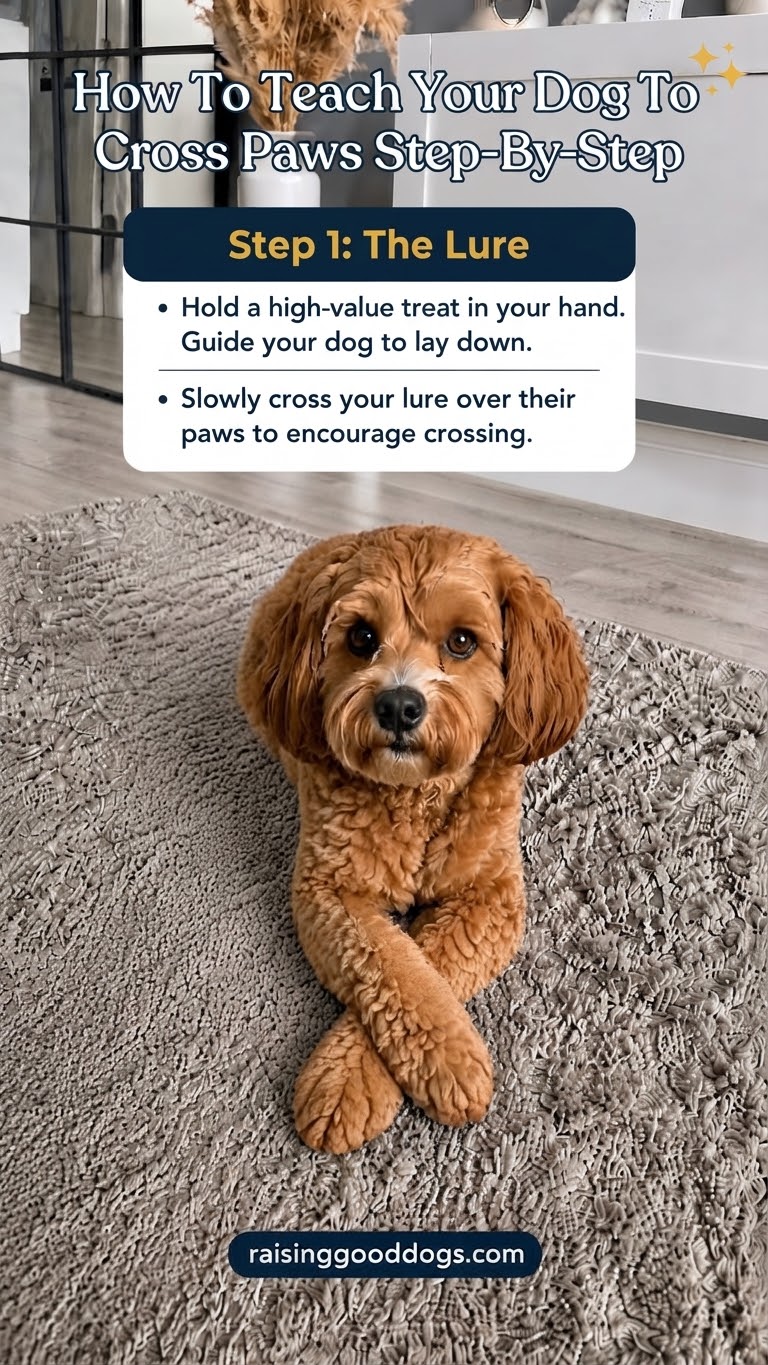
Once the down is boring and reliable, I start the actual shaping. In the second photo you can see the treat isn't being handed over — it's being dragged slowly toward the center of the dog's chest, low and close to the floor, so the nearest front paw has nowhere to go but inward to keep balance.
- Hold the treat between two fingers, close enough to the paw that the movement is small.
- Move it in a slow arc toward the opposite shoulder, not straight up.
- Mark any shift at all — even half an inch — and pay it generously.
The paw doesn't need to move far the first ten times. It needs to move at all, and get paid for it, so your dog starts offering the motion on purpose instead of by accident.
Some dogs get this in one session; others need several days of just this step, and that's completely normal.
Guide the Second Paw Over
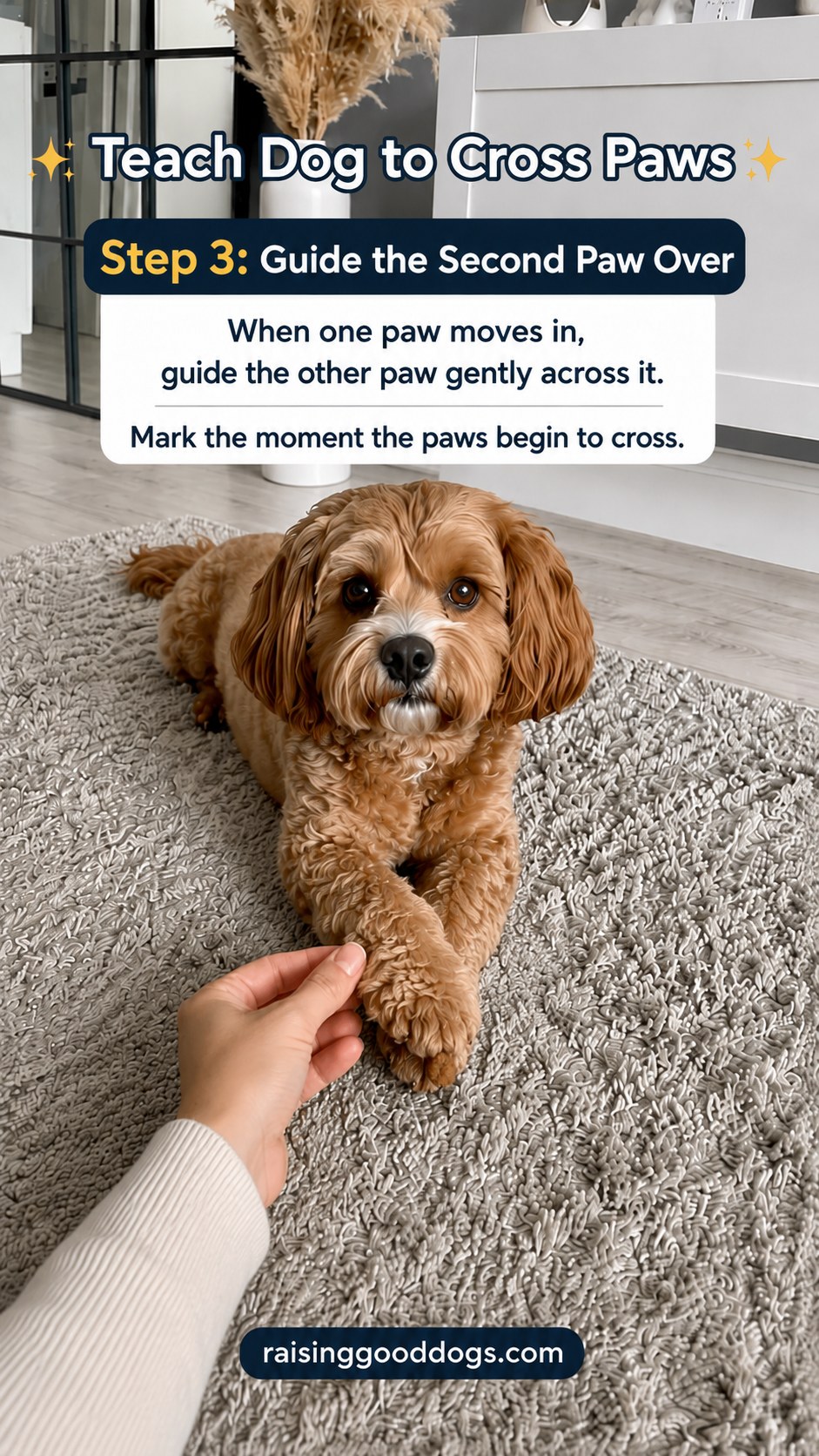
This is the photo where the trick actually starts to look like the trick. With one paw already drawn inward, I'm using my hand to gently guide the second paw across it — not pushing, not placing it with force, just a light touch and a slow path for the paw to follow, the same way you'd lure with a treat.
Watch your dog's face here more than the paws. A tight mouth, a paw pulled sharply back, or leaning away all tell you the guiding felt like too much too fast — back off to just touching the paw lightly and rewarding tolerance before asking for the cross itself. What you want is the loose, unbothered expression in the photo: a dog who's curious about what your hand is doing, not worried by it.
Mark the exact instant the paws touch or overlap — that timing matters more here than almost anywhere else in this trick.
Reward the Cross
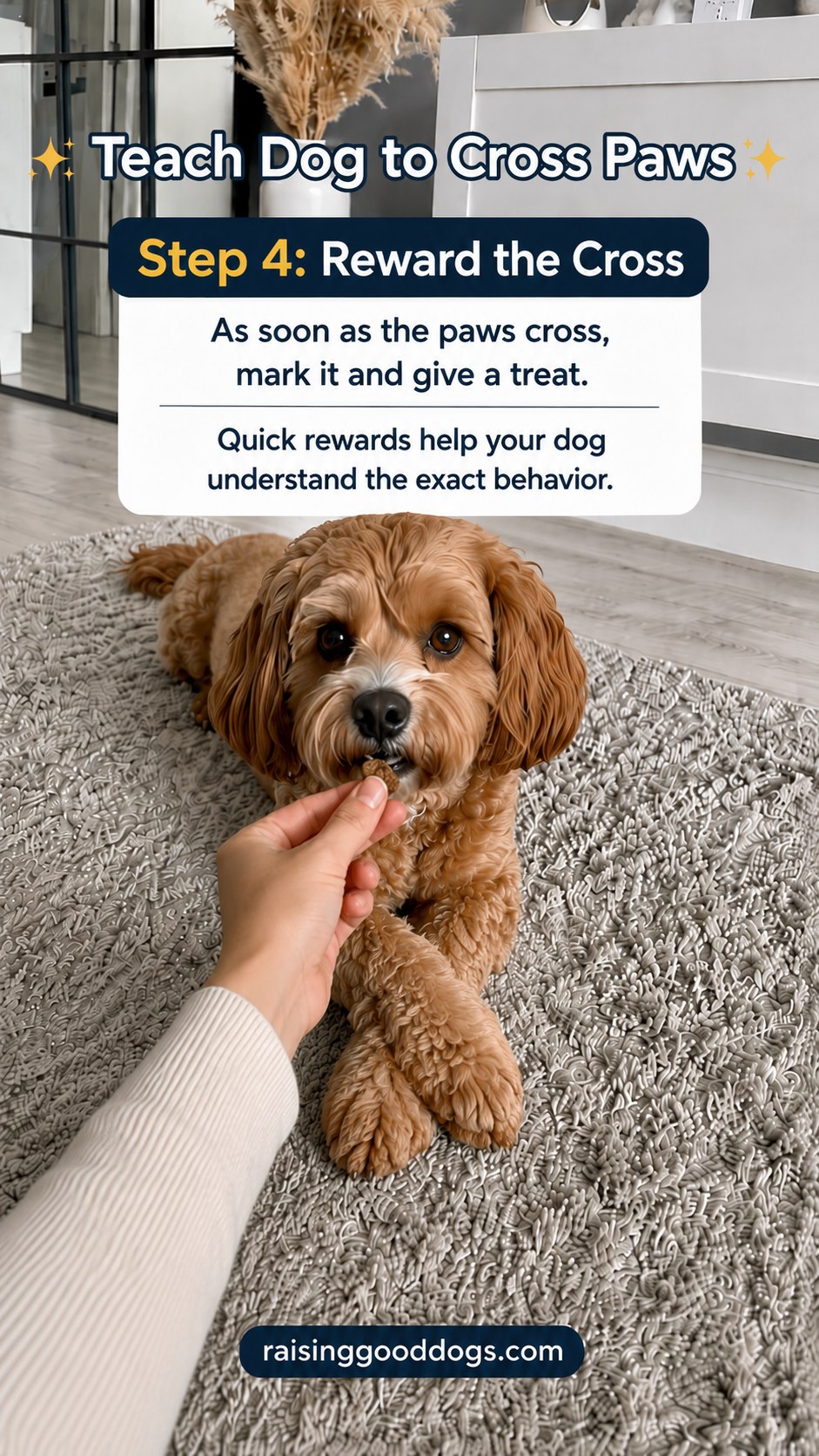
Here's the step most people rush, and it's the one that actually teaches the behaviour: the treat has to land the moment the paws are crossed, not a second after your dog has already moved. In this photo the reward is already at the dog's mouth while the crossed position is still held — that's the timing you're aiming for.
A marker word or a clicker fixes this problem for you, because it tells your dog "that exact thing, right there" faster than your hand can move. If you're finding the cross falls apart before you can reward it, that's not your dog being difficult — it usually means the treat delivery is a half-second too slow, and it's an easy fix once you notice it.
- Mark first, then reach for the treat — don't reverse the order.
- Keep sessions short, five or six reps, so the behaviour stays sharp instead of sloppy.
Add the Cue
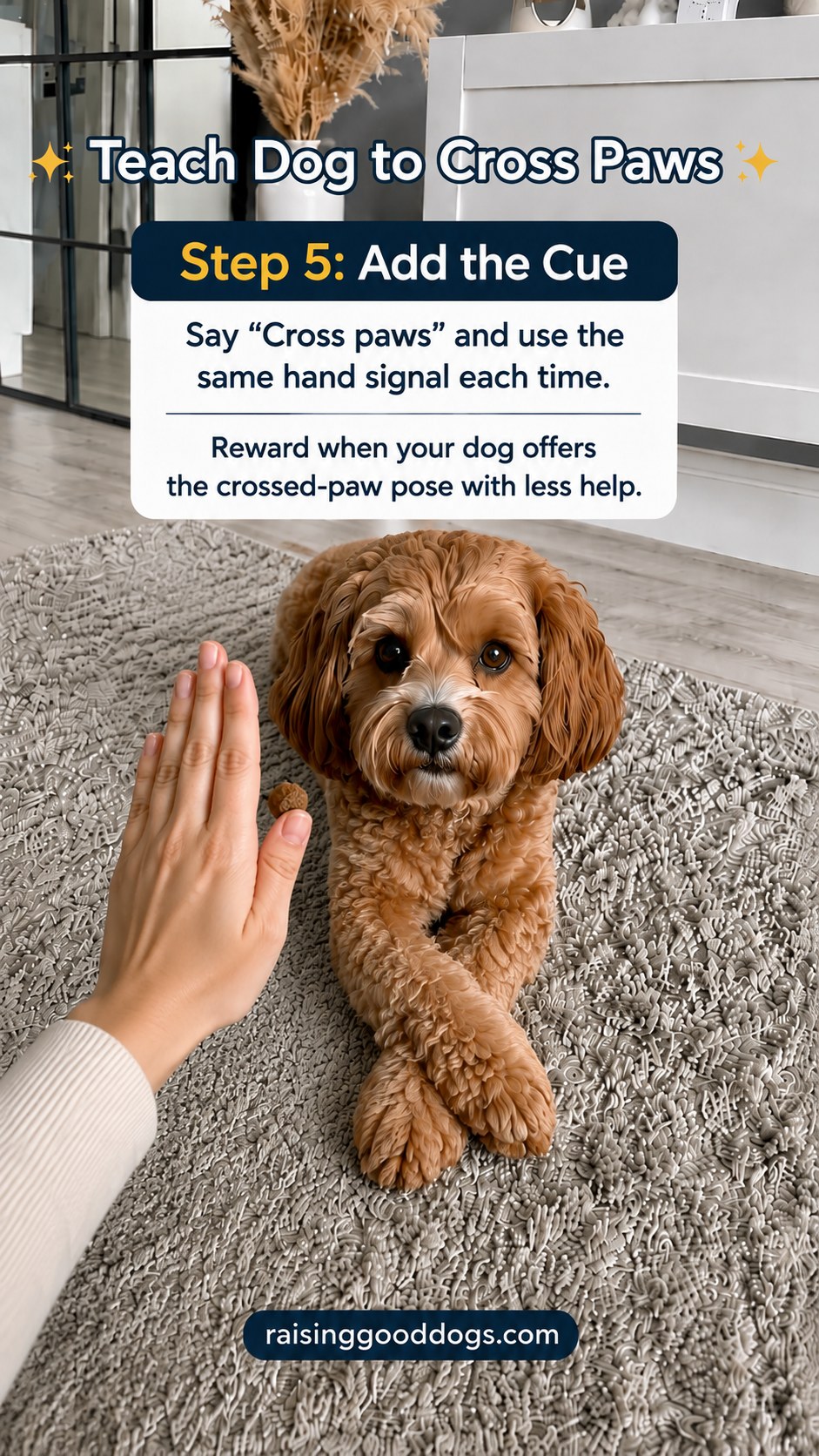
Only once the cross is happening reliably from the lure do I add words to it — you can see the hand signal starting to form in this photo, held up and steady, said alongside “cross paws” right as the paws overlap. Adding the cue too early just teaches your dog to ignore it, because it hasn't been paired with the behaviour enough times to mean anything yet.
Say the cue, give the same hand signal every time, then reward when your dog offers the pose with less help from you — a smaller lure, a shorter treat drag, eventually just the words and the hand. This is where I start deliberately paying only the attempts with less prompting, and giving smaller or no rewards for ones that still need the full lure, so the easier version becomes the one worth trying first.
Proof the Finished Trick
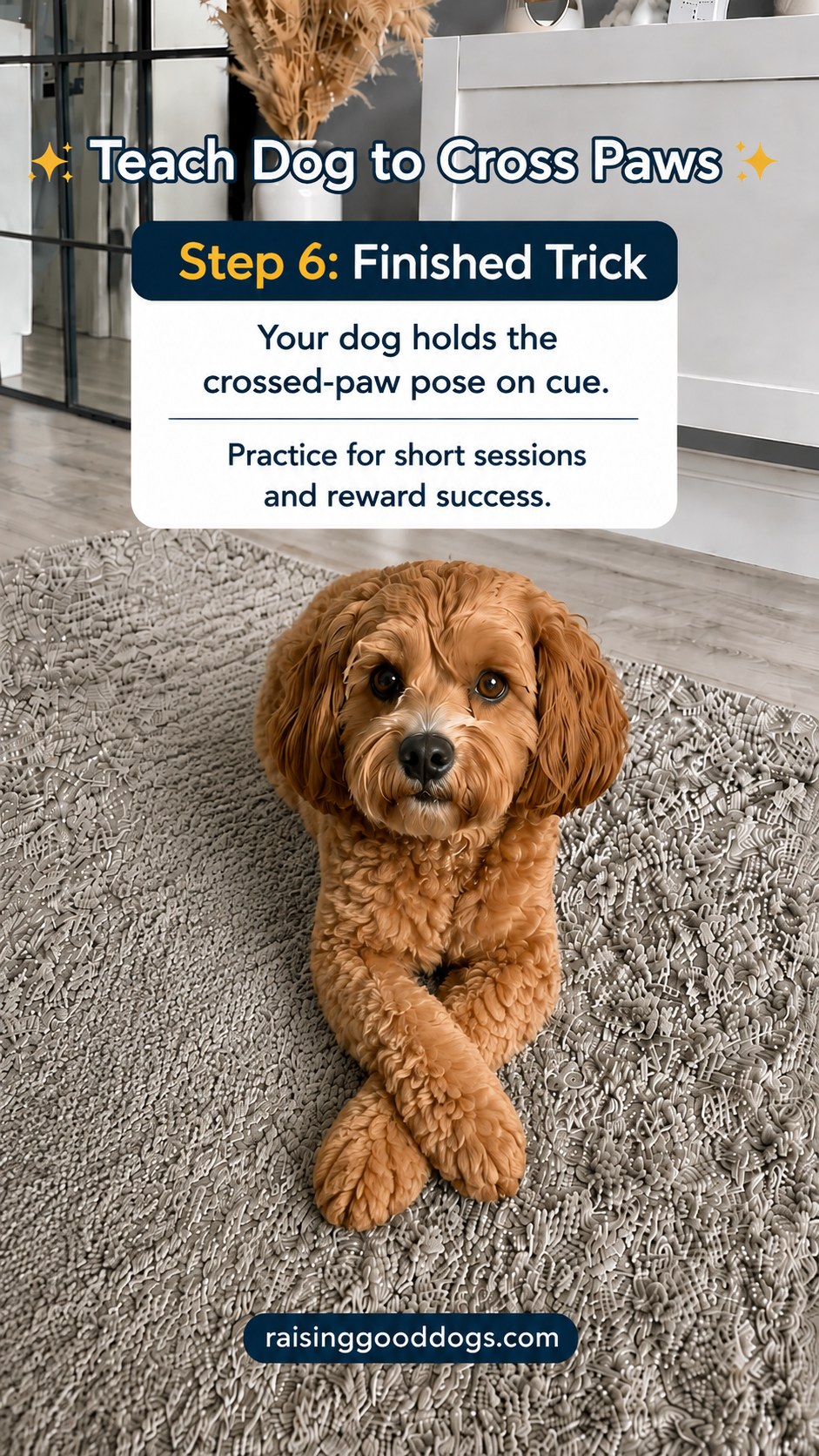
What "finished" actually looks like
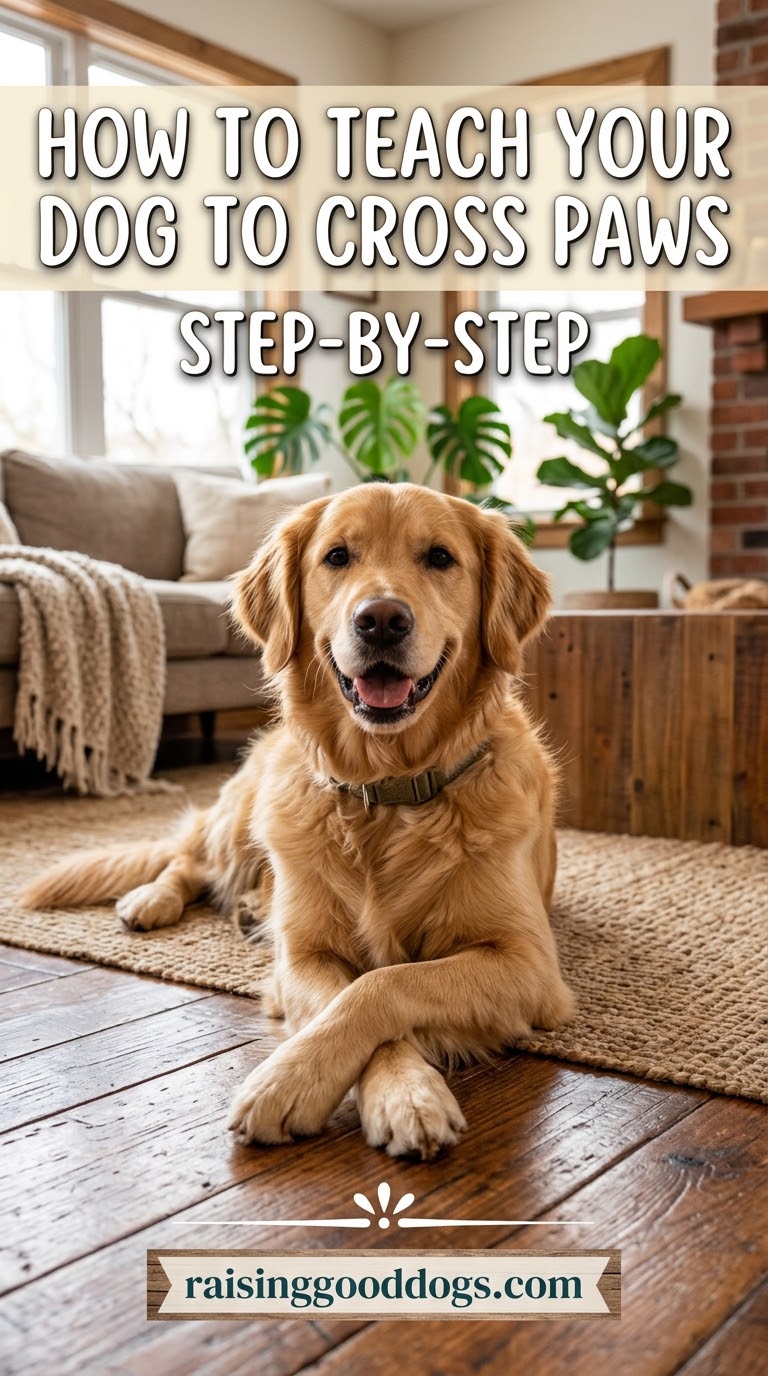
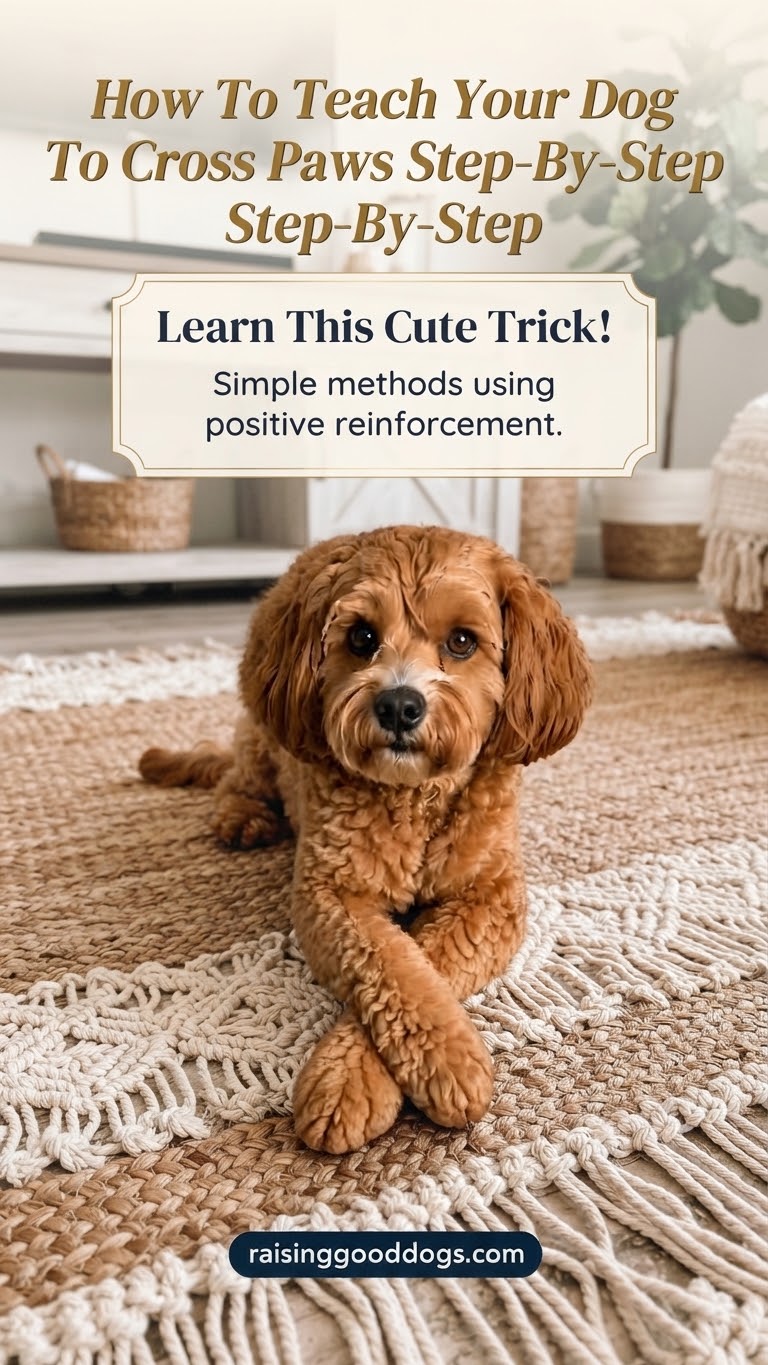
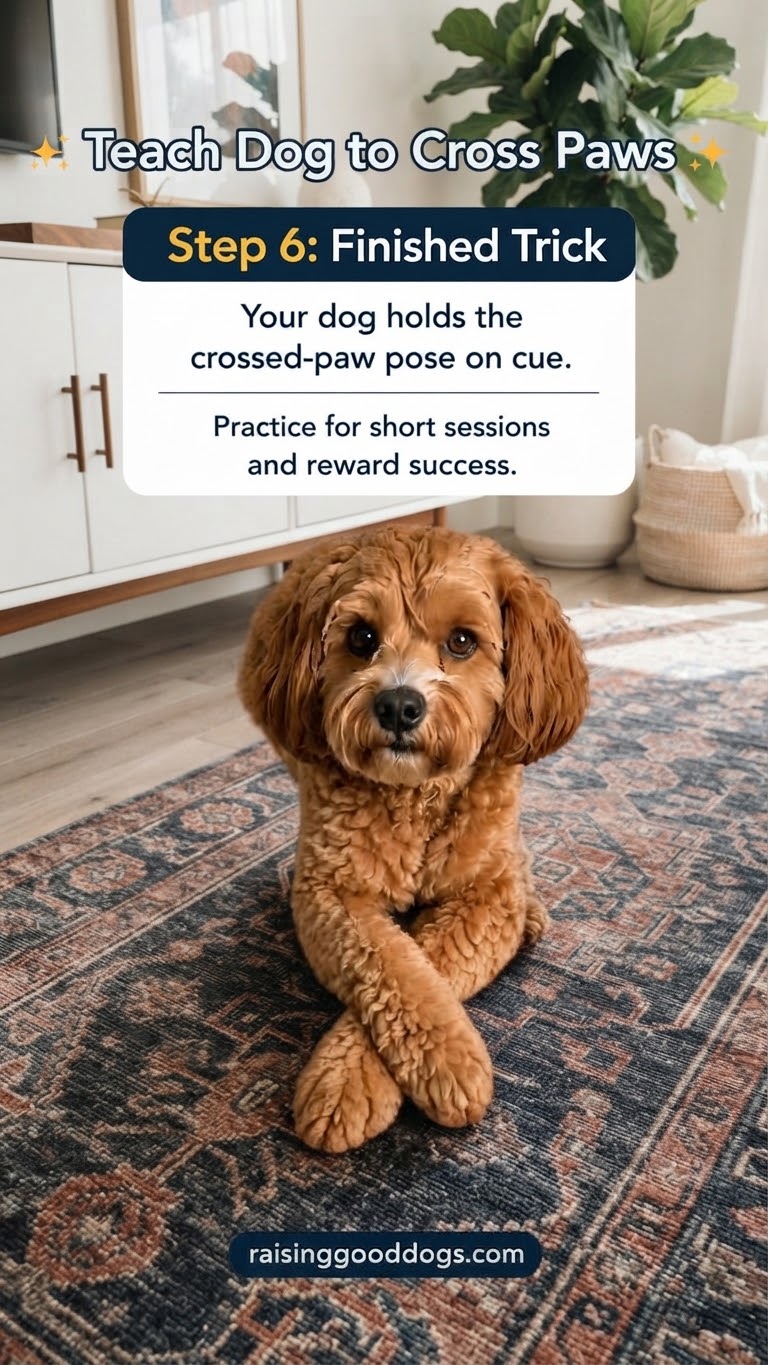
The last photo is the payoff: no hand reaching for a paw, no visible lure, just a dog holding the crossed-paw pose on cue and looking mildly pleased with himself about it. Getting here realistically takes most dogs somewhere between one and three weeks of short, five-minute sessions — faster for food-motivated dogs, slower for dogs who need more reps to feel confident in the paw movement, and neither pace means anything's wrong.
Once you're here, don't stop working it just because it looks solid on the living room rug:
- Practice in different rooms — a trick learned only on one rug is a trick that only works on one rug.
- Keep sessions short even after it's learned, three to five reps, so it stays a fun, requested behaviour rather than a chore.
- Expect an off day now and then. A dog who suddenly can't hold the pose after weeks of nailing it is worth a quick look for stiffness before you assume he's just being lazy — that's the same "rule out pain first" rule I apply to every dog, trick or no trick.
I tried teaching this to Pickle once, purely for a demo. She gave me a look I can only describe as personal and went back to sleep. Not every dog needs to know this one, and that's fine too.
There's no deep behaviour problem hiding in this one — it's just a satisfying trick to build slowly, with a treat, a patient hand, and a dog who's allowed to get it wrong a dozen times before he gets it right. Watch his face more than his paws, and let the pace be his.

- You'll Need





Your Questions, Answered
My dog's down-stay is shaky — can I still start teaching cross paws?
I'd hold off. Spend a few short sessions just rewarding a calm, settled down first. Trying to layer paw-crossing on top of a dog who's still popping up or fidgeting usually just teaches frustration instead of the trick.
How long does it realistically take to teach a dog to cross paws?
Most dogs I've worked with get there in one to three weeks of short, five-minute sessions a few times a day. Some pick up the lure step in a single session; others need several days just on drawing one paw inward, and that's completely normal, not a sign anything's going wrong.
Is cross paws safe for an older or arthritic dog?
I'd check with your vet before starting. The trick asks a dog to shift weight and hold a slightly unusual paw position, which is easy for most healthy dogs but not something I'd ask of a stiff senior — it's a trick my own twelve-year-old shepherd doesn't do anymore, and that's fine.