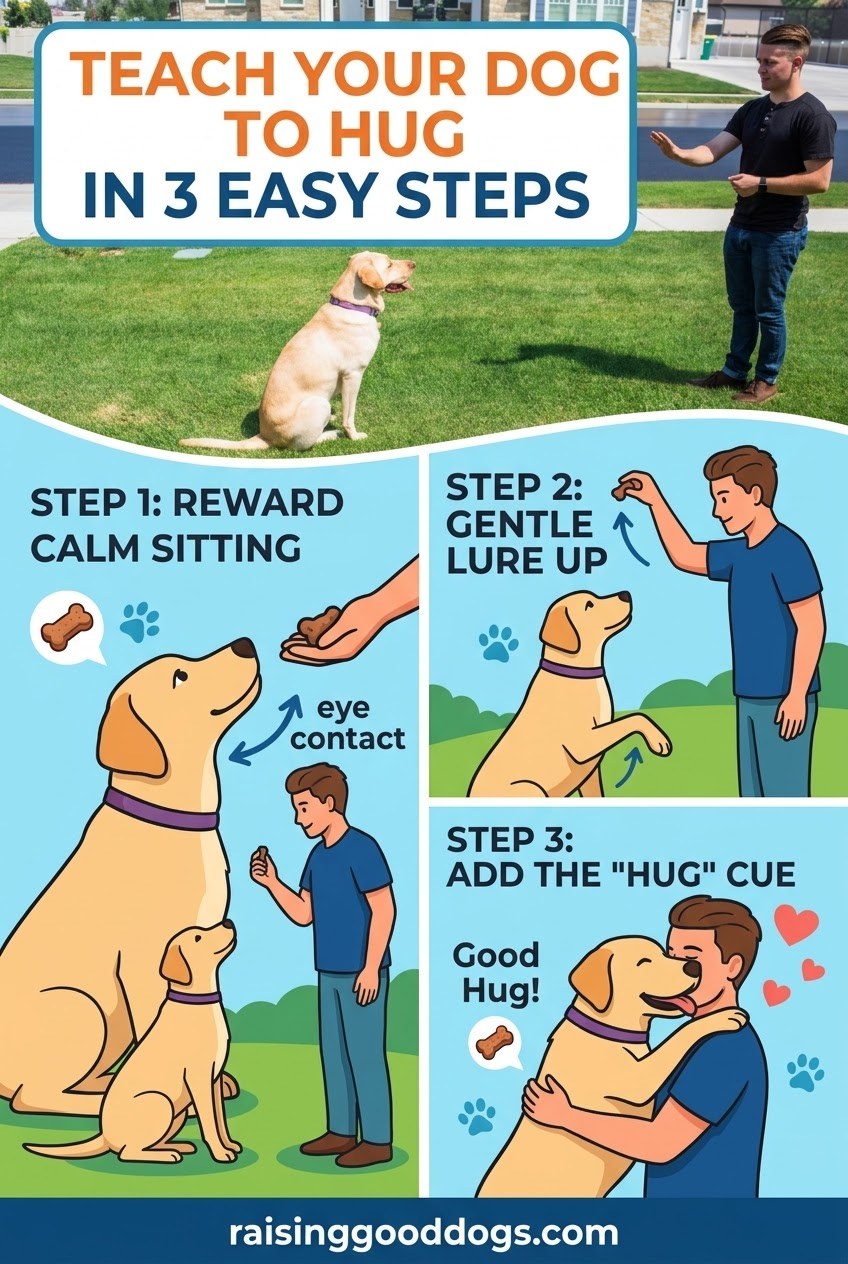
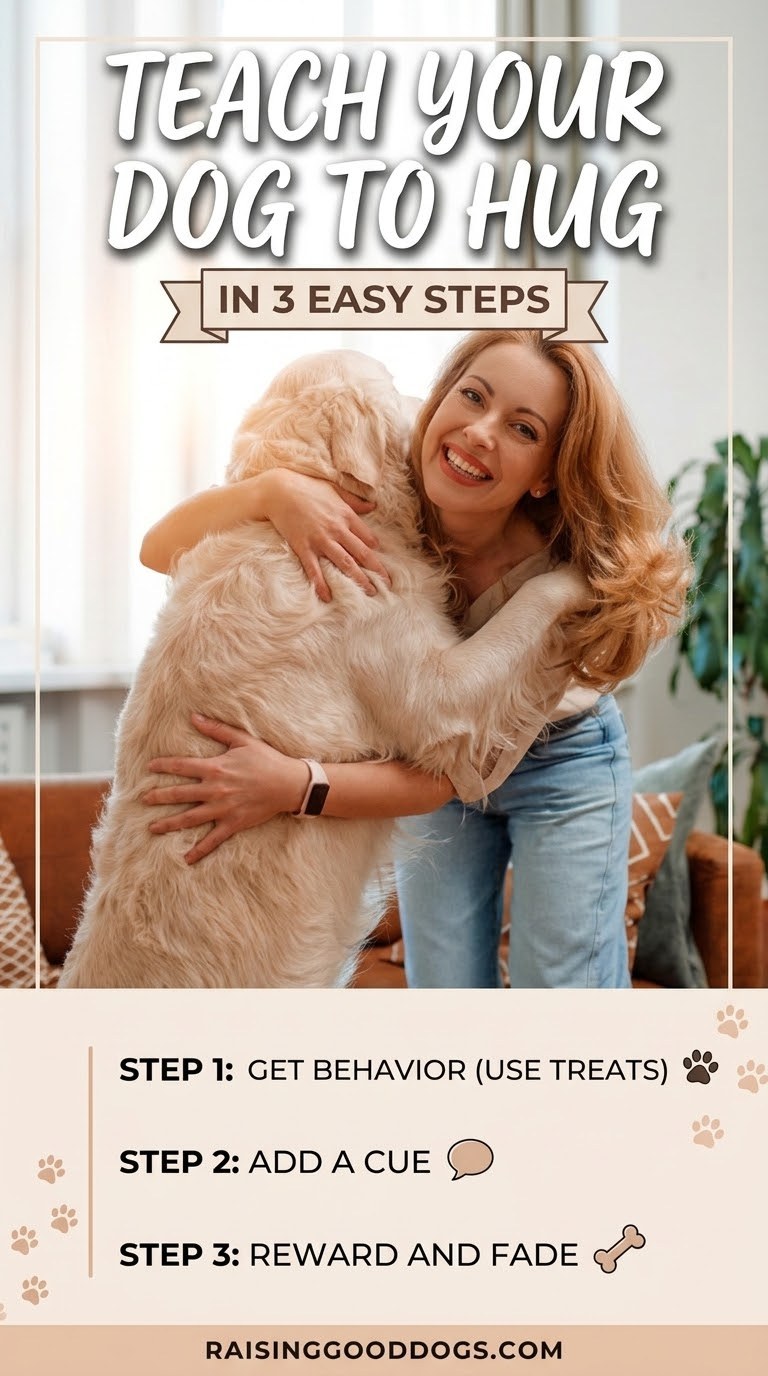
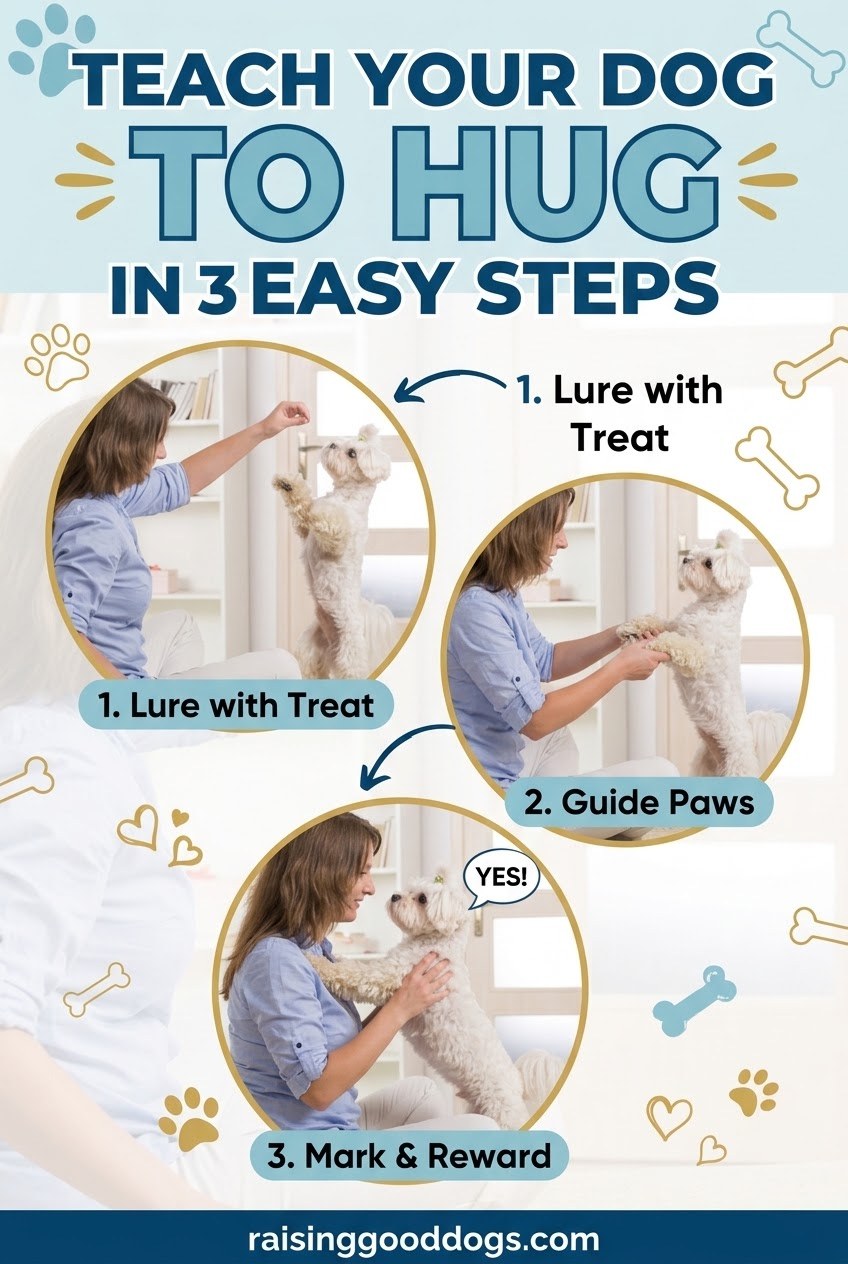
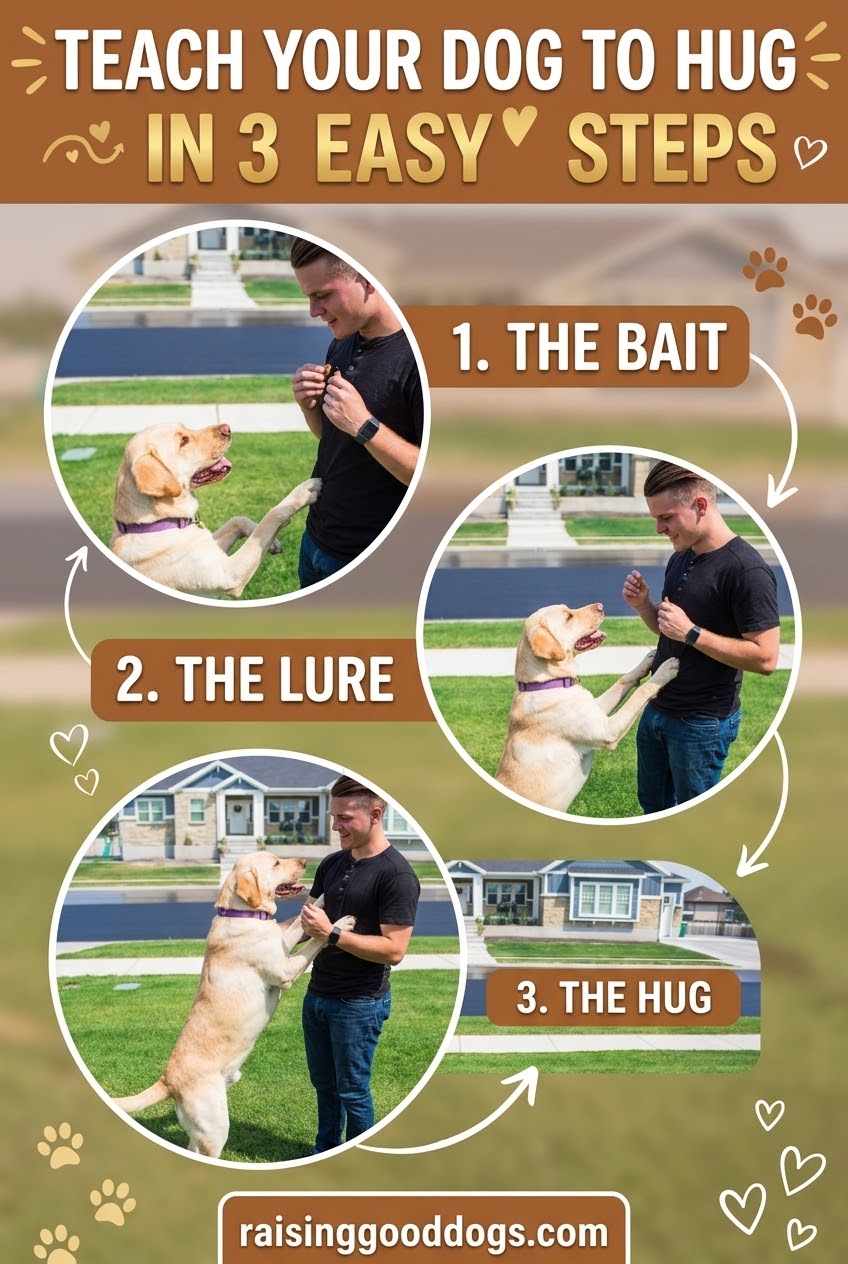
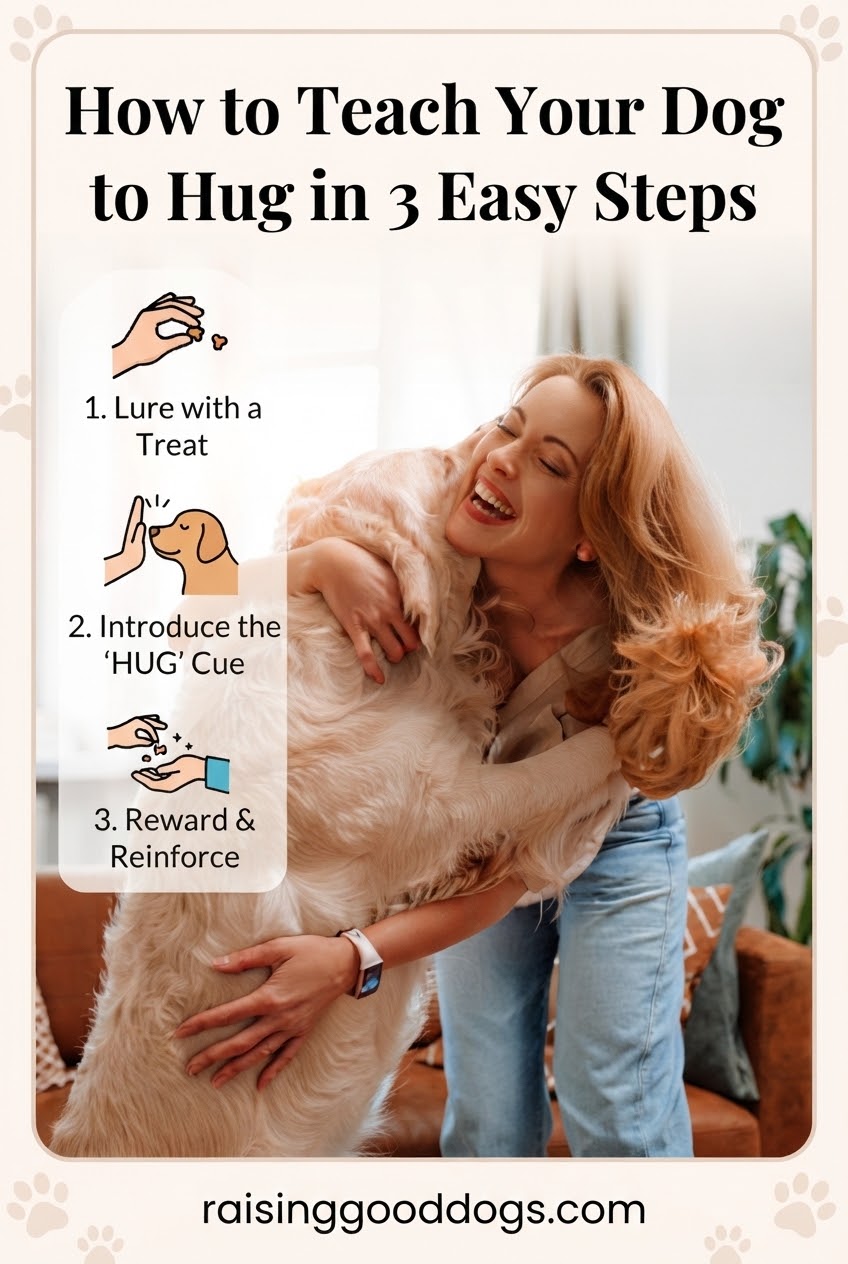
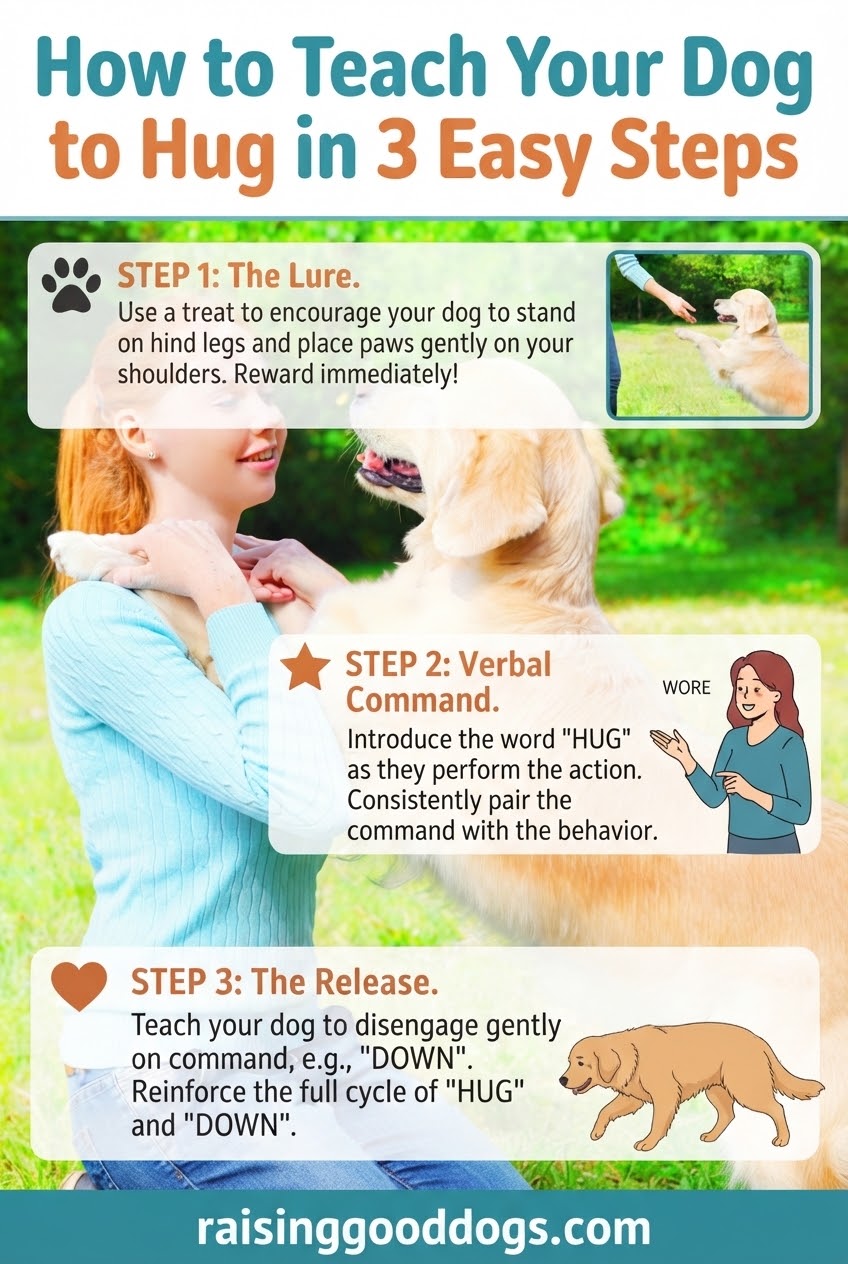
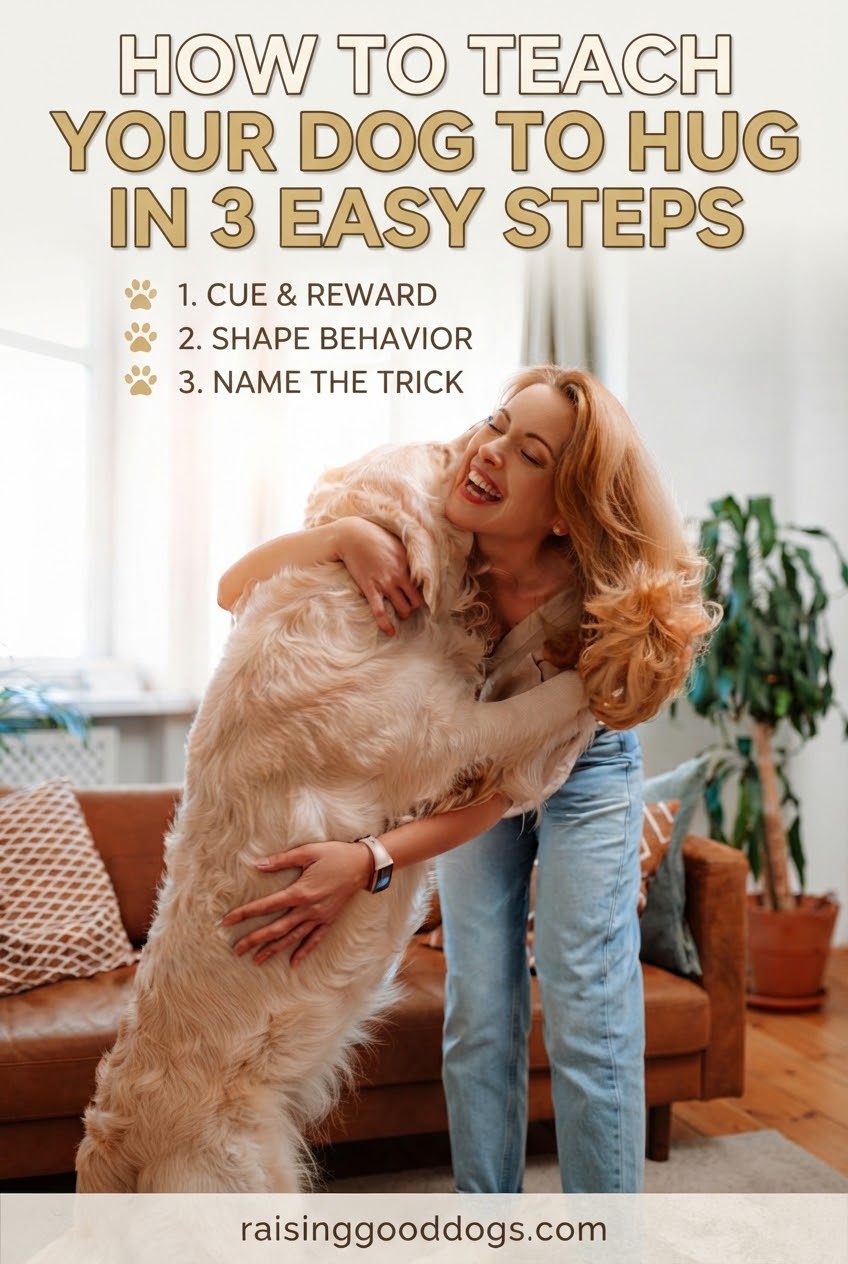
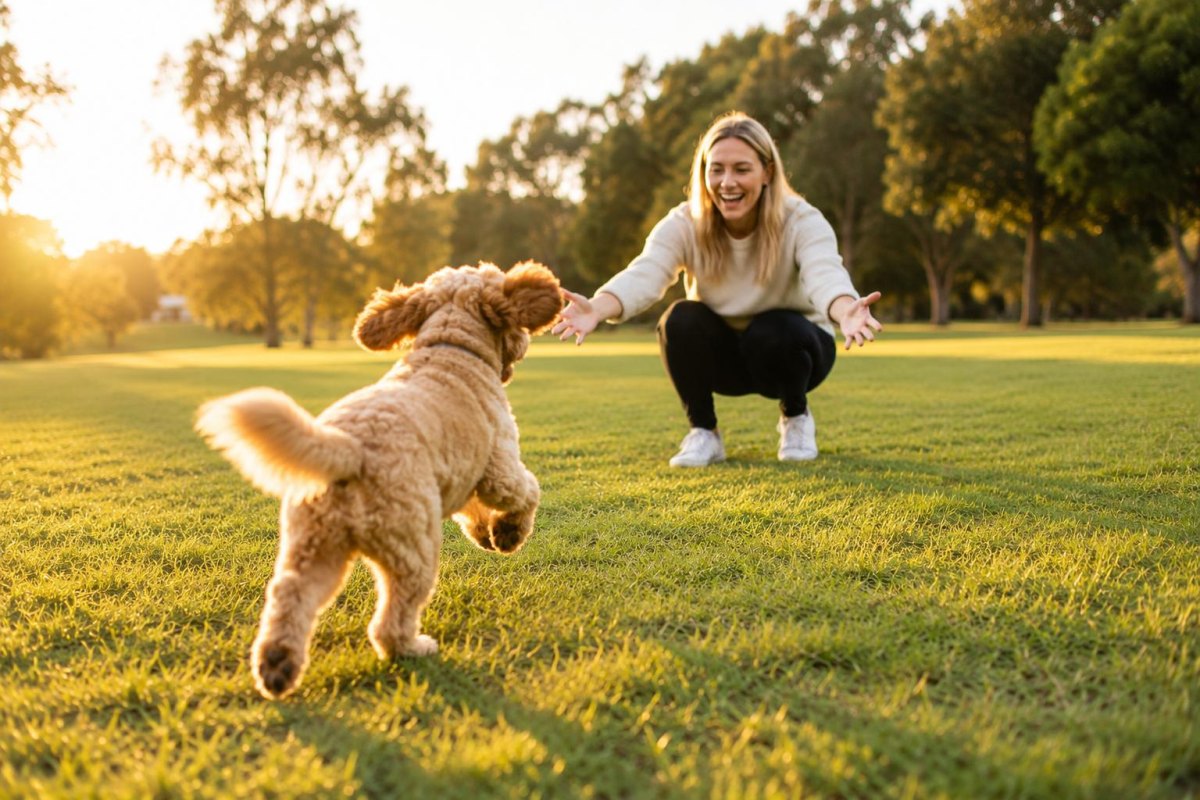
A dog hug looks like a magic moment, but the dogs I teach do not learn it by being pulled into position. They learn it by building tiny pieces of behaviour they already understand. I have taught this trick to plenty of enthusiastic dogs, and the secret is always the same: make the next step easy enough that your dog can succeed.
This is a reward-based trick, not a test of obedience. Some dogs love leaning into people, while others prefer a smaller version like paws on a shoulder. Both are wins. I want the dog in front of me to feel safe, confident, and happy doing the behaviour.
Teach Your Dog the Basics of a Hug Command
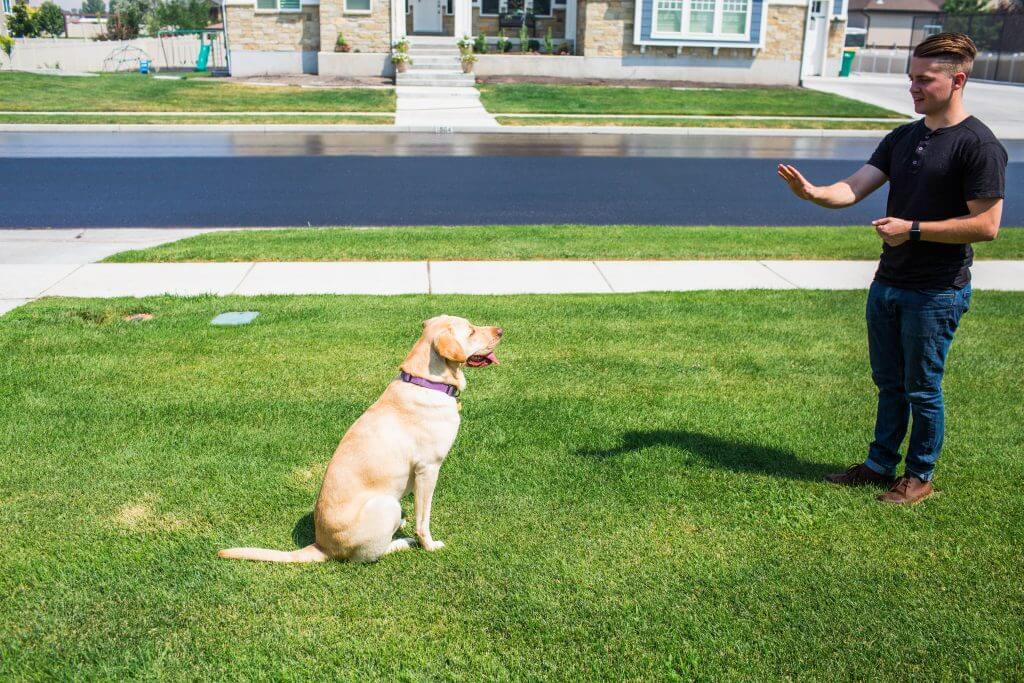
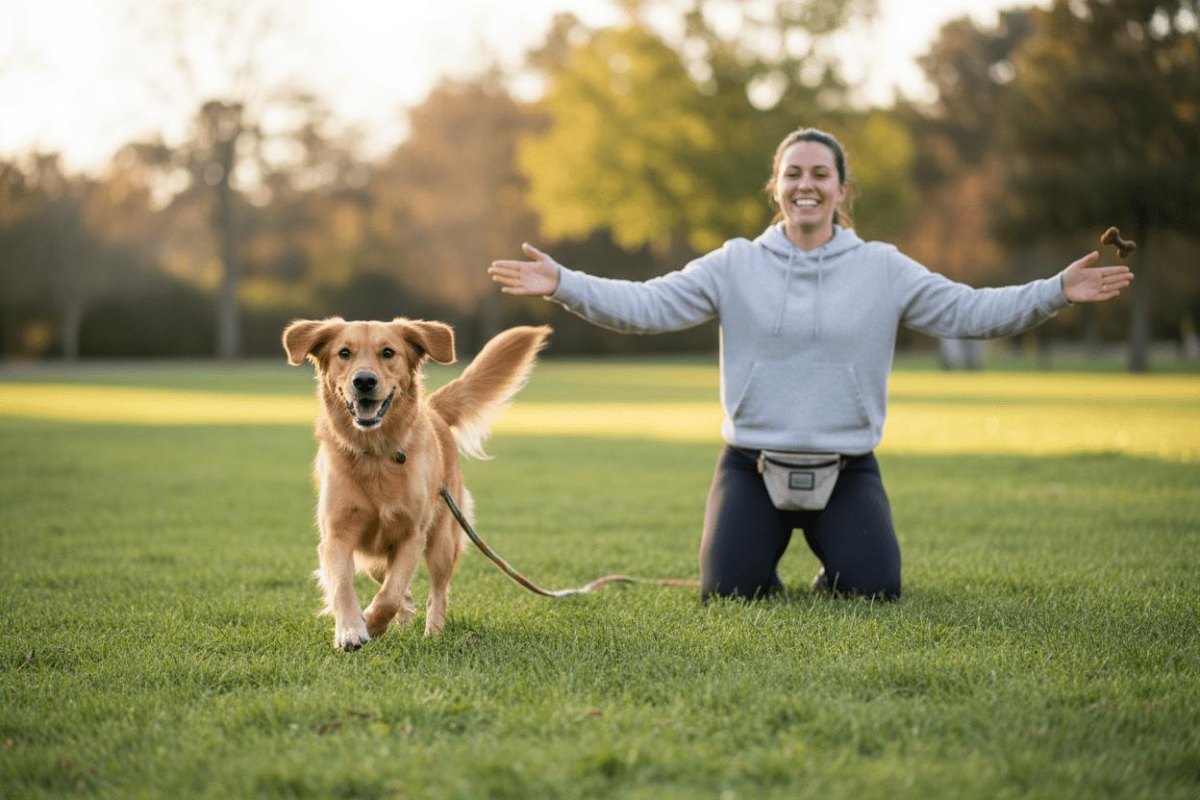
Before I teach the word “hug,” I teach the pieces. Your dog needs to understand simple skills like sitting calmly, focusing on you, and following a hand target. A hug cue only works when the foundation behaviours are already familiar. Reward-based training helps dogs learn which choices earn something they value.
I also check the setup first. If your dog is tired, worried, or avoiding touch, I change the plan. Watch the whole body: ears, mouth, posture, and weight shift tell you far more than a tail wag alone.
Hug trick starting point
- Choose a quiet space with few distractions.
- Use small rewards your dog enjoys.
- Train only when your dog is comfortable with close contact.
Train Your Dog to Place Its Paws on You
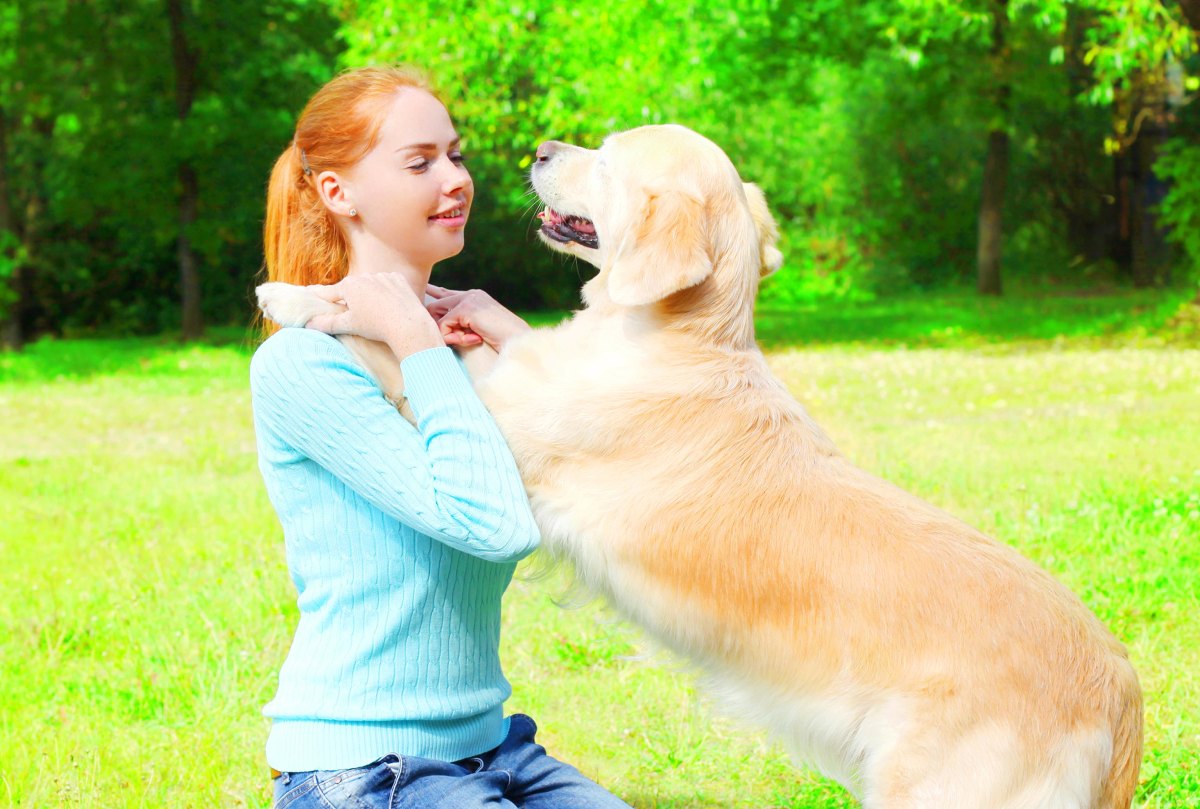
The paw placement is the bridge between basic cues and the finished hug. I usually start with the dog offering a paw movement, then reward the exact moment the paws touch the target area. Timing matters because your dog needs to understand the specific action being rewarded.
I never pull a dog's legs upward or hold them in place. A dog who chooses the movement is learning; a dog who is physically positioned is simply waiting for the moment to end.
- Offer. Present your target and reward any correct paw movement.
- Raise. Slowly increase where you want the paws to land.
- Repeat. Practice until the position feels natural.
Add the Hug Motion Step by Step
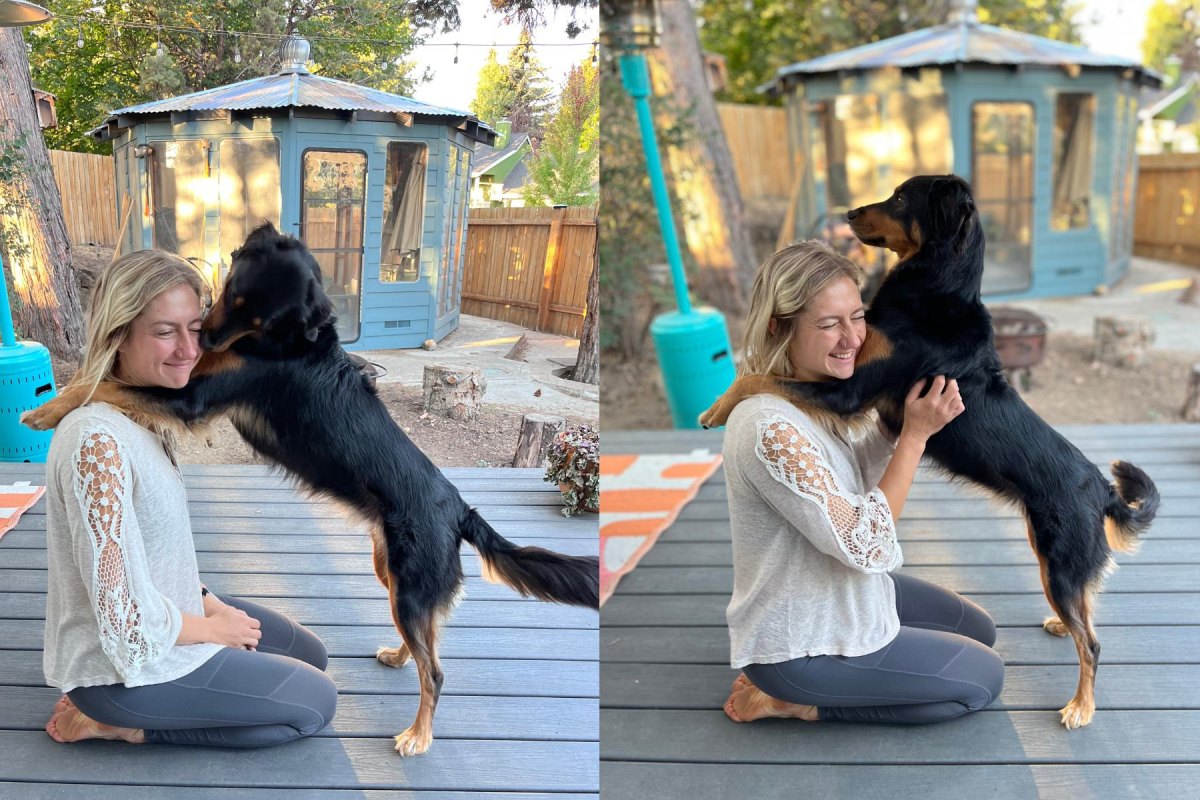
Once the paws are comfortable, I add the leaning motion that makes it look like a hug. This is where many people rush. I prefer a small shaping process because every dog has a different balance, confidence level, and comfort with human contact.
My usual timeline is several short sessions over a few weeks, not one afternoon of repetition. Short, focused training sessions help dogs stay engaged instead of becoming frustrated.
Trainer tip
Stop while your dog is still enjoying the game. A dog who wants another turn tomorrow is exactly where I want them.
Practice and Reward the Hug Trick
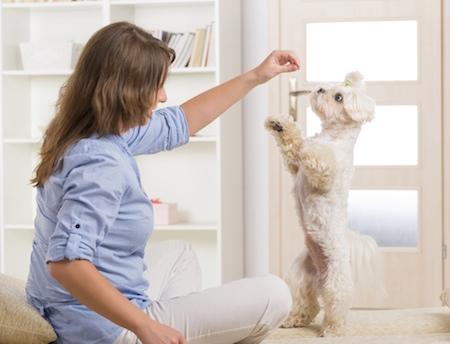
Now I build reliability. I practice the hug cue in different rooms, with different body positions, and with small changes in distraction. A behaviour that only works in the kitchen is not finished yet. Dogs need practice to generalize a behaviour in new situations.
I also pay attention to my dog's emotional response. If I see lip licking, turning away, freezing, or a change in posture, I make the exercise easier. Those signals are information, not stubbornness.
- Reward calm attempts.
- Keep sessions brief and successful.
- End before your dog loses interest.
Improve Your Dog’s Hug Trick for Longer Holds
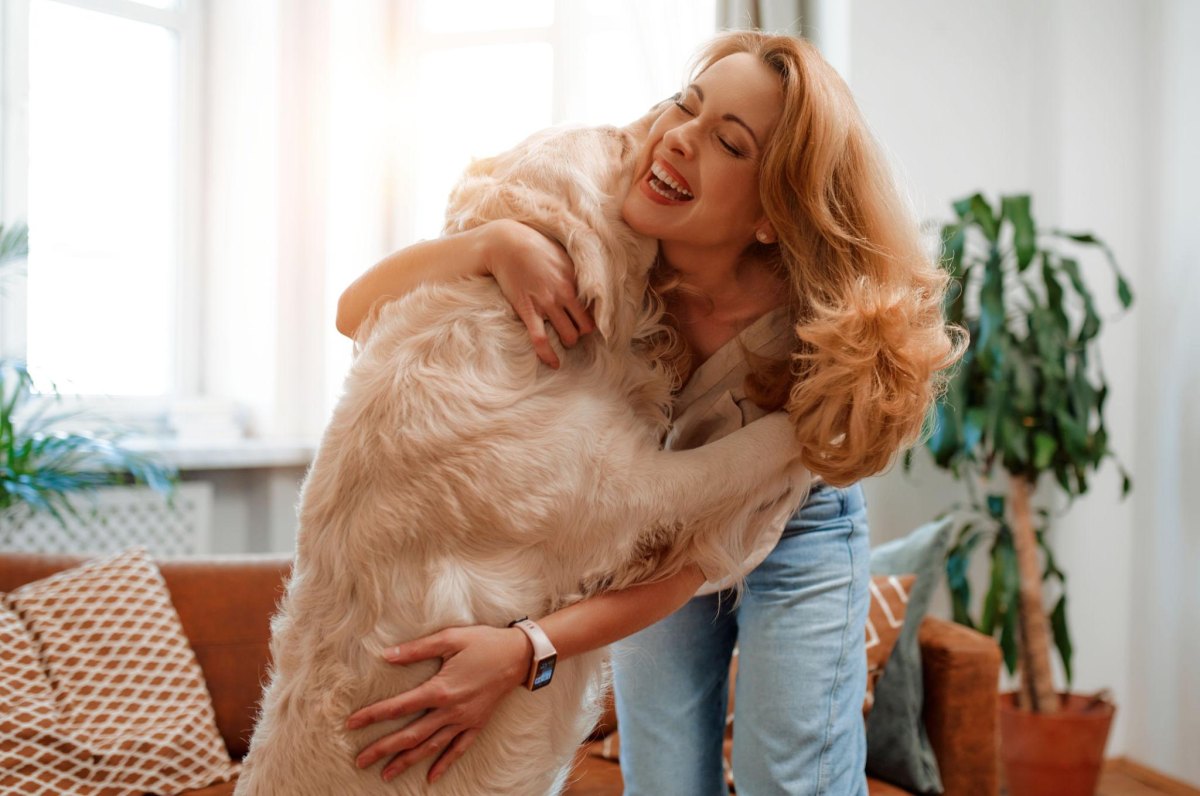
A longer hug is not a separate trick; it is simply duration training. I add one second at a time, rewarding my dog for staying comfortable. If Bruno taught me anything, it is that progress is about the dog you have today, not an imaginary perfect version.
For senior dogs or dogs with discomfort, I am especially careful. A sudden change in willingness to move, climb, or be touched deserves a conversation with your veterinarian before assuming it is a training problem.
| Training goal | What I look for |
|---|---|
| Longer hug | Relaxed body and steady position |
| Better reliability | Successful practice in different places |
Important
If your dog shows discomfort with handling or has a sudden behaviour change, rule out medical causes first.


More Pinterest Visuals