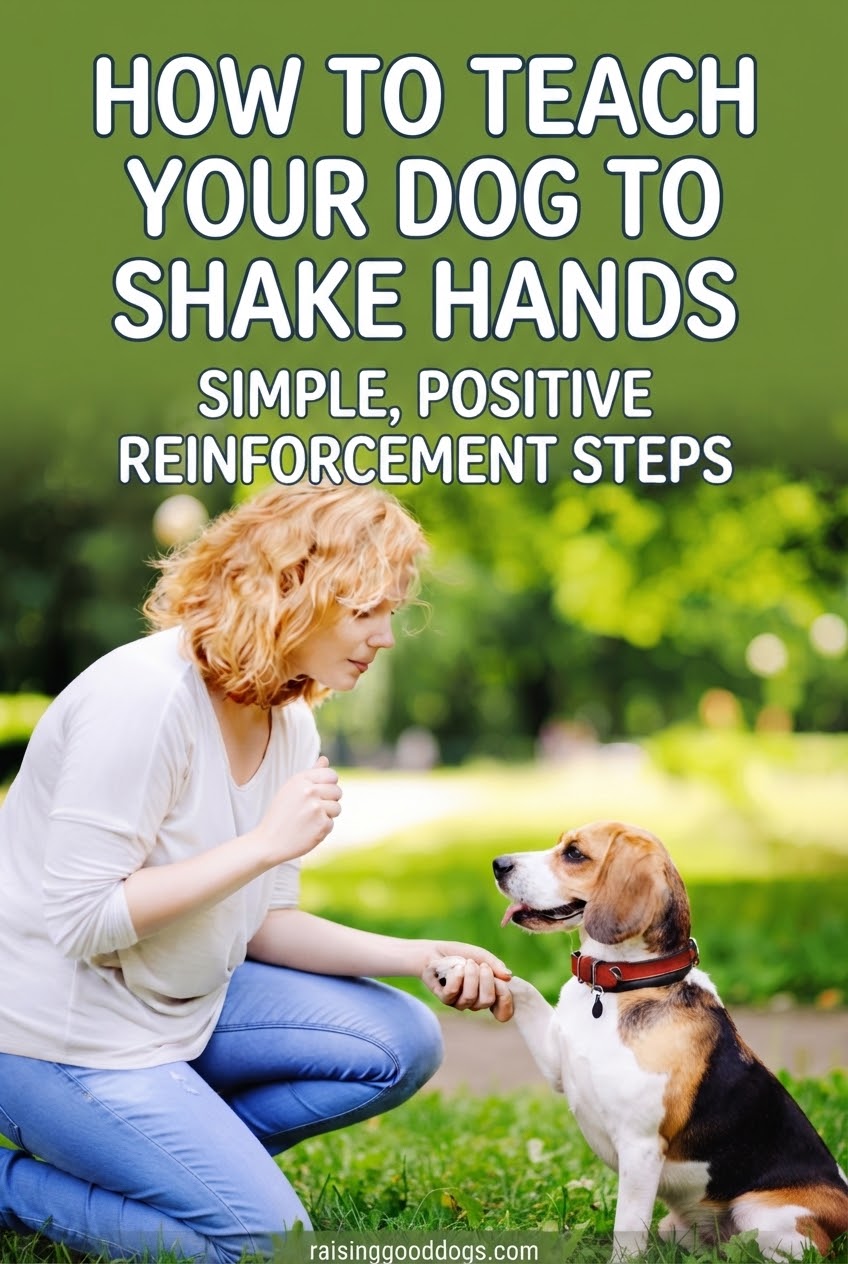
A paw in your hand looks like a tiny trick, but for a dog it is a chain of choices: notice the cue, lift the paw, touch the hand, and wait for feedback. I teach this as a calm skill, not a party stunt, because the dog in front of me matters more than the perfect demonstration.
Most dogs can learn this with short sessions and clear rewards. I usually tell clients to expect a few days to several weeks depending on the dog’s motivation, confidence, and previous training history. The goal is a dog who happily offers the behaviour, not one who feels pressured into it.
Teach Your Dog the Basic Shake Paw Command
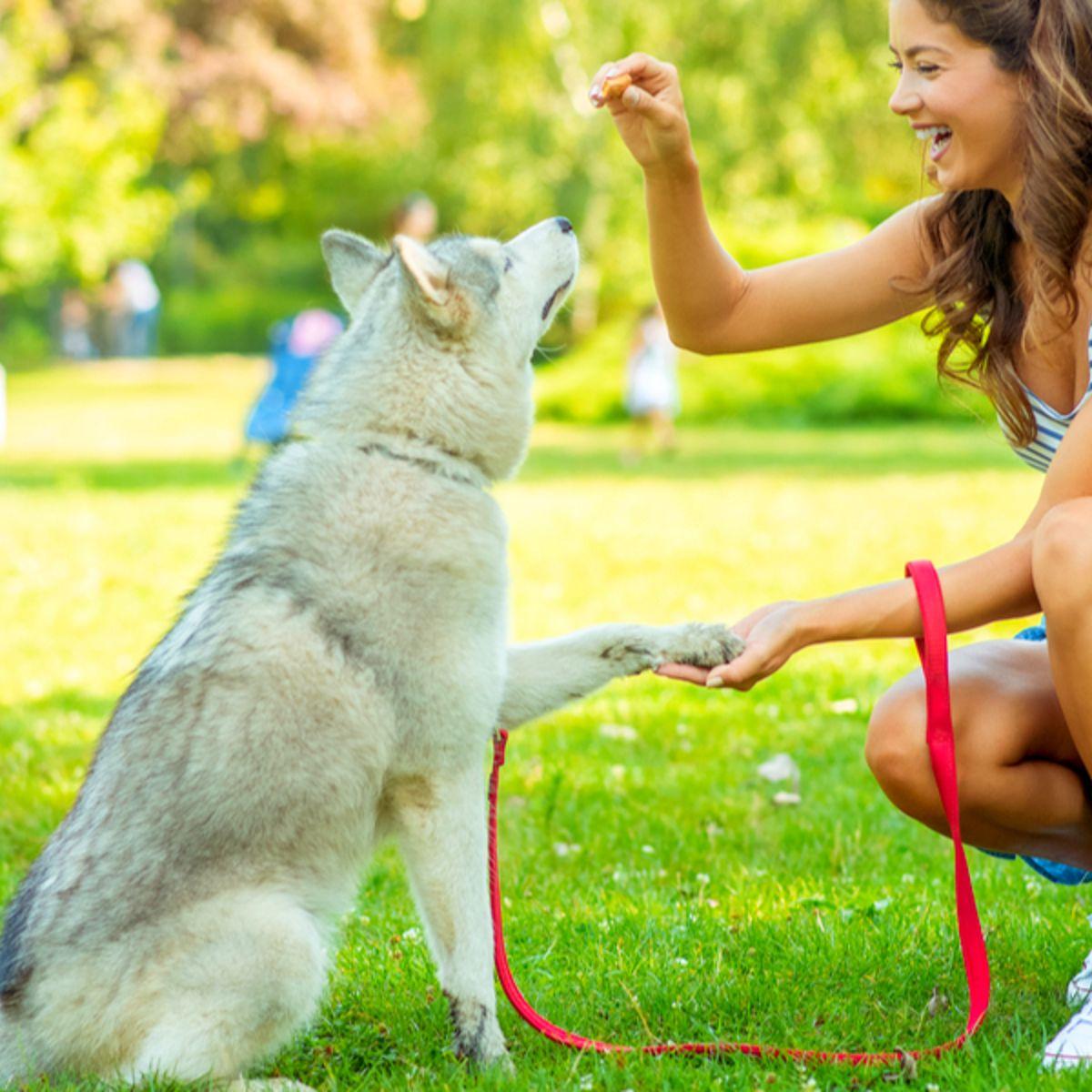
Before I ask for a paw, I make sure the environment is easy enough for the dog to think. A busy room, a hungry toddler, or a dog who is overtired can make a simple trick feel impossible. I start with a quiet space and a dog who can focus on me.
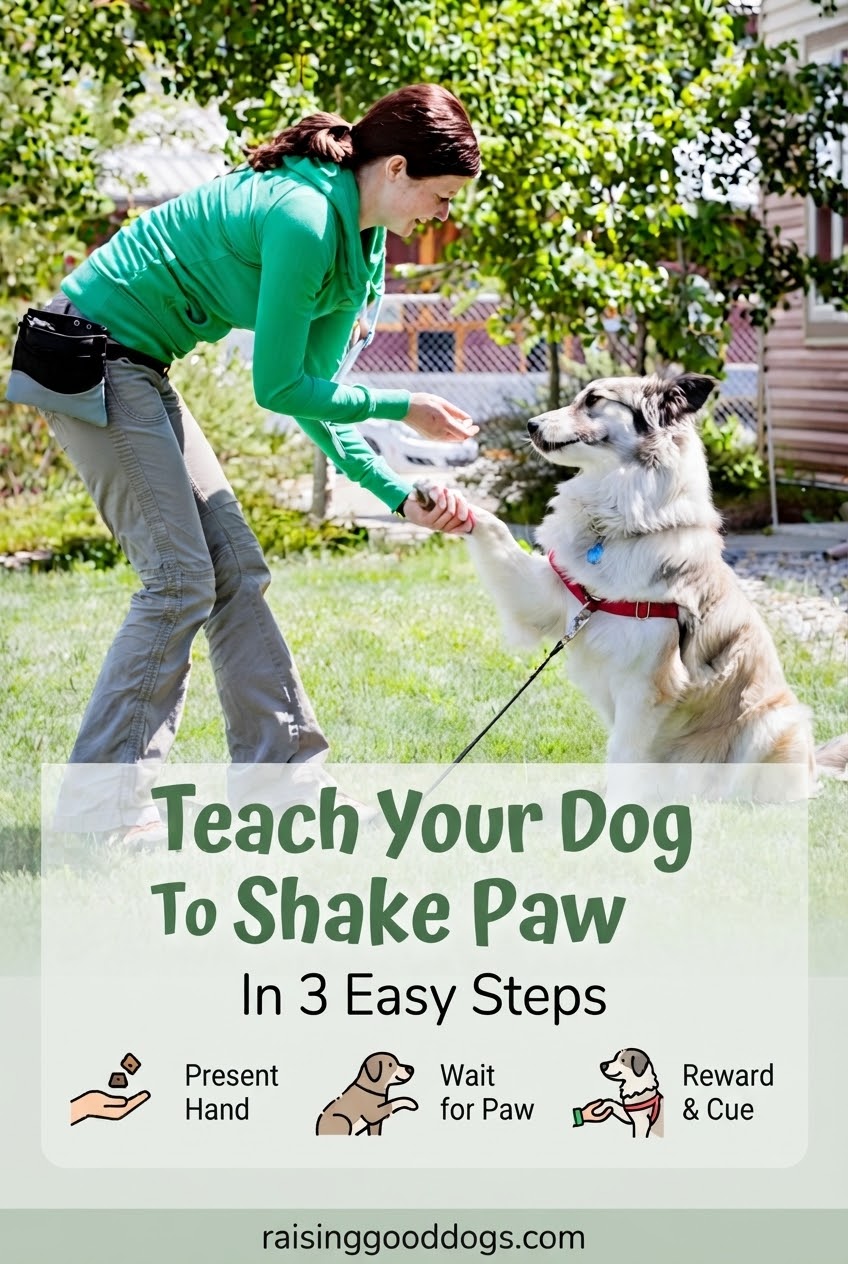
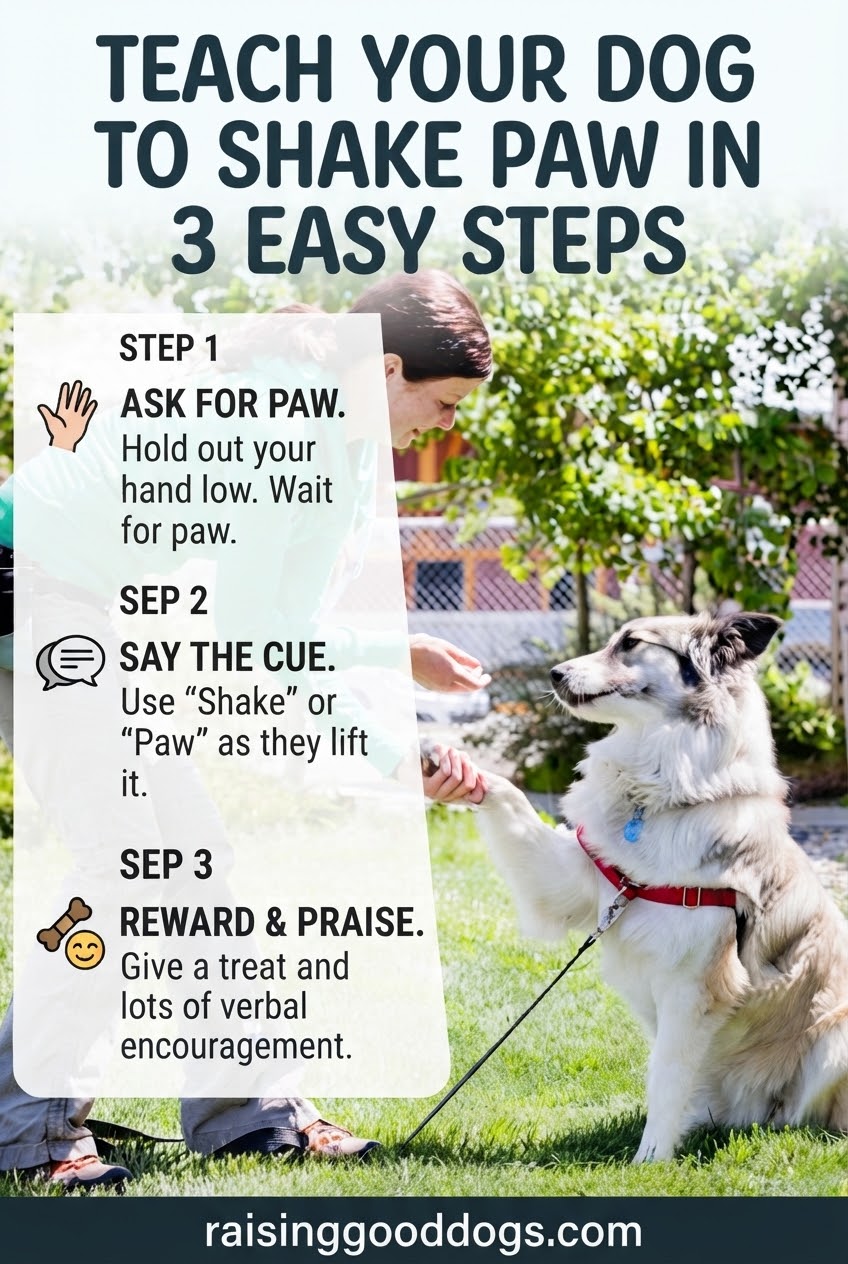
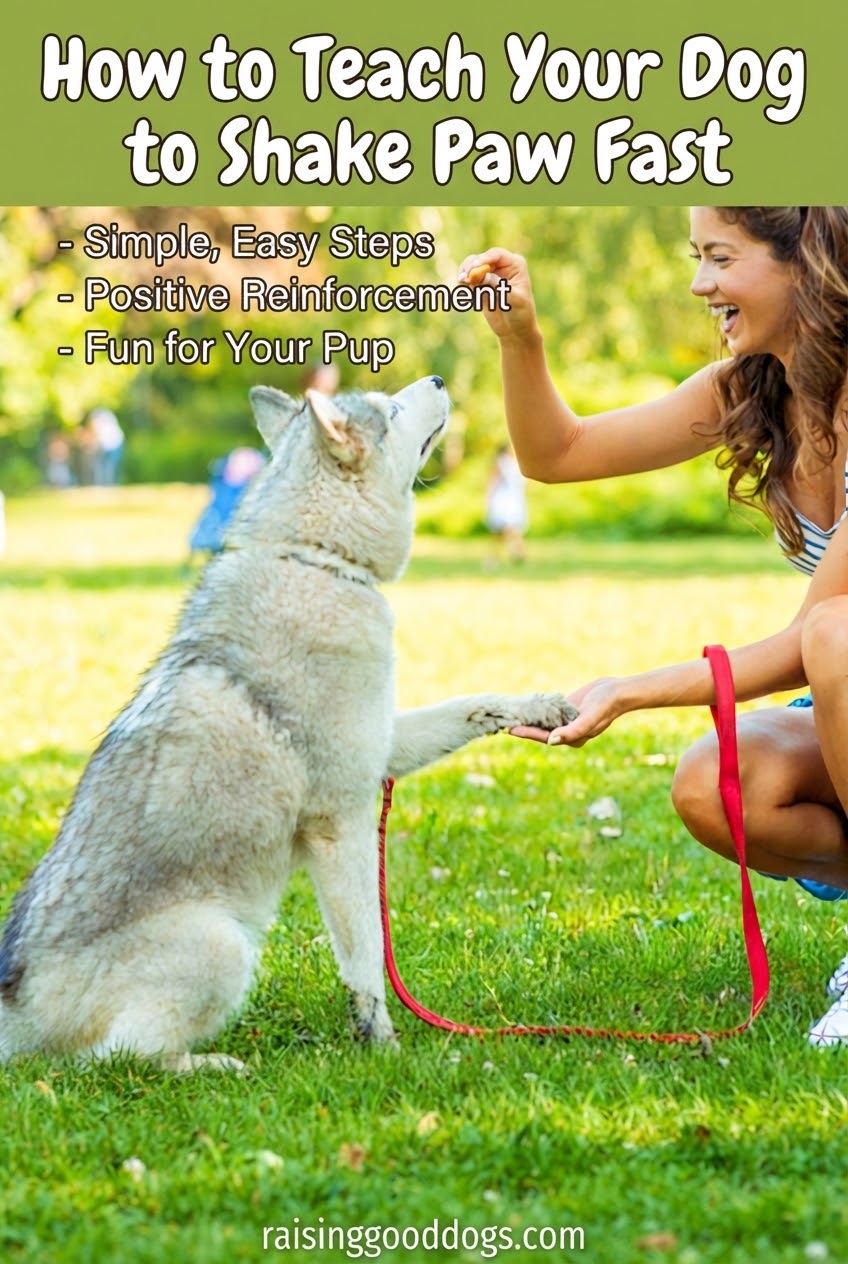
The first step is teaching the dog that a paw movement has value. I wait for a small paw lift, mark it, and reward it rather than grabbing the leg and placing it in my hand. Reward-based training works by connecting a behaviour with something the dog wants, such as food, praise, or play.
Shake paw foundation
- Choose a calm training area.
- Reward small paw movements.
- Keep sessions short and successful.
Trainer tip
Do not rush to hold your dog’s paw. Let your dog discover that offering the paw is what earns the reward.
Use Positive Reinforcement to Encourage Paw Lifting
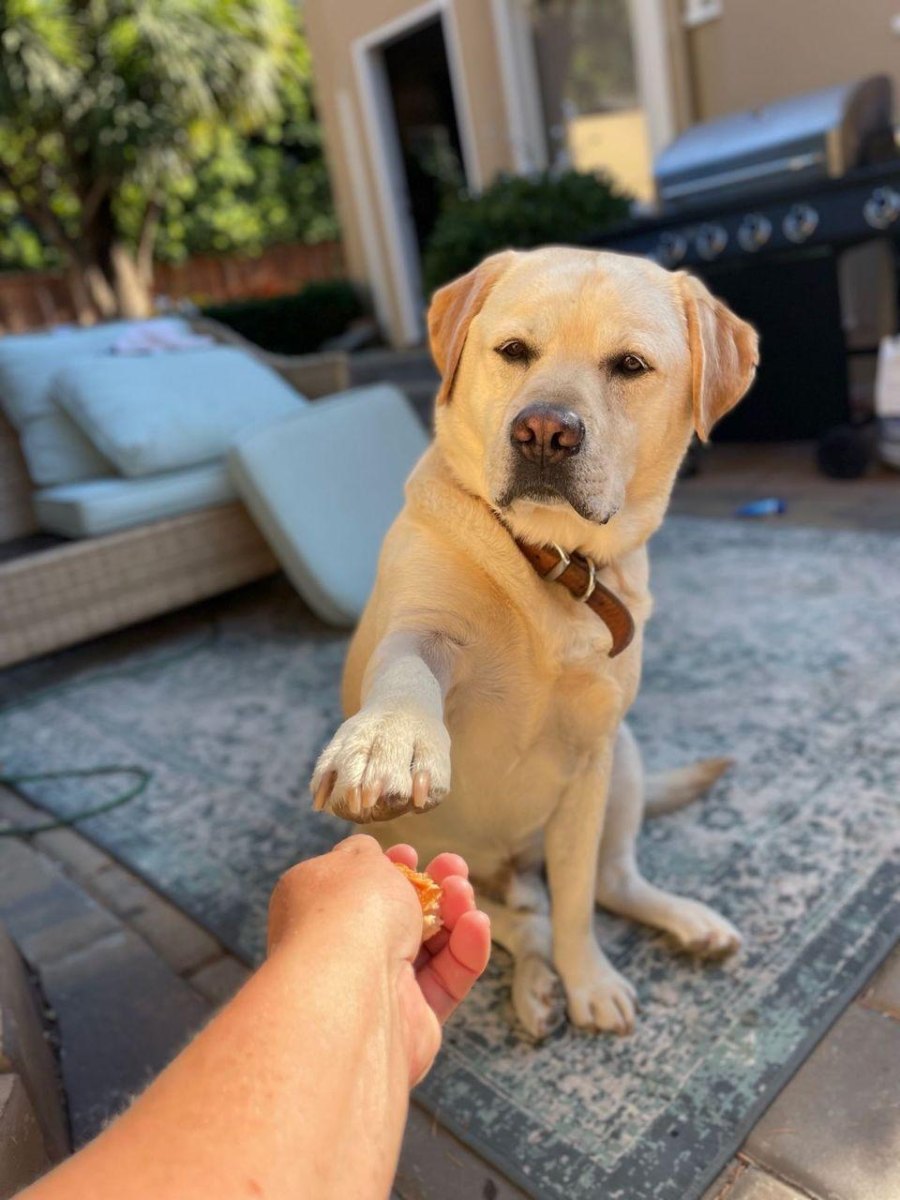
This is where many people accidentally make training harder. They repeat “shake” ten times, move the dog’s paw themselves, and hope the dog understands. I prefer to let the dog earn the information through clear reward timing.
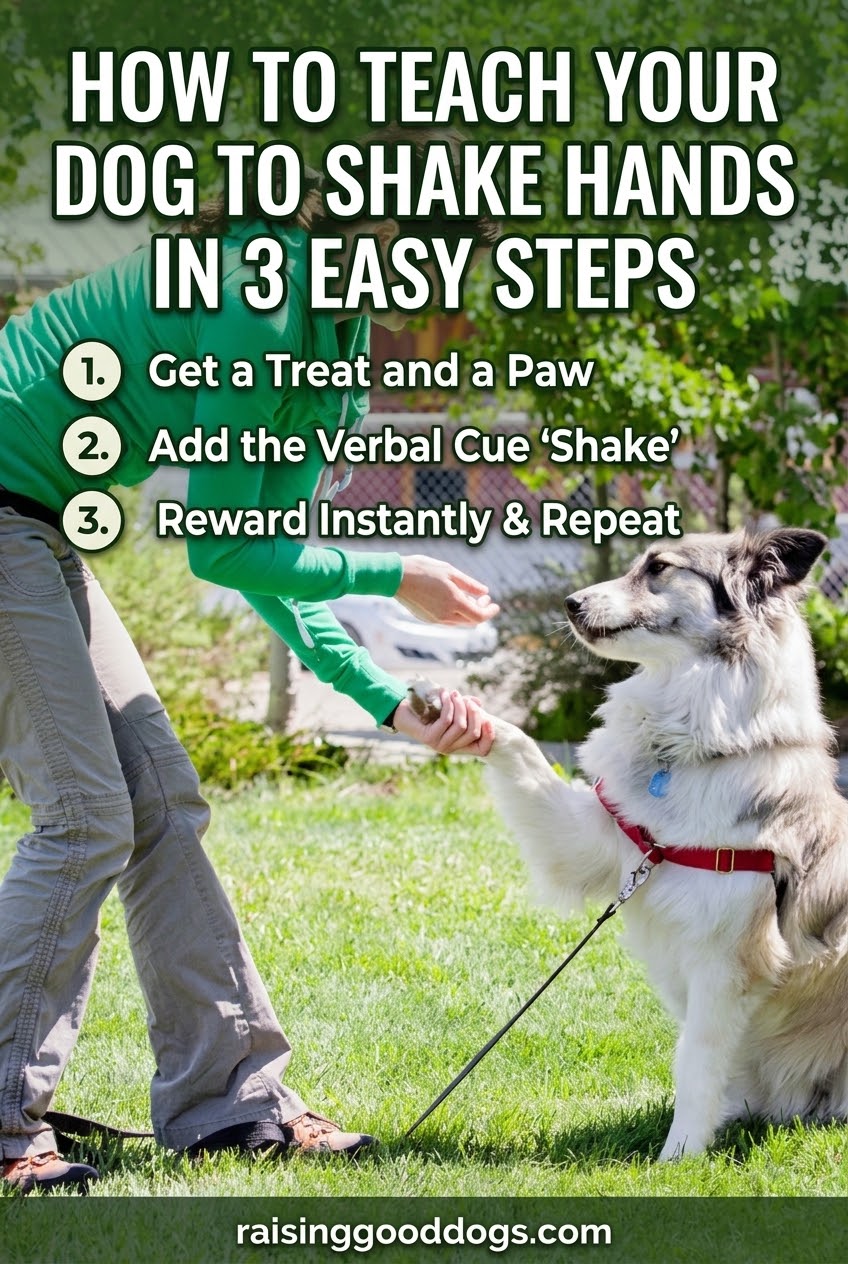
When your dog lifts a paw, even briefly, mark the moment and reward. A clicker or a short word like “yes” can help your dog understand exactly which action worked. Positive reinforcement focuses on showing the dog what is correct rather than only stopping mistakes.
- Wait. Watch for a natural paw lift.
- Mark. Tell your dog that moment was right.
- Reward. Deliver the treat immediately.
Common mistake
Rewarding too late can confuse your dog because they may think the reward was for a different behaviour.
Practice the Shake Paw Motion Step by Step
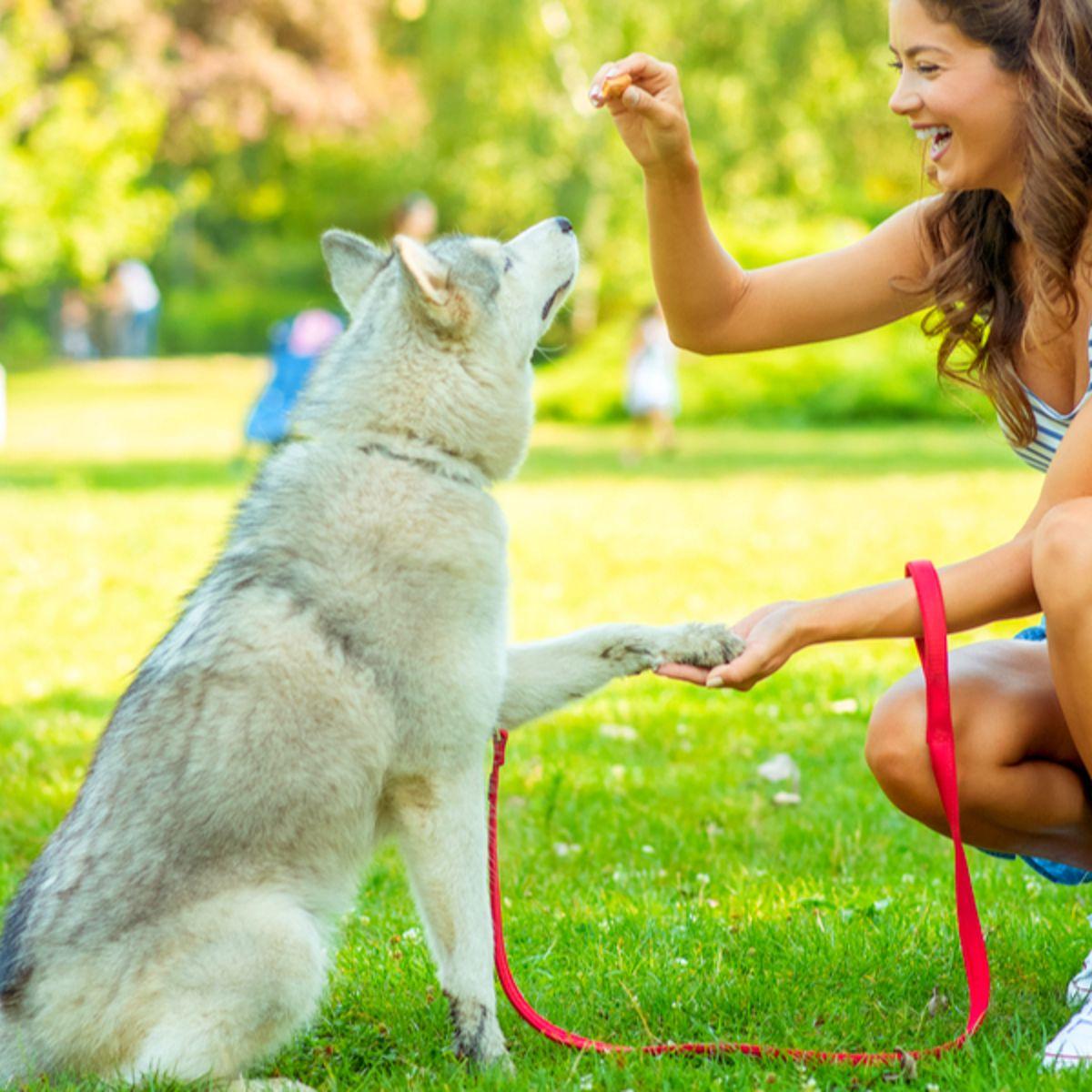
I build shake paw in tiny pieces because dogs learn movement patterns more easily when we do not ask for the finished trick all at once. First comes the lift, then the reach, then the gentle paw placement on your open hand.
I often practise for a few minutes at a time. If your dog walks away, sniffs the floor, or starts showing stress signals like lip licking, looking away, or freezing, I adjust the session instead of pushing through. Dogs communicate a lot through body language.
| Stage | Goal |
|---|---|
| Paw lift | Your dog raises one paw. |
| Hand target | Your dog touches your open palm. |
| Shake | Your dog holds the paw briefly. |
Remember
A slow learner is not a stubborn dog. Some dogs simply need more repetition before the pattern clicks.
Add the Verbal Cue and Improve Your Dog’s Response
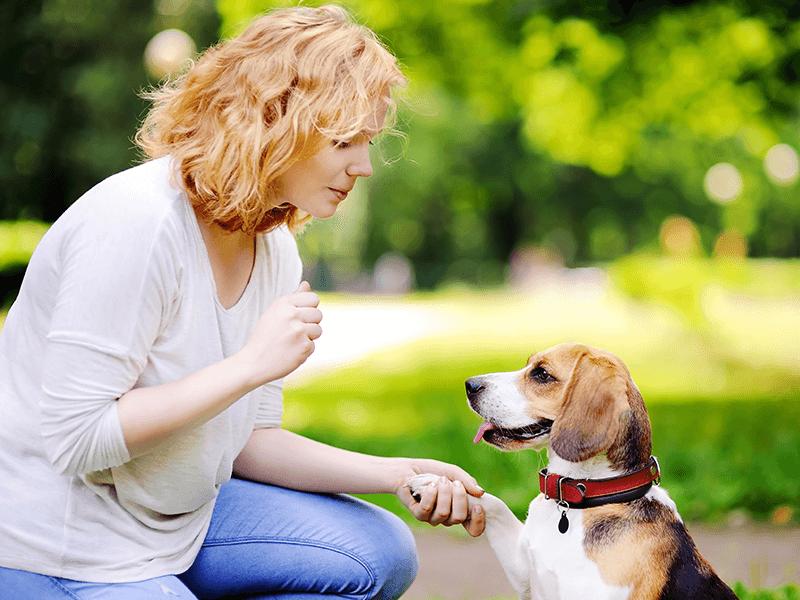
I add the word “shake” only after the paw movement is becoming predictable. A cue should describe something the dog already understands, not be a magic word we repeat while hoping for a response.
I say the cue just before I offer my hand, then reward when the dog completes the action. This helps the dog connect the sound with the behaviour. Training references commonly describe adding a cue after the behaviour is reliable so the dog can associate the word with the action.
- Your dog lifts a paw without being forced.
- You use the same cue each time.
- You reward the correct response quickly.
Watch for frustration
If your dog starts pawing wildly or avoiding you, lower the difficulty and return to an easier step.
Train Your Dog to Shake Paw Reliably in Different Situations
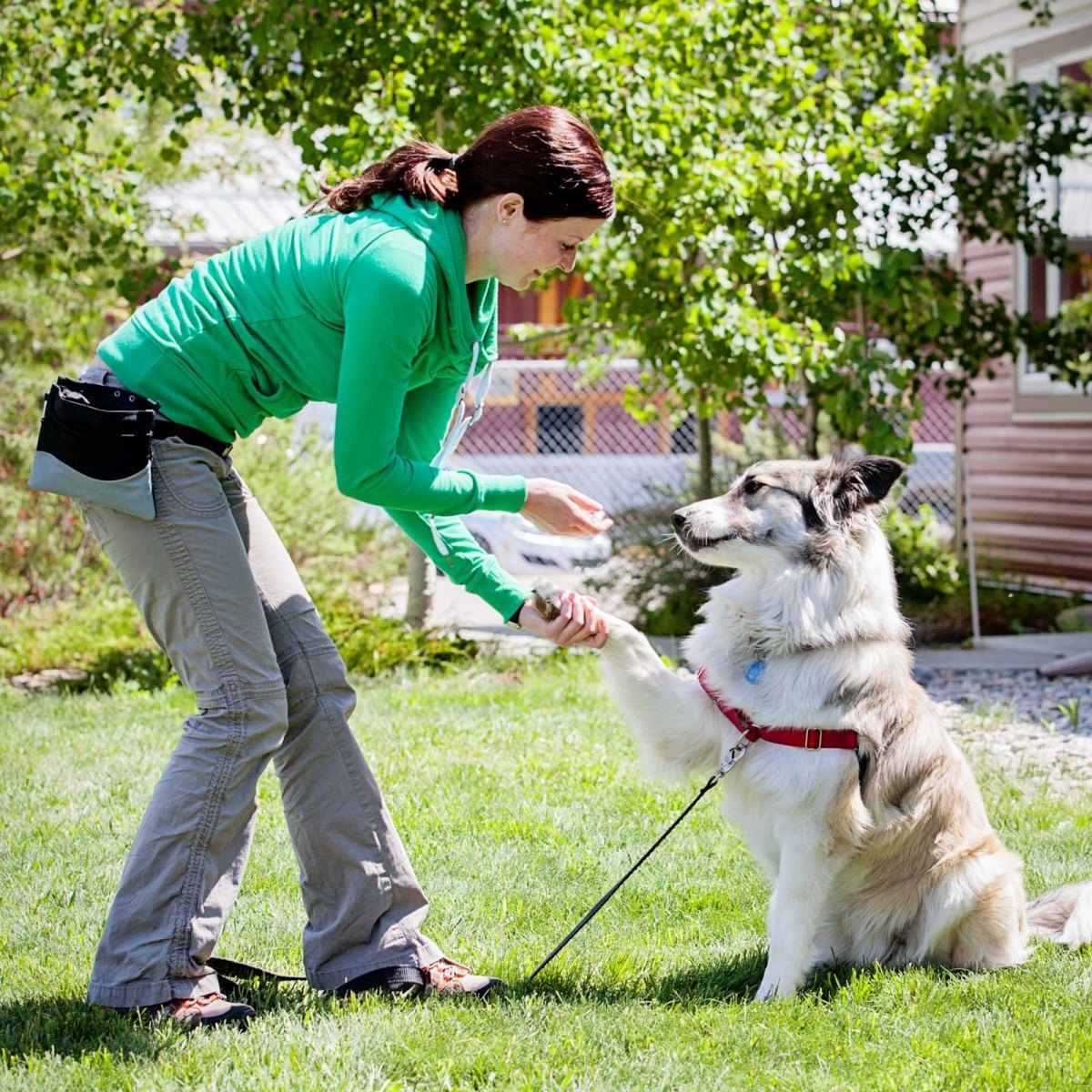
A dog who shakes paw in your kitchen may not understand the same request in a friend’s house or outside. I gradually change the location, distractions, and people involved while keeping the training easy enough for success.
I also watch comfort levels. A dog who is tired, worried, or uncomfortable may not perform a trick they know. If behaviour changes suddenly, especially in an older dog, I recommend checking with a veterinarian before assuming it is a training issue.
Reliable shake paw training
- Builds communication.
- Creates a fun shared activity.
- Strengthens reward history.
Rushing the process
- Creates confusion.
- Can reduce confidence.
- Makes distractions harder later.
A practical final step
Practise in real life, but keep the reward history strong. A dog who enjoys offering the behaviour will usually be far more reliable than one who has simply memorised a routine.


More Pinterest Visuals