The first weeks with a puppy are a little like living with a tiny roommate who has no idea where the bathroom is and thinks shoelaces are treasure. I build schedules around predictable daily rhythms because puppies learn best when their world makes sense.
I do not aim for a perfect clockwork day. I aim for a routine that prevents problems before they start, gives a puppy enough sleep, and helps the human on the other end of the leash know what comes next. Research and veterinary guidance consistently point to structure, regular meals, potty opportunities, rest, and positive training as the foundation of puppy care.
Morning Routine for a New Puppy

My morning rule is simple: the puppy goes outside before the coffee, the emails, or the temptation to check the phone. A young puppy has a small bladder, and starting the day with a quick bathroom trip sets up early potty success instead of practising accidents indoors.
After that first break, I like a gentle sequence of breakfast, a little interaction, and a short training game. A puppy does not need a marathon walk at sunrise; they need a chance to learn that home is safe and the day has a pattern.
- Take. Carry or guide your puppy to the potty area immediately after waking.
- Feed. Offer breakfast at a consistent time that fits your household.
- Engage. Use a few minutes of play or simple reward-based training before rest.
Feeding Schedule and Meal Times
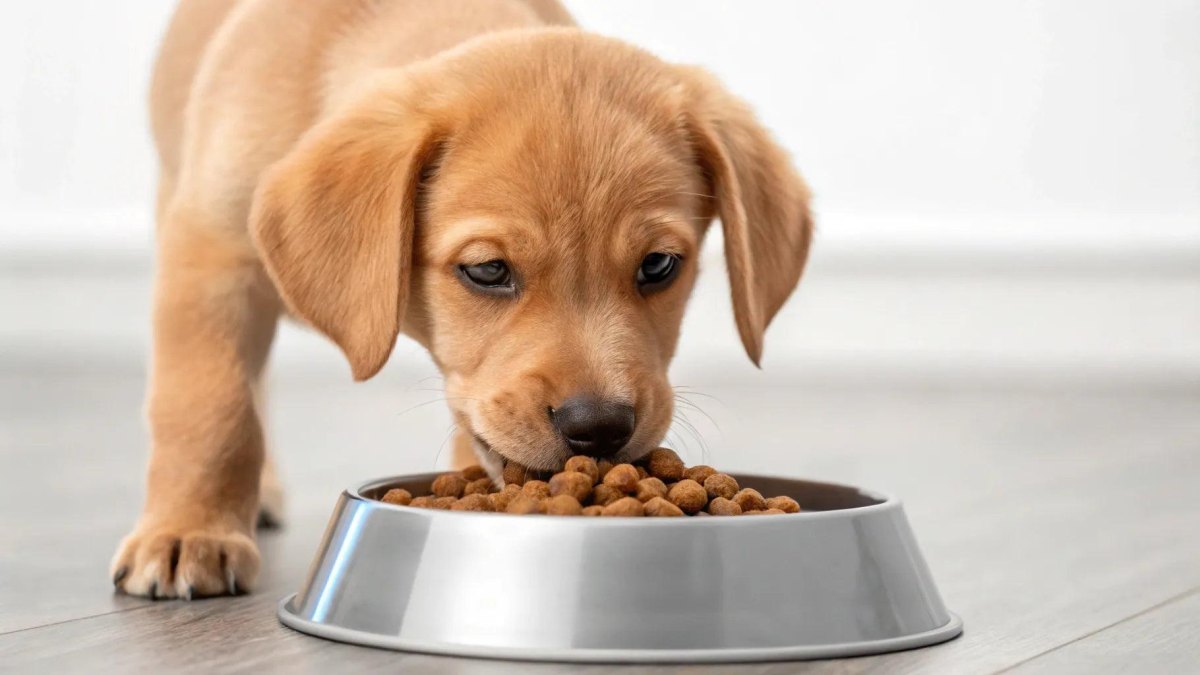
Food is one of the easiest parts of a puppy schedule to make predictable. I prefer measured meals over leaving food available all day because a routine helps with monitoring appetite, growth, and bathroom patterns. Consistent meal timing also makes potty training easier to predict.
| Puppy Age | Typical Meals |
|---|---|
| 6–12 weeks | About 4 meals daily |
| 3–6 months | About 3 meals daily |
| 6–12 months | About 2 meals daily |
I always tell clients that the schedule is a starting point, not a rigid rule. Your puppy's breed, size, health, and veterinary guidance matter. Growth needs change, so the plan should change with the dog.
Potty Training Breaks Throughout the Day
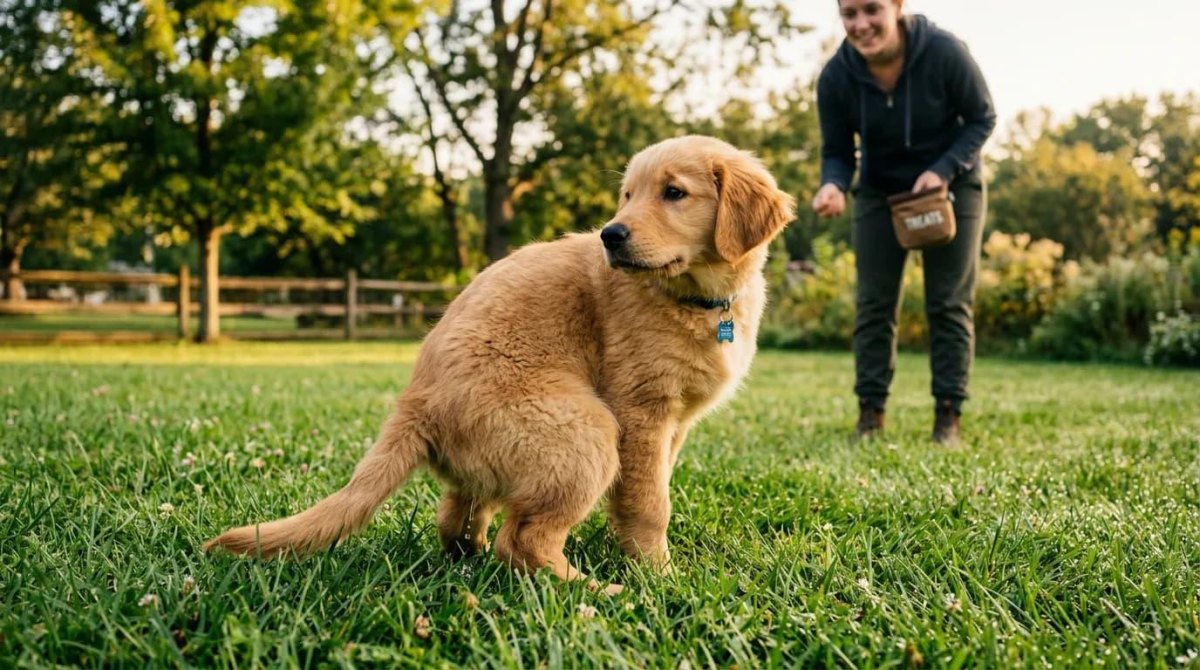
Potty training improves when I stop asking the puppy to make a difficult choice. Instead, I manage the environment so the right answer is the easy answer. Frequent trips outside after waking, eating, drinking, playing, and sleeping are the foundation of successful house training.
Trainer tip
Keep potty trips boring and clear at first. Bathroom first, celebration second. This helps your puppy understand why you are outside.
Accidents are information, not a reason for punishment. If a puppy suddenly regresses after being reliable, especially with other behaviour changes, I would involve a veterinarian before assuming it is a training issue.
Playtime and Exercise Sessions
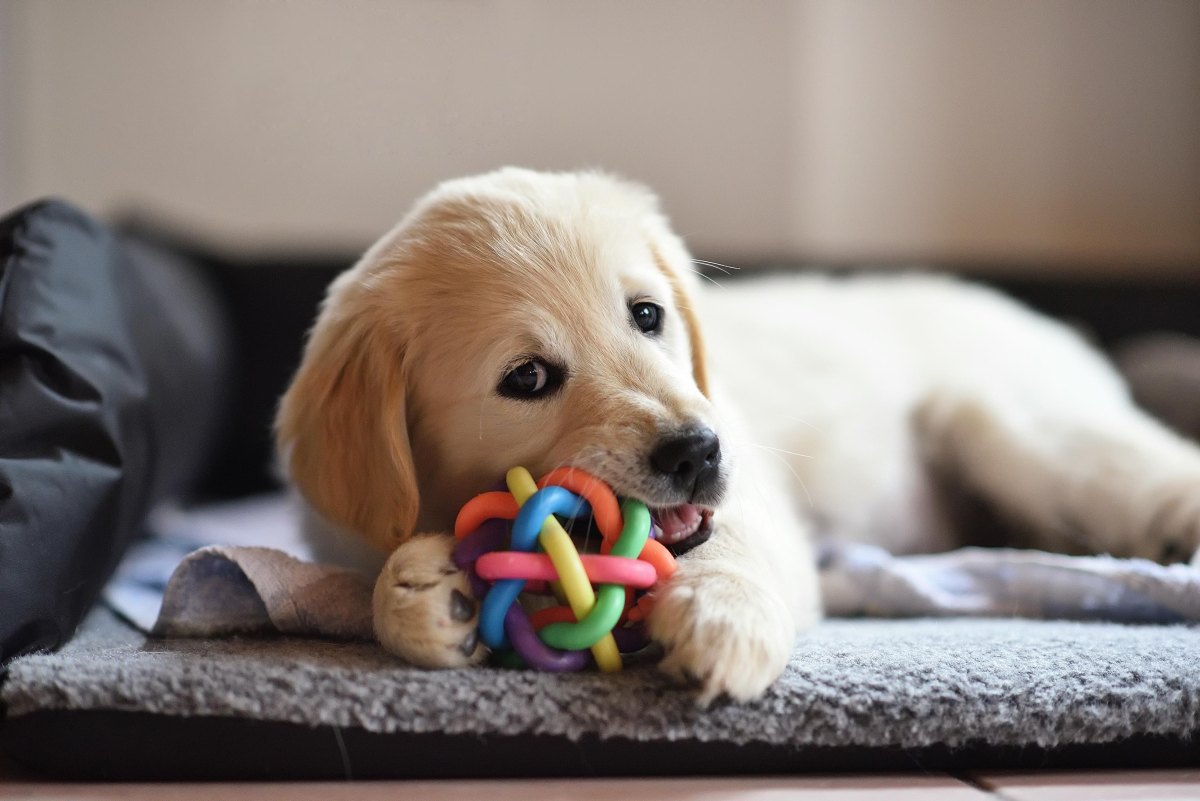
Play is not just a way to tire out a puppy. It is where they practise choices, explore safely, and learn how to settle afterward. I use short bursts of age-appropriate activity rather than trying to exhaust a puppy into good behaviour.
- Supervise toy play and chewing.
- Include sniffing and exploration.
- Stop before your puppy becomes frantic or overtired.
- Reward calm behaviour, not only excitement.
The puppy who cannot stop playing is often the puppy who needed a nap twenty minutes ago. I have seen that mistake many times, and it is usually the human who needs the reminder.
Training and Socialization Practice
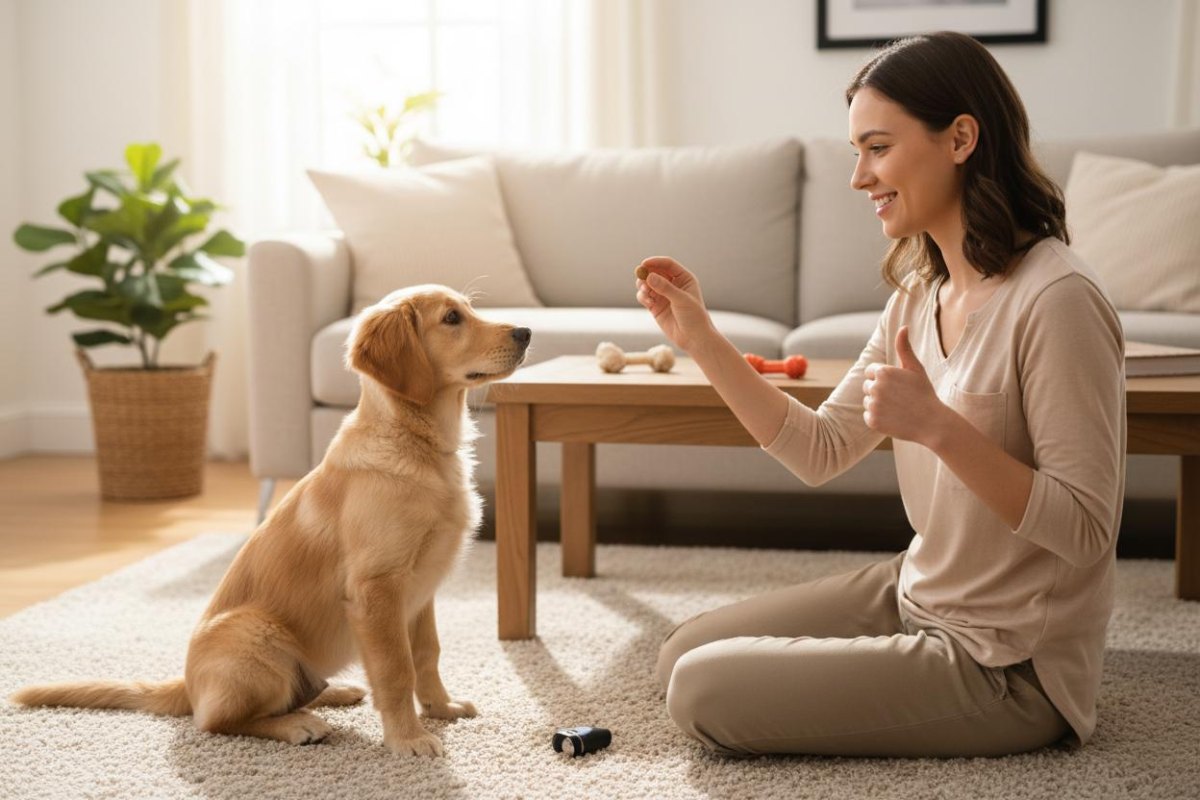
I start training from the first day a puppy comes home, but my sessions are tiny. A few good repetitions teach more than a long lesson where the puppy loses focus. Positive reinforcement training builds skills without creating fear or confusion.
- Name practice: Reward your puppy for turning toward you.
- Handling: Pair gentle touches with something pleasant.
- Social exposure: Let your puppy experience new sights and sounds at their own pace.
Socialization is not dragging a nervous puppy into every situation. It is careful exposure where the puppy can stay comfortable. I watch for body language like a closed mouth, weight shifting away, freezing, or repeated lip licking because those details tell me when to slow down.
Nap and Quiet Time Schedule
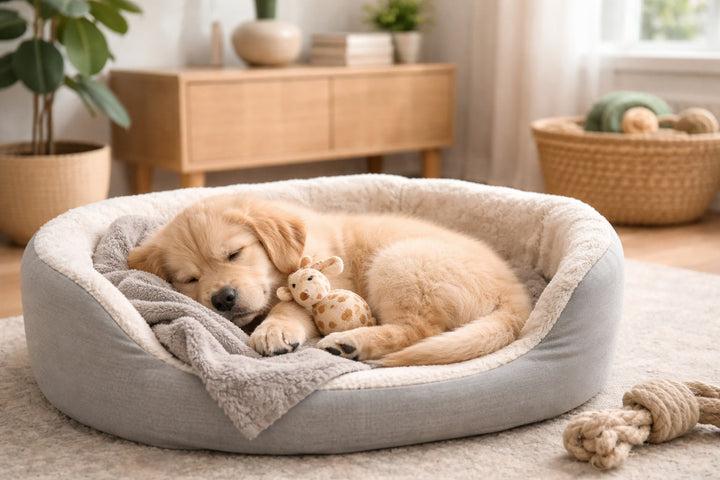
The puppy who is awake all day is usually not the puppy who learns best. Sleep is part of development, and many puppies need a surprising amount of rest throughout the day. I build the schedule around planned quiet periods, not only activity.
Up to 18 hours
of sleep may be needed by some puppies in a day
I teach families that a nap is not a punishment. A crate, pen, or quiet bed can become a safe resting place when introduced positively. If a puppy is distressed rather than simply protesting, I treat that as information and adjust the plan.
Evening Routine and Bedtime Preparation
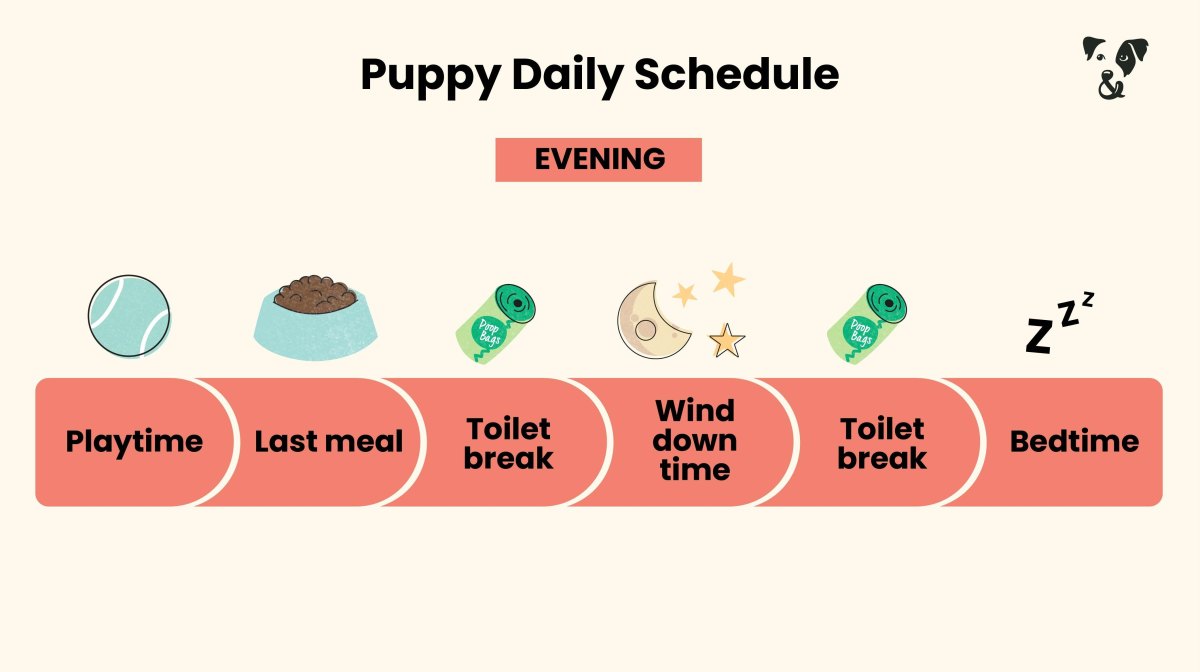
The evening is where many puppy schedules fall apart because everyone is tired. I prefer a gentle landing: calmer activities, a final bathroom trip, and a predictable bedtime pattern. A consistent bedtime routine helps puppies understand that the busy part of the day is finished.
My favourite evening reset
A short sniffing activity, a little calm training, a final potty break, then lights down. The goal is not to wear the puppy out; it is to help the puppy settle.
Very young puppies may still need overnight bathroom breaks, and that is normal. I would rather respond calmly than expect a baby dog to handle an adult schedule overnight. Progress takes time, and the boring consistency is what creates the dependable dog later.



More Pinterest Visuals