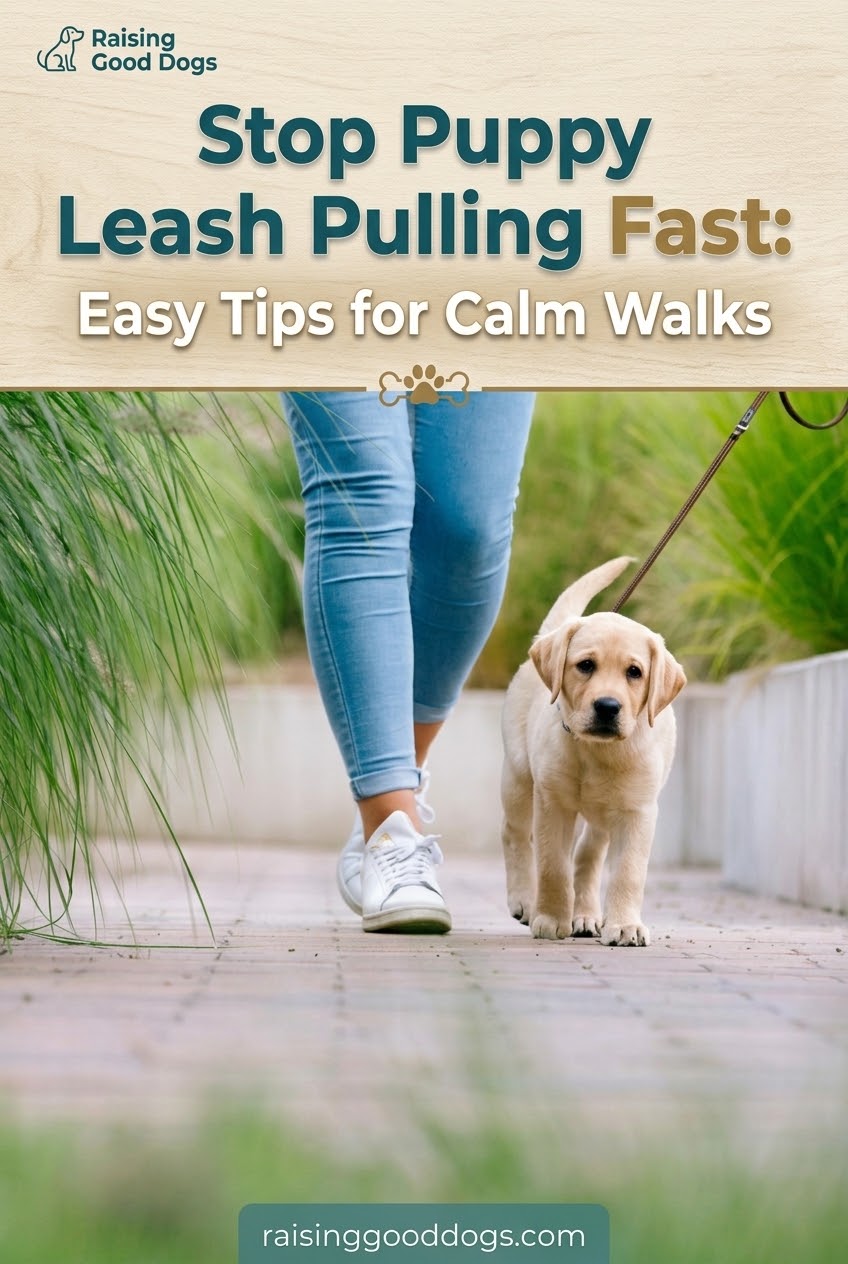
I have watched plenty of puppies turn a peaceful walk into a sled race, usually before breakfast and always when you are wearing your least practical shoes. The good news is that leash walking is a skill, not something puppies magically understand. With small repeatable lessons and the right setup, most puppies can learn to stay connected to you.
I start by making the walk easier before asking for better behaviour. A puppy who is already overwhelmed by smells, traffic, dogs, or excitement is not being stubborn; they are having a hard time thinking. Loose-leash training works best when we build calm walking habits gradually.
Teach Your Puppy to Walk Beside You
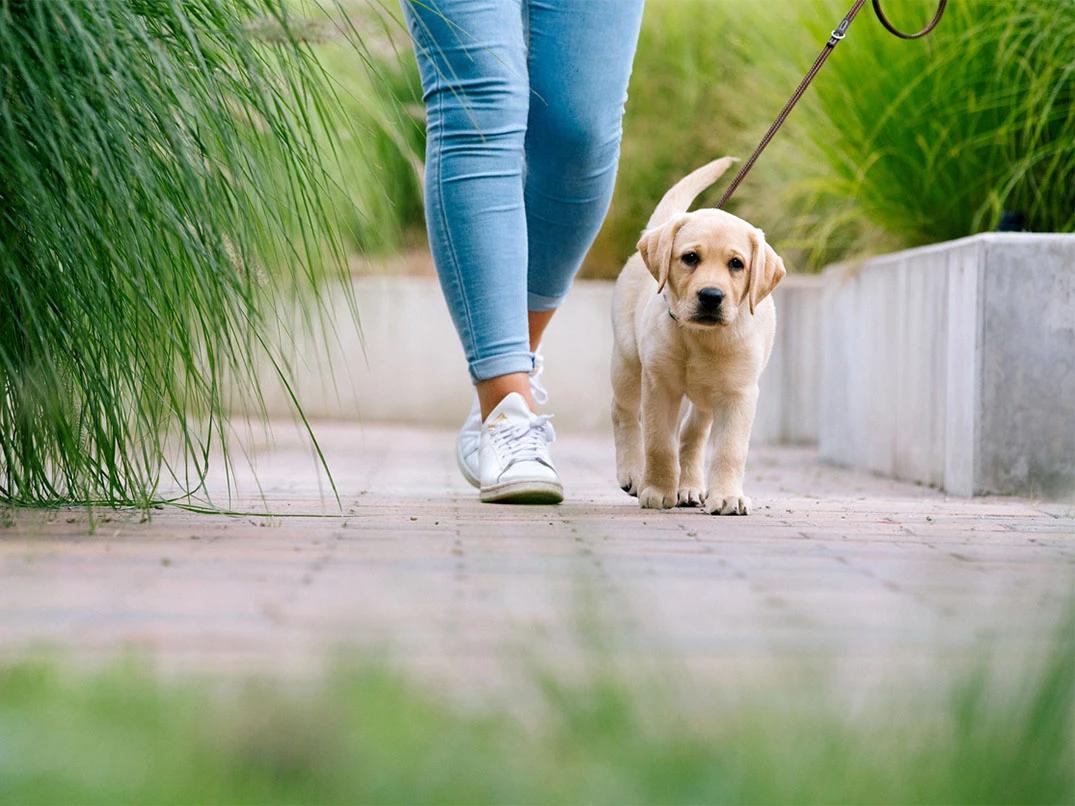
The first mistake I see is expecting a puppy to know what a leash means. They do not arrive with a built-in understanding of walking beside a person. I teach the picture I want first: a loose leash near my side, not a perfect competition heel.
Before practicing outside, I check that the puppy can settle enough to learn. If your puppy is panting from excitement, scanning constantly, freezing, or pulling toward every movement, I make the environment easier rather than pushing through. Lowering distractions is often the fastest way forward.
My starting point
- Reward your puppy for choosing to stay close.
- Begin in places where your puppy can succeed.
- Increase distractions slowly instead of all at once.
Use Positive Reinforcement During Leash Training
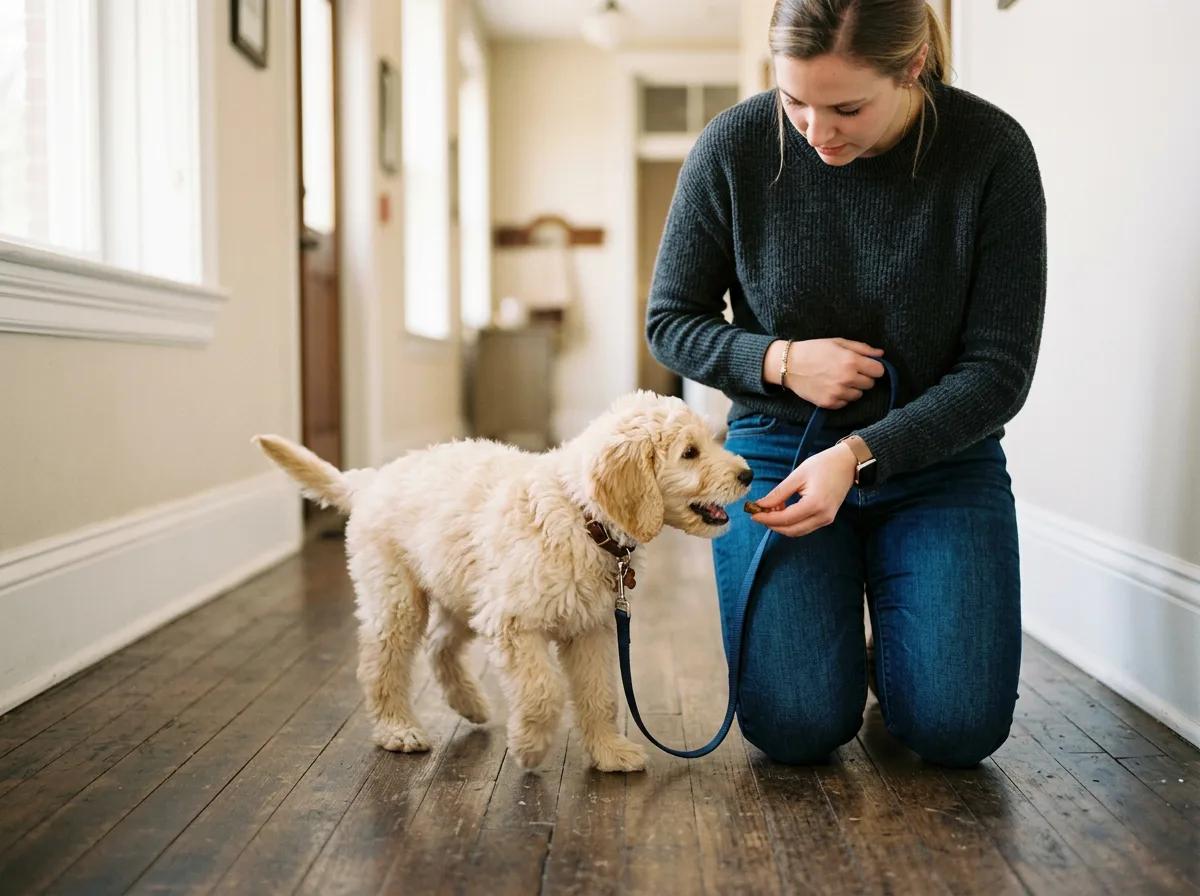
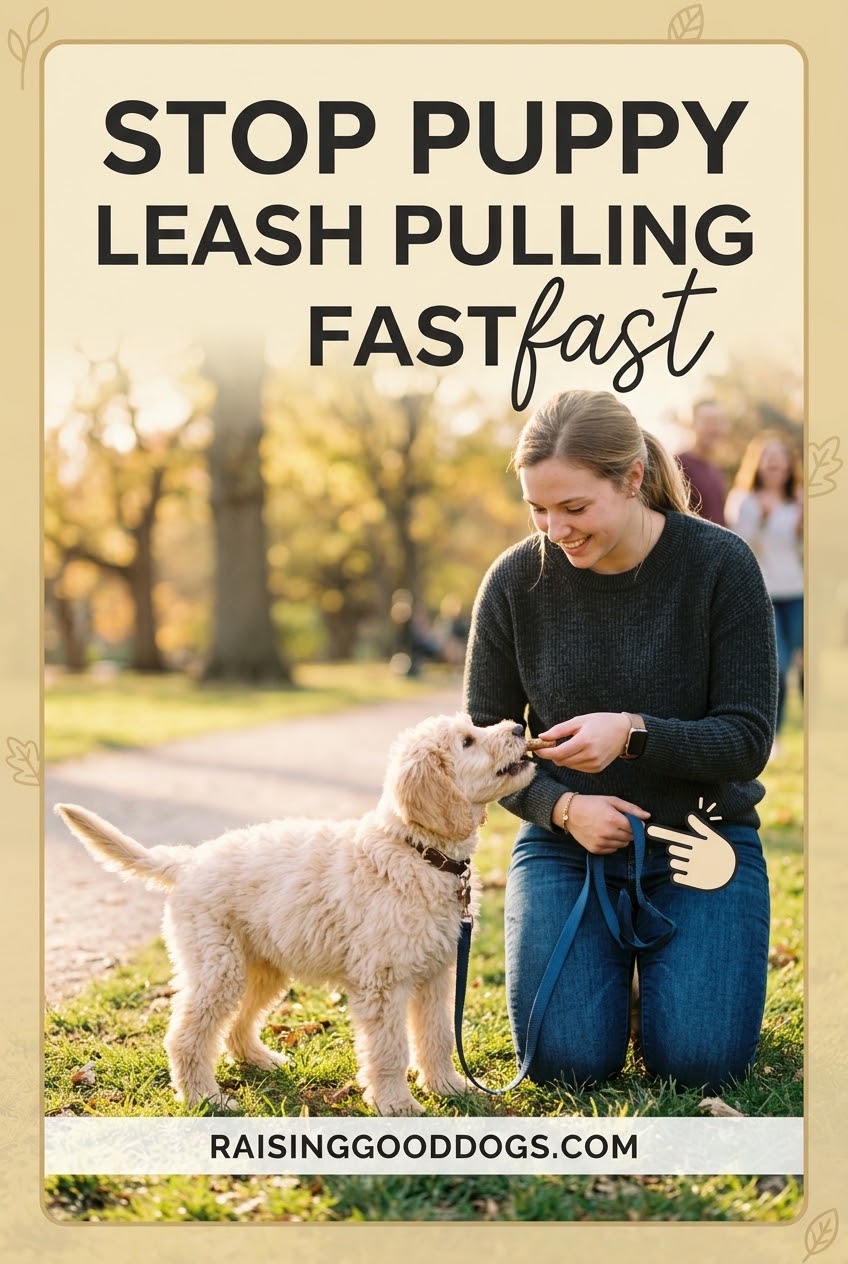
I spend far more time showing puppies what earns rewards than telling them what not to do. Walking politely is a behaviour we build by paying attention to the moments when the leash is loose and the puppy checks in. Reward the behaviour you want and it becomes more likely to happen again.
In the first few weeks, I expect lots of treats and very short successful stretches. A puppy who walks nicely for five steps today may walk twenty steps next week. That is progress, not a failure to be further along. Frequent reinforcement helps the lesson become clear.
- Notice. Mark the moment your puppy walks near you.
- Reward. Deliver the treat beside your leg.
- Repeat. Practice before your puppy loses focus.
Stop Pulling by Changing Direction
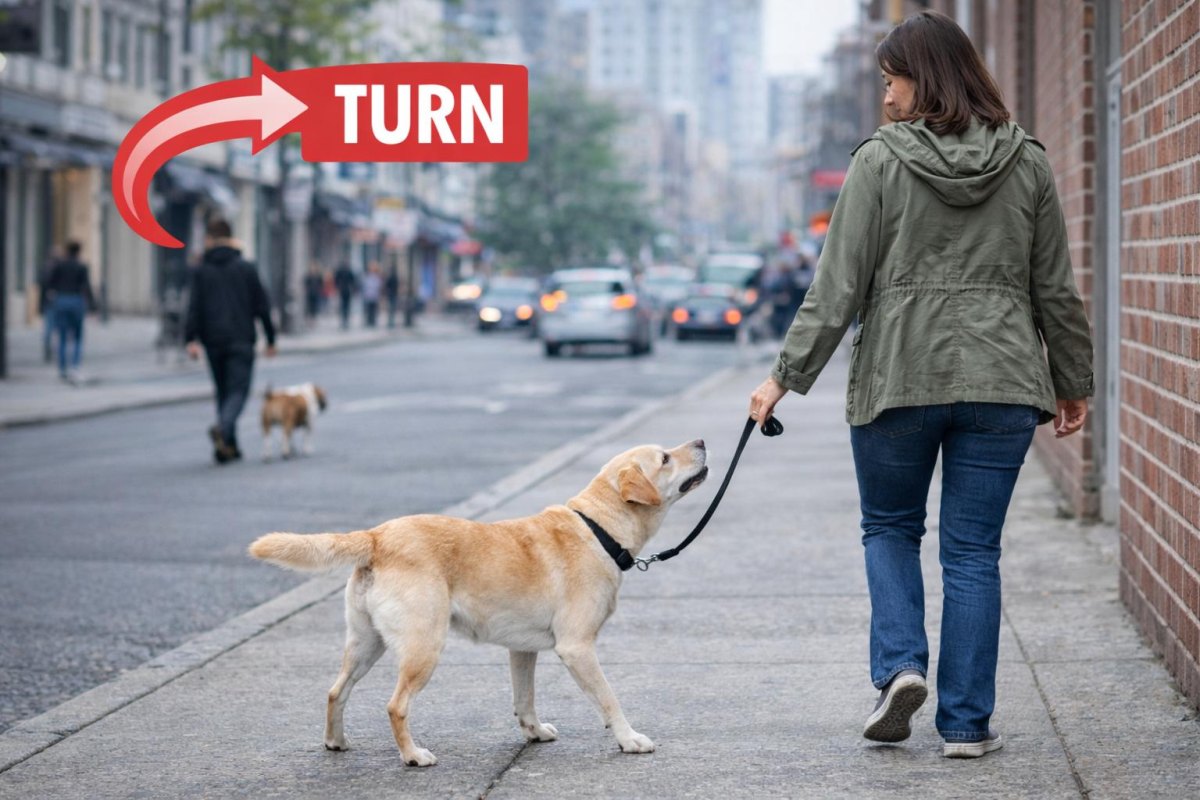
When a puppy pulls toward something interesting, I avoid turning the leash into a tug-of-war. Instead, I calmly change direction and invite the puppy to follow. The lesson becomes simple: pulling does not move us forward, while staying connected does.
This can feel painfully slow at first. I have had walks where we travelled only a few houses because the puppy was learning the new pattern. That is normal. The goal is not distance; the goal is teaching a different walking choice.
Trainer tip
Keep direction changes light and cheerful. The turn should redirect your puppy, not feel like a correction.
Choose the Right Leash and Harness
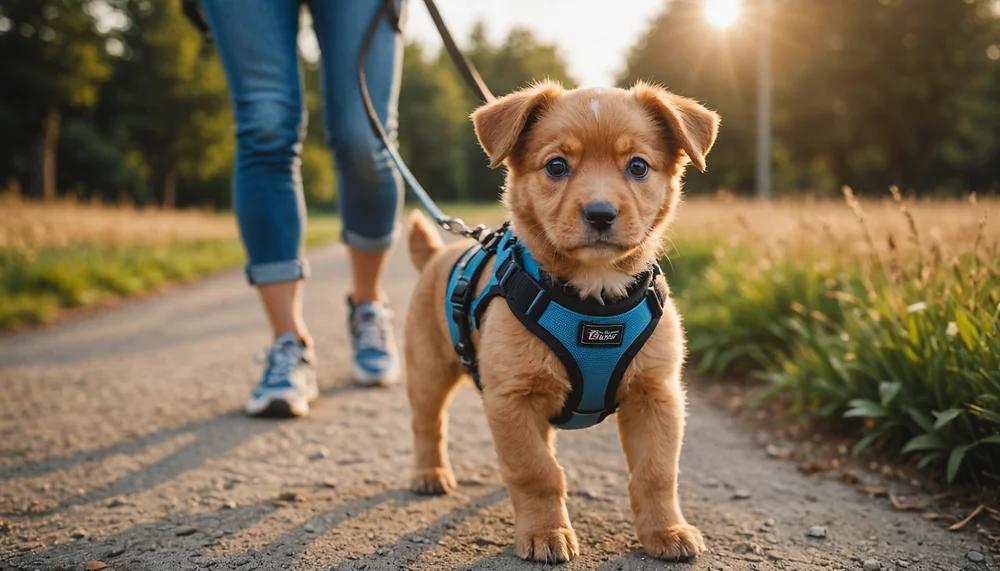
Equipment will not train a puppy by itself, but the wrong setup can make learning harder. I want gear that lets the puppy move comfortably while giving me enough control to prevent rehearsing pulling. Comfort and management come before fancy features.
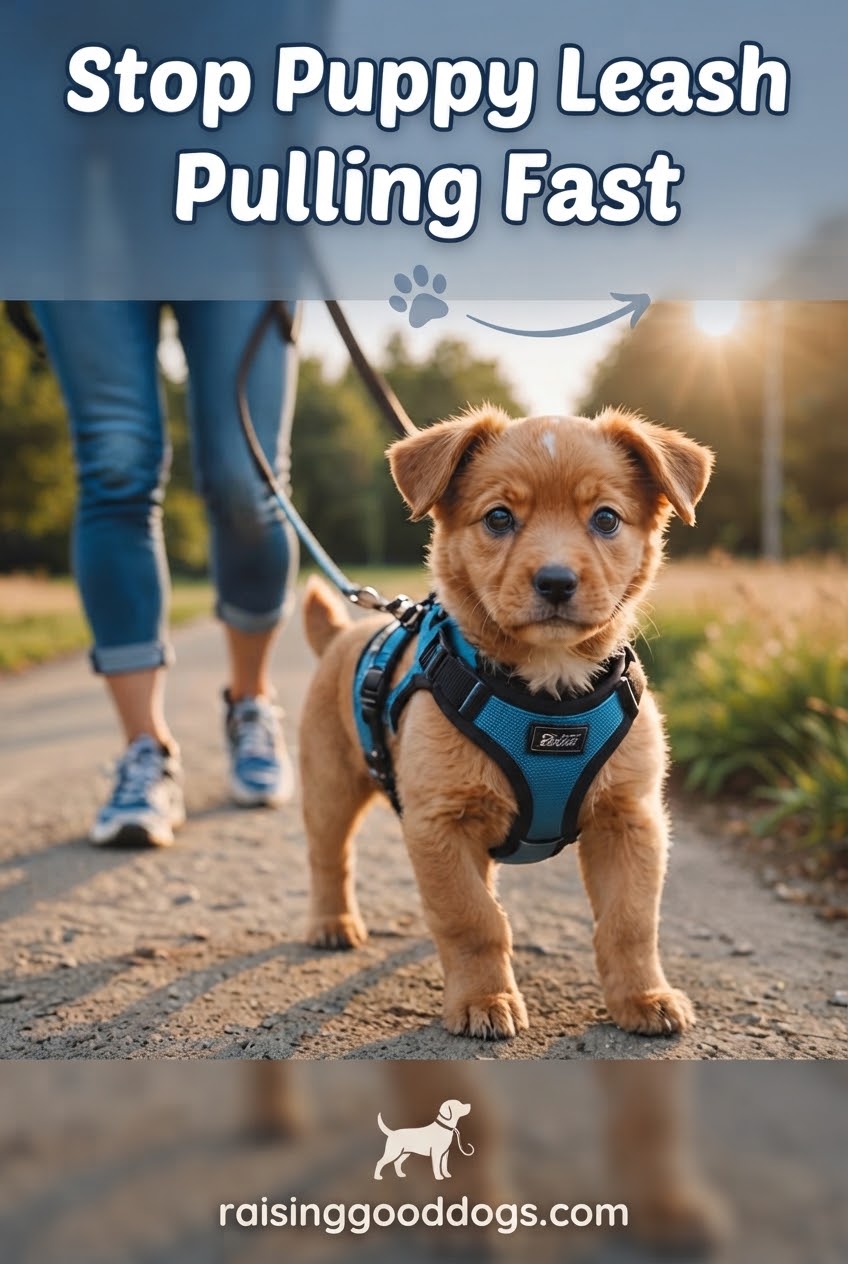
I avoid tools designed around pain, startling, or forcing a puppy to stop. A harness, collar, or other option should be chosen for the individual dog, fit correctly, and support training rather than replace it. Research has also shown that different restraint types can affect leash tension differently, so there is no single answer for every dog. Fit matters more than marketing.
| Equipment | What I consider |
|---|---|
| Flat collar | Useful for identification and some calm walkers. |
| Harness | Can help some dogs with comfortable management when properly fitted. |
| Leash | Choose a length that allows control without constant tension. |
Practice Calm Walking in Low-Distraction Areas
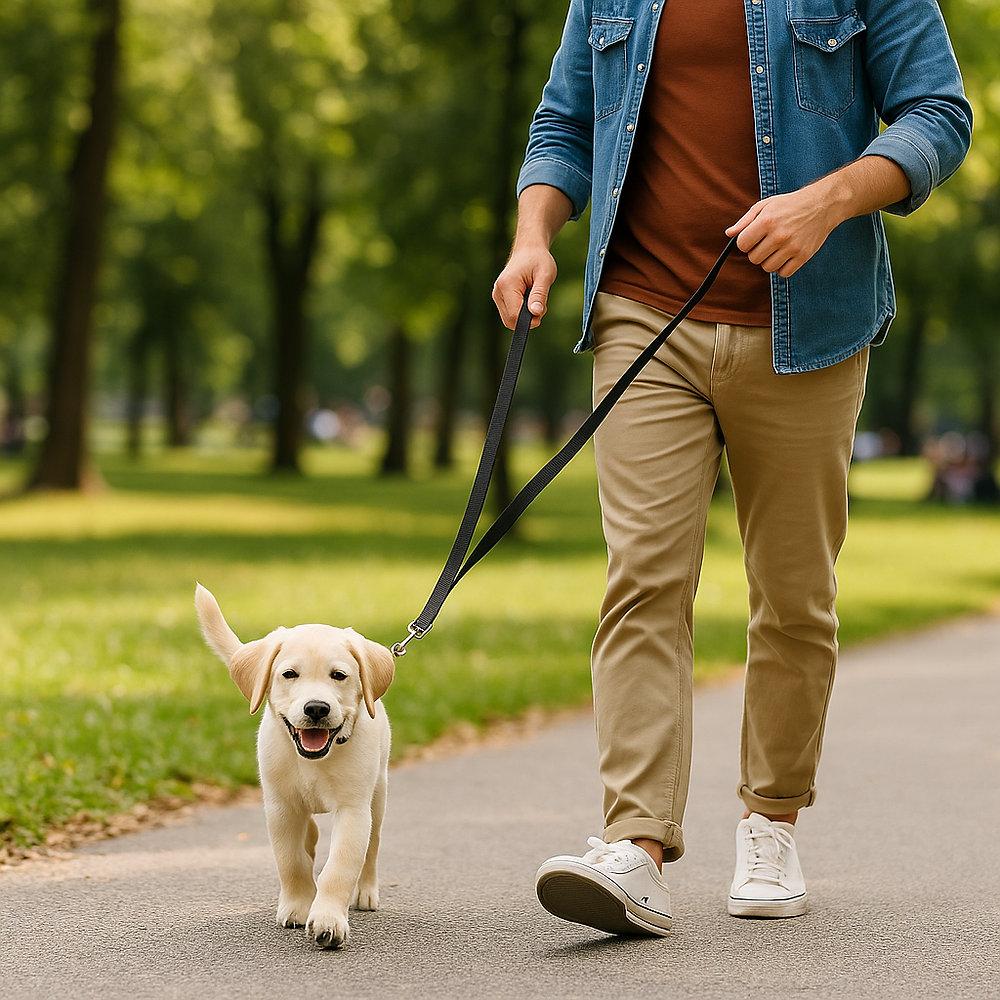
I rarely begin leash training on the busiest street in town. A puppy learning a new skill needs a chance to think, which is why my early sessions often happen in quiet areas. A calm training environment lets the puppy practise success before facing harder situations.
I watch the details people often miss: ears suddenly forward, weight shifting toward a distraction, mouth closing, or the tail base becoming stiff. Those tiny changes tell me when to create more distance. Reading body language prevents many pulling battles before they start.
- Choose a quiet area first.
- Keep sessions short and successful.
- Add one distraction at a time.
Build Consistent Leash Habits Every Day
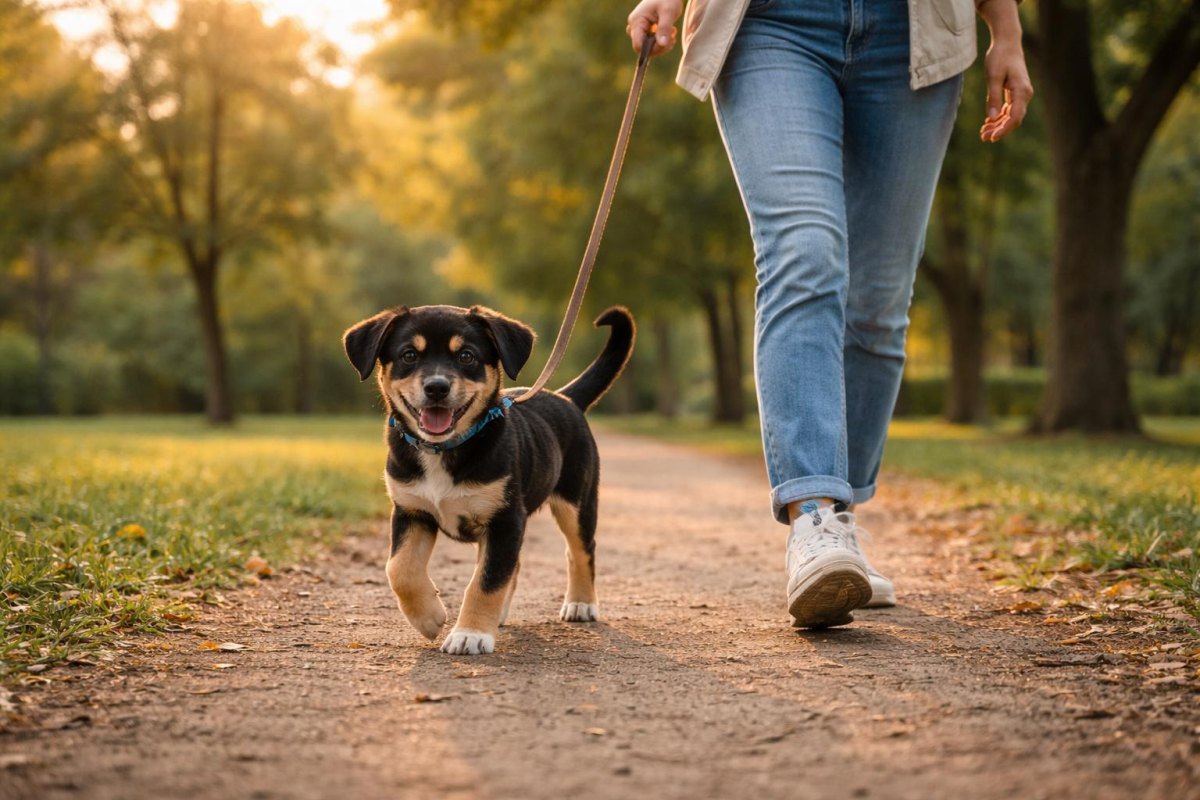
The puppies who improve are not the ones who have a perfect owner. They are the ones who get many small chances to practise. I would rather see three calm minutes every day than one exhausting walk where everyone is frustrated. Consistency beats intensity with leash skills.
Expect uneven progress. Week two may look better, then a new place or exciting smell may bring pulling back. That is not your puppy forgetting everything; it is information about what level of difficulty comes next. Setbacks are part of learning, not a sign that the plan failed.
A realistic goal
A good leash walk is not a robotic puppy glued to your leg. I am aiming for a dog who can explore, sniff, and move with you without dragging you down the street.




More Pinterest Visuals