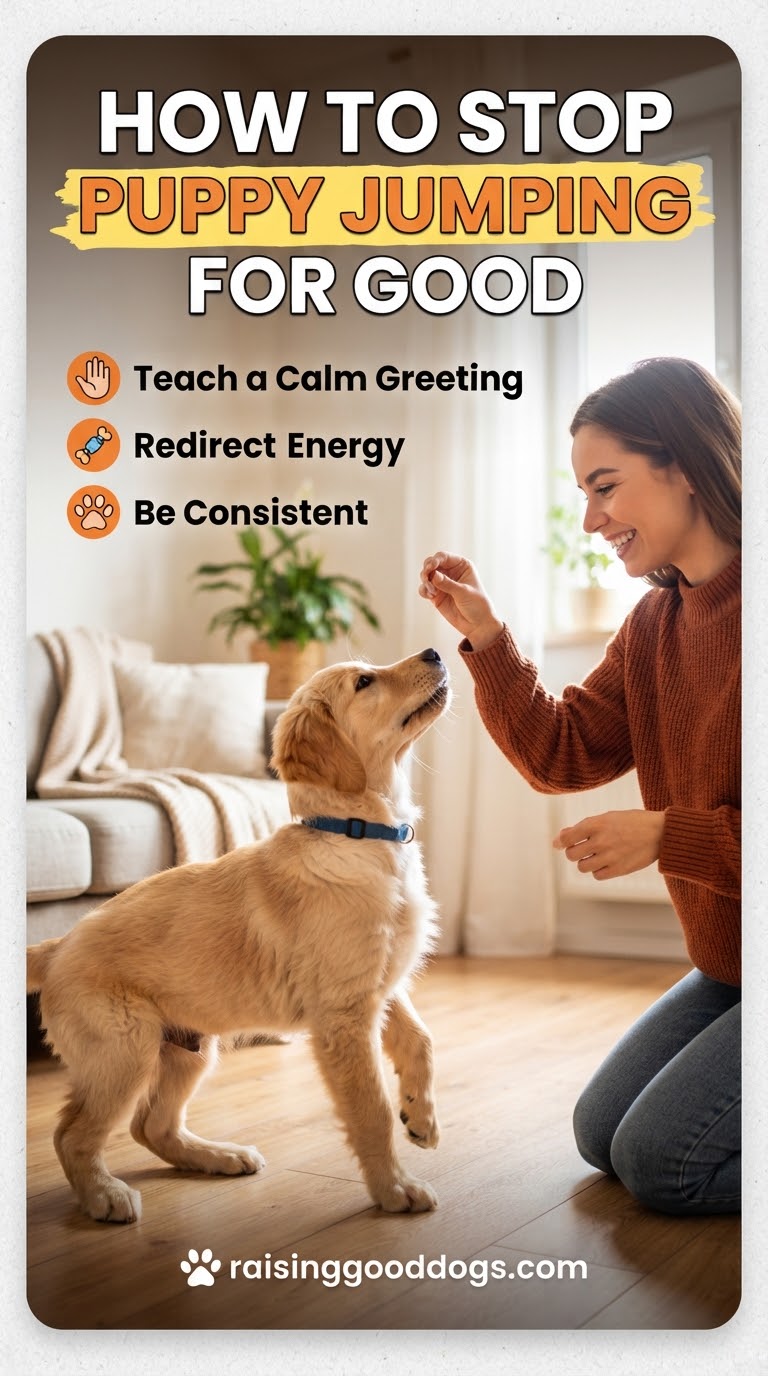
A puppy launching itself at your knees when someone walks through the door is funny exactly once. After that, it becomes the moment you start apologising to visitors and hoping nobody arrives wearing nice clothes.
I see this with young dogs all the time. The jumping is usually not a sign of a bad puppy; it is a behaviour that has worked. The puppy jumps, gets attention, and learns that paws on people make things happen.
Before training, I always remove as many chances to rehearse the jumping as possible. Use a leash when guests arrive, create distance with a baby gate if needed, and practise when your puppy is calm enough to think. A puppy who is already bouncing off the walls is not ready for a lesson.
What helps puppies stop jumping
- Teach a clear alternative behaviour like sitting or standing calmly.
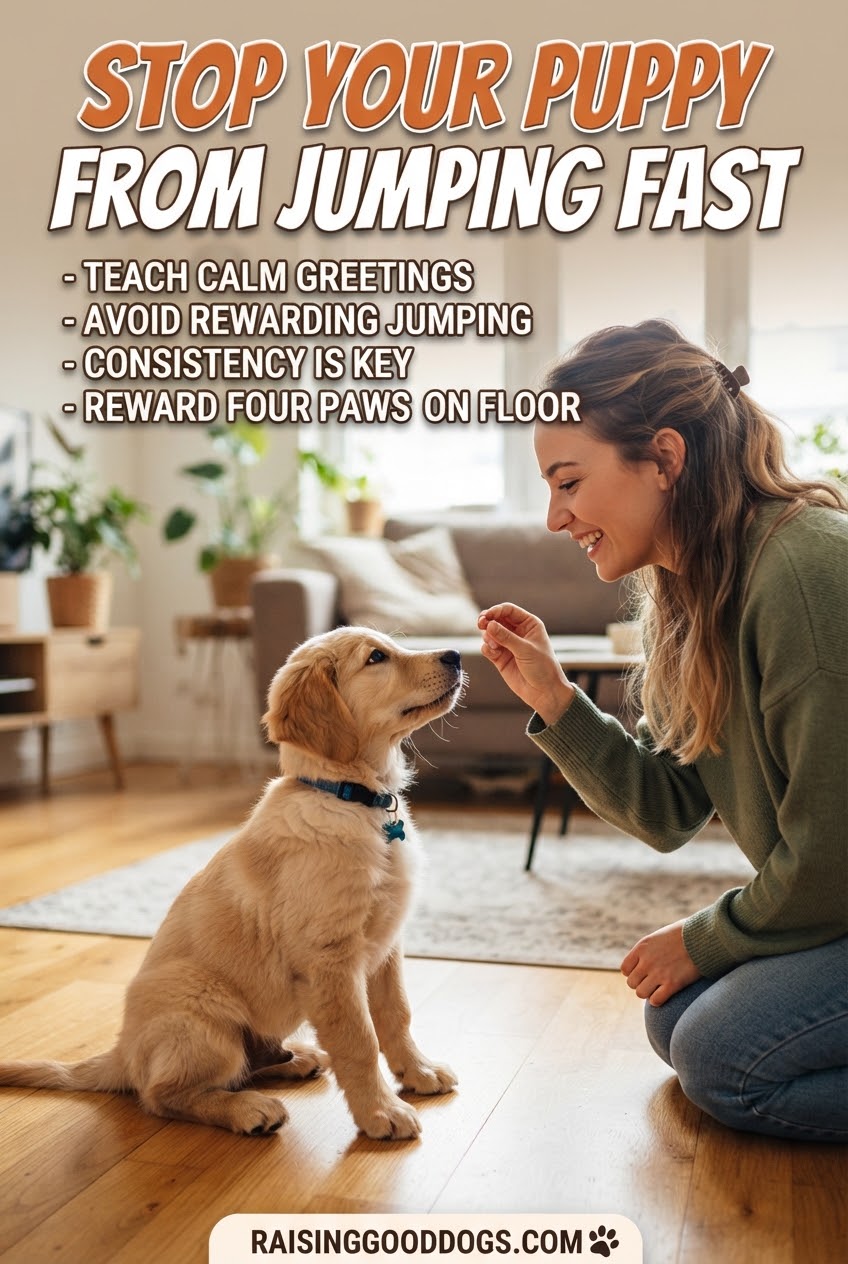
- Reward the moments when all four paws stay on the floor.
- Practise short greetings often instead of waiting for big challenges.
This process usually takes weeks, not a single afternoon. You will have good days, messy days, and days where your puppy remembers the rule only after jumping first. That is normal learning, not failure.
Teach the “Four Paws on the Floor” Rule
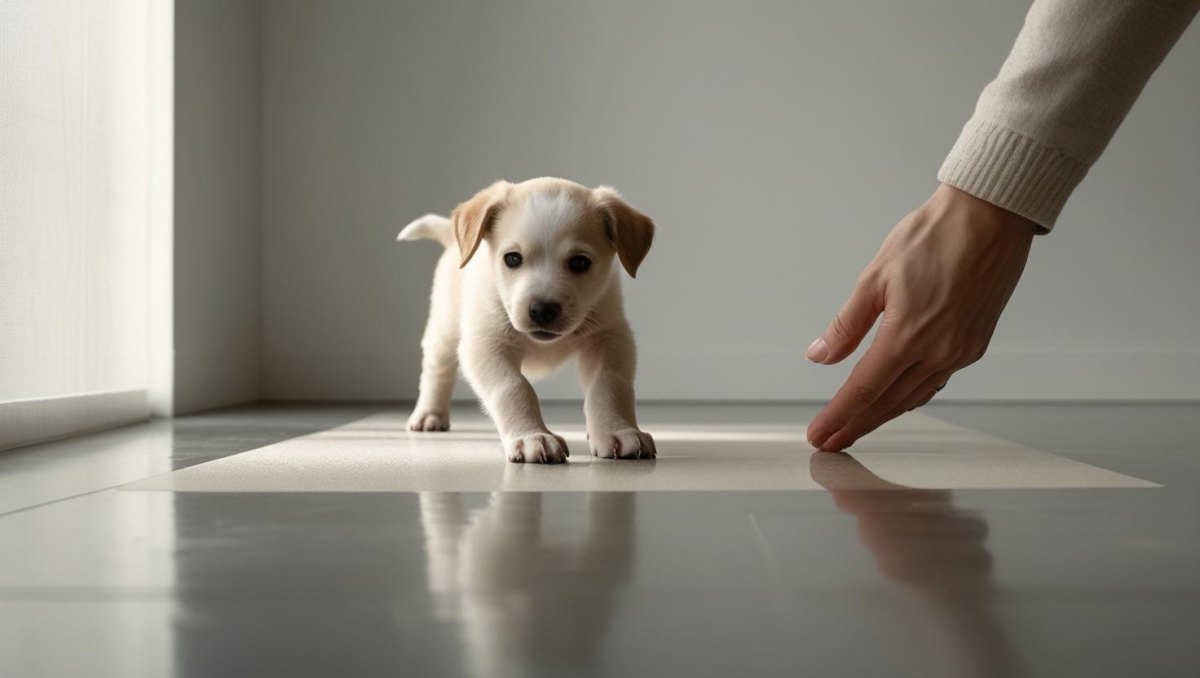
This is the foundation I start with because puppies need to know what to do instead of jumping. I do not want a puppy thinking, “I should not jump.” I want them thinking, “Keeping my feet down makes good things happen.”
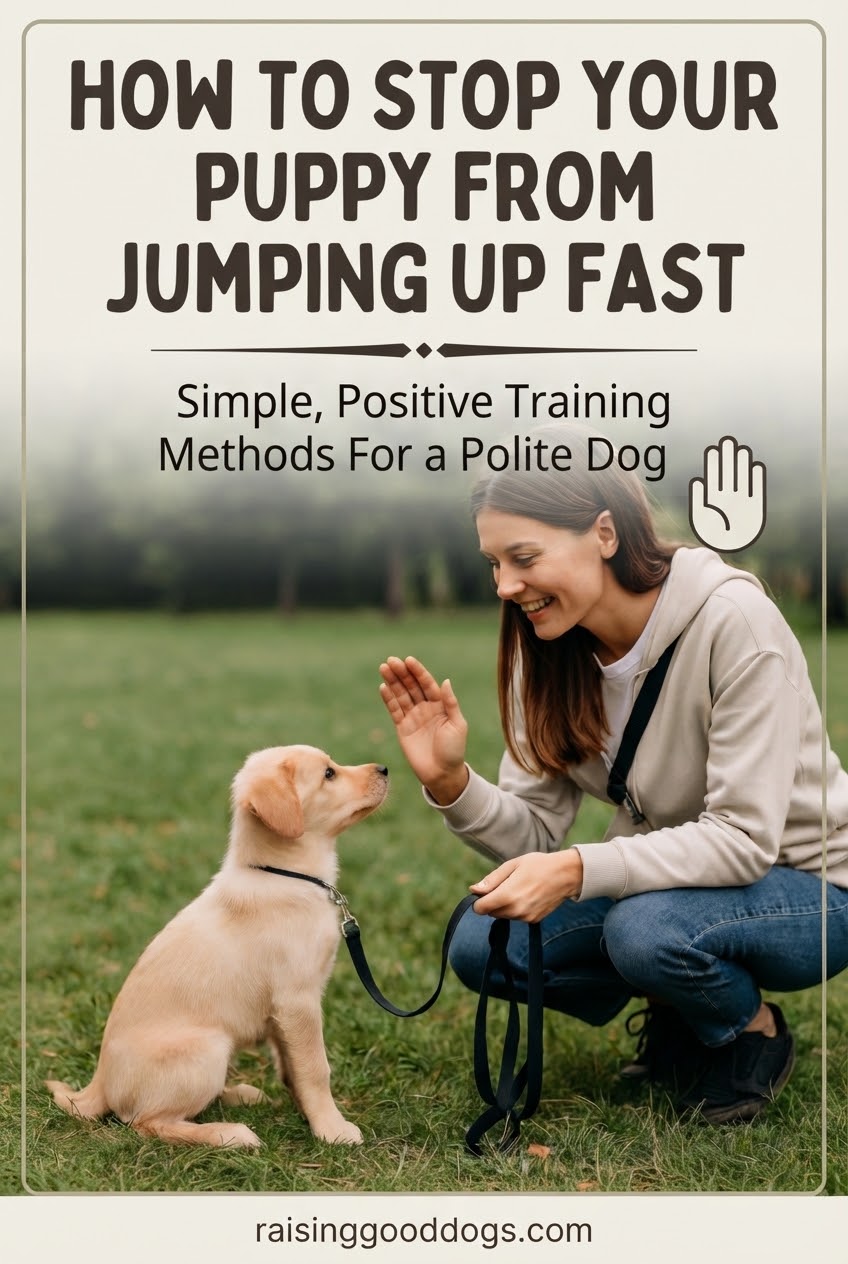
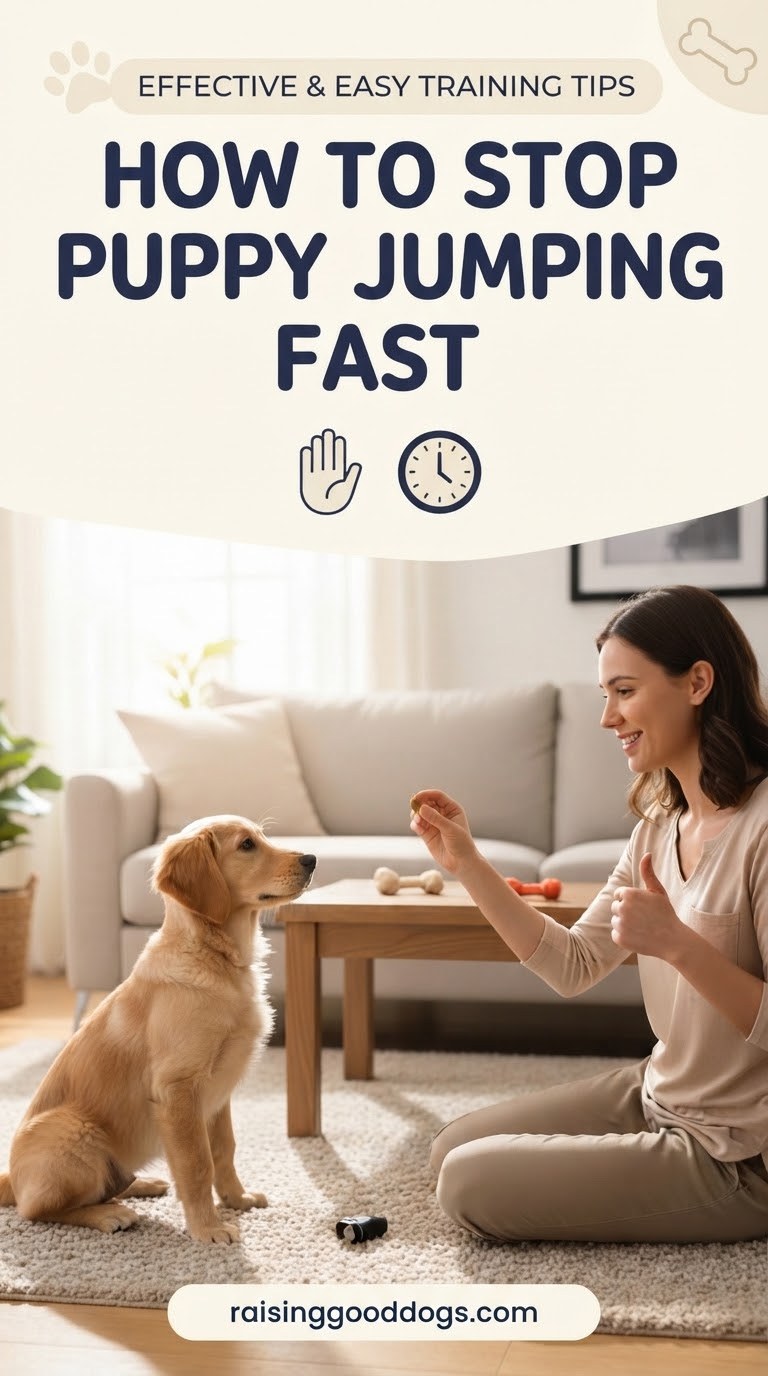
Start in a quiet room without visitors. Stand still, wait for your puppy's paws to stay on the ground, then mark that moment with praise or a treat. At first, you may be rewarding one second of calm. That is perfectly fine.
- Wait. Stand calmly and give your puppy a chance to choose a grounded position.
- Reward. Deliver the treat low, near the floor, so you do not accidentally encourage bouncing upward.
- Repeat. Practise several short sessions instead of one exhausting session.
Trainer tip
If your puppy cannot stop jumping during practice, the difficulty is too high. Lower the excitement, increase distance, or try after a nap.
Use Sit Training to Replace Jumping
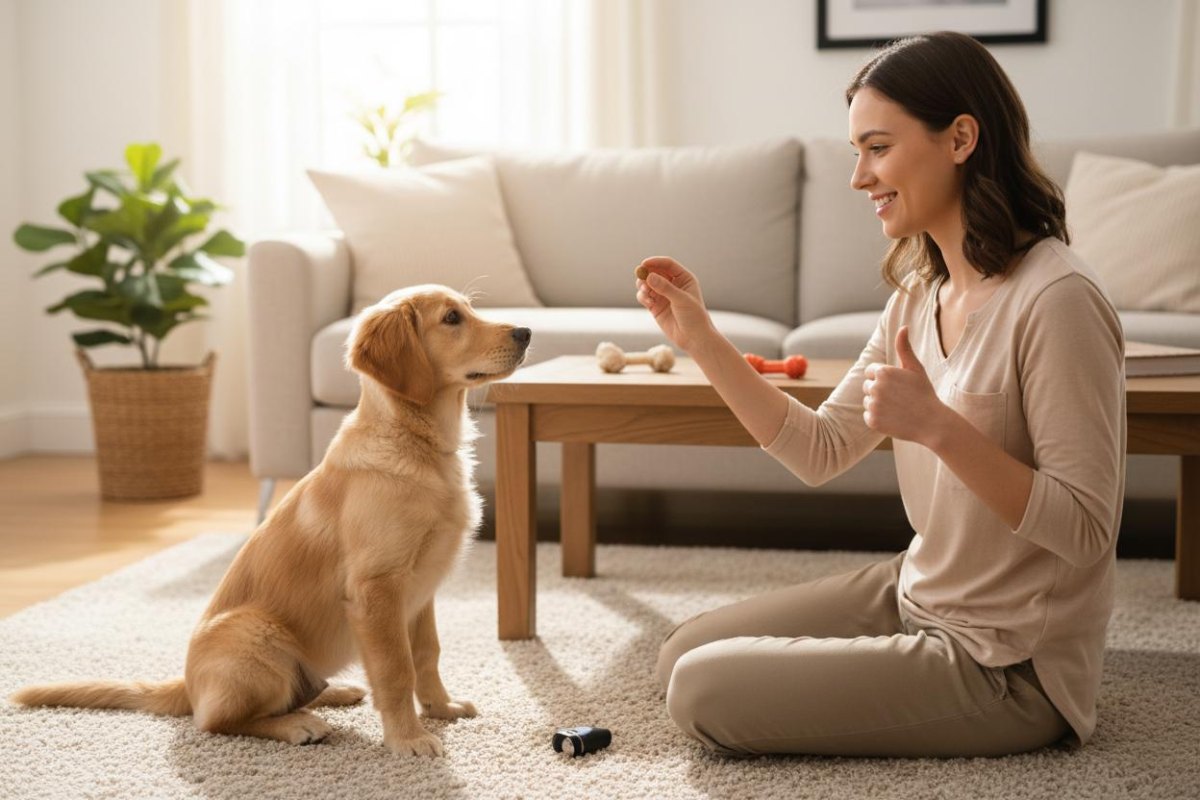
I like teaching sit as a greeting skill because it gives the puppy something clear to do with all that excitement. Sitting is not about making a puppy be perfectly still forever; it is about creating a pause where good choices can happen.
Practise the sit when nothing exciting is happening first. Then slowly add distractions. A common mistake I see is asking for a sit only when the puppy is already overwhelmed by a visitor, which is like asking me to solve paperwork while someone is ringing the doorbell repeatedly.
- Your puppy can sit when the room is quiet.
- Your puppy can take treats while practising.
- Your puppy can respond before excitement reaches its peak.
For most puppies, improving greetings takes several weeks of repetition. Expect some backsliding when excitement increases. The goal is progress, not a puppy who never gets excited.
Reward Calm Greetings and Ignore Jumping
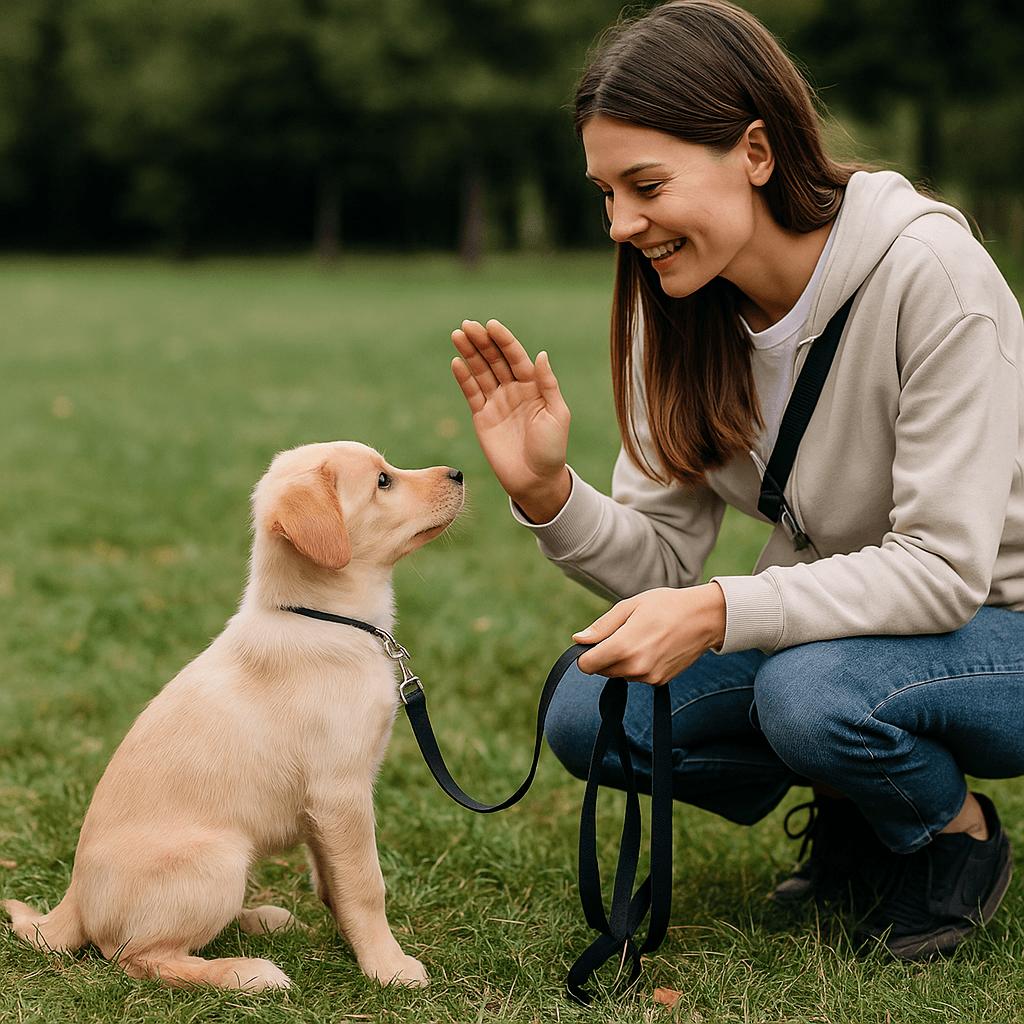
The tricky part for many families is that jumping often gets rewarded accidentally. Hands reaching down, talking loudly, pushing the puppy away, or laughing can all feel like a fun interaction to an excited dog.
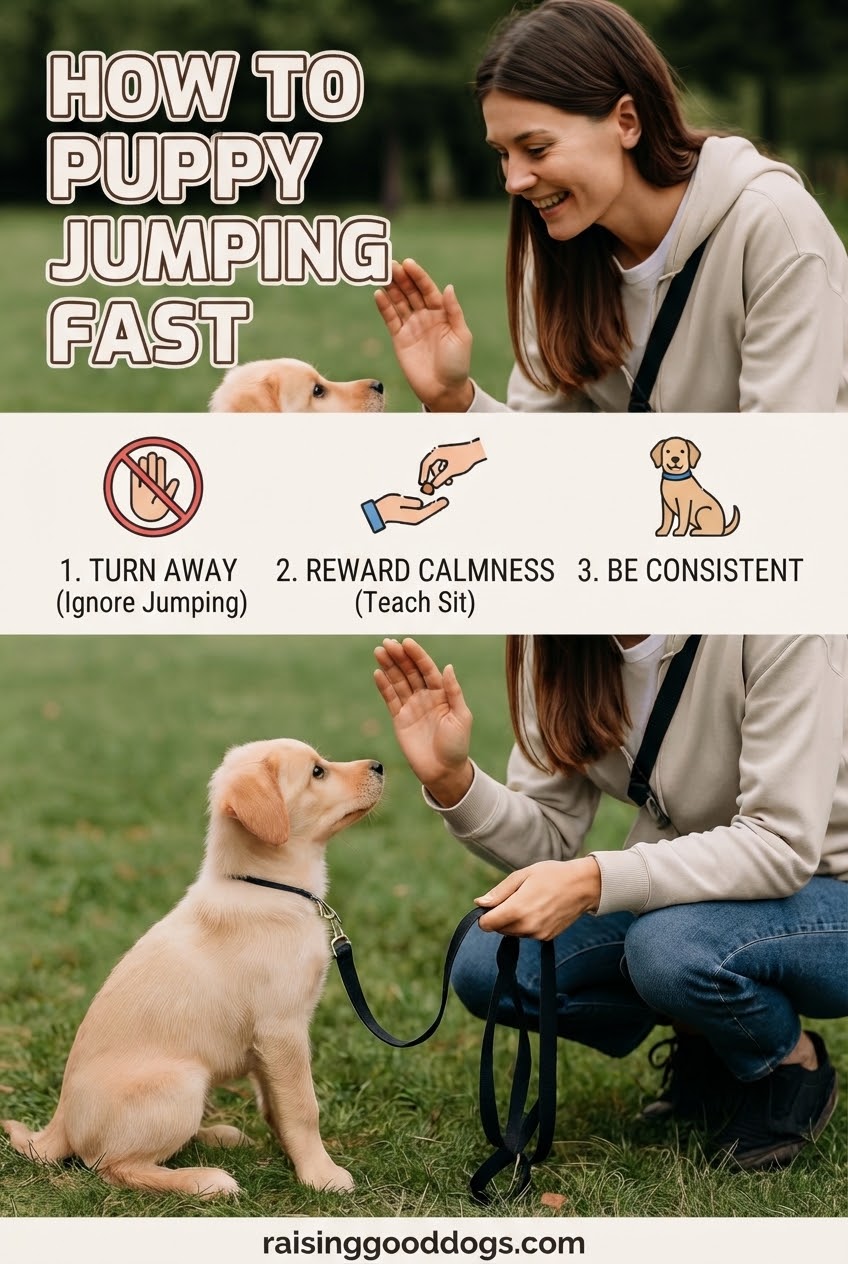
Instead, I teach people to become wonderfully boring when paws leave the floor. Turn slightly away, avoid adding attention, and wait for the puppy to return to the ground. The instant calm appears, the puppy gets the thing they wanted: connection.
A common mistake
Do not ask a puppy to sit while you are still giving lots of exciting attention. Calm behaviour needs calm feedback.
Watch your puppy's body language too. A puppy who is struggling may have a tight mouth, frantic movement, wide eyes, or difficulty taking a treat. That is information telling you to make the situation easier.
Practice Controlled Greetings with Visitors
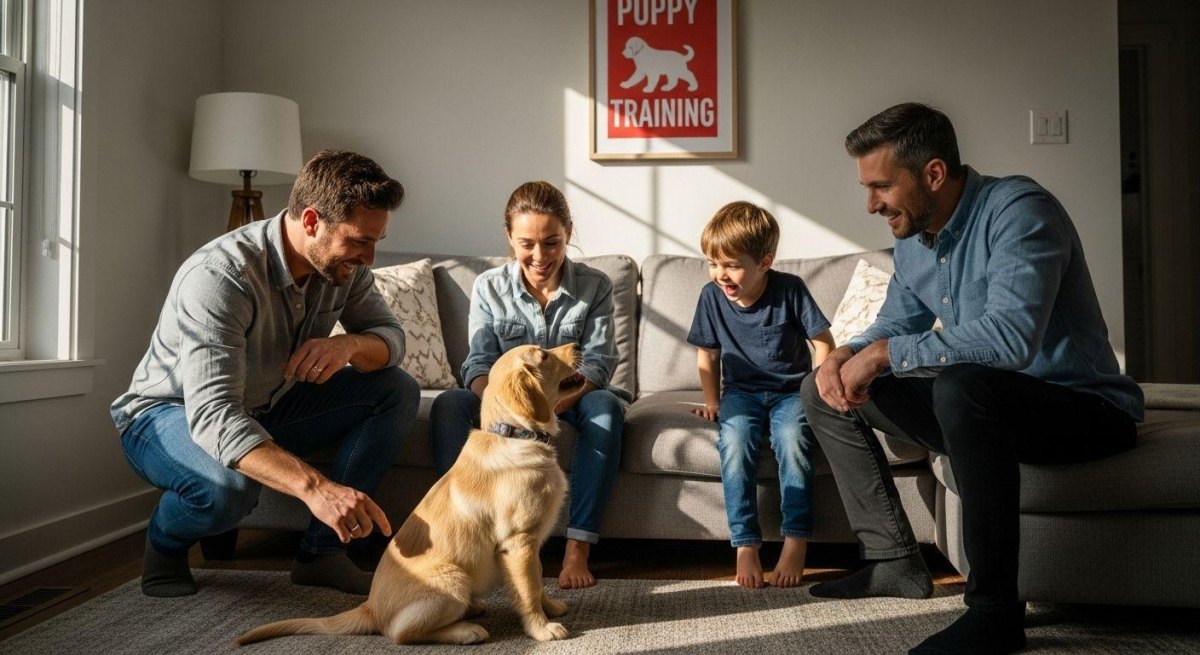
Real visitors are where many training plans fall apart. The door opens, everyone gets excited, and suddenly the puppy is practising the exact behaviour you were trying to change.
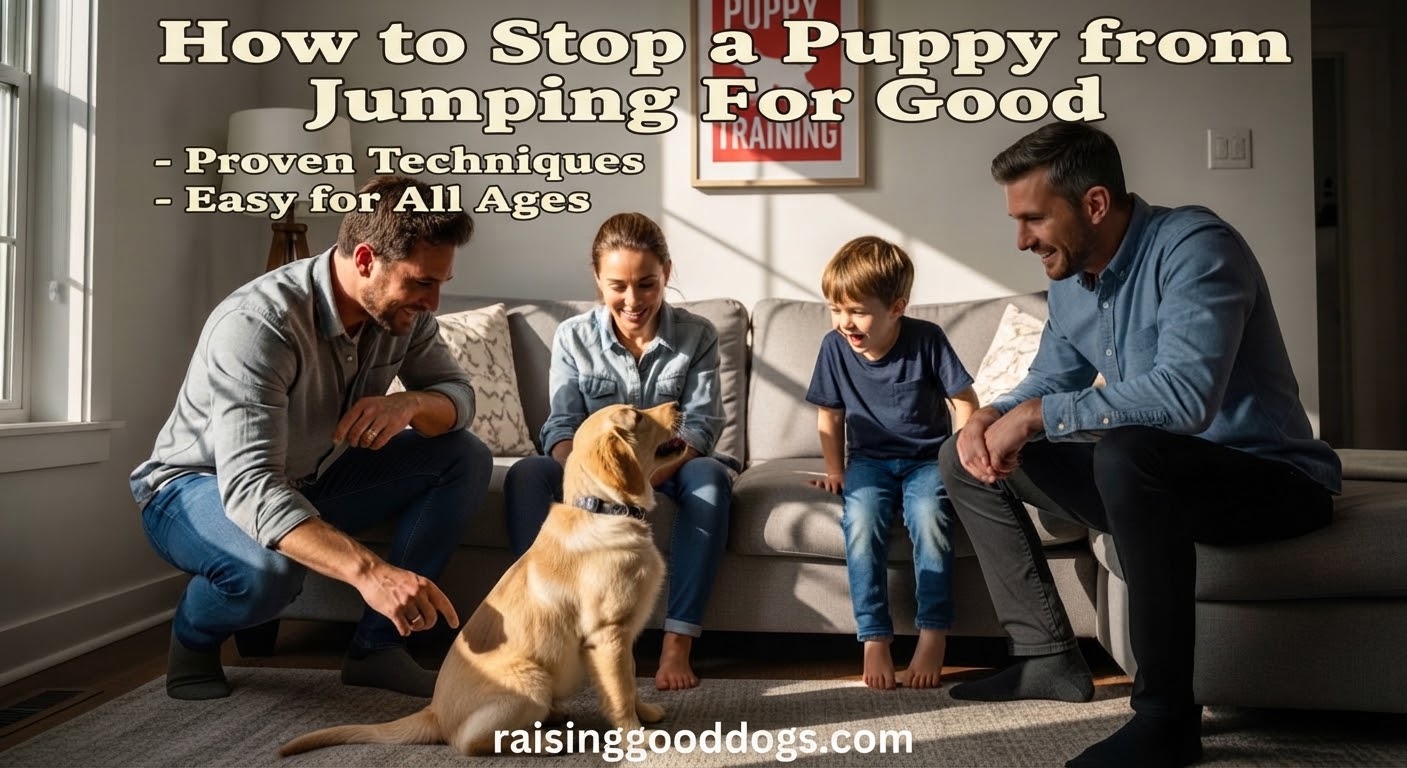
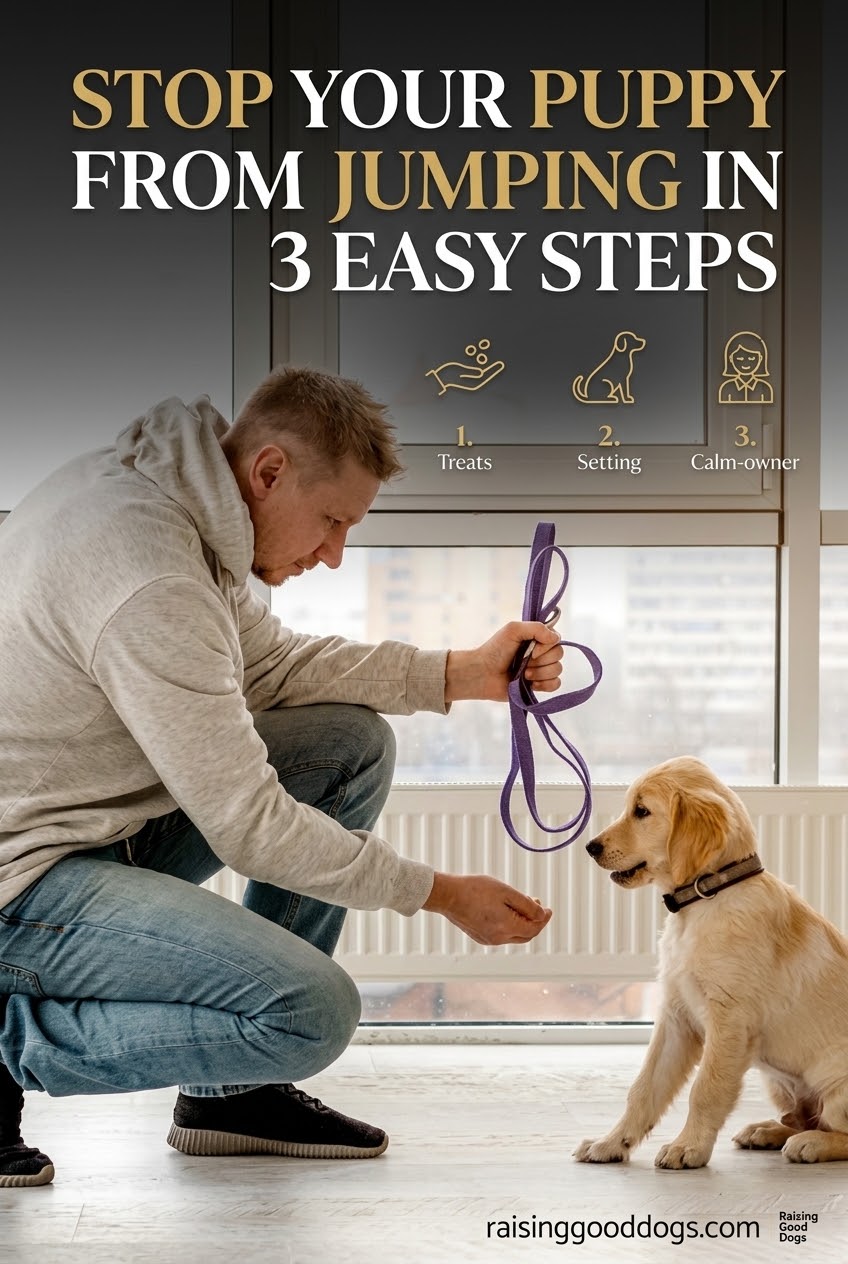
I recommend setting up pretend greetings. Ask a friend to help, keep your puppy on a leash, and work at a level where your puppy can still think. If your puppy is pulling, barking, or ignoring food, the person is probably too close or the greeting is too long.
- Before the door opens: prepare treats, leash, and a quiet space if your puppy needs a break.
- During the greeting: reward calm feet and relaxed body language.
- After practice: end while your puppy is still successful.
If a puppy has bitten someone, especially if skin was broken, or if there is aggression around children or serious fear, this is beyond a blog exercise. I would involve a certified professional in person and discuss the situation with your vet.
Build Consistency with Daily Jumping Practice
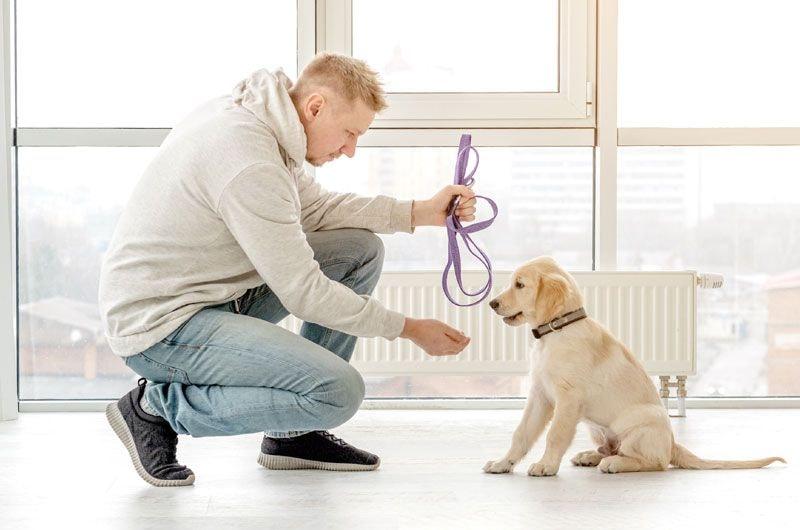
The families who make the most progress are rarely the ones doing marathon training sessions. They are the ones fitting tiny moments of practice into ordinary life.
I would rather see you spend three minutes practising calm greetings after breakfast than twenty minutes once a week when everyone is frustrated. Puppies learn through repetition, and the repetition needs to happen in the situations where the behaviour matters.
Remember
A setback usually means the environment was harder than your puppy was ready for. It does not erase the learning that already happened.
Keep rewarding the behaviour you want to see. Eventually, the exciting arrival of a person becomes a cue for your puppy to check in, plant those paws, and wait for the greeting to begin.
How long does it take to stop a puppy from jumping?
Most puppies need several weeks of consistent practice. The timeline depends on age, excitement level, previous habits, and how often jumping has been rewarded.
Should I push my puppy down when they jump?
I do not recommend pushing, kneeing, or startling a puppy. Those responses can add excitement or create confusion. Teaching and rewarding an alternative behaviour is clearer.
When should I ask for professional help?
If jumping is connected to fear, aggression, inability to calm down, or safety concerns, I would bring in a qualified trainer for an in-person assessment.




More Pinterest Visuals