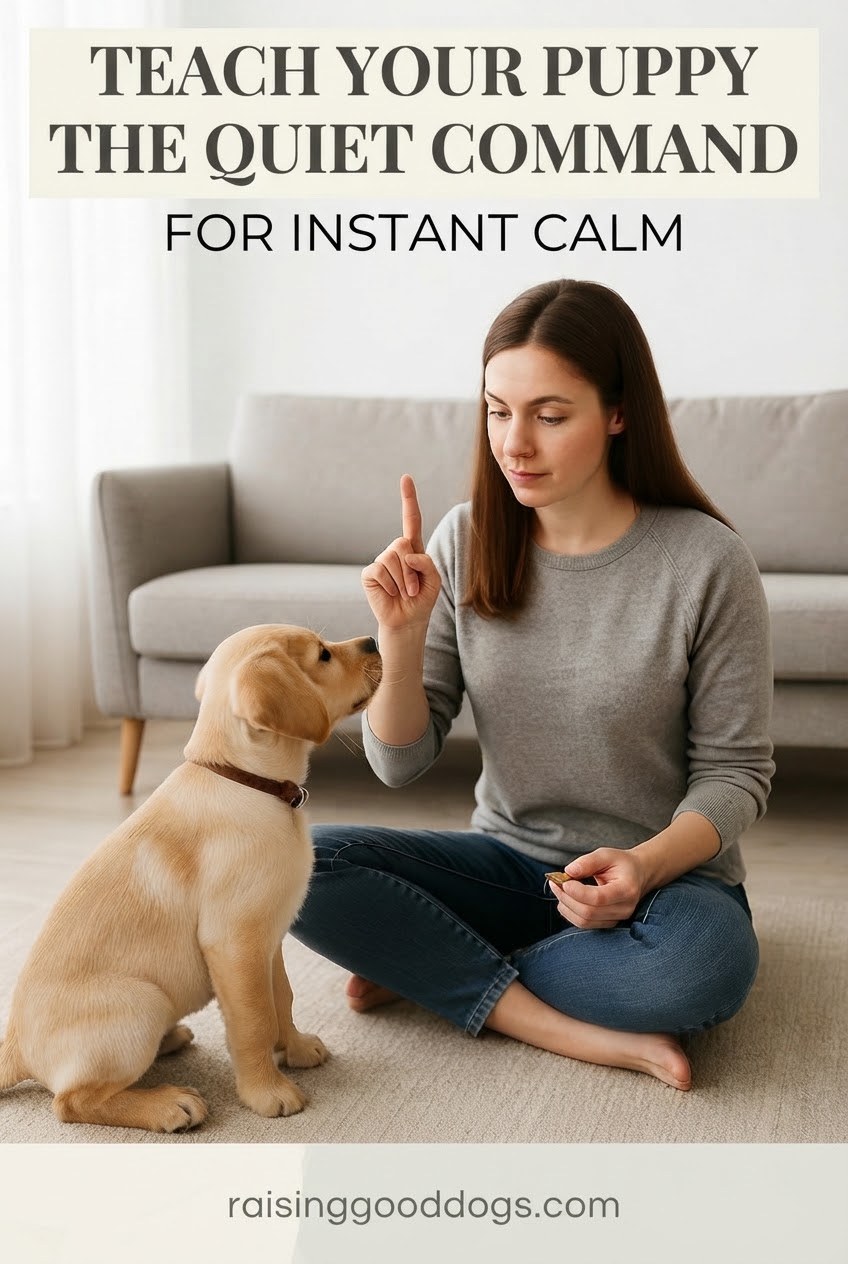
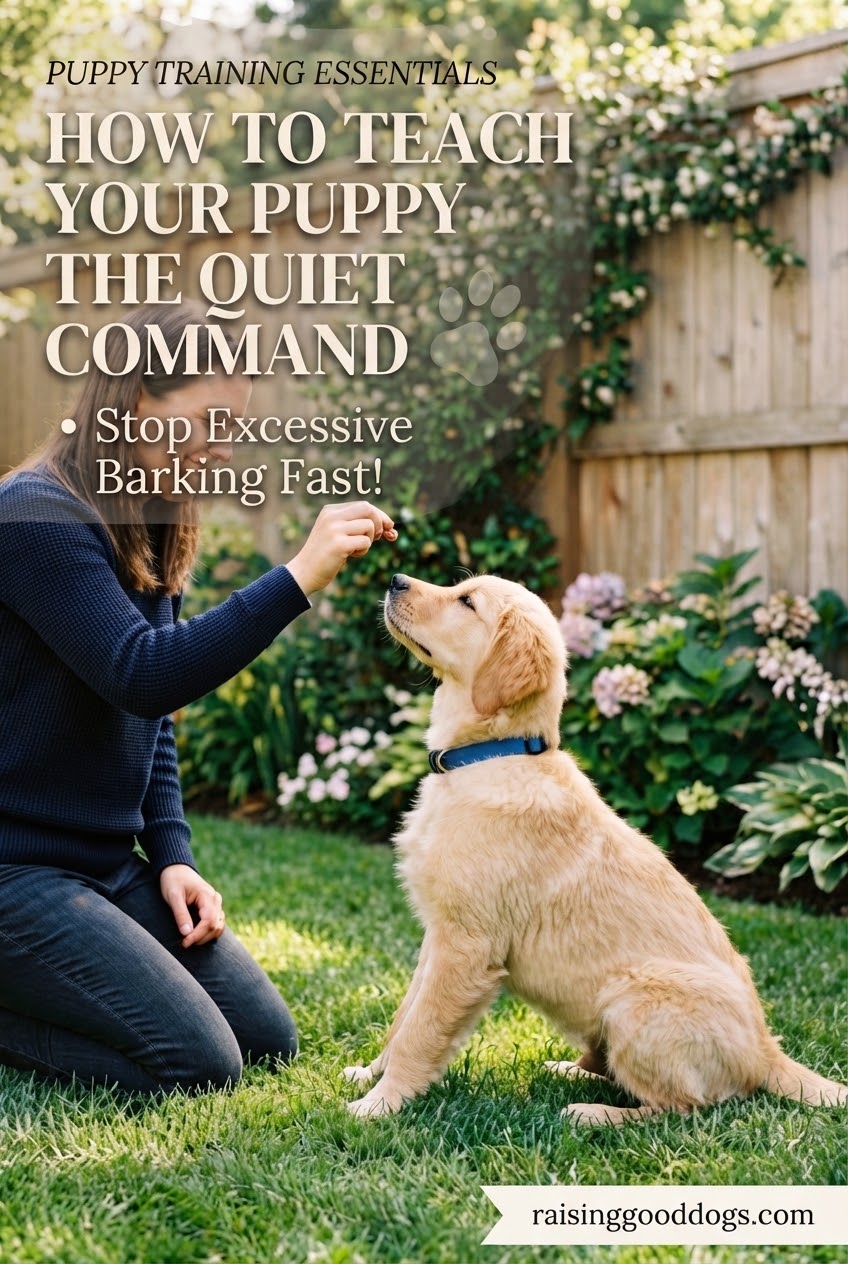
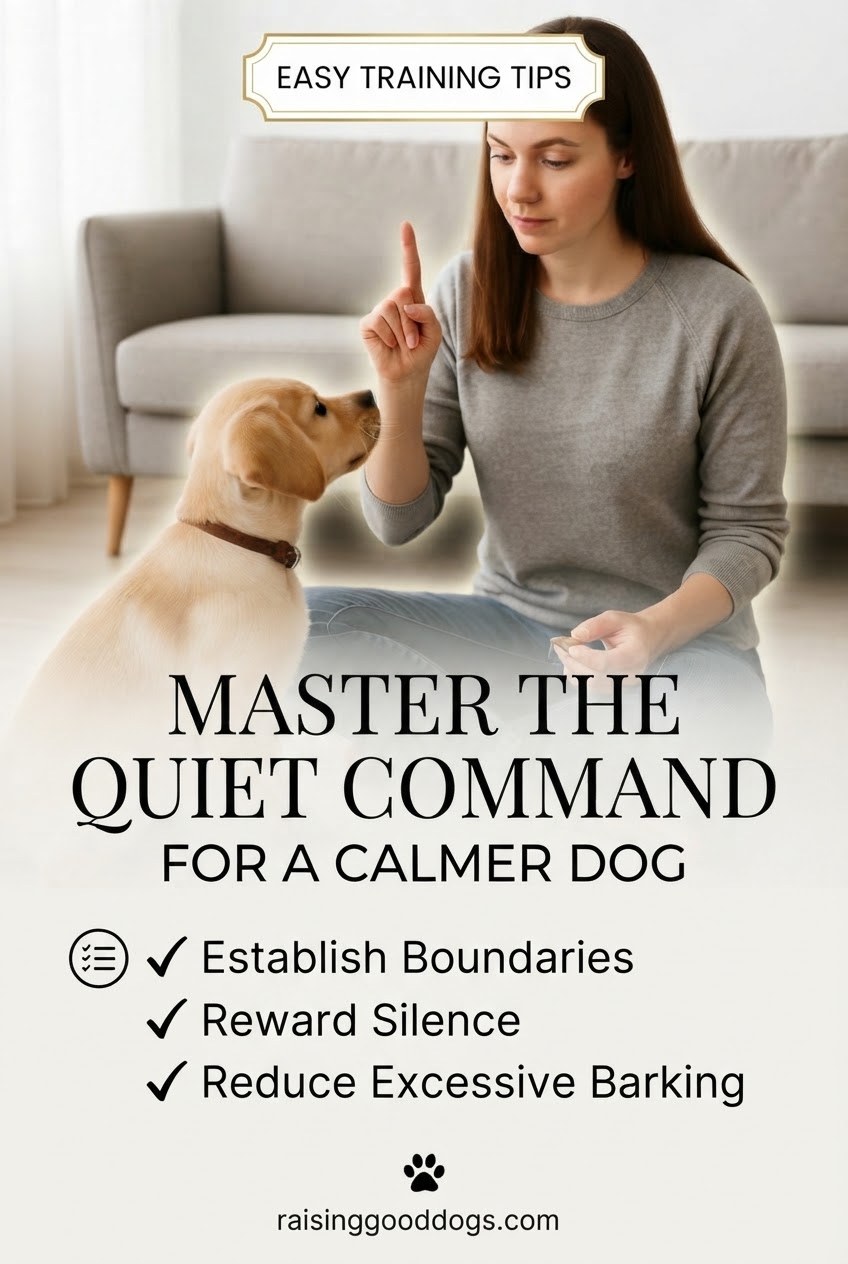
A barking puppy can make an ordinary Tuesday feel like a full-time job, especially when the barking starts at the window, the door, or the neighbour’s footsteps. I teach the quiet command by first asking what the puppy is communicating and then building a different habit.
The goal is not a silent dog who never speaks. I want a dog who can notice something exciting and then return to calm behaviour when I ask. That takes practice, management, and more patience than most quick tips admit.
Teaching the “Quiet” Command with Positive Reinforcement
What I focus on first
- Reward the moment of silence rather than punishing the noise.
- Start where your puppy can succeed, not during the biggest barking explosion.
I begin by preventing endless rehearsal. If your puppy spends every afternoon barking at the window, I use management first: close the curtain, change the setup, or create distance. Then we train the quiet response when the puppy is able to think.
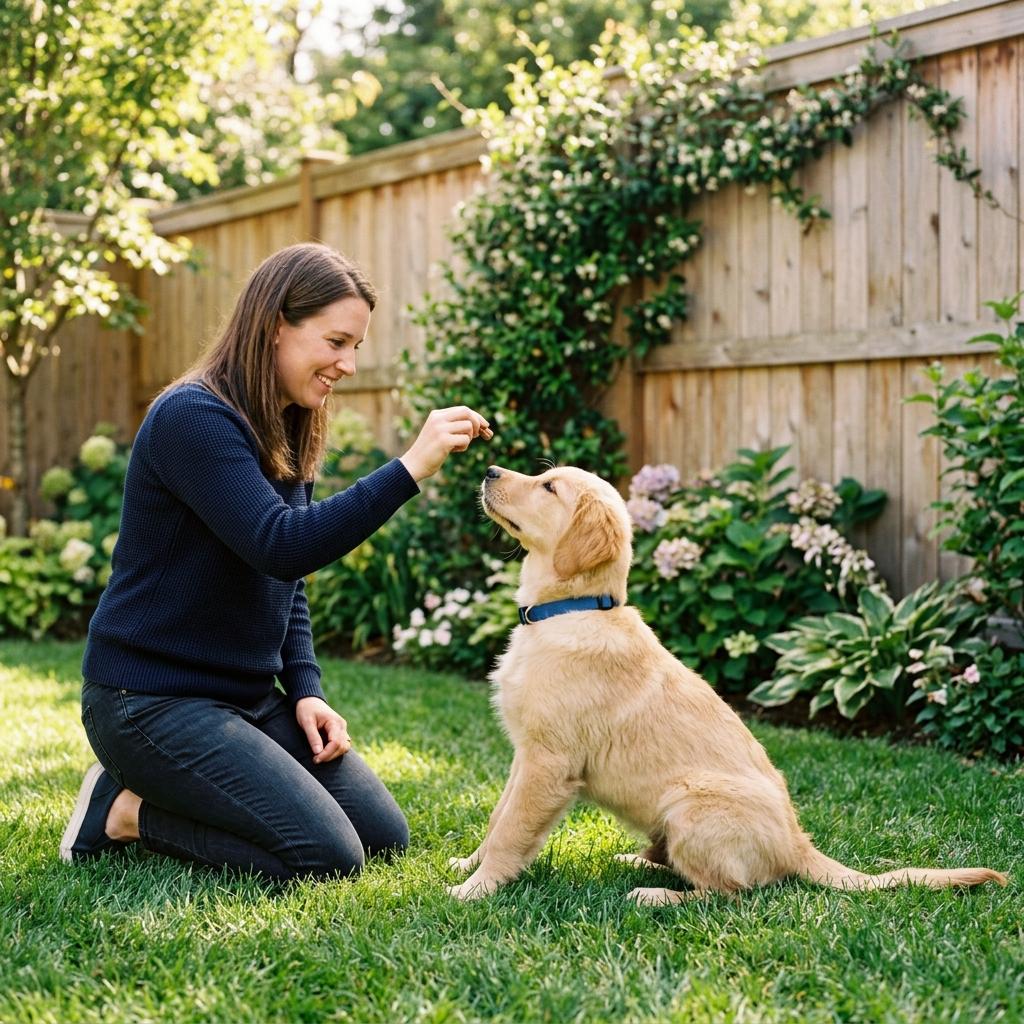
My first sessions are usually very simple. I wait for a tiny pause in barking, mark that moment, and reward it. Reward-based training works because behaviours followed by something valuable are more likely to happen again.
- Wait. Look for even one second of silence from your puppy.
- Reward. Deliver a treat calmly while the puppy is quiet.
- Repeat. Slowly build longer quiet periods before adding the cue word.
Introducing the Quiet Cue During Barking Moments
The hardest part of teaching quiet is that people often introduce the word when their puppy is already at maximum volume. At that point, the puppy is usually too aroused to learn. I look for the early barking signs instead: ears forward, weight shifting toward the trigger, closed mouth after scanning, or a sudden freeze.
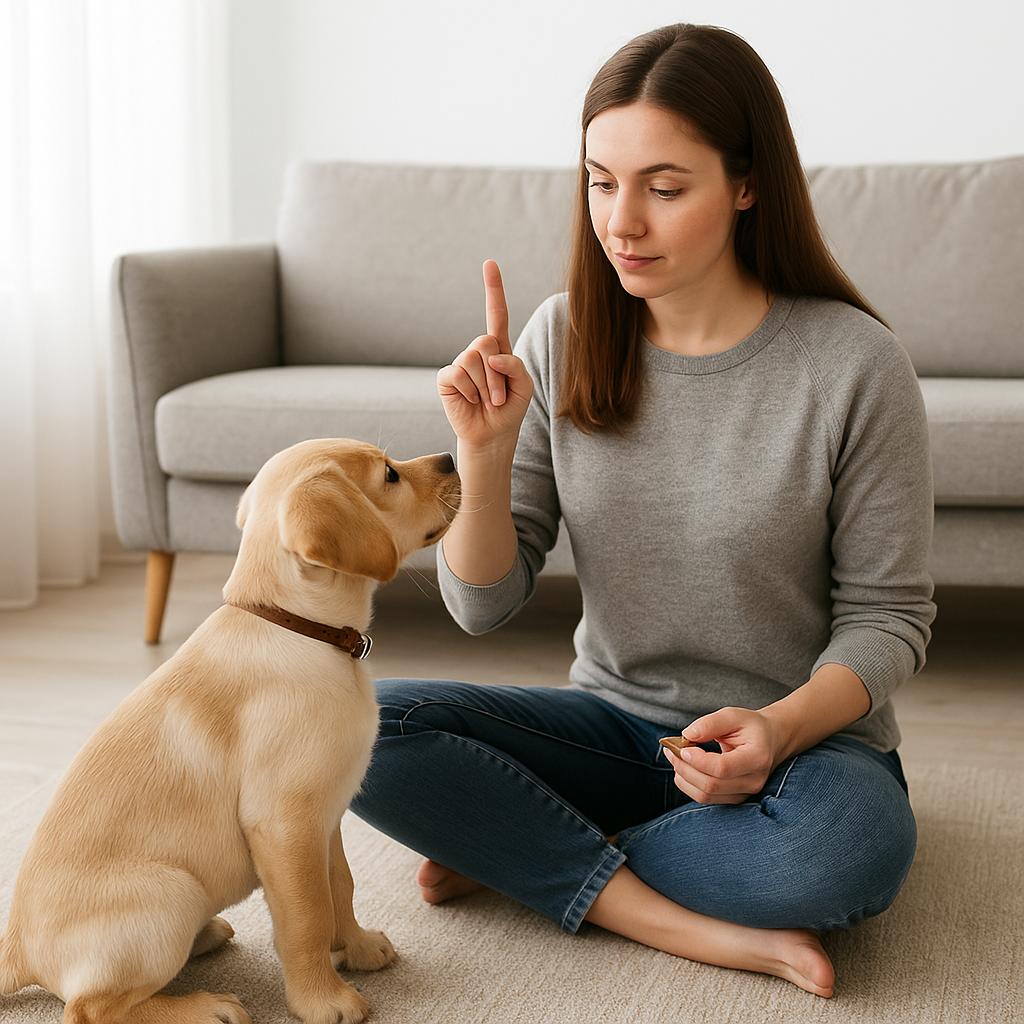
Once the puppy understands that silence earns good things, I add the word “quiet” just before the pause I expect. The cue becomes meaningful because it predicts a behaviour the puppy already knows.
A tip from my training room
Do not compete with your barking puppy by getting louder. A calm voice and a smaller training moment usually give you more information.
If barking suddenly appears in an adult dog, or comes with pain signs, fear, or a major behaviour change, I want a vet check before assuming it is simply a training issue.
Rewarding Silence and Calm Behavior
I spend a lot of time teaching owners to notice what happens between the exciting moments. A puppy lying down, looking away from the window, sighing, or resting their chin is already showing calm body language worth rewarding.
Many dogs are not being stubborn; they simply have not learned that quiet choices are valuable. Calmness can be built by reinforcing relaxed behaviour and gradually increasing the time before rewards arrive.
- Reward relaxed posture, not just perfect obedience.
- Keep your voice and movements low-key.
- Increase expectations slowly over several sessions.
Why this works
- Builds a behaviour your puppy can offer independently.
- Creates calmer habits around everyday triggers.
What makes it difficult
- Progress is measured in weeks, not one afternoon.
- Exciting environments can temporarily reduce success.
Practicing the Quiet Command in Different Environments
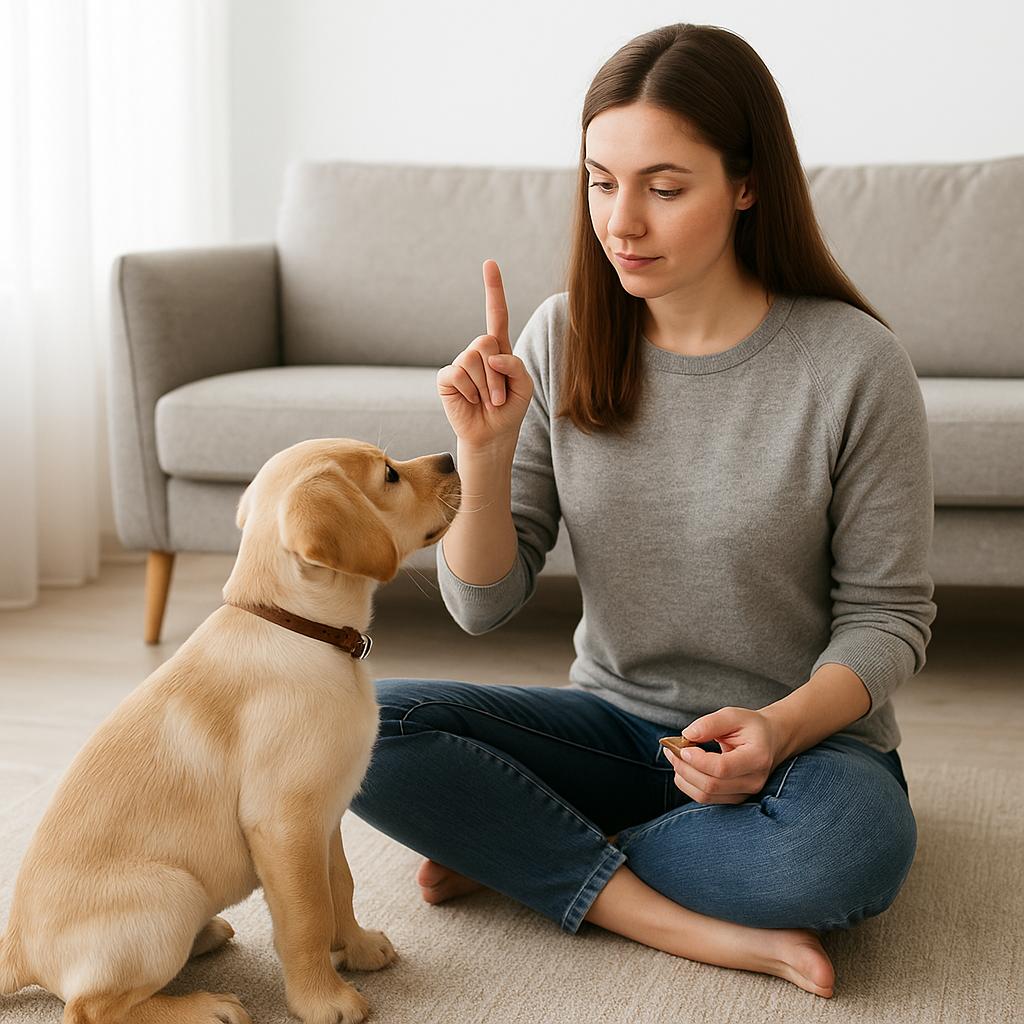
A puppy who is quiet in your kitchen may look completely confused outside. I see this constantly. Dogs learn behaviours in context, so the harbour path, the front porch, and the training room are not automatically the same lesson. Generalising the cue is part of the training.
I move slowly: bedroom first, then living room, then yard, then a quiet outdoor area. I change one difficulty at a time so the puppy has a chance to succeed instead of practising failure.
| Location | Training goal |
|---|---|
| Home | Learn the cue with few distractions |
| Yard | Practice around mild noises |
| Public area | Use the skill around real-life distractions |
A common mistake
Testing the quiet cue at the busiest possible moment is not proof of failure. It simply means the difficulty jumped too quickly.
Building Long-Term Quiet Command Success
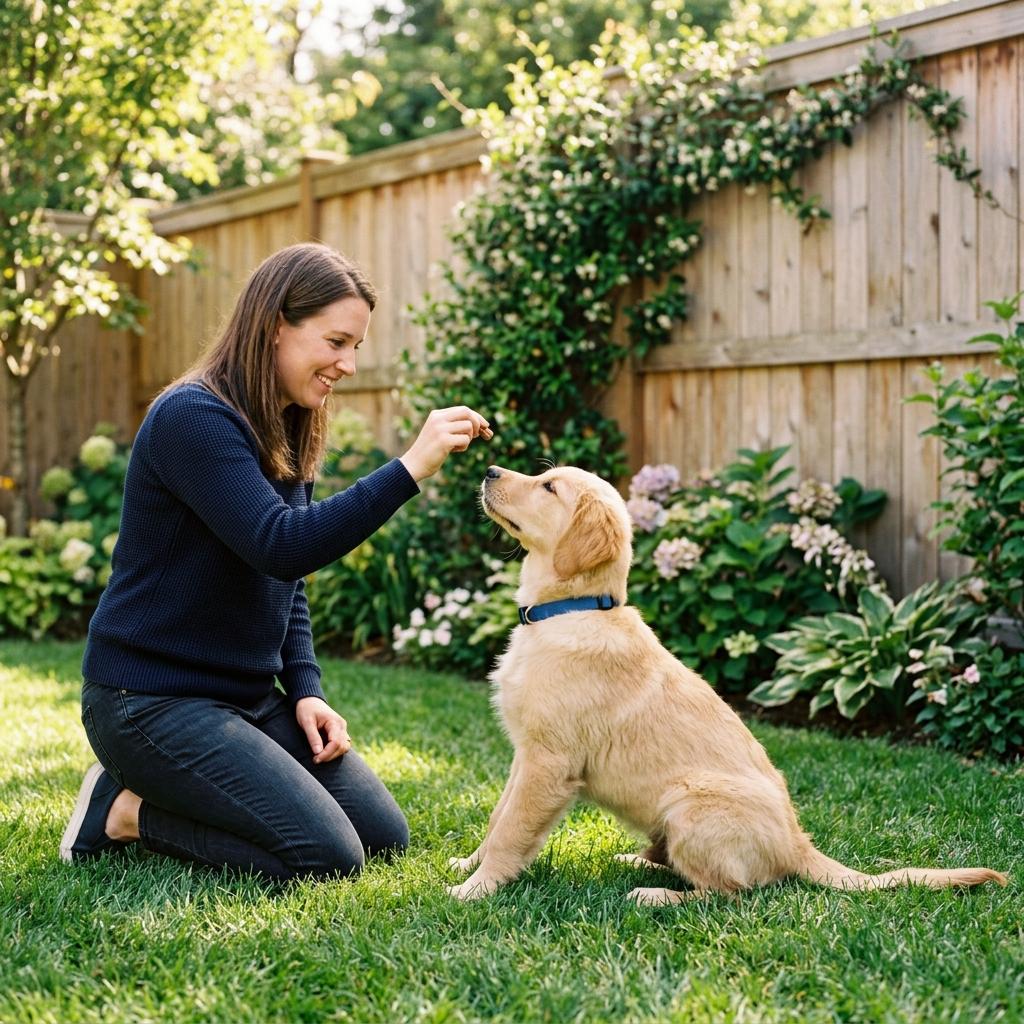
The families I work with usually ask, “When will this be fixed?” I understand the question. I have lived through difficult behaviour with Bruno myself. The honest answer is that reliable quiet behaviour is built over time, with maintenance and realistic expectations.
I keep rewarding the behaviour I want, even after the puppy understands the cue. Rewards can change over time, but the training history matters. Consistency helps a dog keep choosing the quiet option.
- Daily practice: Short sessions are more useful than occasional long ones.
- Setbacks: A barking relapse usually means the situation became harder, not that training disappeared.
- Professional help: Severe fear, aggression, or dangerous behaviour needs an in-person qualified professional.
The skill I want owners to keep
A quiet command is not about controlling every sound your puppy makes. It is about giving your dog a clear, practiced way back to calm.




More Pinterest Visuals