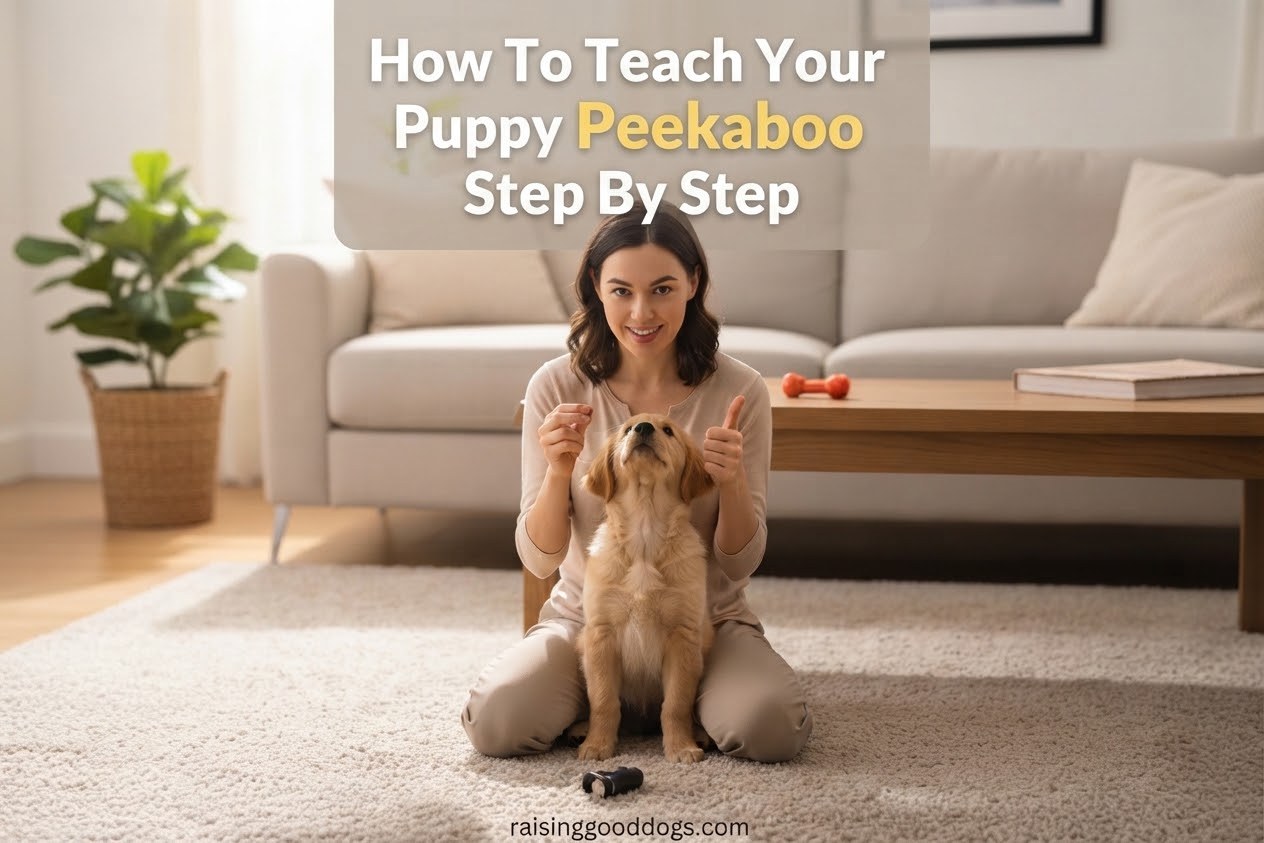
The first time a puppy pops their face into your hands for a peekaboo, it feels like a tiny bit of magic. The truth is, it is just a behaviour built in small pieces. I teach tricks this way because the dog in front of me matters more than the perfect demonstration. A puppy who is distracted by a sock, a leaf, or the neighbour’s footsteps needs a plan that works on an ordinary Tuesday.
This peekaboo trick training guide breaks the behaviour into manageable steps using rewards, clear cues, and short practice sessions. I am not looking for a puppy who performs on command after one afternoon; I am looking for a puppy who understands the game and enjoys learning.
Choose the Right Cue and Setup
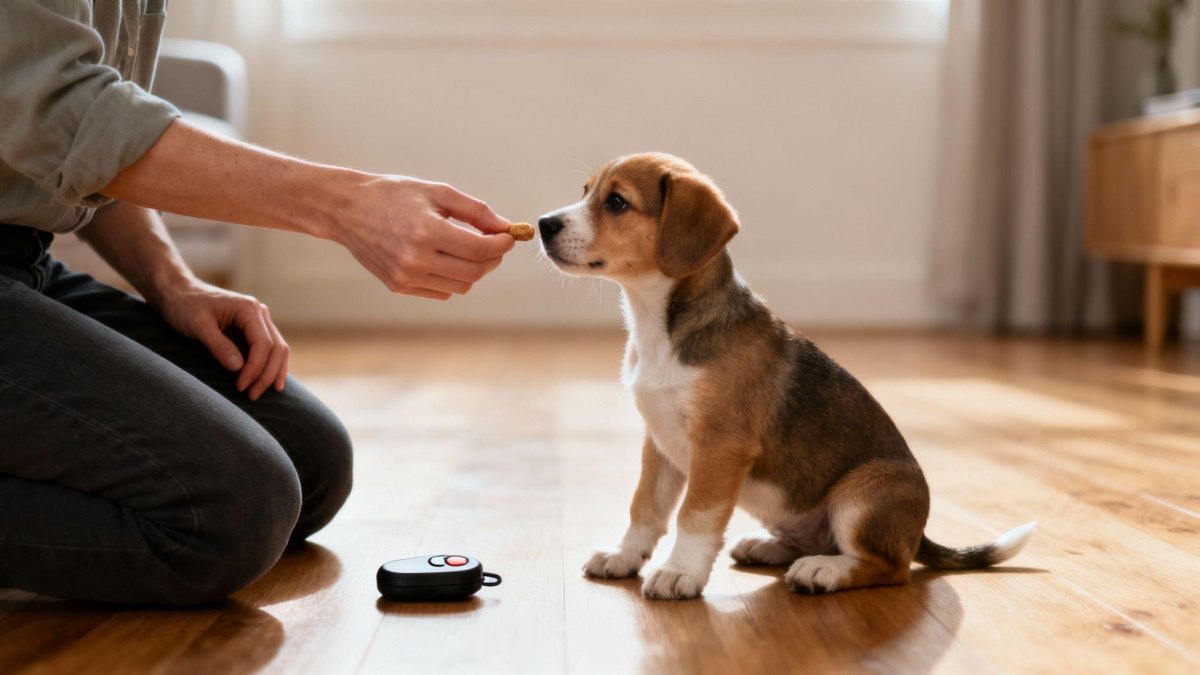
Before I teach peekaboo, I make the environment boring enough that the puppy can think. A quiet room, a few small treats, and a puppy who has had a chance to rest will beat a chaotic training session every time. Good training setup is not fancy equipment; it is removing unnecessary difficulty.
I start by deciding what the finished behaviour looks like. For most puppies, peekaboo means coming behind my hands and placing their face between them. I reward tiny steps toward that picture rather than waiting for perfection. This shaping approach is a useful way to build new behaviours gradually.
Peekaboo starting checklist
- Use a calm space with few distractions.
- Have small rewards ready before asking.
- Train when your puppy is awake but not overtired.
Teach Your Puppy to Hide Behind Your Hand
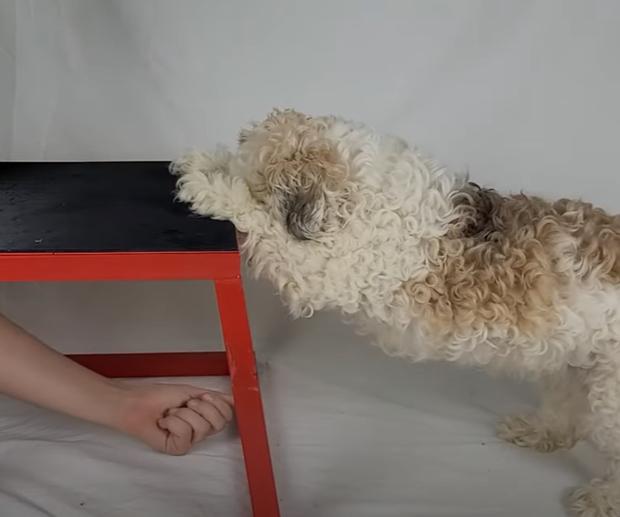
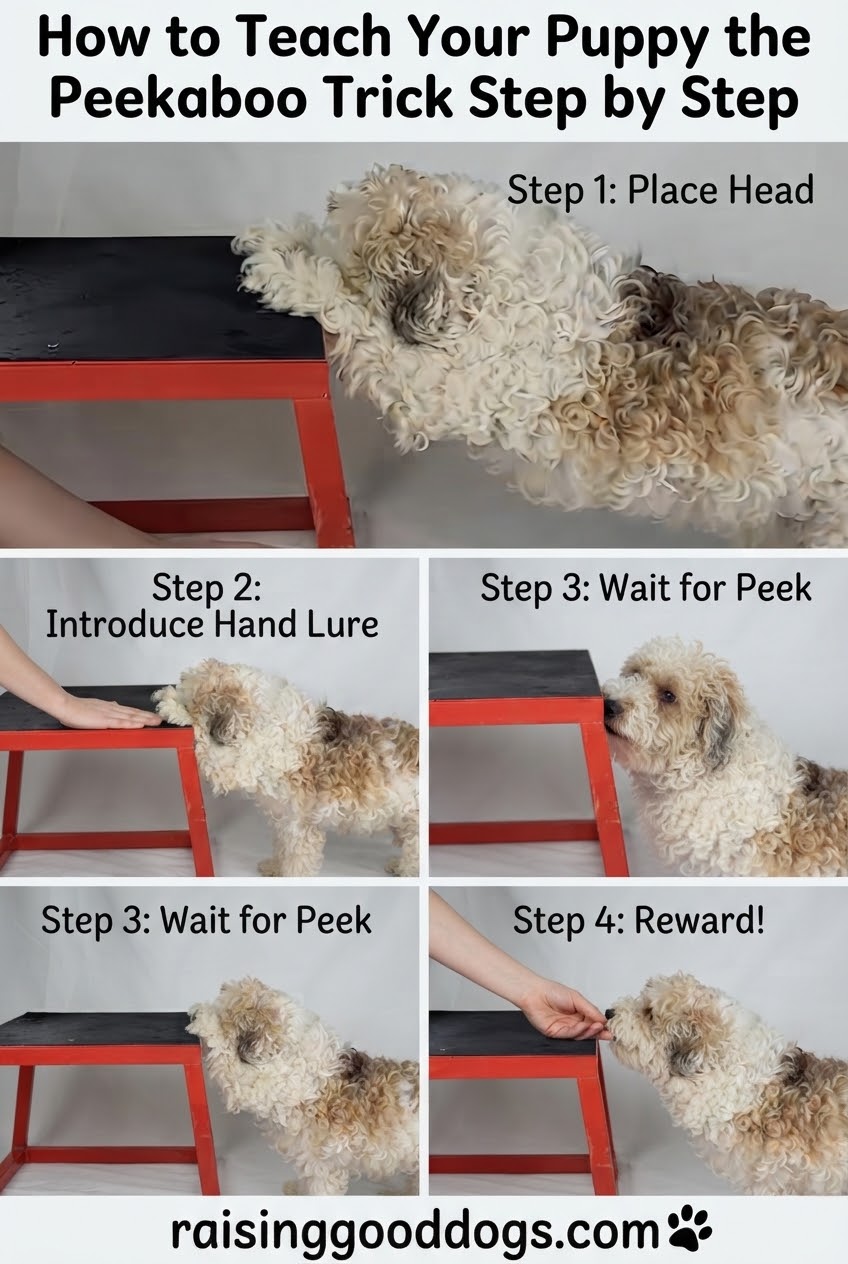
I begin with my hands as a target, not as a trap. Some puppies naturally investigate hands, while others need encouragement. I reward looking toward my hands first, then moving closer, then placing their face into position. Small rewarded steps are what create the final trick.
If your puppy already knows a nose touch, this can make the process much smoother. Hand targeting is commonly taught by rewarding the dog for approaching and touching a target, then gradually increasing the difficulty.
- Present. Hold your hands open and let your puppy investigate.
- Reward. Mark and treat any movement toward the centre of your hands.
- Shape. Slowly wait for the puppy to bring their face farther into position.
- Repeat. Keep sessions easy enough that your puppy wants another turn.
Trainer tip
If your puppy backs away, freezes, or avoids your hands, I lower the difficulty. The answer is not to push through; it is to make the next repetition easier.
Add the Peekaboo Word Command
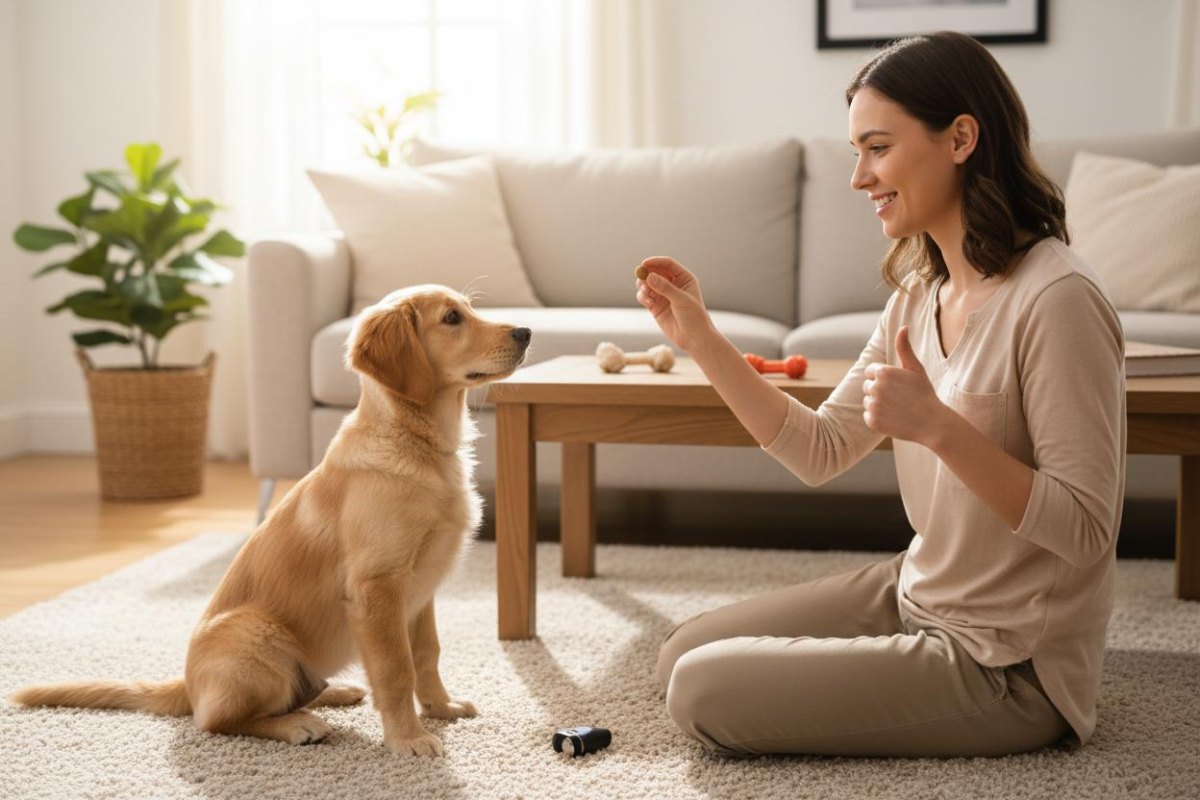
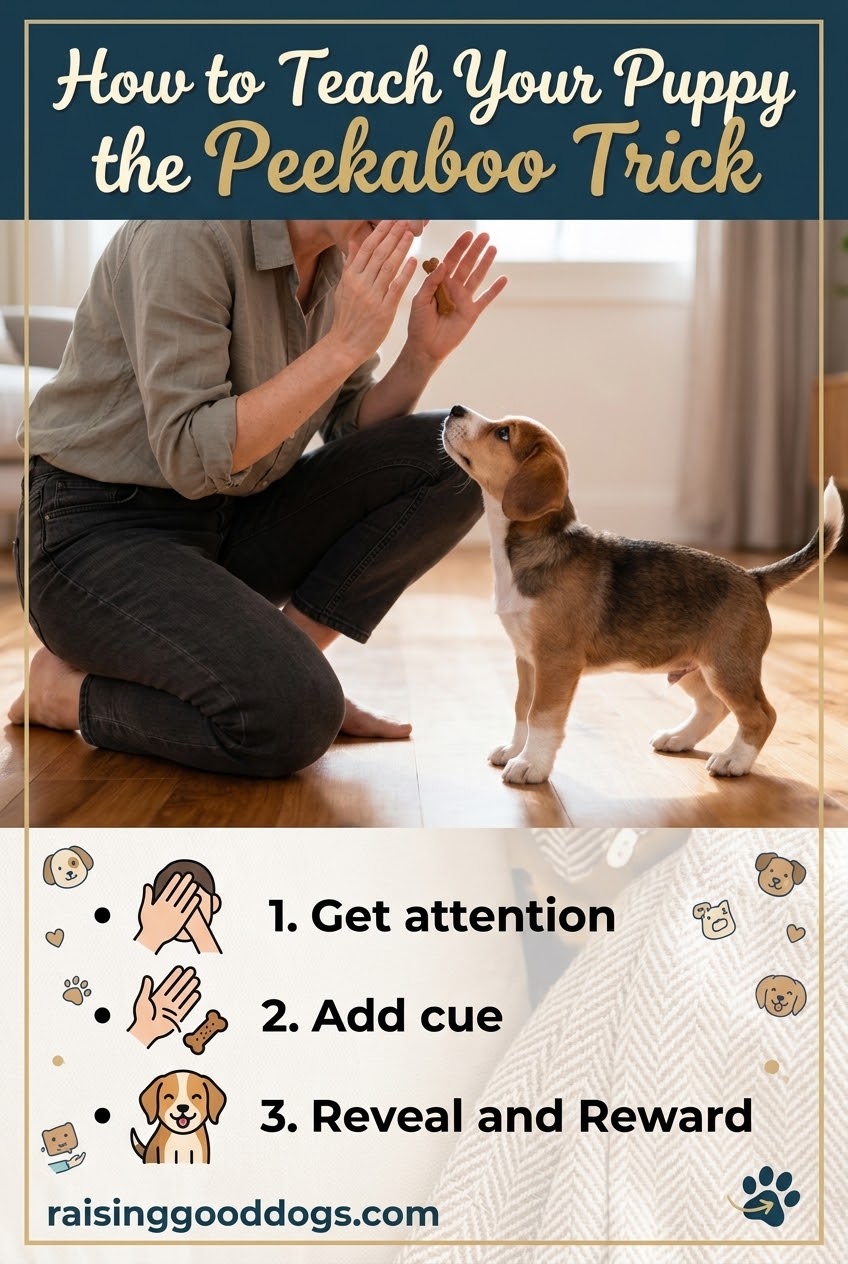
Once my puppy is offering the face-in-hands position reliably, I add the word. I say the cue, pause briefly, then help if needed. The word has to become meaningful through repetition, not because I repeat it louder. Clear verbal cues come from pairing a sound with a behaviour the puppy already understands.
I usually choose one simple cue such as “peekaboo” and keep everyone in the home using the same word and hand motion. Consistency matters because changing cues or expectations can confuse dogs.
- Cue: Say “peekaboo” once in a cheerful voice.
- Pause: Give your puppy a moment to think.
- Reward: Pay quickly when the behaviour happens.
- Repeat: Build understanding through calm practice.
Common mistake
I see people say the cue five times while the puppy is guessing. That teaches the puppy that the first few words are background noise. One cue, then help.
Practice Short Peekaboo Repetitions
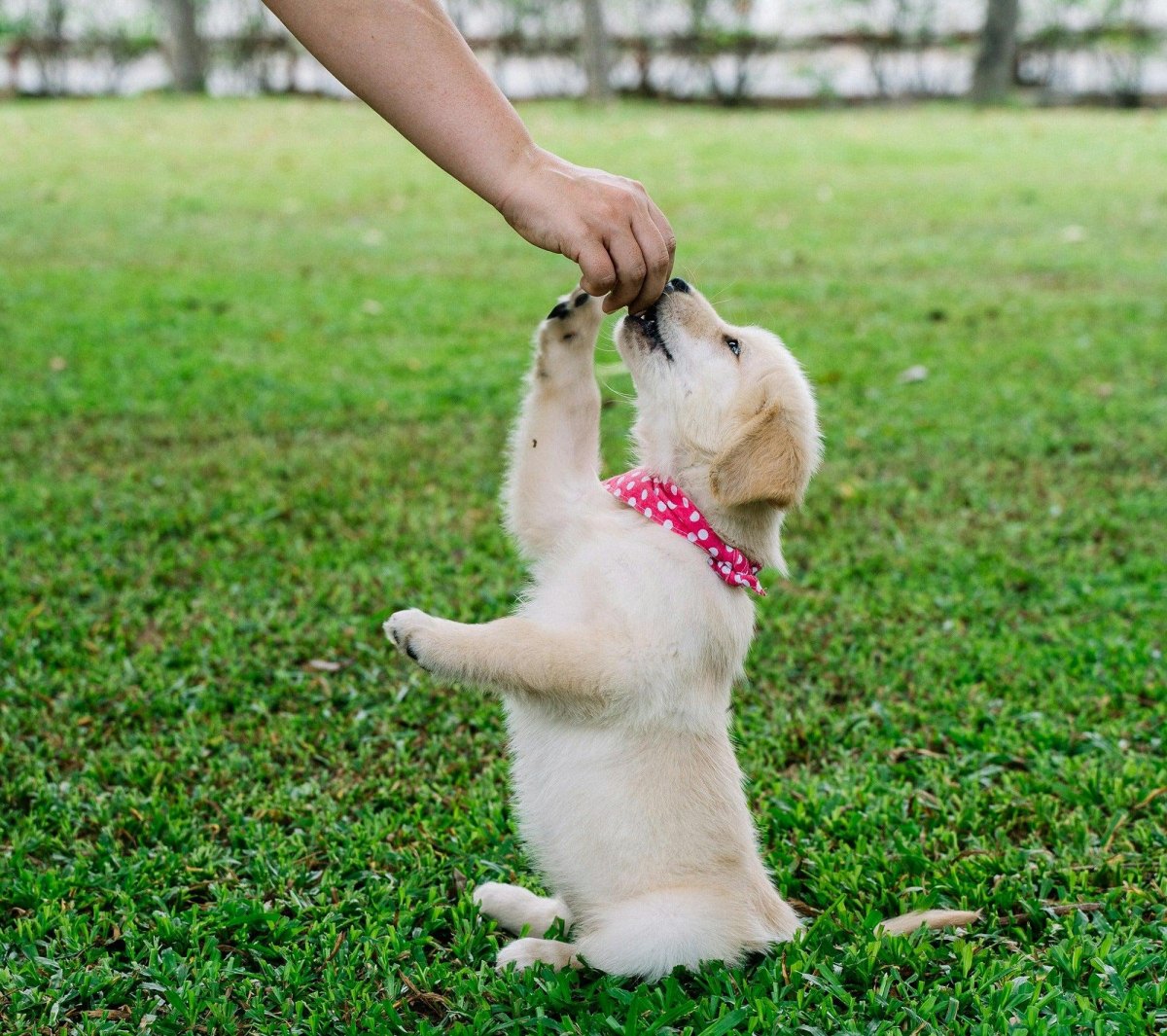
Puppies are brilliant learners, but they are also easily distracted little creatures. I would rather have five excellent repetitions than twenty sloppy ones. Short training sessions keep the game enjoyable and prevent the puppy from reaching the point where their brain has left the room.
A puppy may learn peekaboo in days, but fluency takes longer. I look for gradual improvement over weeks, including better responses when the room changes or mild distractions appear. Short sessions are commonly recommended because puppies have limited attention spans.
- End while your puppy is still interested.
- Reward effort, not just perfect performances.
- Stop if frustration appears.
- Practice in different calm locations later.
| Training stage | Goal |
|---|---|
| Beginning | Puppy moves toward your hands |
| Middle | Puppy offers the peekaboo position |
| Later | Puppy responds with the cue |
Build a Reliable Peekaboo Performance
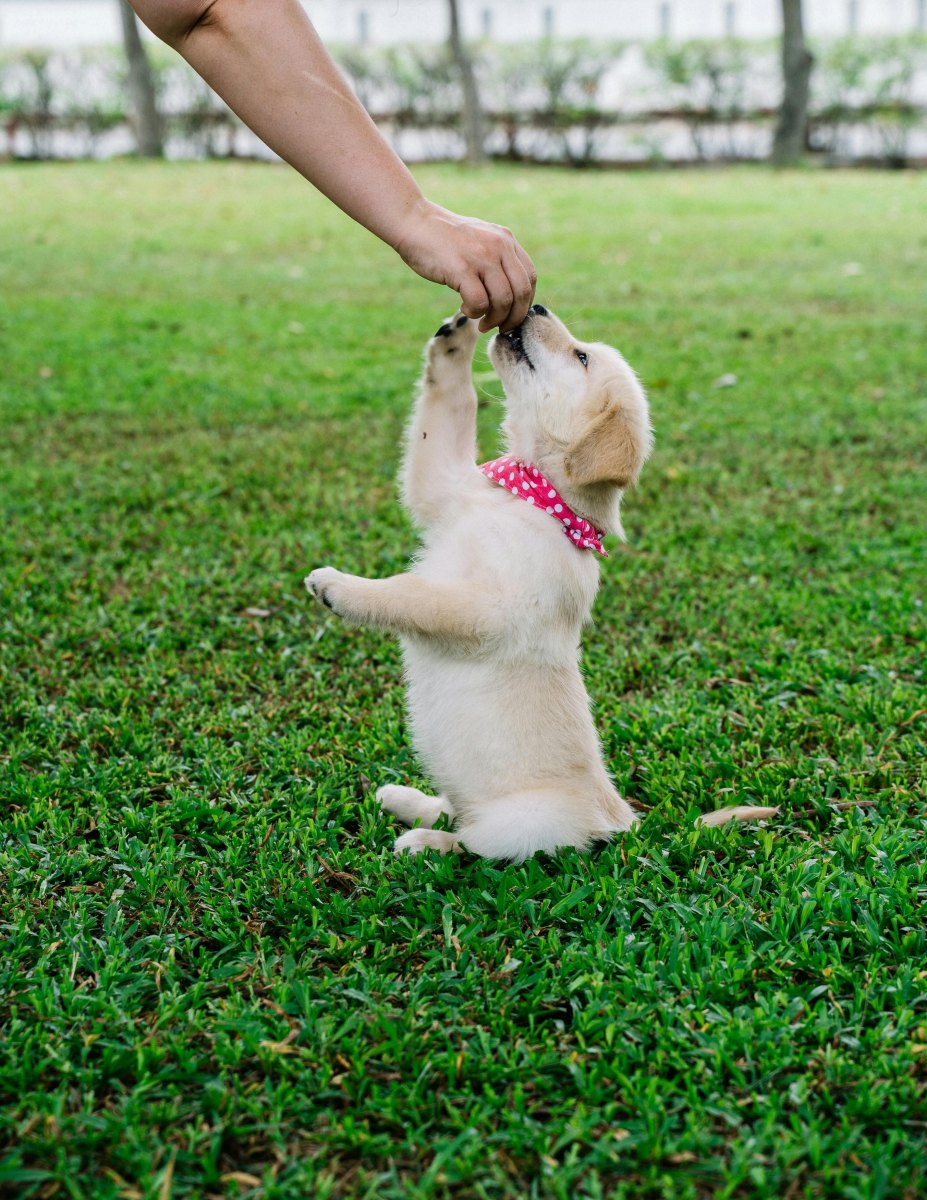
The final step is making peekaboo useful in real life, not just in the kitchen where every puppy magically behaves. I slowly change locations, add gentle distractions, and keep rewarding success. Reliable tricks are built through many easy wins, not one difficult test.
I also pay attention to my puppy’s body language. A puppy who turns away, licks their lips, slows down, or suddenly sniffs the floor may be telling me the session has become too hard. My job is to listen and adjust.
What helps
- Reward-based practice.
- Clear cues from everyone.
- Gradual distractions.
What slows progress
- Rushing to busy places.
- Repeating cues constantly.
- Training when the puppy is exhausted.
I still remember how much easier training became when I stopped chasing the perfect result and started noticing the tiny choices my dogs were making. Peekaboo is a party trick, yes, but the real win is a puppy who learns that paying attention to you is worth it.




More Pinterest Visuals