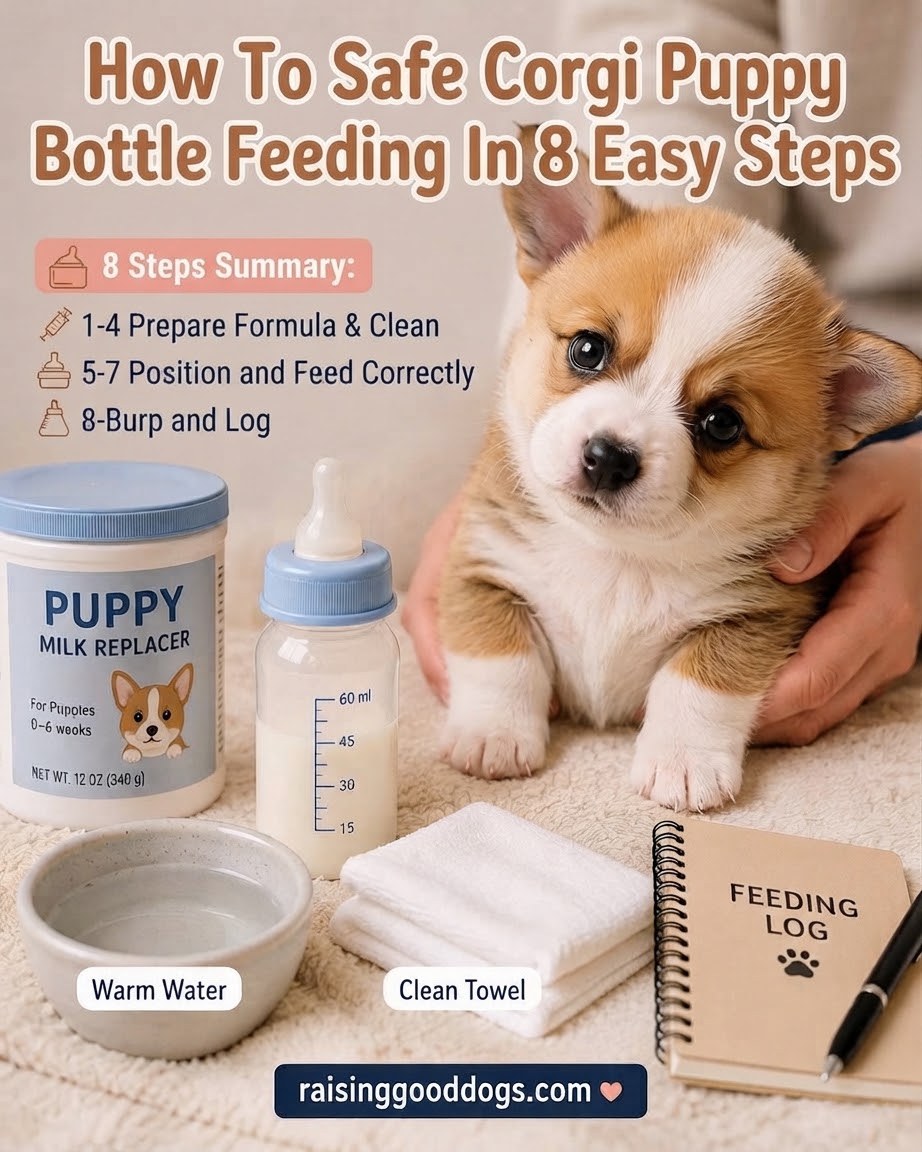
This is a bit outside my usual reactivity-and-recall territory, but it's a question I get more than you'd think — from foster homes, from breeders' clients, from someone whose corgi mom rejected the runt of the litter at 2 a.m. Bottle feeding a corgi puppy isn't complicated once you've done it a few times, but the first time is nerve-wracking, and small mistakes matter more with tiny animals. I spent six years in veterinary practice before I ever taught a training class, and this is the kind of thing I watched go right and wrong in equal measure. I'm not a vet — for anything medical here, your vet or the breeder who's raised litters before is the real authority, and I'll say that again before we're done.
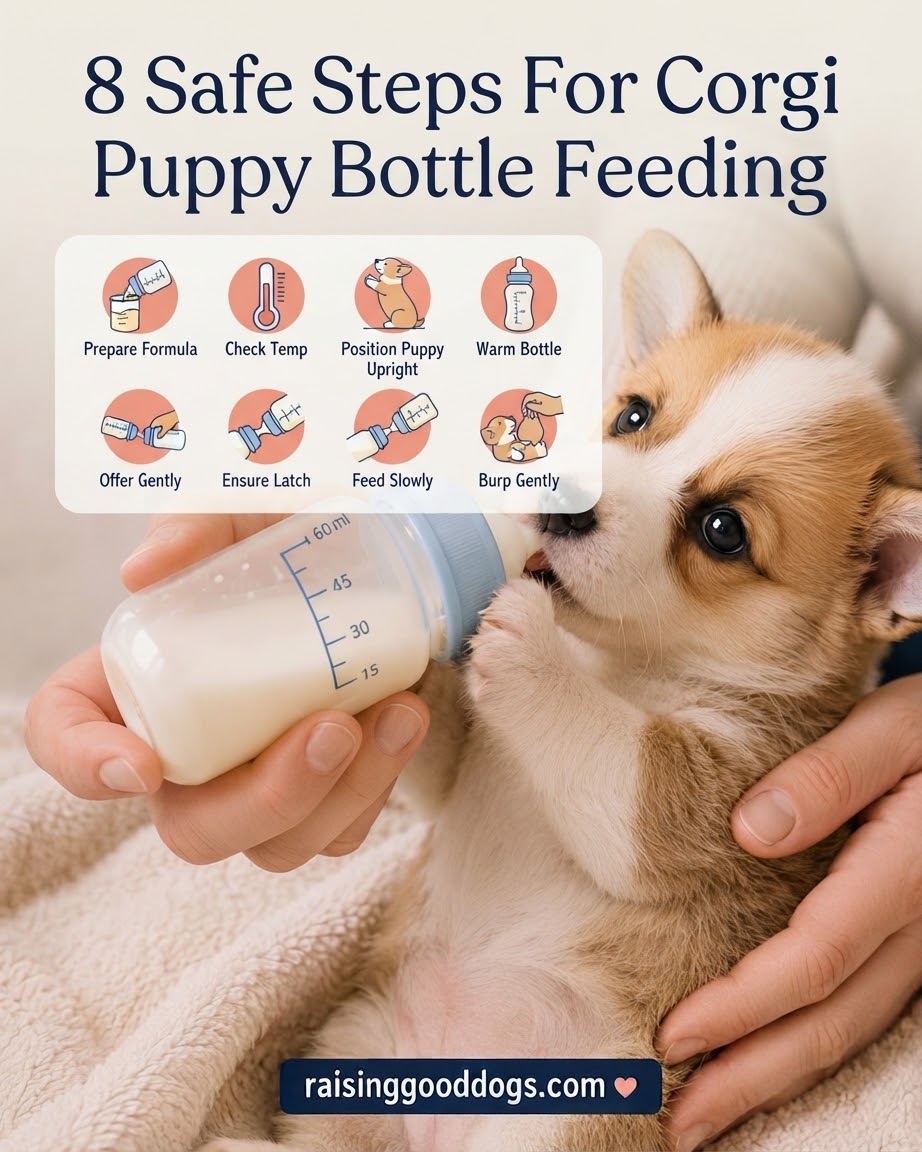
Lay Out Everything Before the Puppy Needs It
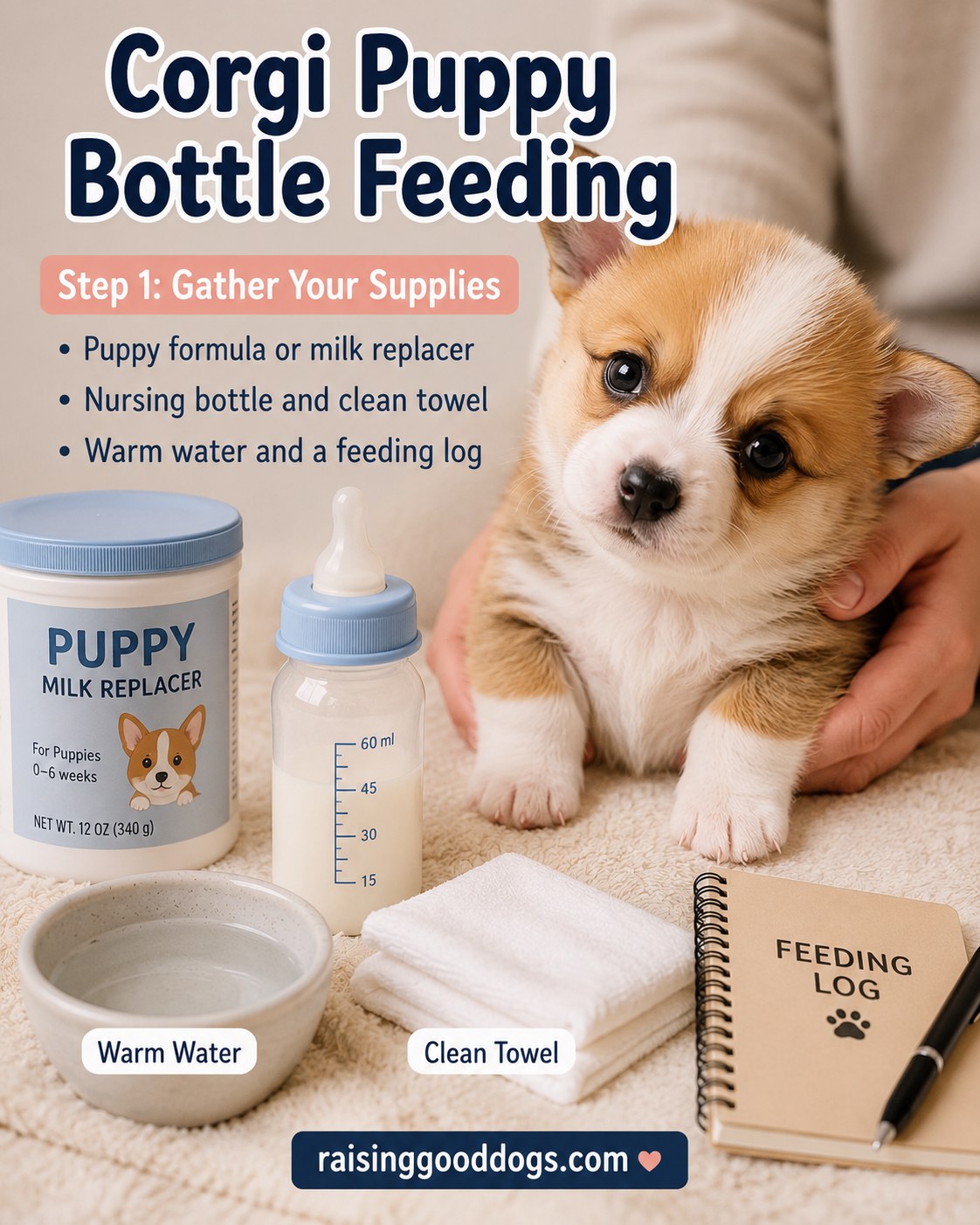
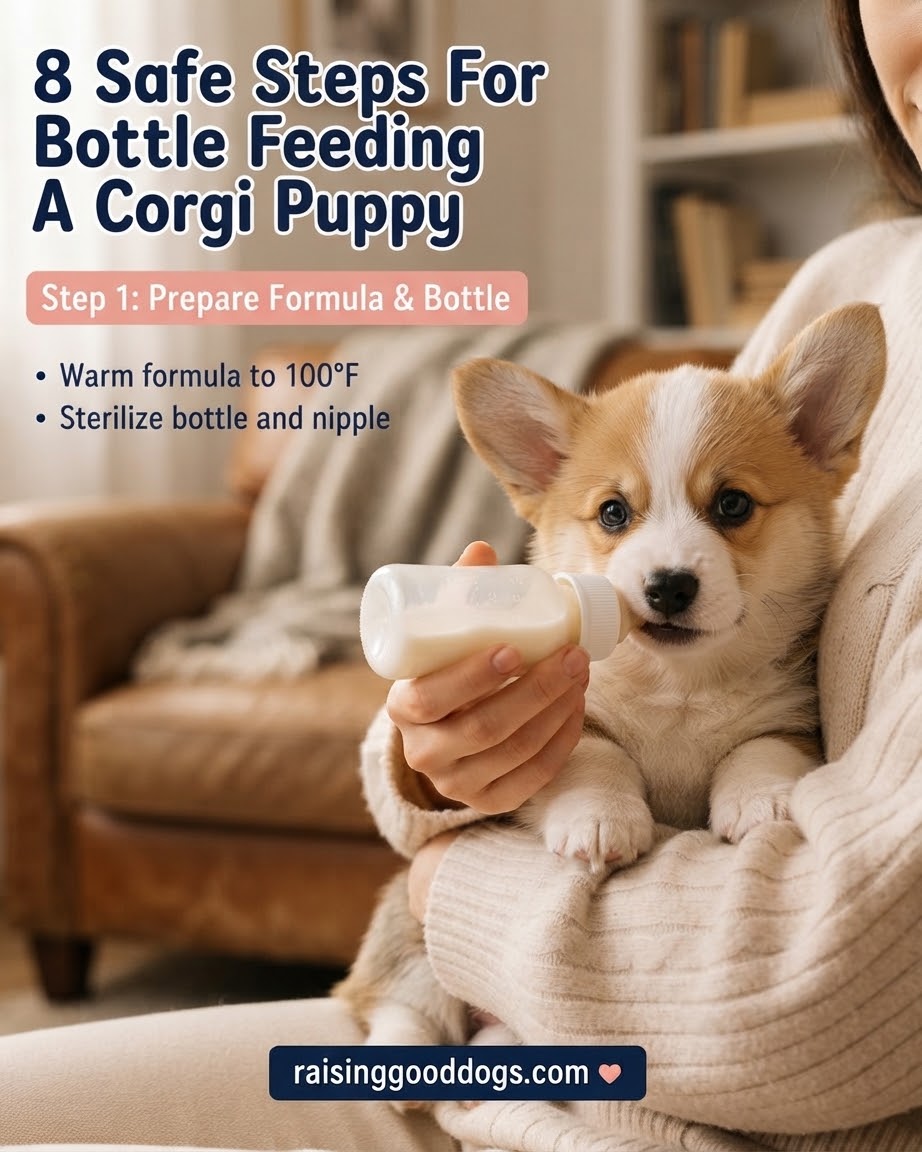
The single biggest mistake I saw in the clinic wasn't technique — it was people improvising mid-feeding because they were missing something. Get every piece of equipment on the counter before you pick up the puppy. A hungry, distressed neonate is not the moment to go hunting for a clean towel.
- Puppy formula or milk replacer — never cow's milk, never human infant formula. Corgi puppies need a replacer formulated for canine nutrition, and your vet or the breeder can point you to the right one.
- A proper nursing bottle sized for a small breed, with a soft nipple — not a human baby bottle, the flow rate is wrong.
- A clean towel, warm water, and a feeding log.
That log matters more than it looks like it does. Neonatal puppies can decline fast, and the only way you'll notice a feeding pattern going wrong is if you've written down what's normal for this puppy.
Mix and Warm the Formula Correctly
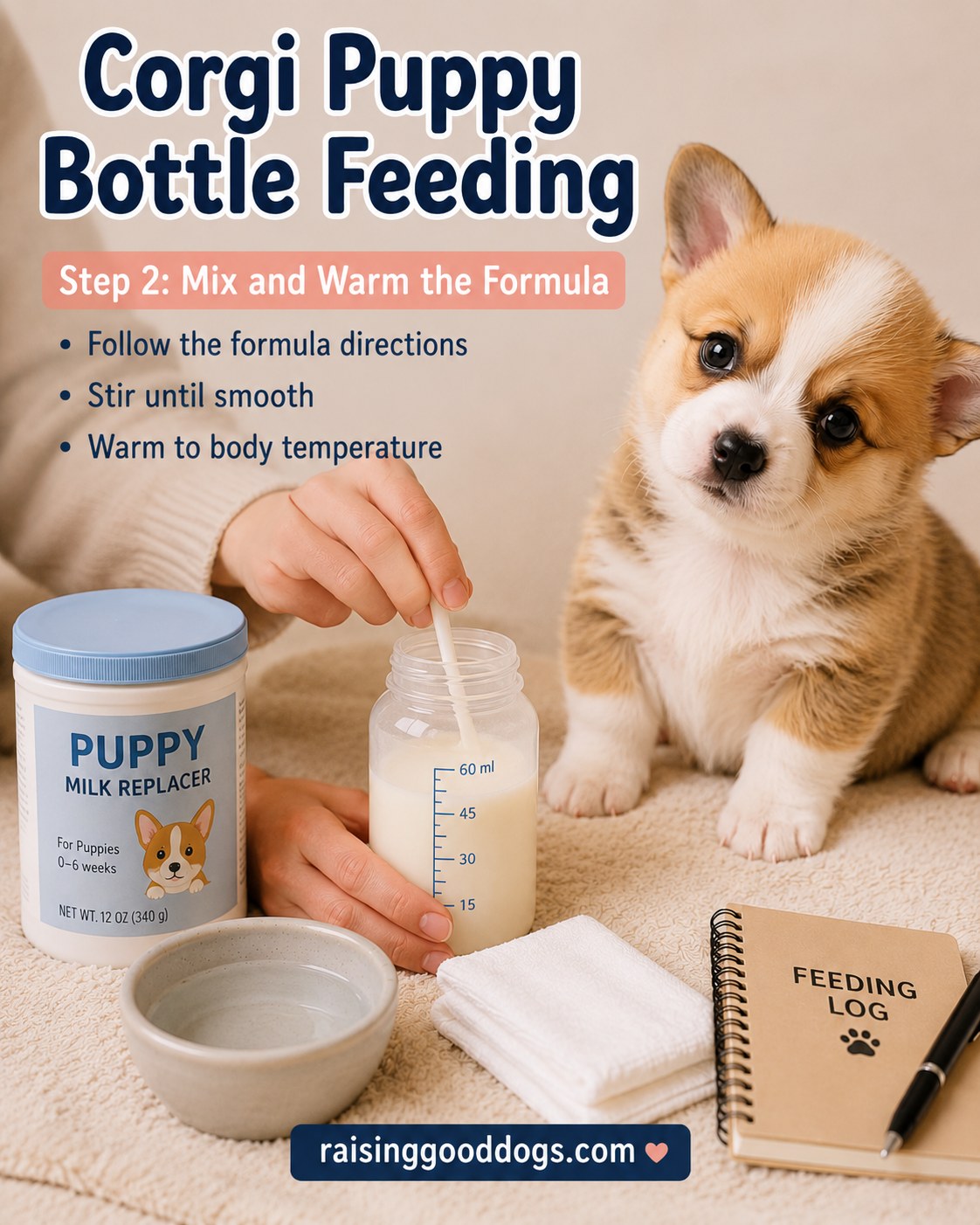
Follow the ratio on the packaging exactly — not looser, not stronger. Puppy milk replacer is calibrated for a very young digestive system, and eyeballing it is how you end up with a puppy who won't settle or has loose stool. Stir until it's completely smooth, no clumps, no undissolved powder sitting at the bottom of the bottle.
Warm it gently — a bottle warmer or a cup of warm (not boiling) water around the bottle works well. Never the microwave. Microwaves heat unevenly and create hot pockets you can't see, which is exactly how a puppy gets burned in the mouth from formula that felt fine on the outside of the bottle.
I learned to distrust anything that "should be fine" in the vet clinic — the puppies that got hurt were almost always hurt by something that looked harmless from the outside.
Body temperature is the target, roughly what you'd want for a human infant's bottle — which brings us to the step nobody should skip.
Test the Temperature Every Single Time
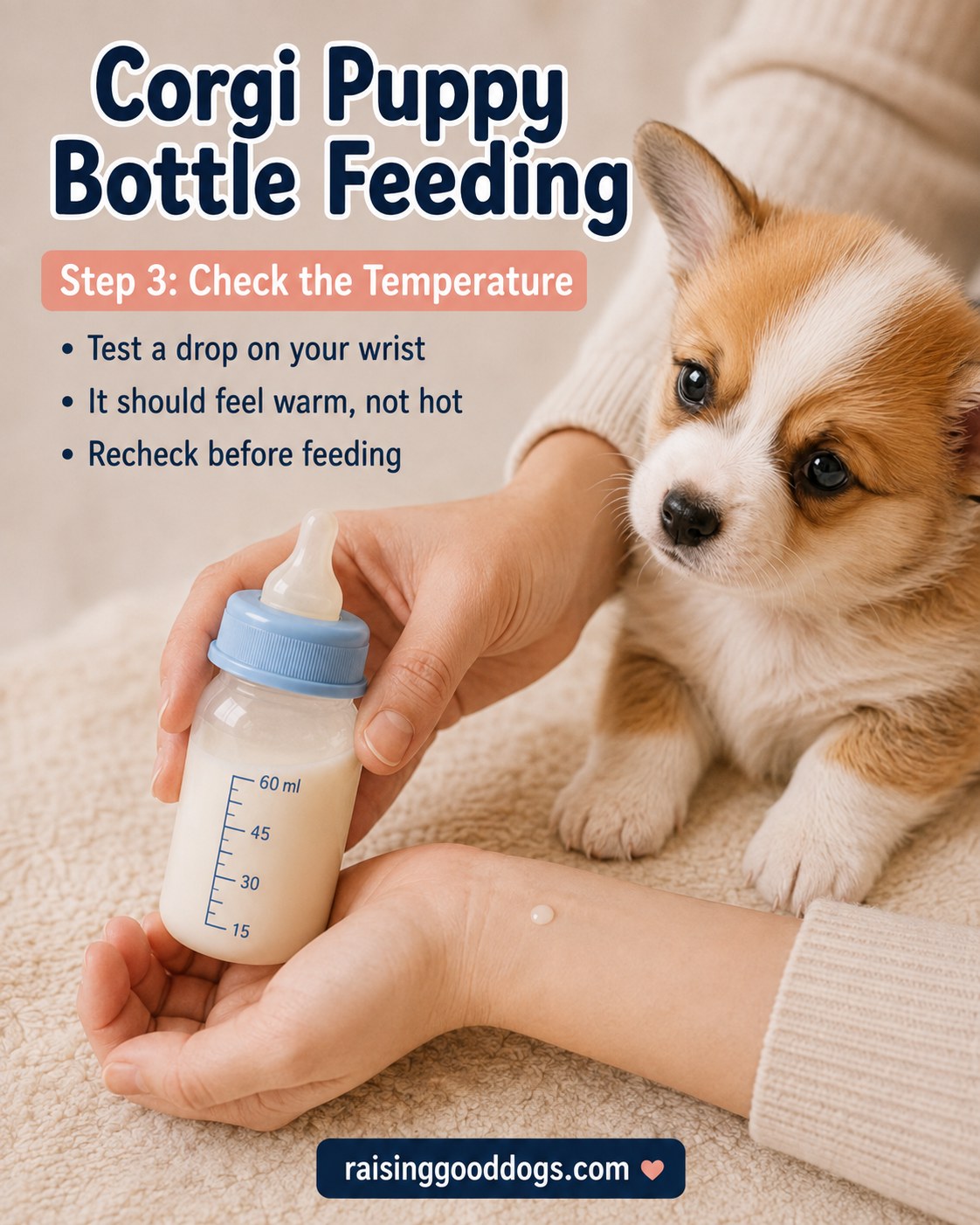
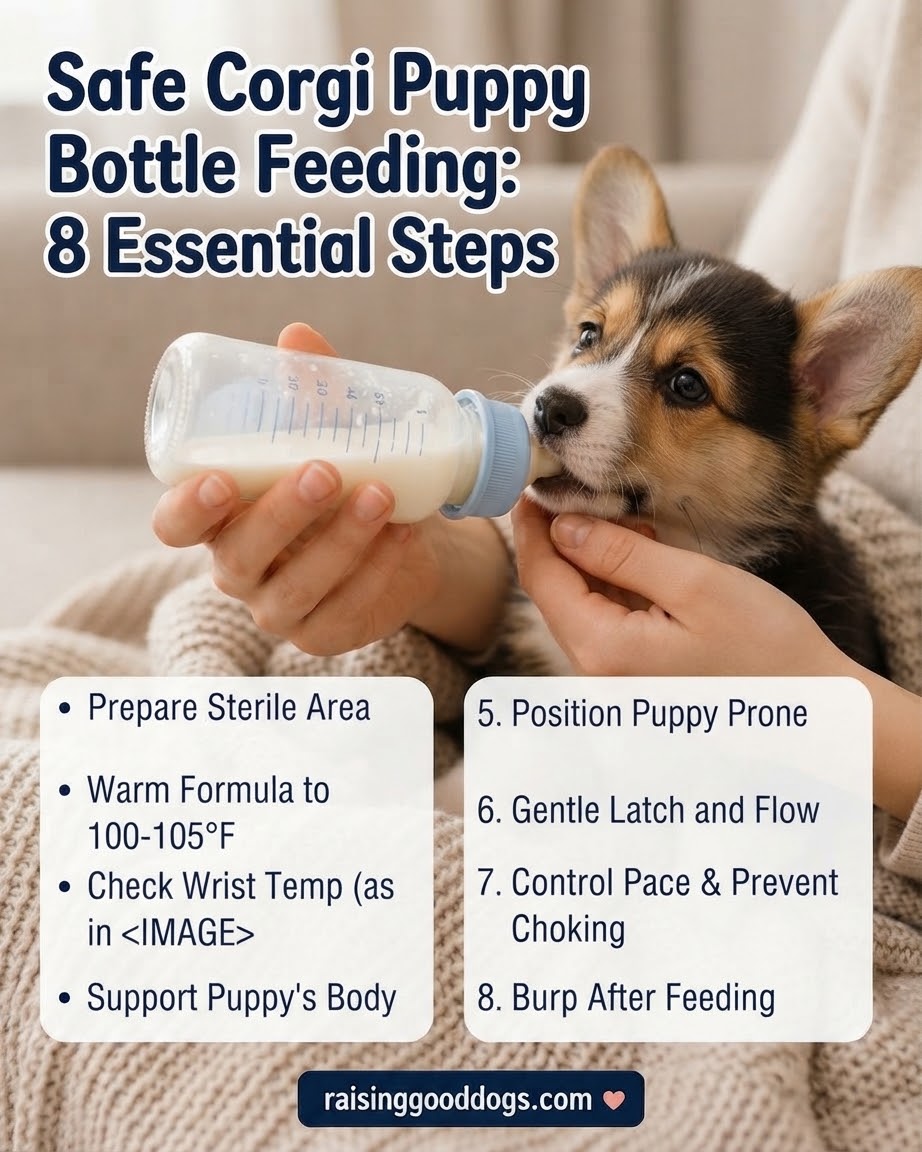
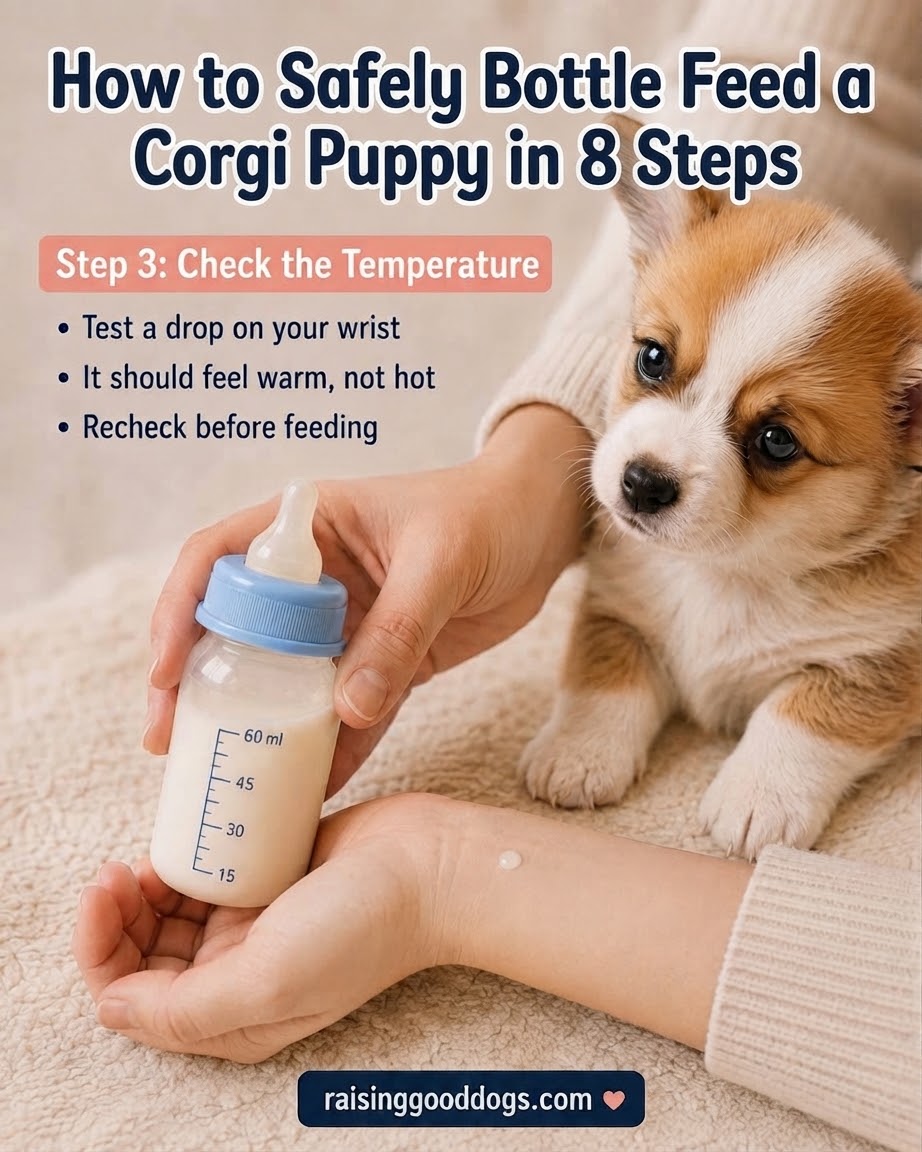
Do the wrist test before every feeding, not just the first one. Bottles cool and reheat unevenly, and formula that was correct ten minutes ago isn't guaranteed to still be correct now.
It should feel warm, not hot — closer to neutral than you'd expect. If you can feel real heat on your wrist, it's too hot for a mouth and throat this small and delicate. Let it cool and retest.
- Too hot risks burns to the mouth and esophagus.
- Too cold can cause a puppy to refuse the bottle or feed poorly, and can drop an already fragile body temperature further.
Recheck right before the puppy's lips touch the nipple. This isn't a step you do once and trust for the whole feeding session — it's a habit, the same way I ask clients to check their dog's body language before every single rep of a training exercise instead of assuming yesterday's read still holds.
Hold the Puppy Belly-Down, Never on the Back
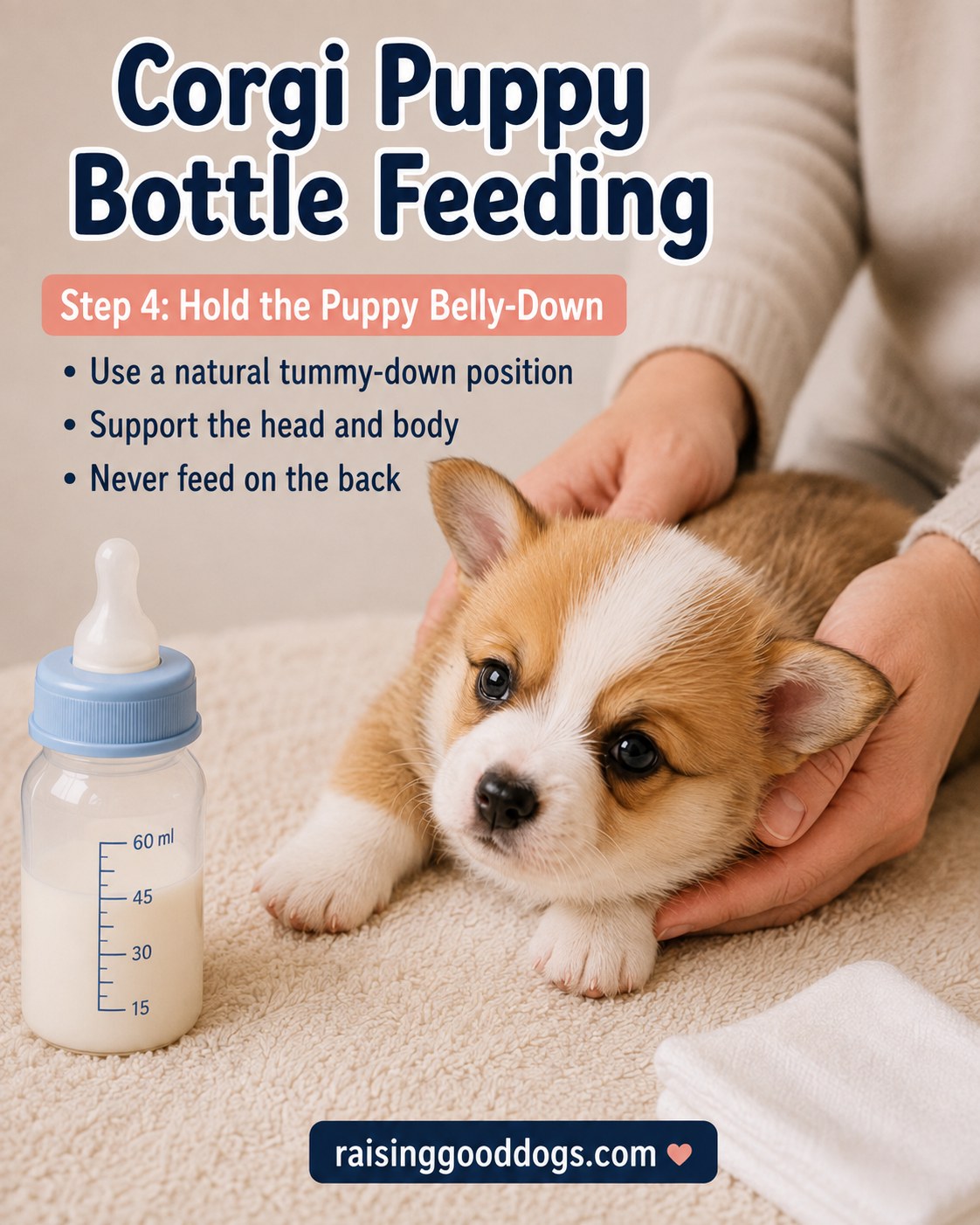
Position matters as much as formula. Feed in a natural, tummy-down position, roughly the way the puppy would lie against mom while nursing — head level, body supported, feet tucked under.
Never feed a puppy on its back. It's tempting because it feels like a human-baby pose, but dogs aren't built for it, and feeding on the back significantly raises the risk of formula going down the wrong way — aspiration is the real danger here, and it's one of the reasons orphaned-litter feeding needs a careful hand rather than a casual one.
Support the head loosely; don't force it into a particular angle. A puppy who's allowed to hold its own head at a natural angle will generally position itself correctly to swallow safely. Your job is stability, not steering.
If a puppy consistently fights this position or seems distressed by it, that's worth a call to your vet rather than pushing through — a puppy telling you something with its body is information, not defiance, at any age.
Offer the Bottle, Don't Push It
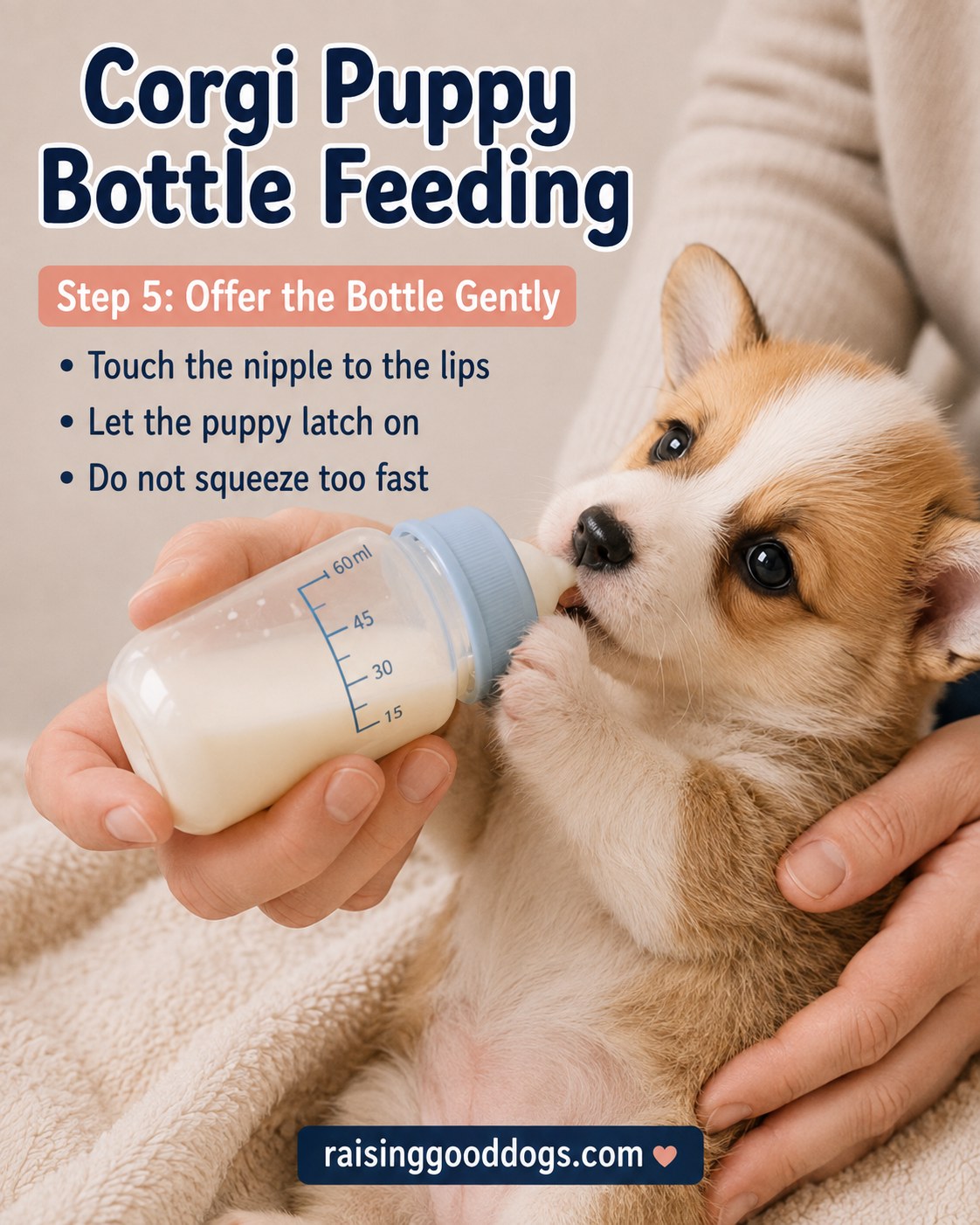
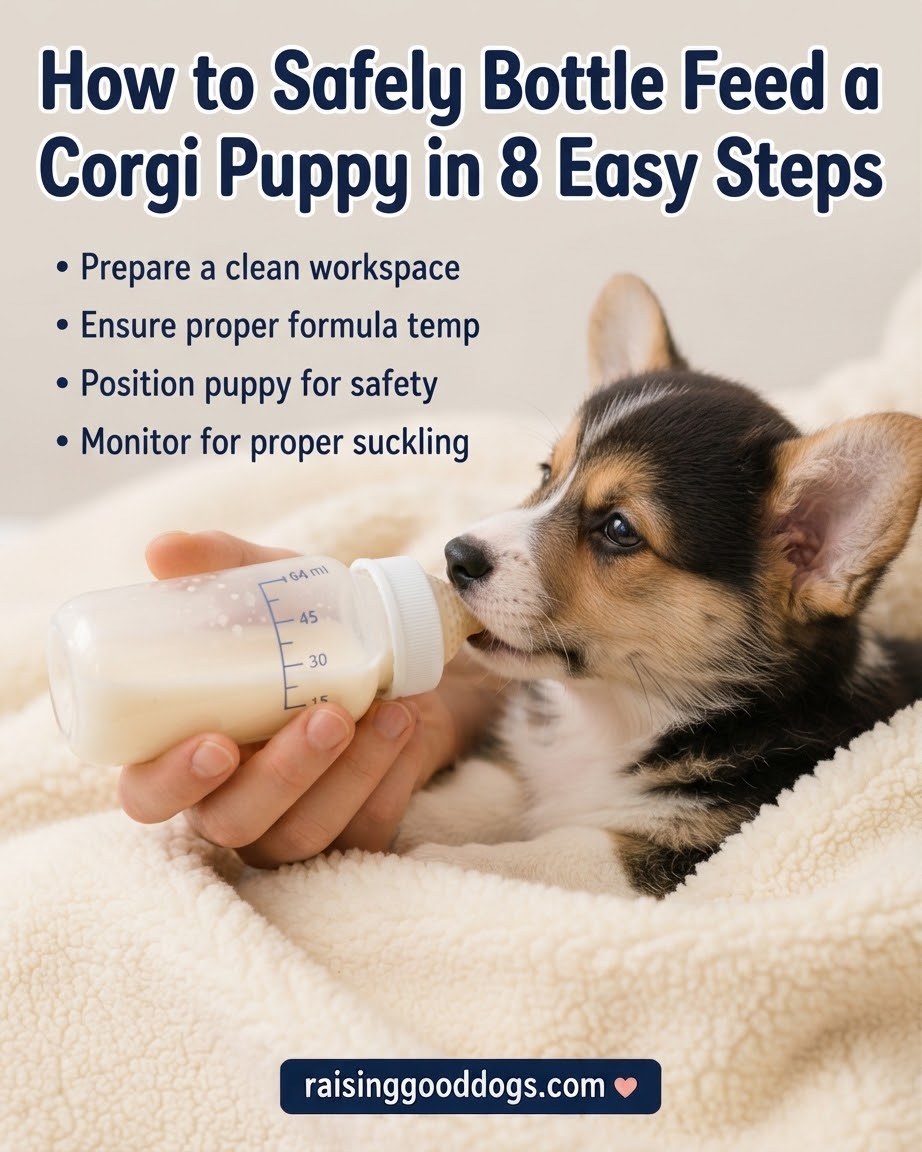
Touch the nipple gently to the puppy's lips and let the puppy do the work of latching. A healthy puppy with an intact suck reflex will usually root toward it on its own within a few seconds — this is instinct, not something you need to coax hard.
Do not squeeze the bottle to speed things along. This is the step I see people rush, usually out of worry that the puppy isn't getting enough fast enough, and it's the step most likely to cause choking. The bottle's job is to be available; the puppy's suck does the actual feeding.
- Latches and sucks rhythmically — good, let it continue at its own pace.
- Turns away or won't latch — don't force it. A puppy refusing to feed is a reason to call your vet, not to try harder.
- Latches but seems to be struggling — pause, reposition, try again gently.
Feed Slowly and Read the Puppy the Whole Time
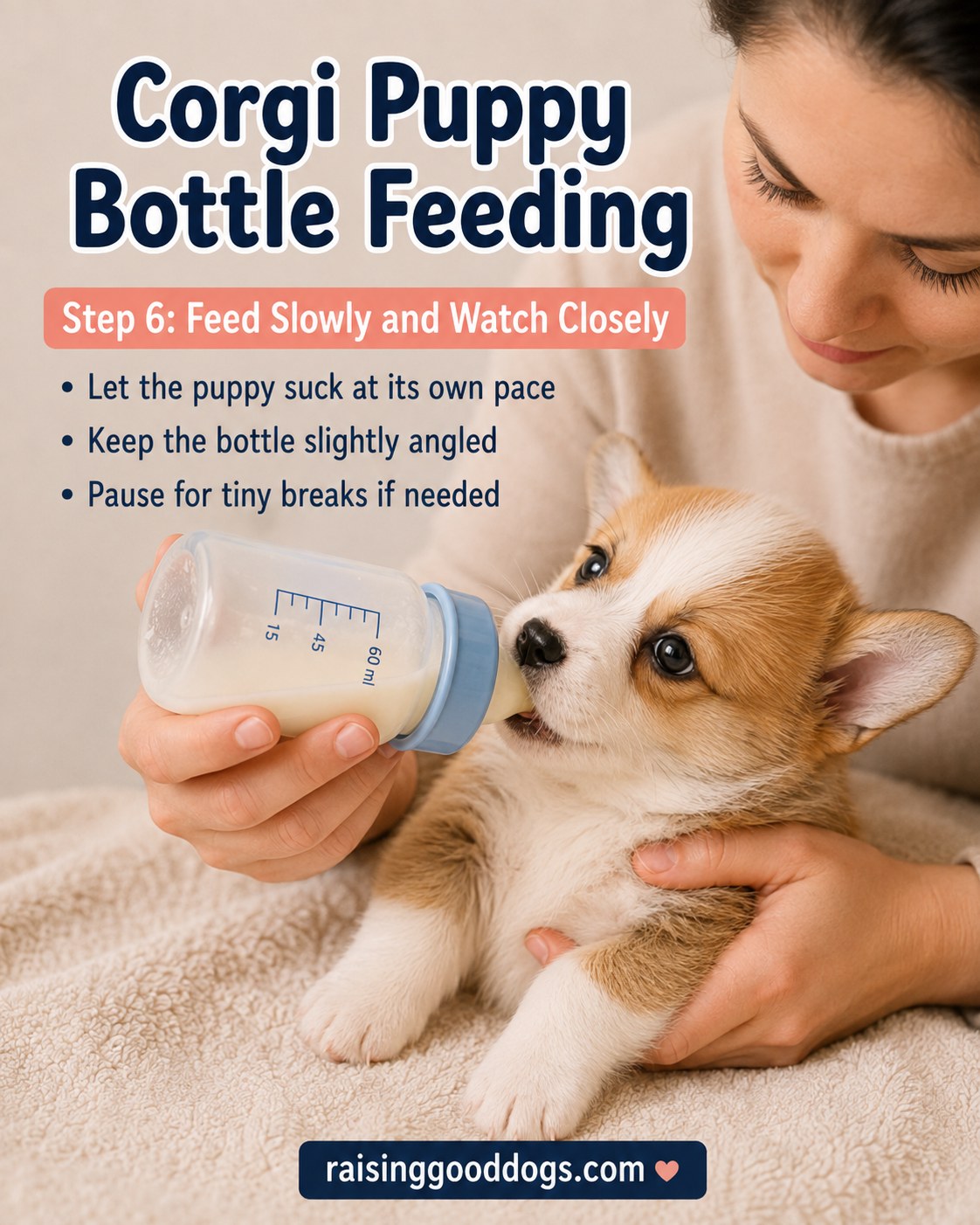
This is where the vet-clinic habit of watching a small animal closely pays off. Let the puppy suck at its own pace — keep the bottle only slightly angled, just enough that the nipple stays filled with formula rather than air, and resist the urge to hurry a slow feeder.
Watch for the same category of signals I ask people to watch for in adult dogs, just scaled down: is breathing steady, is swallowing happening between sucks, does the puppy pause on its own? Pause for tiny breaks if you see:
- Coughing, sputtering, or milk appearing at the nostrils
- A sudden change in breathing rhythm
- The puppy going limp or unusually quiet mid-feed
Any of those — stop, let the puppy recover upright, and if it doesn't resolve quickly or happens repeatedly, that's a same-day call to your vet, not a wait-and-see. A whole feeding session for a very young corgi puppy is usually only a few minutes; there's rarely a reason to rush it.
Burp Gently and Clean Up Before You Set the Puppy Down
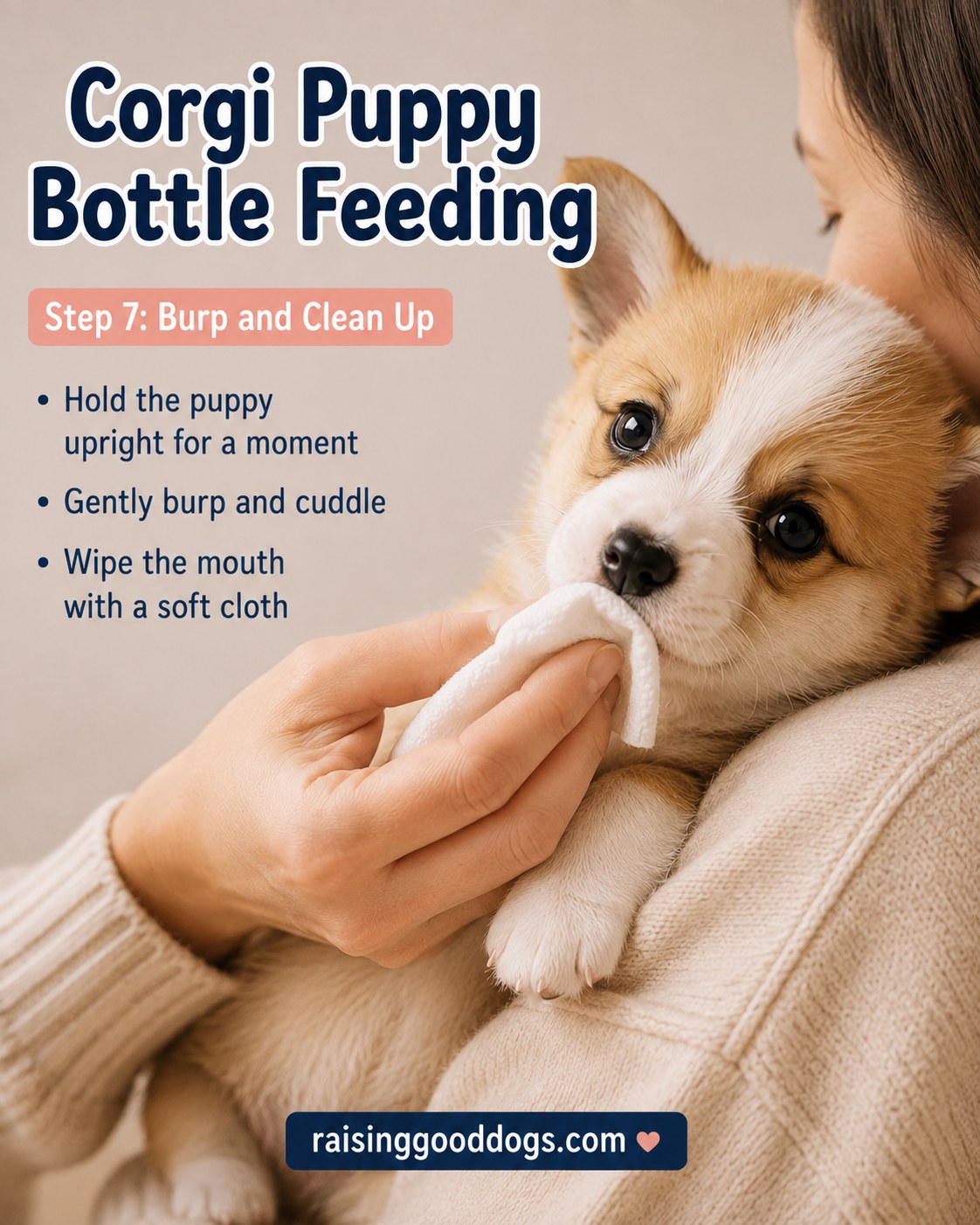
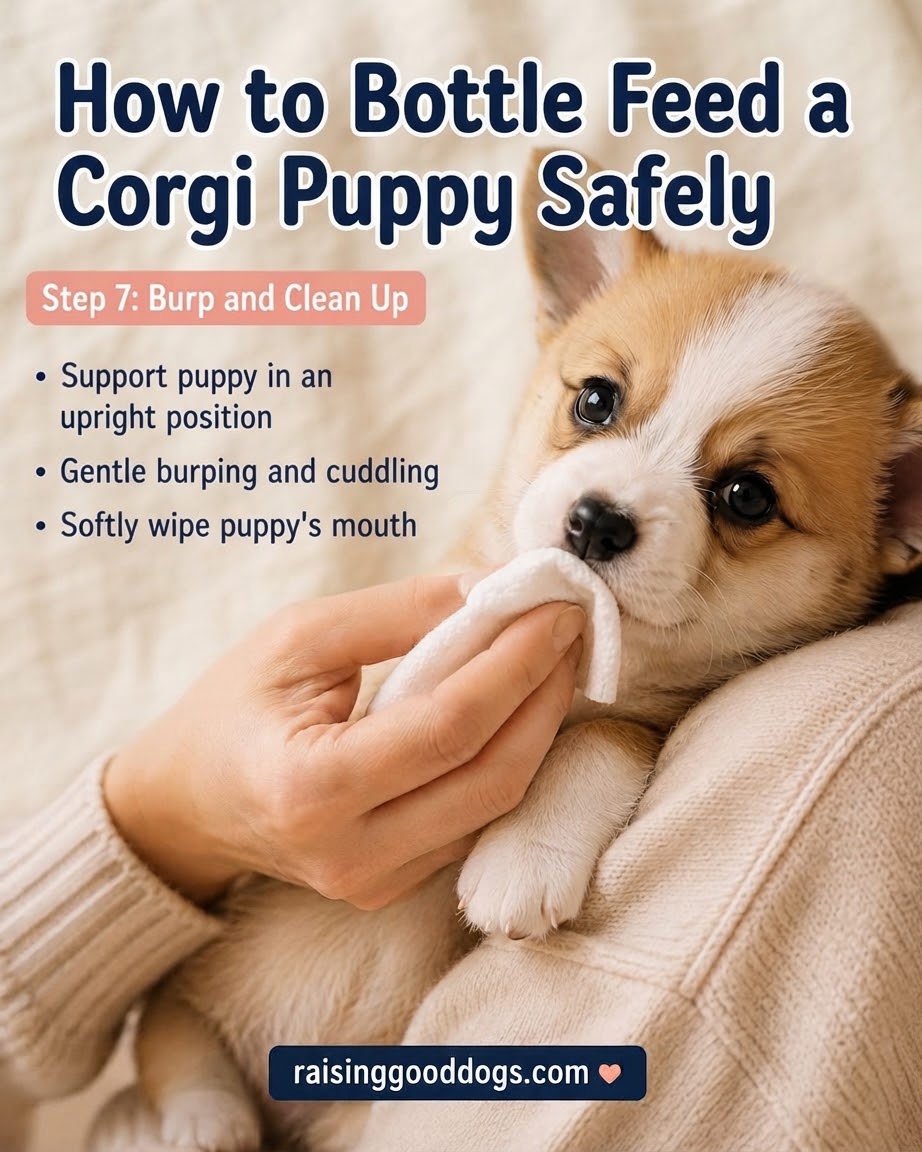
Hold the puppy upright against your chest for a minute or two after feeding, the same instinct you'd have with a human infant, and gently pat or rub the back to help release swallowed air. Neonatal puppies swallow more air during bottle feeds than they would nursing naturally, and skipping this step can lead to discomfort or spit-up shortly after you've settled them.
Wipe the mouth and chin with a soft, clean cloth afterward — dried formula left on the fur isn't just messy, it can irritate delicate skin around the mouth over repeated feedings, and a puppy this age has no way to groom that away itself.
This is also a good moment for a quick once-over: is the belly gently rounded rather than tight or swollen, are the eyes clear, is the puppy calm rather than distressed. None of that replaces a vet exam, but it's the kind of small daily observation that catches problems early rather than three days late.
Settle the Puppy Warm and Log the Feed
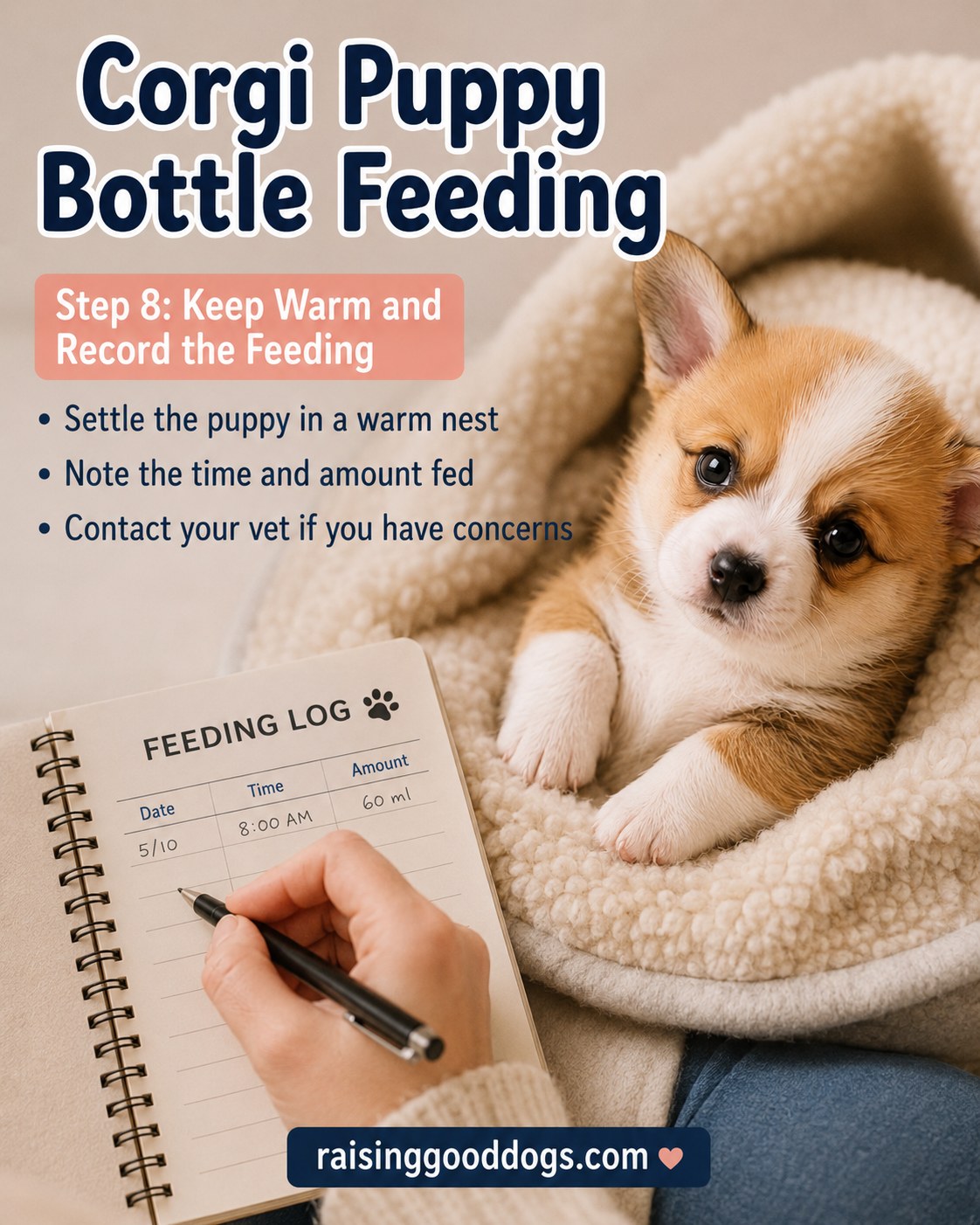
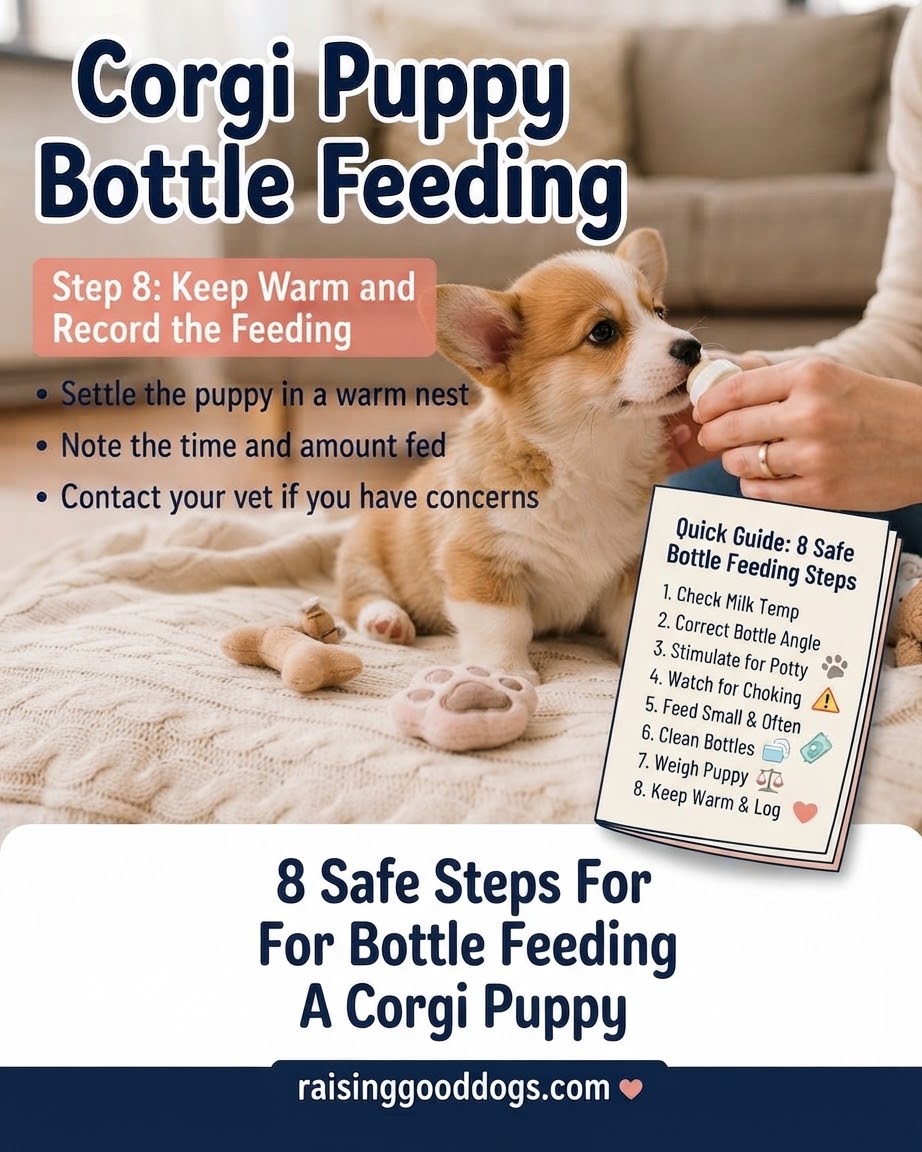
Neonatal puppies can't regulate their own body temperature the way an older dog can, so a warm, draft-free nest — not directly on a heating pad the puppy can't move away from — is non-negotiable between feedings, right alongside the formula itself.
Then write it down: time, amount, how the puppy fed, anything unusual. A feeding log feels tedious on day one and becomes genuinely important by day four, when you're trying to answer your vet's question about whether intake has actually dropped or you just imagine it has.
Contact your vet if you notice reduced appetite, a puppy that feels cold to the touch, crying that doesn't settle, or weight that isn't climbing steadily on a scale — corgi puppies this young should be gaining daily, and any plateau or drop is worth a same-day call rather than a wait-and-watch. I'll say plainly what I say about every medical question on this site: I'm a trainer with a vet-practice background, not a veterinarian, and hand-rearing a litter is exactly the kind of situation where your vet should be looped in from day one, not called only when something's already gone wrong.
None of this is glamorous work — it's 3 a.m. feedings and a notebook full of times and milliliters — but it's the kind of unglamorous, careful attention that gets a fragile puppy through the first weeks. Keep your vet close through all of it; this is one of the few areas where I'd rather you over-call than under-call.





Common Questions
How often does a young corgi puppy need bottle feeding?
It depends heavily on age and weight, and your vet or the breeder is the right one to set the schedule for your specific puppy — very young neonates often need feeding every two to three hours, including overnight, tapering as they grow.
Can I use regular cow's milk if I don't have puppy formula yet?
No — cow's milk isn't formulated for a puppy's digestive needs and commonly causes diarrhea, which is dangerous in a very small animal. Use a proper puppy milk replacer, and if you don't have any on hand, call your vet or an emergency clinic before improvising.
How do I know if my puppy is getting enough milk?
Steady daily weight gain on a gram scale is the clearest sign, along with a puppy who settles and sleeps well between feeds rather than crying persistently. Track it in a feeding log so you and your vet can spot a plateau early rather than late.
What if the puppy won't latch onto the bottle at all?
Don't force it — a puppy refusing to latch, especially repeatedly, is a reason to call your vet the same day rather than try harder techniques at home. It can signal something beyond a feeding-mechanics problem.