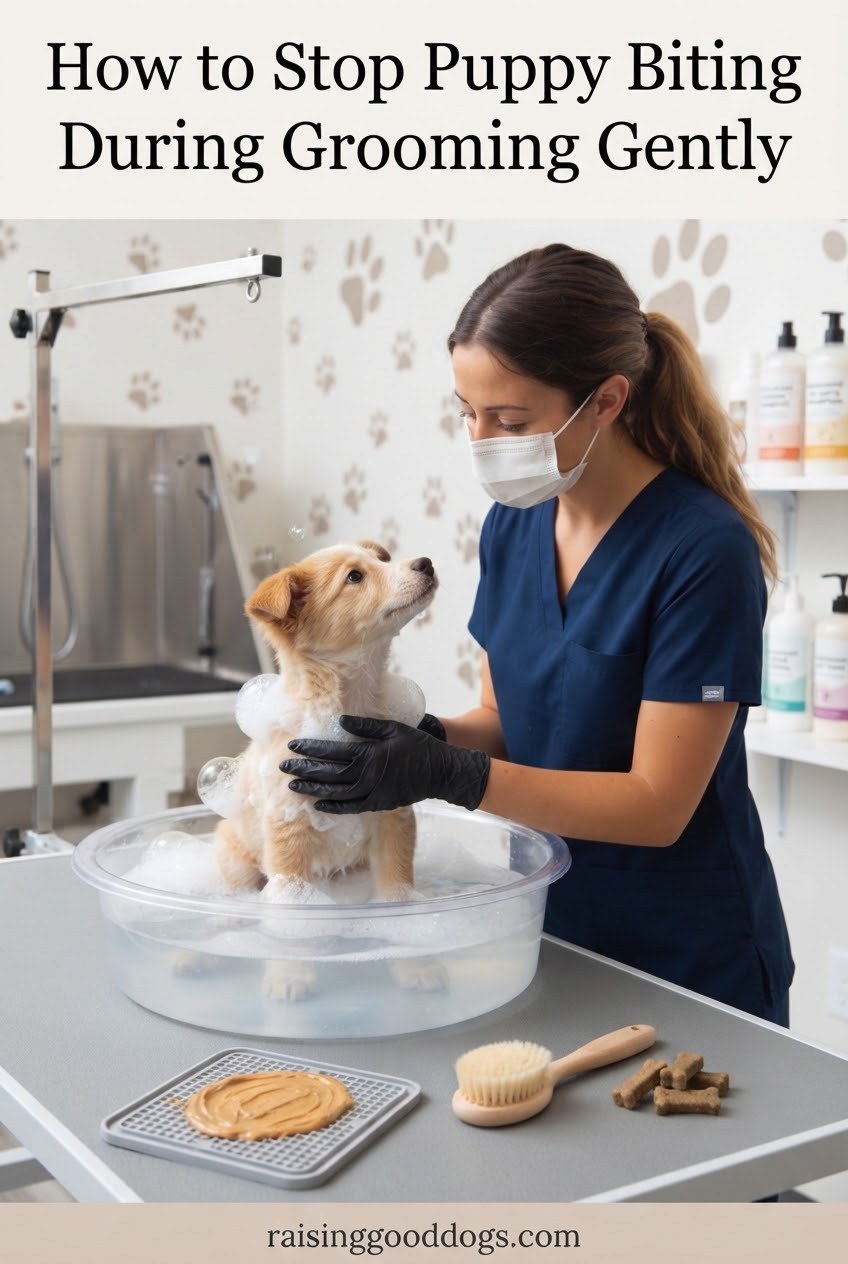
That tiny puppy who happily steals socks can suddenly become a furry alligator when the brush comes out. I see this a lot in my training work: owners are not dealing with a "bad" puppy, they are usually dealing with a puppy who has not learned that grooming is safe yet. The goal is not to force stillness; it is to teach your dog that handling predicts good things and that they have a way to communicate discomfort.
Why Puppies Bite During Grooming
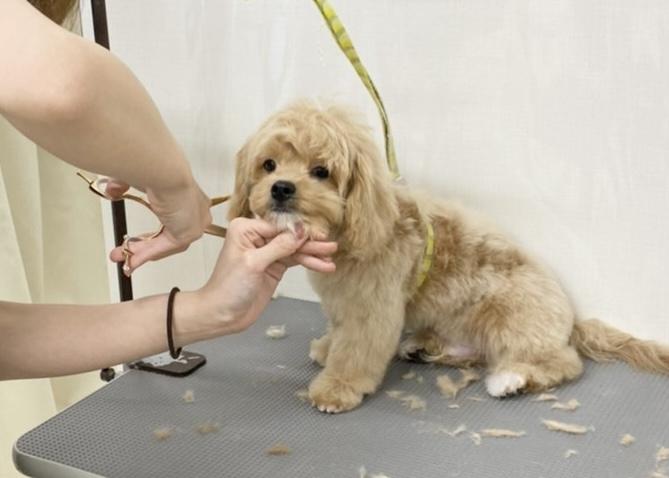
When a puppy bites during grooming, I first look at the emotion behind the teeth. Most young dogs are not trying to challenge you or take control. They are usually saying, in the only way they know how, "I don't understand this" or "I need this to stop."
What I want you to remember
- Puppy biting during grooming is usually communication, not aggression.
- Short, positive sessions build trust faster than forcing a puppy to tolerate handling.
- Management comes first: prevent scary grooming experiences from repeating.
- Pain or sudden behaviour changes should always be checked with your vet.
I learned this lesson the hard way with dogs who looked perfectly fine until a nail clipper appeared. The body tells the story before the mouth does: a puppy who freezes, turns their head away, tightens their mouth, or shifts their weight backward is already struggling.
The first step is reducing the rehearsal of biting. If every grooming session ends with a wrestling match, your puppy is practising the idea that grooming is something to fight. Instead, we create easier repetitions where your puppy can succeed.
Signs Your Puppy Is Overwhelmed by Grooming
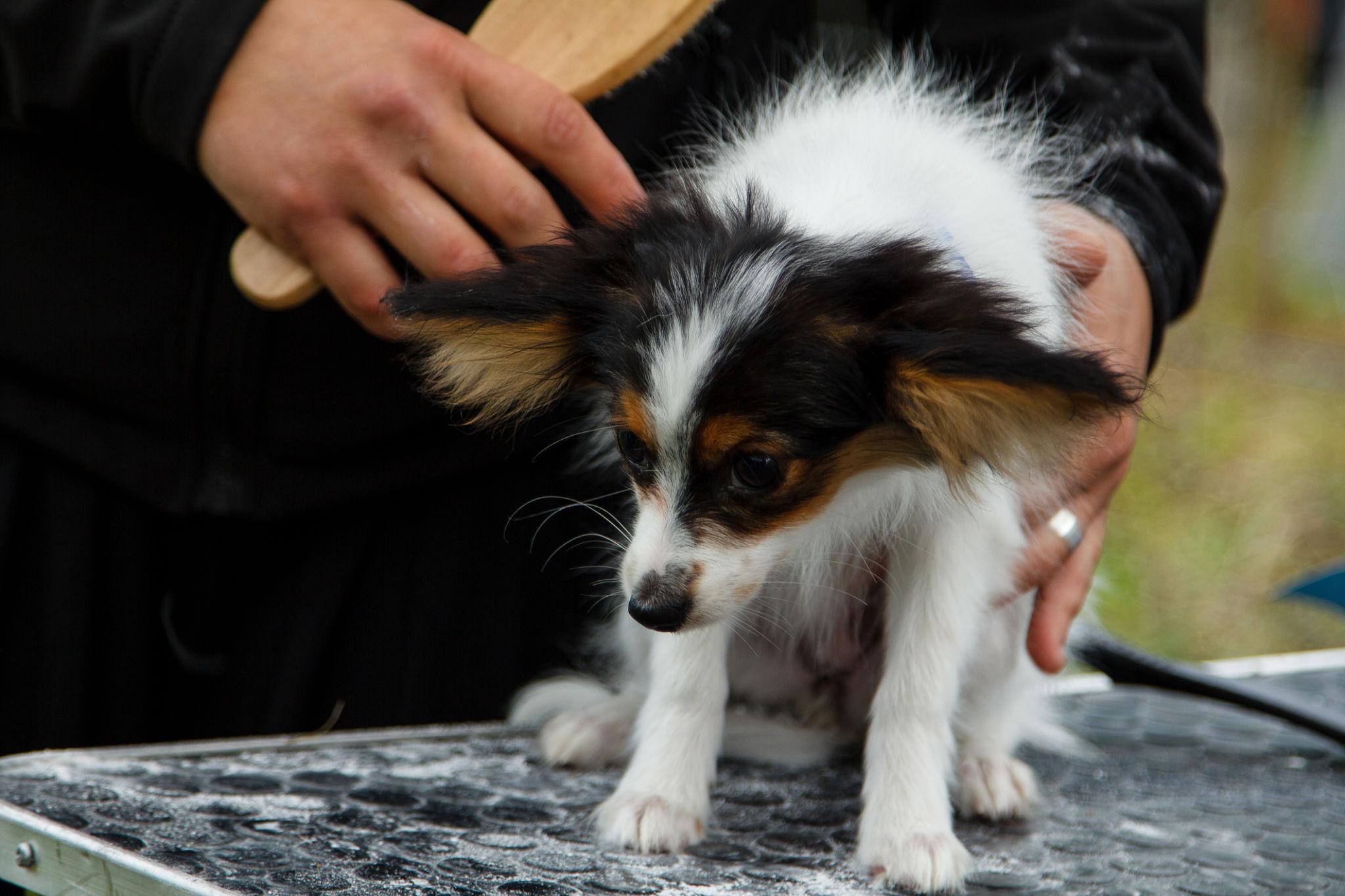
Most puppies give us plenty of warning before they snap at a brush or hand. The problem is that humans often notice the teeth because it is the loudest signal.
- Head turning: Your puppy repeatedly looks away from the brush or your hands.
- Lip licking: Quick tongue flicks can appear when a dog is uncomfortable.
- Body freezing: A still puppy is not always a relaxed puppy.
- Weight shifting: Leaning away or pulling paws back shows avoidance.
- Tight mouth: A closed, tense mouth often appears before a warning snap.
My trainer shortcut
Stop grooming at the first small stress signal, not the last dramatic one. Puppies learn faster when they discover that calm communication works.
A puppy who is overwhelmed cannot learn. Their brain is focused on escaping, not on remembering that brushing earns treats. Lowering the difficulty is not giving in; it is how we make progress.
Common Grooming Triggers That Make Puppies Bite
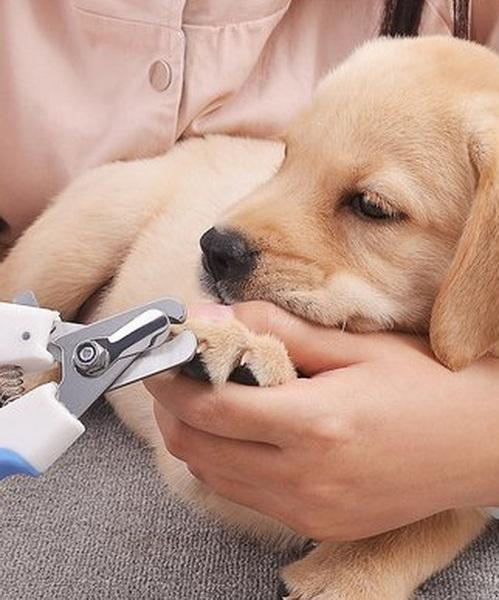
Grooming is not one single skill. A puppy may happily accept brushing but panic when a nail grinder turns on. I break the problem down instead of treating "grooming" as one big category.
| Trigger | Why It Can Be Difficult |
|---|---|
| Brush pulling through fur | It may tug sensitive skin or catch mats. |
| Clippers or dryers | The sound and vibration can be startling. |
| Paw handling | Many puppies dislike having feet restrained. |
Watch for discomfort
If biting appears suddenly in a puppy who previously accepted grooming, I would rule out pain or a medical issue with a veterinarian before assuming it is training.
I spent years in veterinary practice, and one thing stayed with me: behaviour changes are information. A dog who suddenly hates being touched may be telling you something important.
Teaching Bite Inhibition Before Grooming Sessions
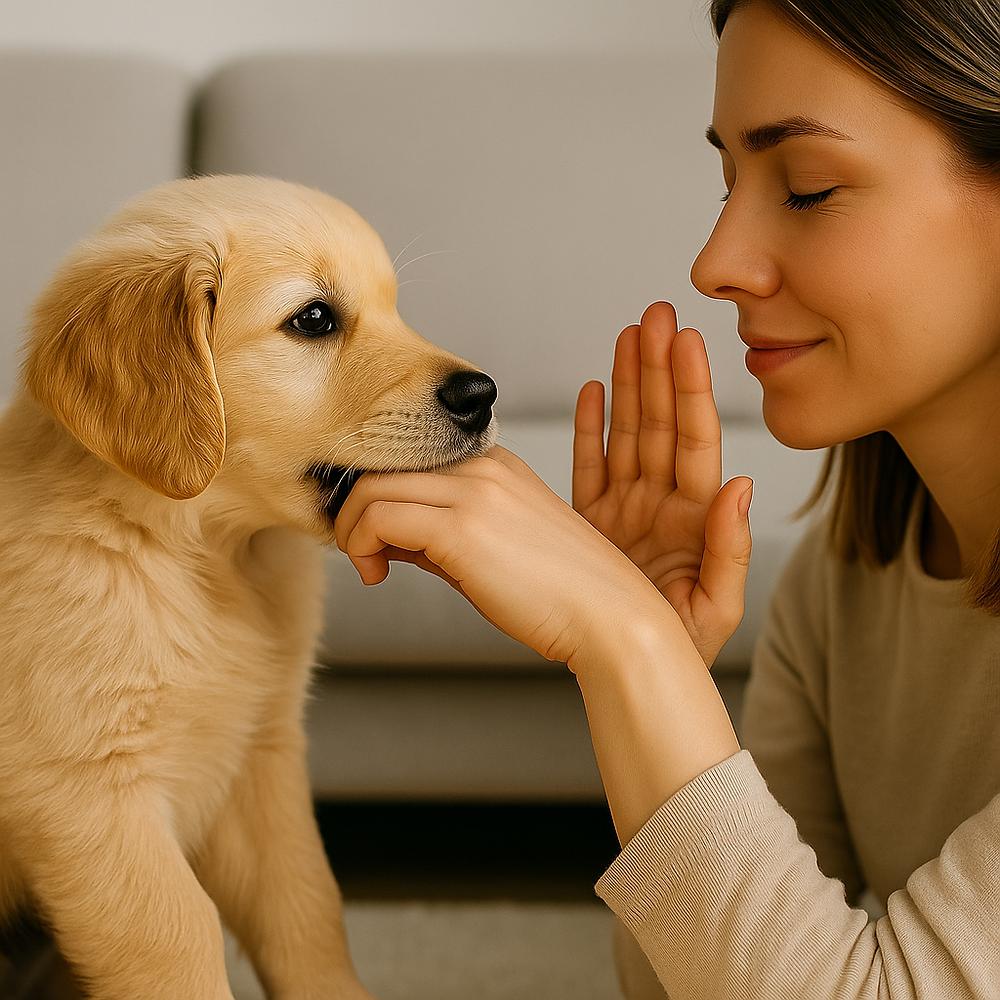
Puppy biting is a normal developmental behaviour. I do not punish puppies for using their mouths. Instead, I teach them what happens when teeth meet skin and how to choose another behaviour.
- Notice. Pay attention to when your puppy gets mouthy during play, handling, or frustration.
- Redirect. Offer an appropriate chew or toy before the puppy escalates.
- Reward. Reinforce calm choices with praise, treats, or continued gentle interaction.
A common mistake
Many owners wait until a puppy is already frantic before trying to teach calm behaviour. Training works better when the puppy is still able to think.
This foundation takes weeks, not a weekend. The goal is not a puppy who never feels frustrated; the goal is a puppy who has better ways to handle frustration.
How to Introduce Grooming Tools Without Fear
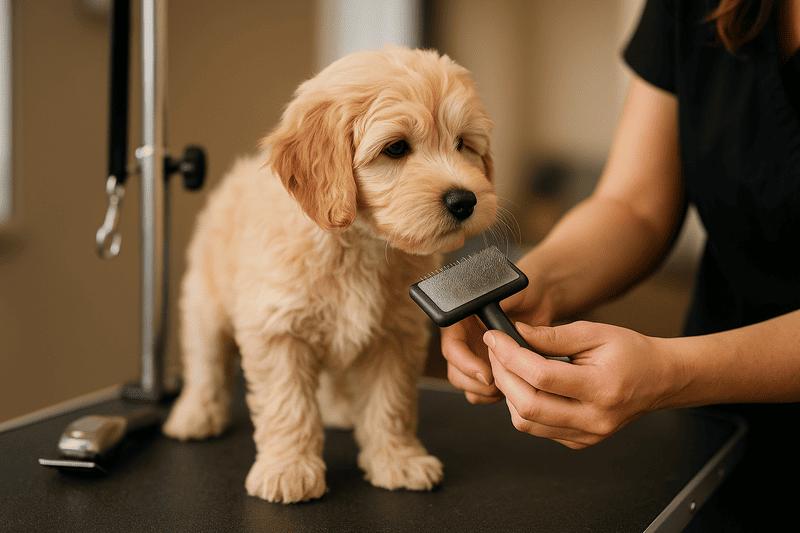
The brush should not appear only when something uncomfortable is about to happen. I want the tool itself to become boring. Boring is wonderful in dog training.
The two-second grooming game
I start with a simple pattern: show the brush, feed a treat. Touch the puppy briefly with the brush, feed a treat. Then stop. A puppy who wants more can come back. Choice matters.
- Let your puppy sniff grooming tools before using them.
- Pair sounds like clippers or dryers with food at a comfortable distance.
- Practise handling ears, paws, and legs during calm moments.
- End sessions before your puppy feels the need to bite.
For many puppies, the first week is not about grooming at all. It is about building the expectation that grooming equipment predicts safety.
Step-by-Step Training to Stop Grooming Bites
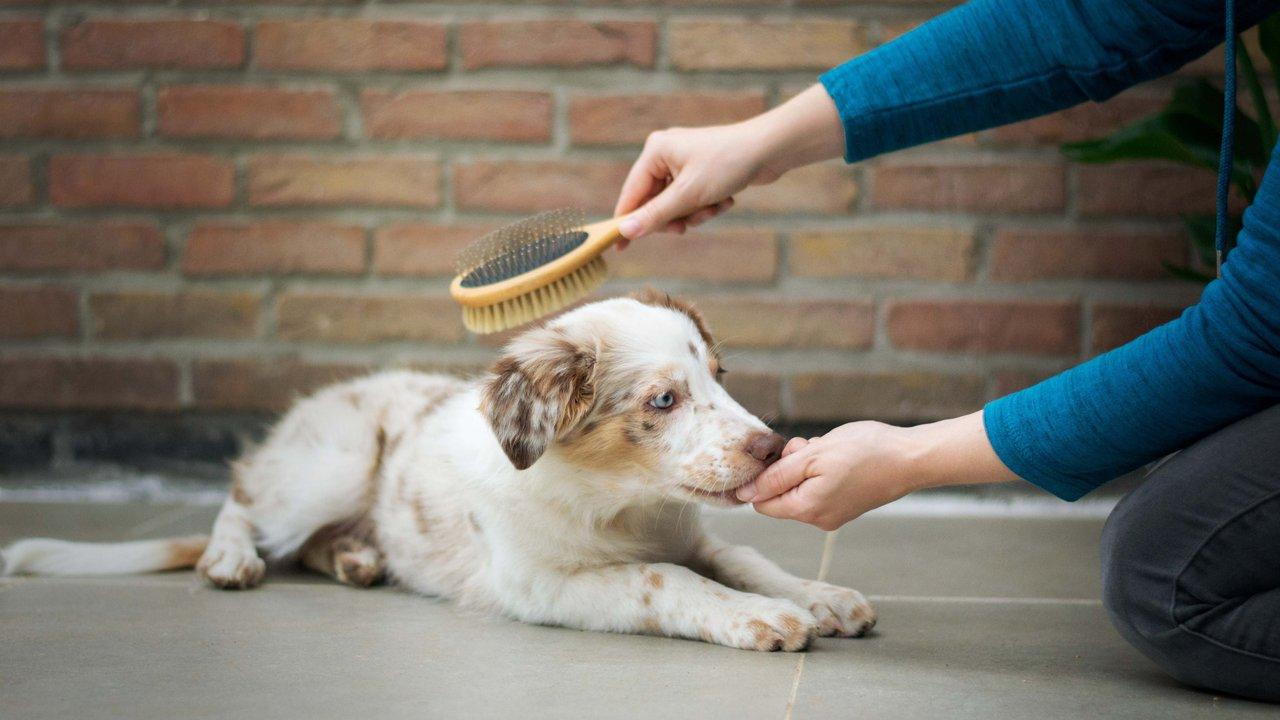
Once your puppy can stay relaxed around the equipment, I begin gradual handling practice. I keep sessions tiny because success matters more than duration.
- Prepare. Choose a quiet area and have high-value rewards ready.
- Touch. Briefly touch a safe body area and reward calm behaviour.
- Increase. Slowly add brush strokes, paw holds, or tool movement.
- Pause. Stop while your puppy is still comfortable.
- Repeat. Build many easy sessions over several weeks.
I tell my clients to measure progress by recovery, not perfection. A puppy who startles but quickly relaxes again is learning.
Handling Biting During Brushing, Bathing, and Nail Trims
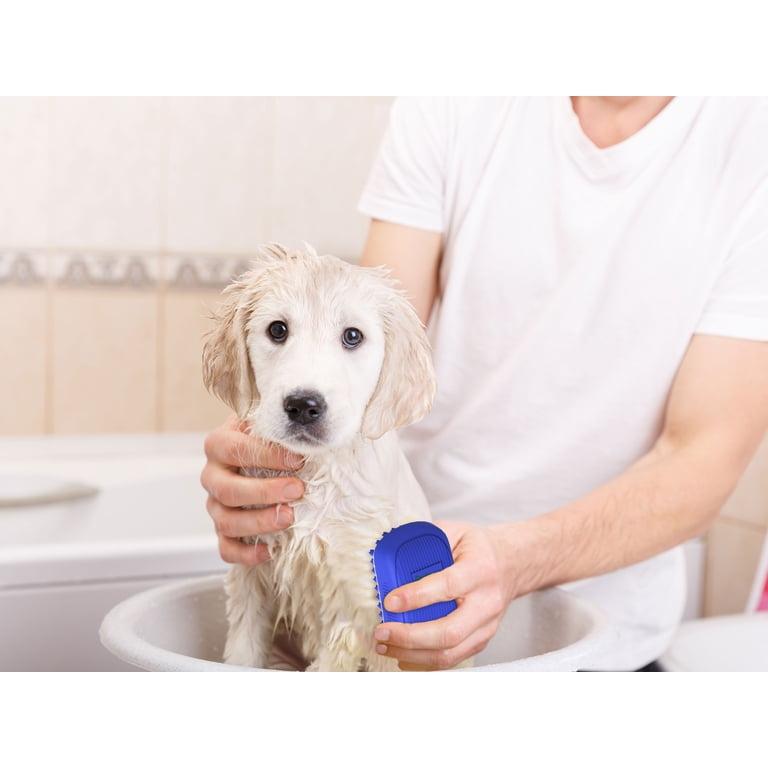
Brushing, bathing, and nail trims each bring different challenges. I avoid trying to "push through" because that often creates a puppy who becomes more worried next time.
Helpful approaches
- Short sessions with rewards.
- Non-slip surfaces for confidence.
- Breaking grooming into small pieces.
Things I avoid
- Holding a struggling puppy down.
- Scolding warning signals.
- Rushing through fear.
A practical adjustment
If your puppy bites during nail care, practise touching the paw without clipping anything. Separate the steps so the puppy can understand each one.
Some puppies improve in a few weeks. Others need months of careful work, especially if they have had frightening grooming experiences already.
When Puppy Grooming Biting Requires Professional Help
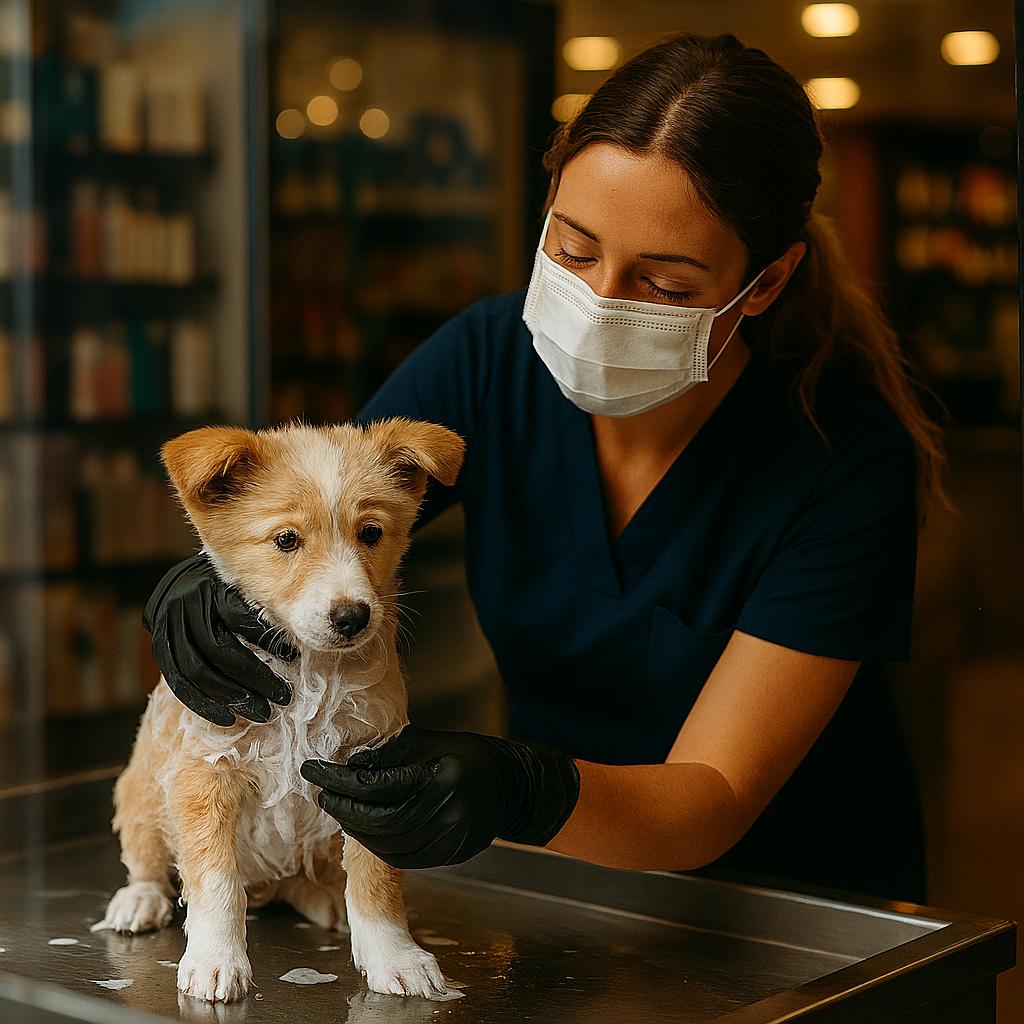
There is a point where a blog post is no longer enough. If your puppy is snapping, making contact, or you feel worried about handling them safely, I want you to get support rather than trying to solve it alone.
17
years I have spent helping owners understand behaviour instead of fighting it
- Ask your veterinarian about sudden behaviour changes or possible pain.
- Work with a certified professional trainer for serious handling problems.
- Seek veterinary behaviour support when aggression is significant or safety is a concern.
- Use management strategies so nobody gets bitten while training is underway.
Puppy Grooming Biting Questions
Is puppy biting during grooming normal?
Yes, many puppies bite because grooming is unfamiliar, frustrating, or uncomfortable. It is a behaviour to teach through gradual practice.
Should I punish my puppy for biting during grooming?
I do not recommend punishment. It can increase fear and remove the warning signals that help us understand discomfort.
How long does grooming training take?
Most puppies need repeated practice over weeks or months. The timeline depends on the puppy's history and stress level.
The puppy in front of you is not giving you a grooming problem; they are showing you a skill they have not learned yet. Slow down, make the next repetition easier, and build from there.




More Pinterest Visuals