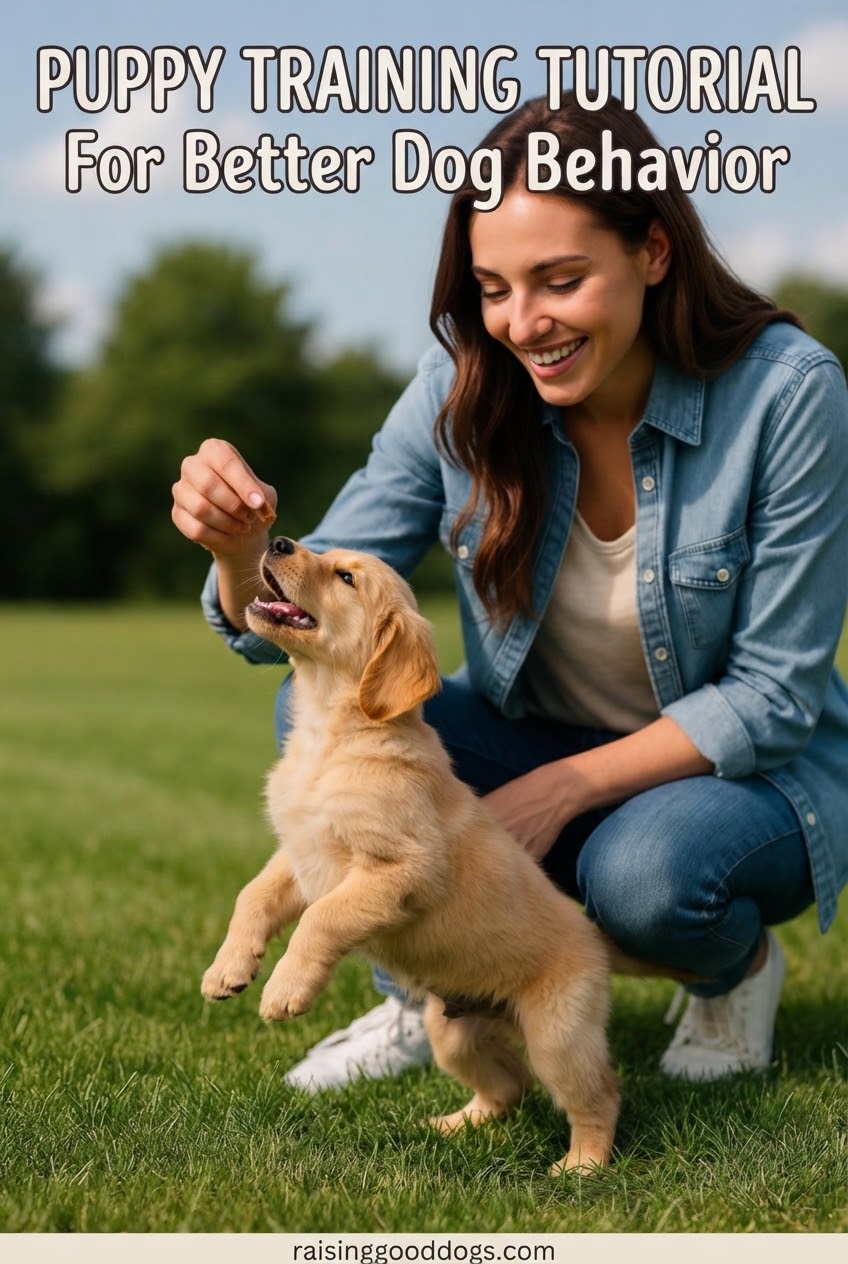
A puppy does not arrive knowing our rules, routines, or what we consider polite. They arrive ready to learn, which is wonderful and also why the first few months matter so much. I have spent years helping owners build everyday skills, and the biggest lesson is simple: make the right choice easy before you ask your puppy to make it.
This puppy training tutorial follows the same order I use with real dogs: teach communication first, create predictable routines, prevent rehearsal of unwanted habits, and reward the behaviours you want repeated. Current veterinary and training guidance also supports starting early with short, reward-based sessions.
Summary
- Start training as soon as your puppy comes home.
- Use rewards, repetition, and realistic expectations.
- Focus on building habits rather than chasing quick fixes.
Teaching Basic Commands and Cues
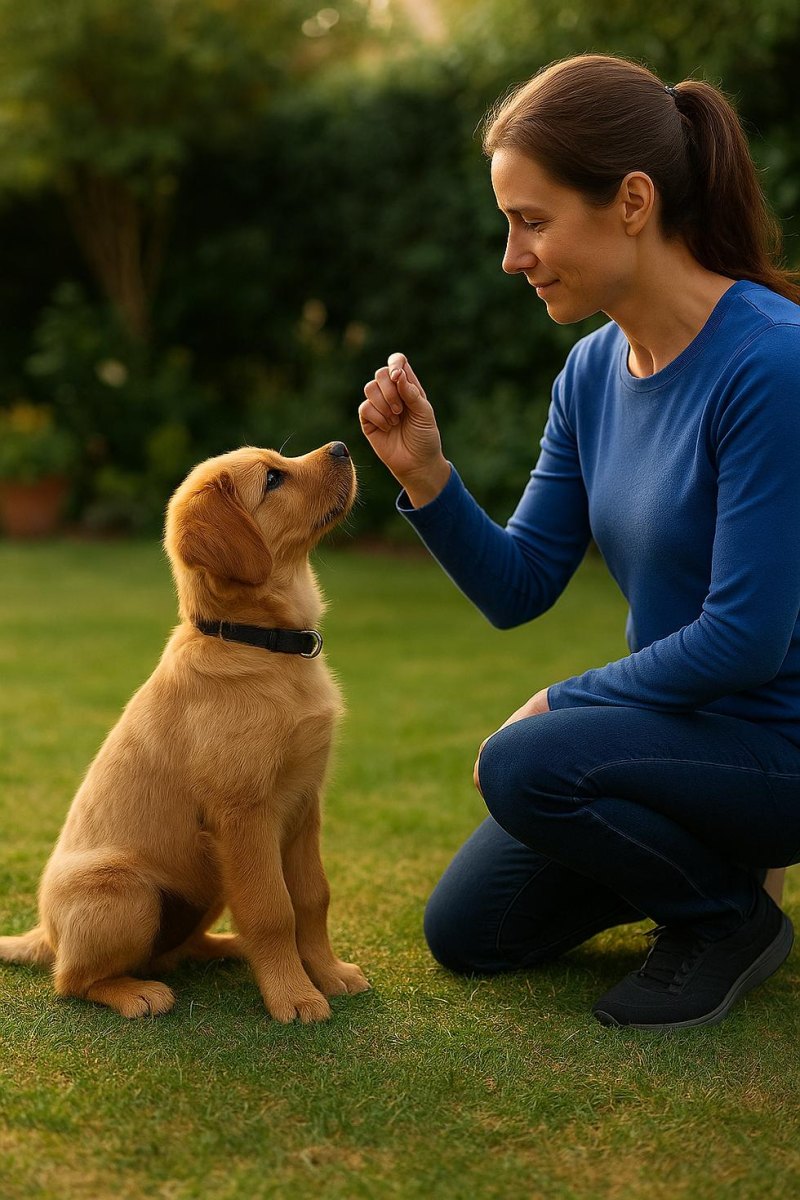
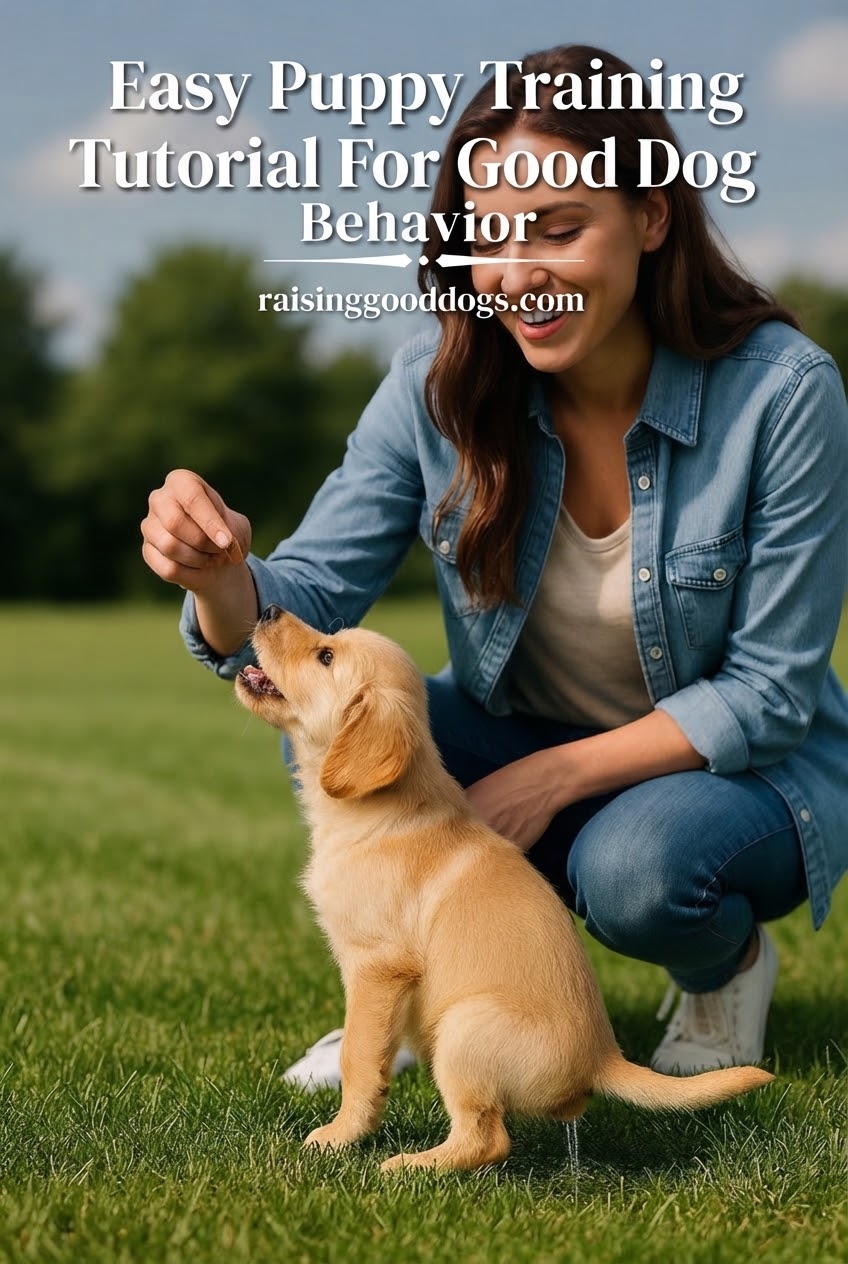
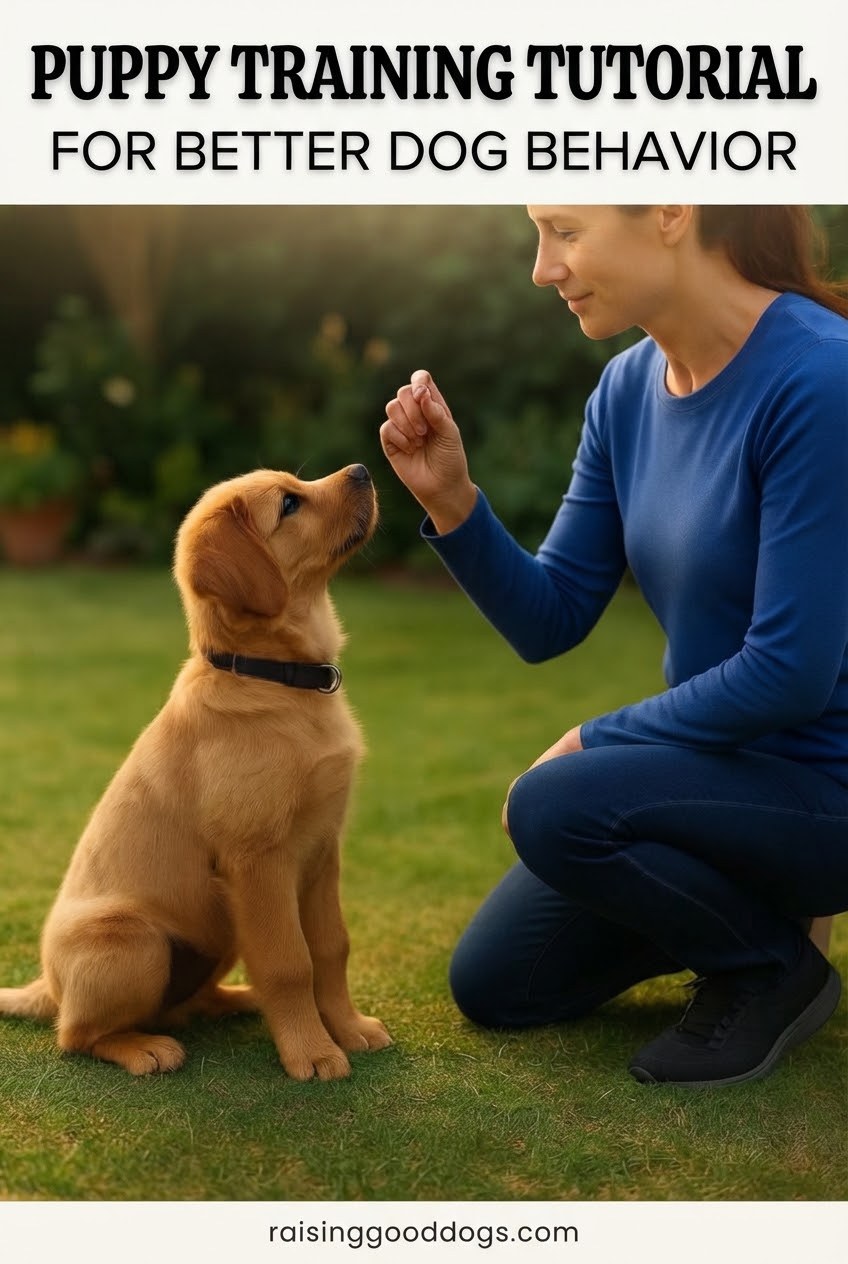
The first cues I teach are not about making a puppy perform. They are about creating a shared language. A name response, a hand target, sit, and come can become useful tools for everyday life when they are taught with clear rewards and good timing.
I keep early lessons short because puppies have tiny attention spans. Five focused minutes can be more productive than twenty minutes where your puppy is wandering off to investigate a dust bunny that has suddenly become fascinating.
- Reward. Mark the moment your puppy offers the behaviour you want.
- Repeat. Practice in easy places before adding distractions.
- Build. Increase difficulty slowly while keeping success high.
Trainer tip
If your puppy stops responding, I first ask whether the environment is too difficult. Training works best when the dog can actually think.
Potty Training Your Puppy Step by Step
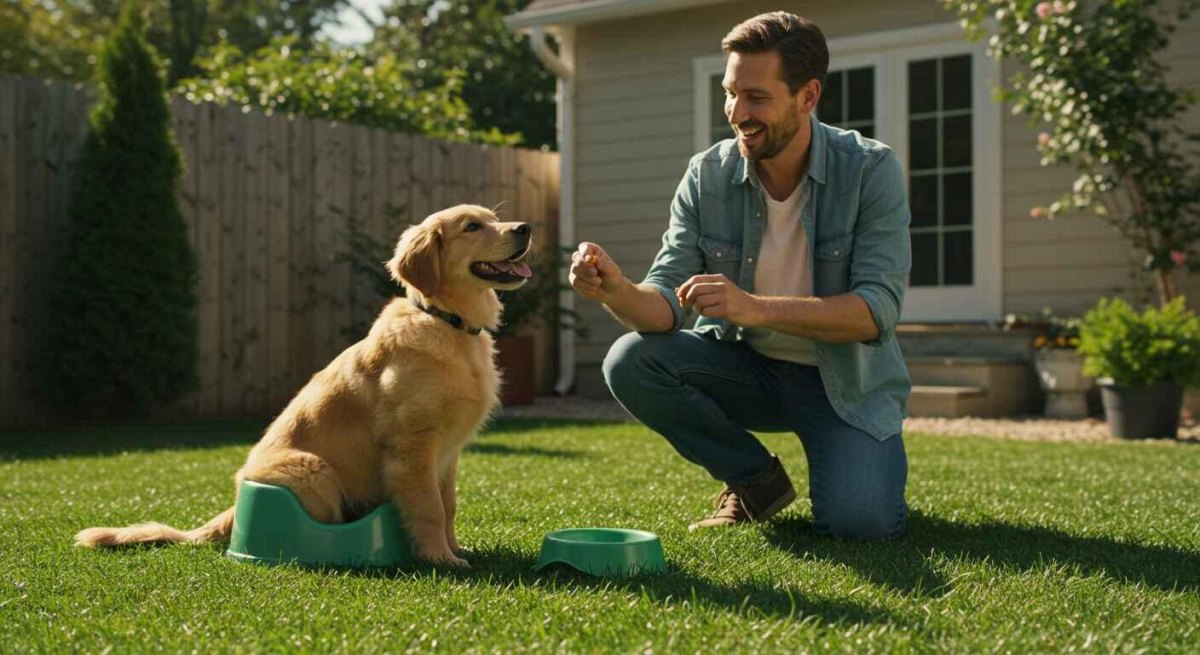
Potty training is one of those jobs where people often think their puppy is being stubborn. Usually, the puppy simply has not had enough opportunities to practise the right habit yet. A predictable schedule, supervision, and immediate rewards make the lesson much clearer.
I tell clients to watch the puppy, not the clock alone. Sniffing, circling, wandering away, or suddenly losing interest in play can all be clues that a bathroom break is needed.
- Take your puppy out after sleeping, eating, and playing.
- Reward outdoor toileting immediately.
- Clean accidents thoroughly without punishment.
- Ask your vet about sudden house-training changes.
Common mistake
Waiting for accidents to happen teaches the puppy after the fact. I prefer preventing the accident and paying for the behaviour I want.
Crate Training for Safety and Comfort
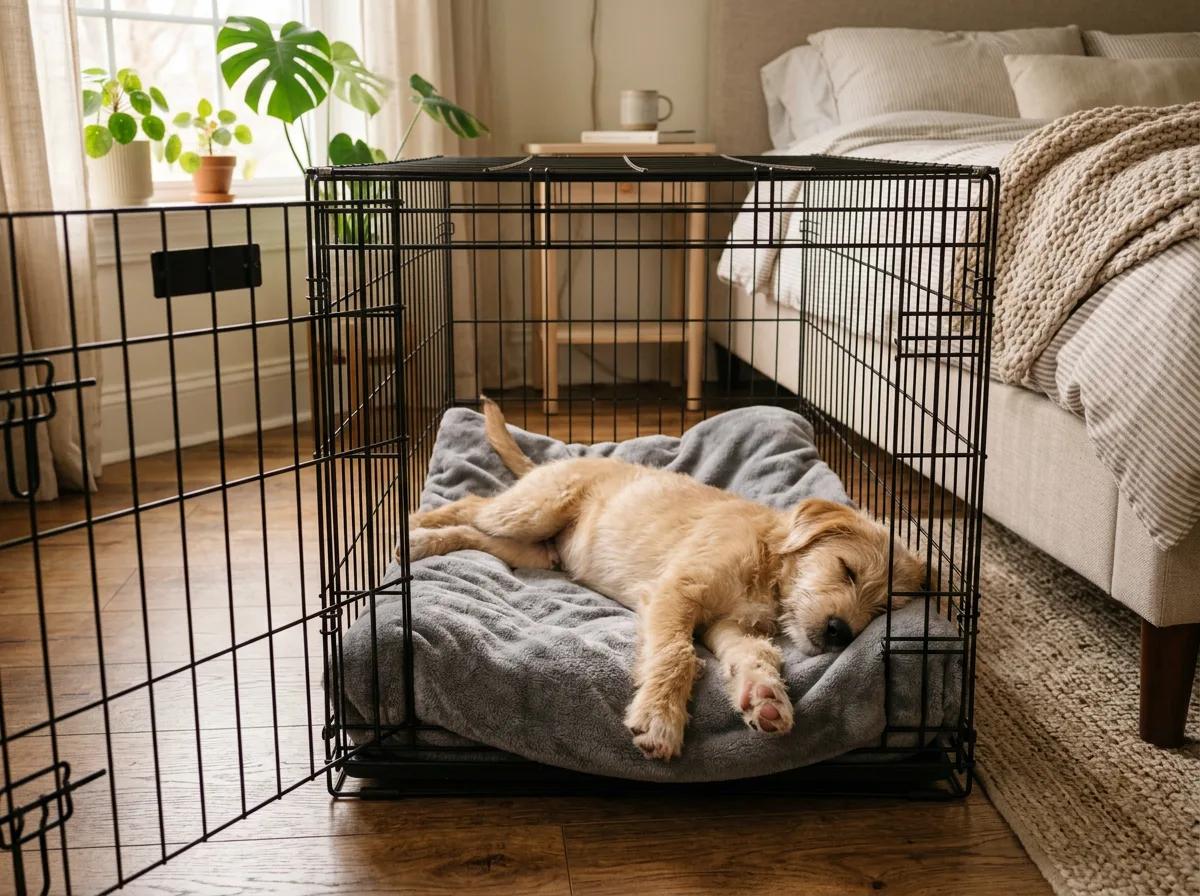
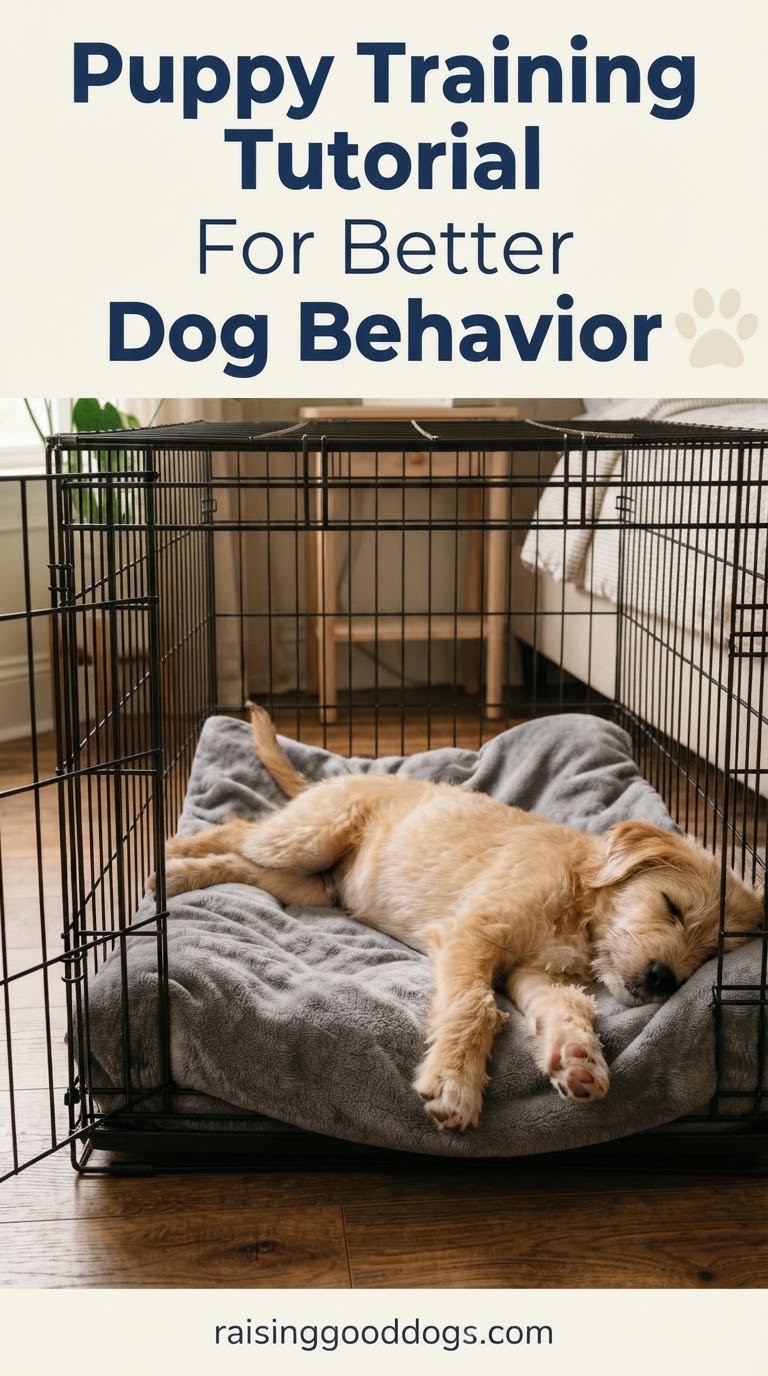
A crate should feel like a bedroom, not a time-out corner. When introduced slowly, it can become a place where a puppy rests, settles, and learns independence. The goal is comfort, not simply closing a door.
I start with the door open and let the puppy investigate. If I see stress signs like freezing, frantic pawing, heavy panting, or trying to escape, I make the exercise easier rather than pushing through.
| Good crate practice | Avoid |
|---|---|
| Reward calm choices inside | Using the crate as punishment |
| Increase time gradually | Ignoring distress signals |
Socializing Your Puppy with People and Pets
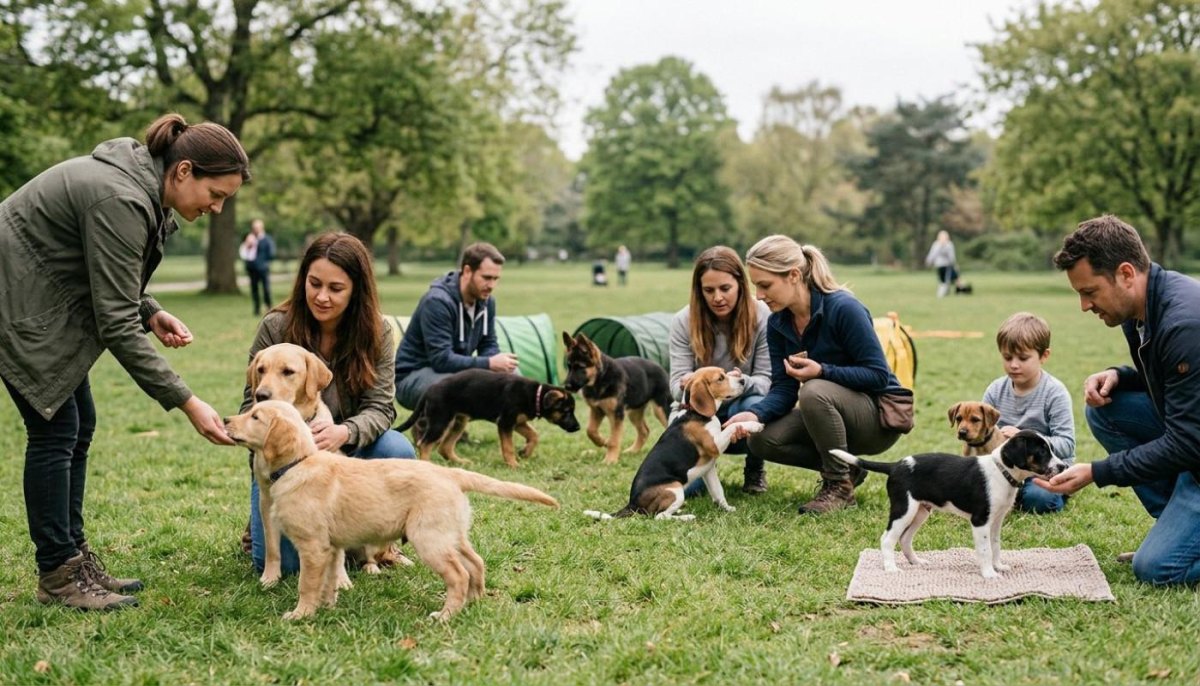
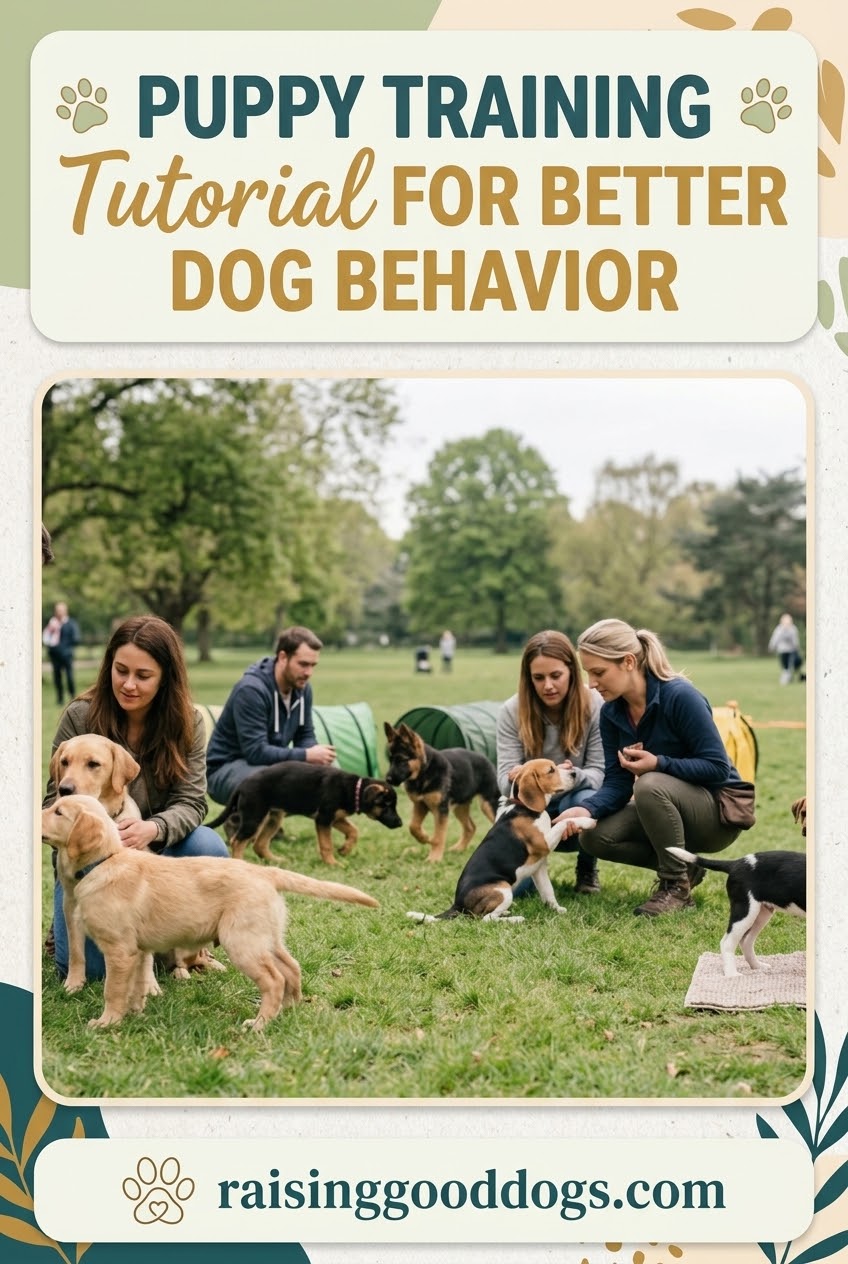
Good socialisation is not forcing a puppy to greet everything. It is helping them experience the world while feeling safe. I want puppies to notice new people, dogs, sounds, and places without being pushed beyond what they can handle.
I watch the small signals that appear before a puppy becomes overwhelmed: a tucked tail, turning away, freezing, lip licking, or suddenly becoming unable to take treats. Those are communication, not bad behaviour.
- People: Encourage calm interactions at the puppy’s pace.
- Dogs: Choose safe, appropriate play partners.
- Places: Introduce new environments gradually.
Remember
Vaccination timing and safe exposure plans should be discussed with your puppy’s veterinarian.
Building Good Behavior Through Positive Reinforcement
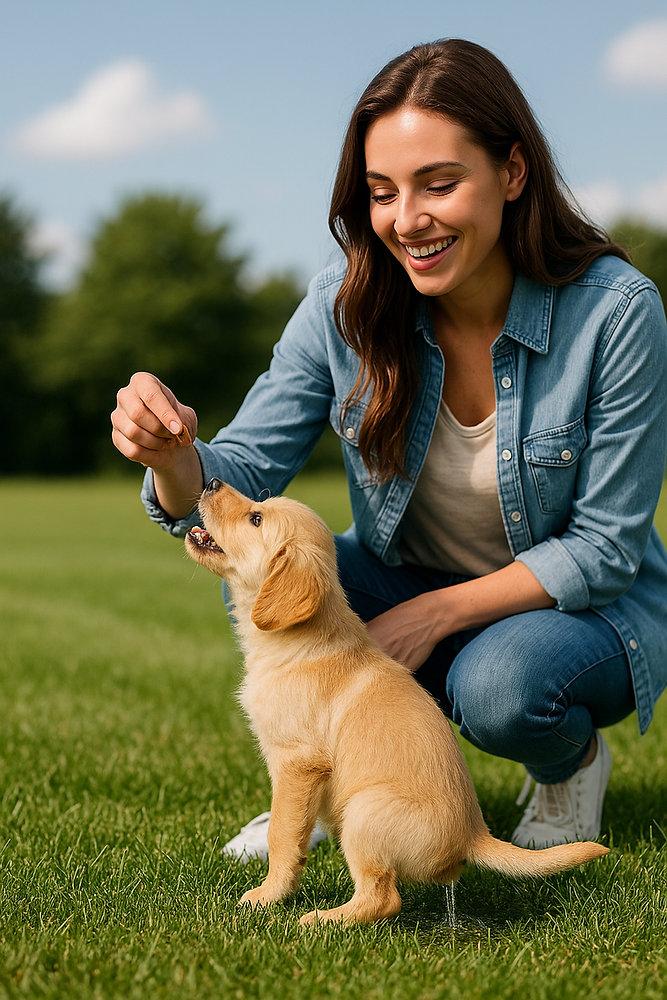
The easiest behaviour to live with is the one your puppy has been rewarded for choosing. Positive reinforcement means noticing the good moments: four paws on the floor, settling quietly, checking in with you, or choosing a toy instead of a shoe.
I still remember how much my own German Shepherd Bruno taught me about patience. The boring repetitions were the work. The tiny improvements were the progress. Training is built in those ordinary Tuesday moments, not just in perfect practice sessions.
Benefits
- Builds trust between dog and owner.
- Creates behaviours your puppy wants to repeat.
- Supports calmer learning.
Challenges
- Requires consistency from the whole household.
- Progress may happen in small steps.
The habit that changes everything
Reward the behaviour you would like to see again. Your puppy is always learning, even when you are not holding a treat pouch.




More Pinterest Visuals