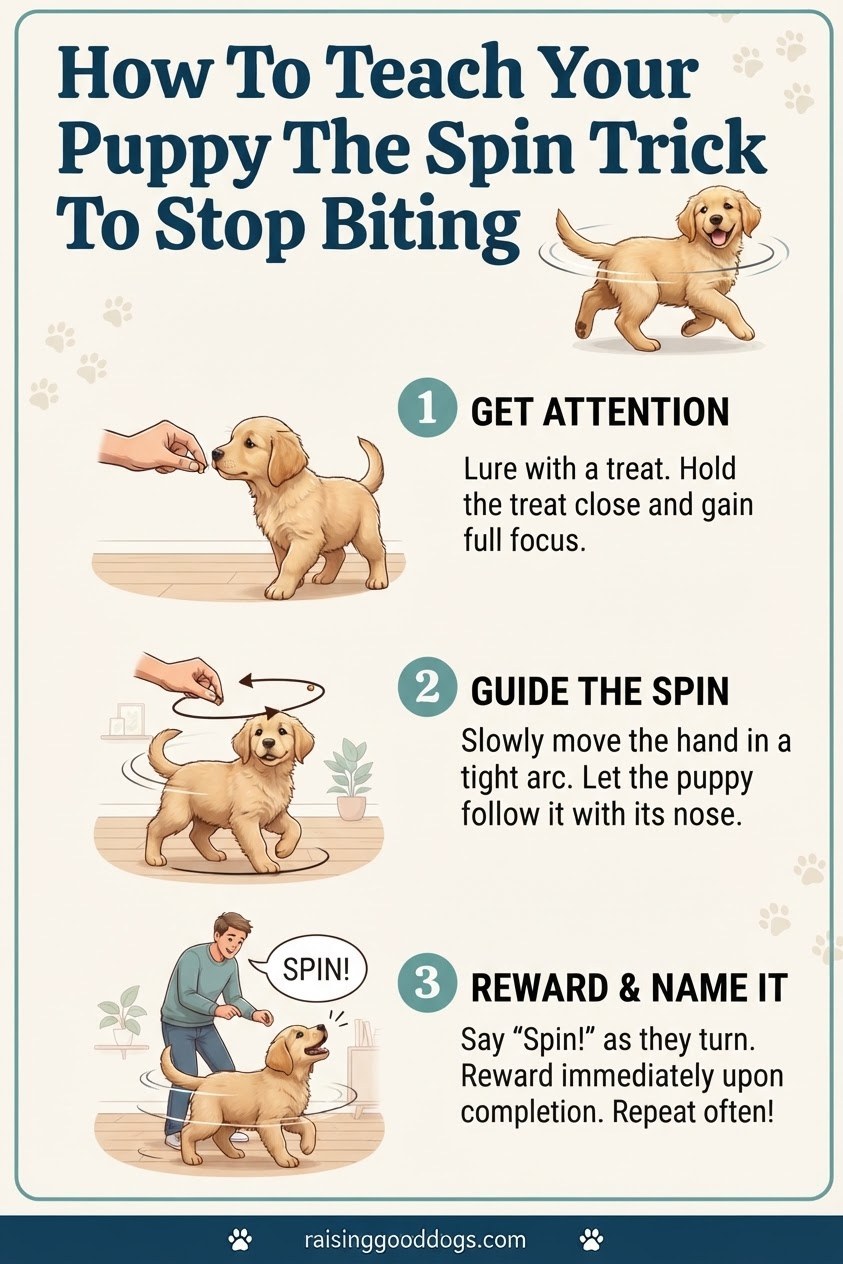
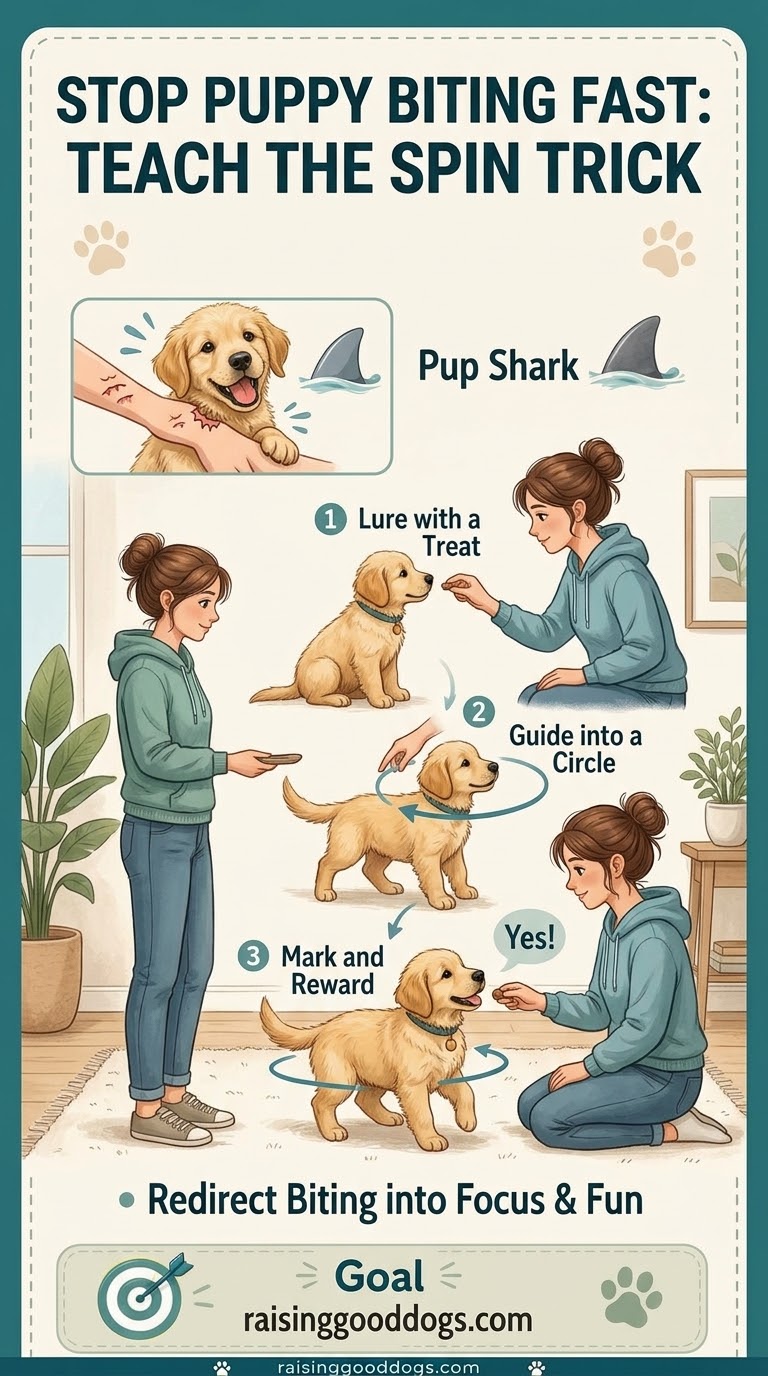
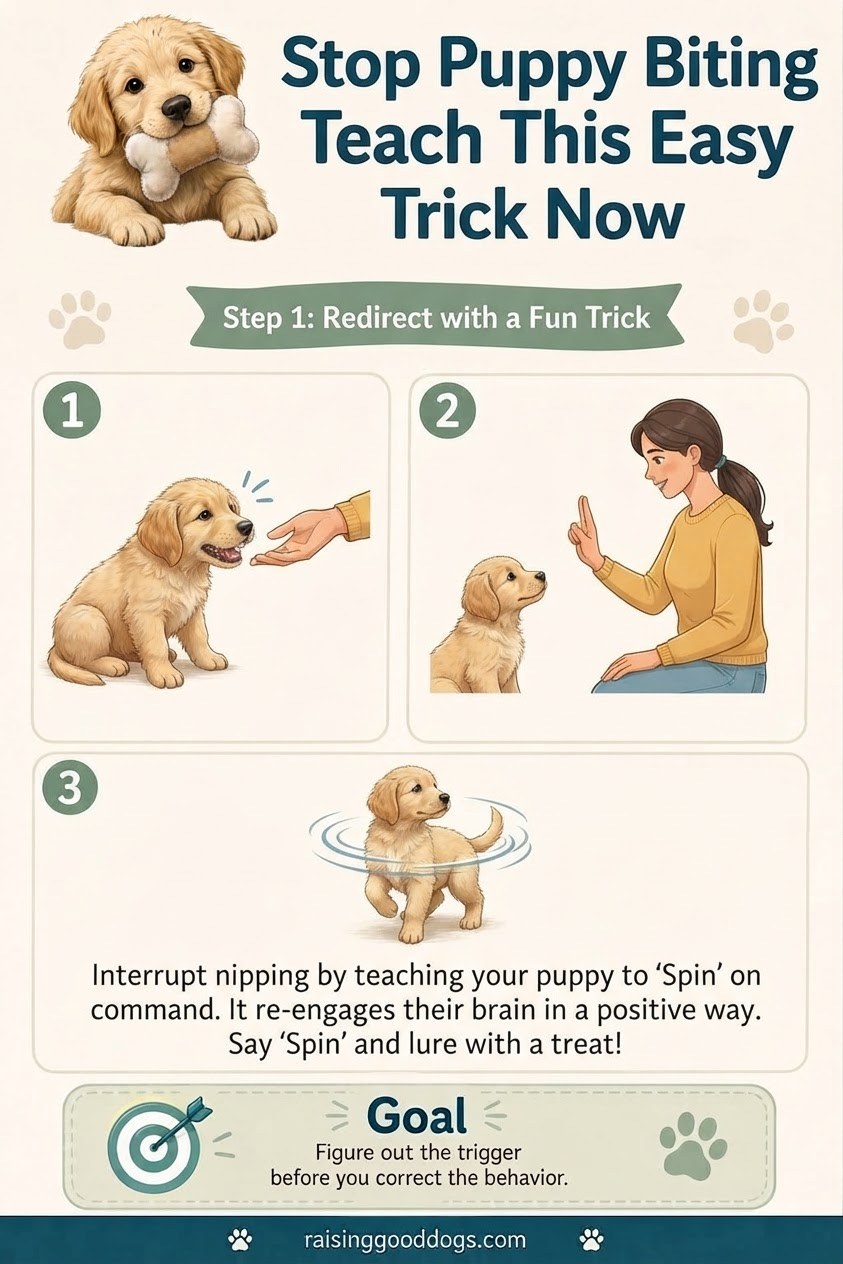
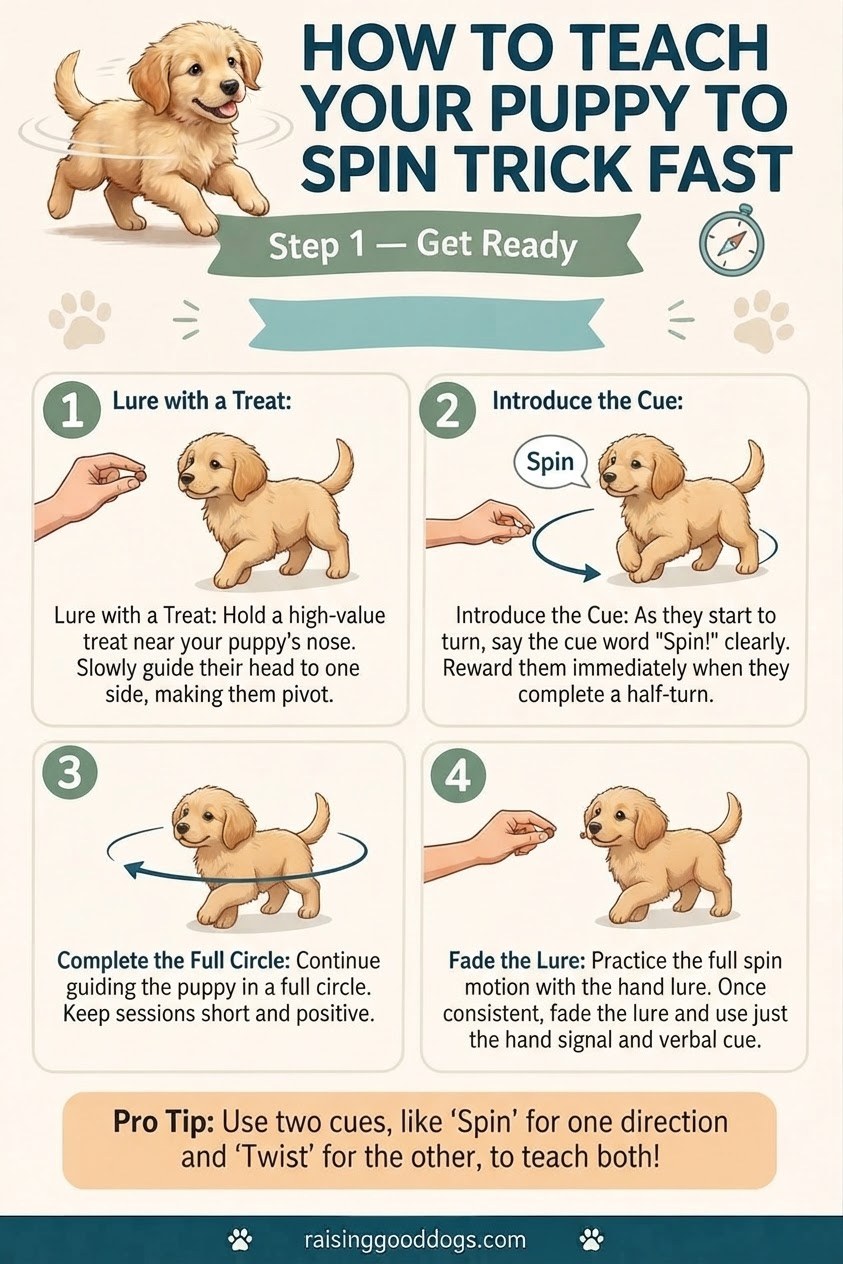
Somewhere around eight weeks, every puppy turns into a small, determined mouth with legs, and my inbox fills up with the same panicked question: is this normal, or did I get a shark instead of a dog? Almost always it's normal. But 'normal' still needs a plan, or you'll spend the next two months bleeding gently and blaming yourself for it.
Know What's Normal Before You Panic
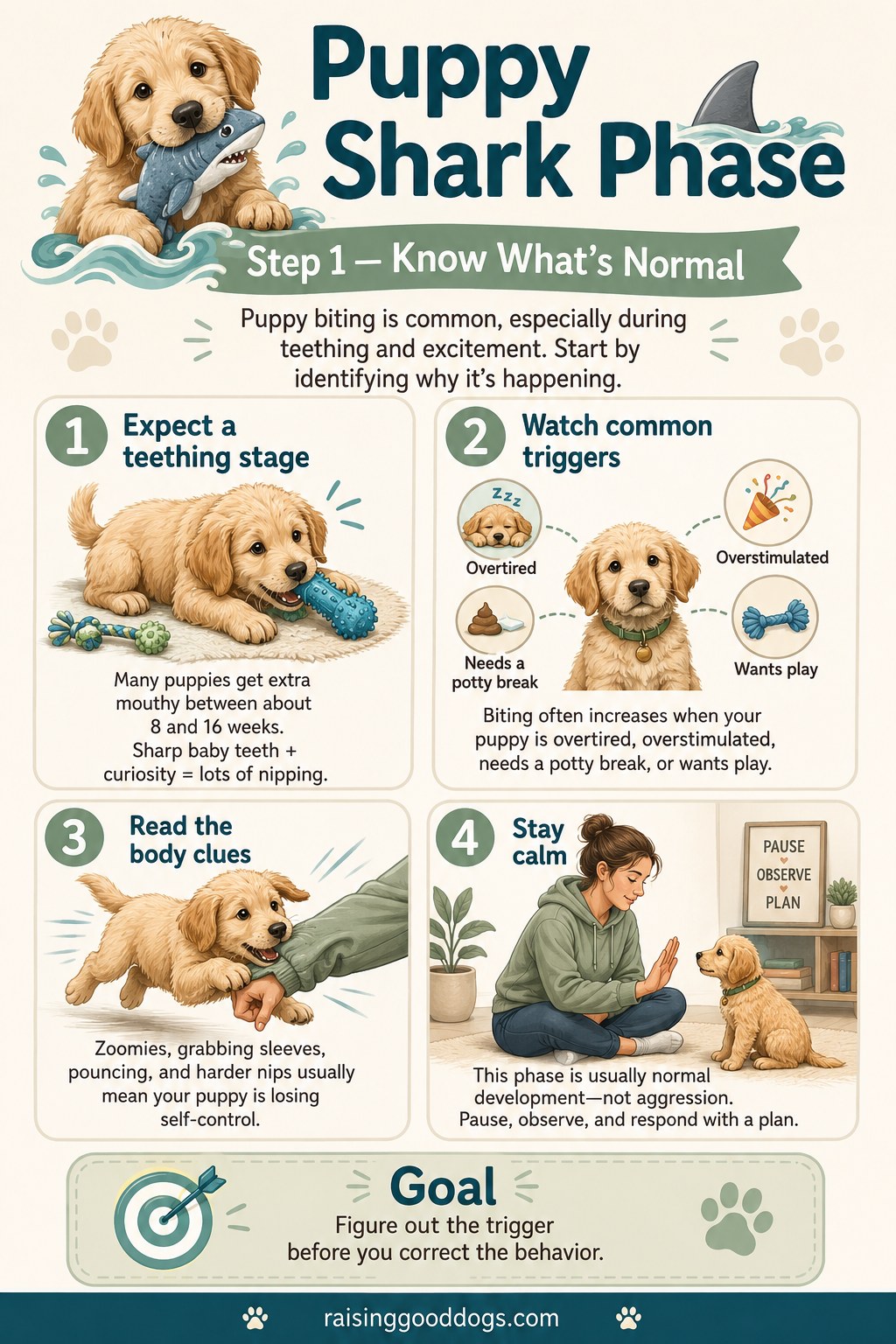
Puppy biting during teething runs roughly from eight to sixteen weeks, and it's driven by sharp baby teeth, sore gums, and a brain that hasn't learned any other way to interact with the world yet. Before you correct anything, figure out why the mouthing is happening right now, because the fix changes depending on the trigger.
- Overtired — the bitiest puppy I see in any session is the one who missed a nap, not the one with a behaviour problem.
- Overstimulated — too much noise, too many hands, too much excitement with nowhere for it to go.
- Needs a potty break — a full bladder makes everyone crankier, puppies included.
- Wants play — sometimes the mouth is just an invitation, badly worded.
Watch the body, not just the teeth: zoomies, sleeve-grabbing, pouncing and harder nips usually mean your puppy has lost a bit of self-control, not that anything is wrong with them. My years reading dogs in a vet exam room taught me the same lesson this phase teaches every new owner — the behaviour in front of you is information, not a verdict. Pause, observe, and respond with a plan instead of a punishment.
Redirect the Bite
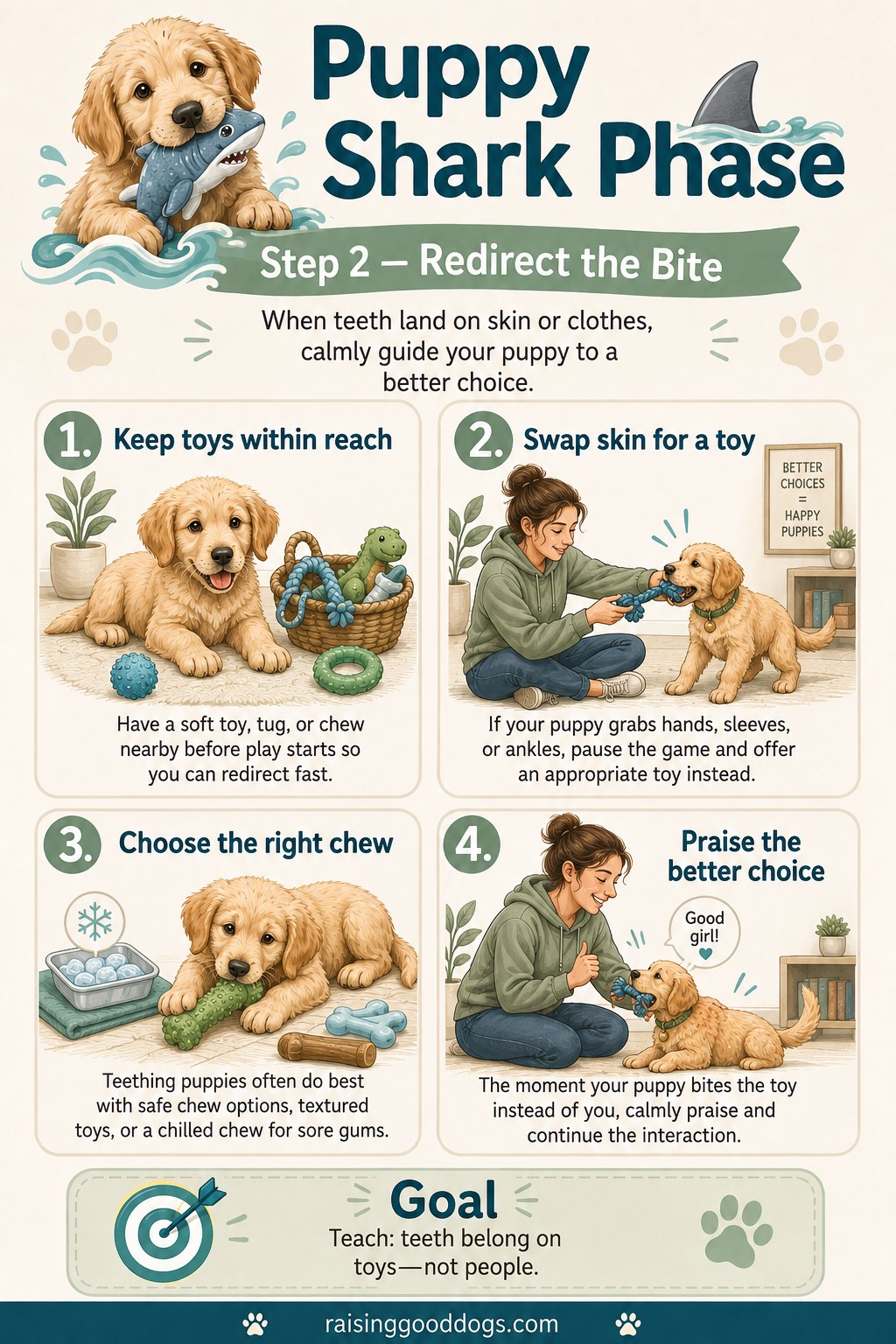
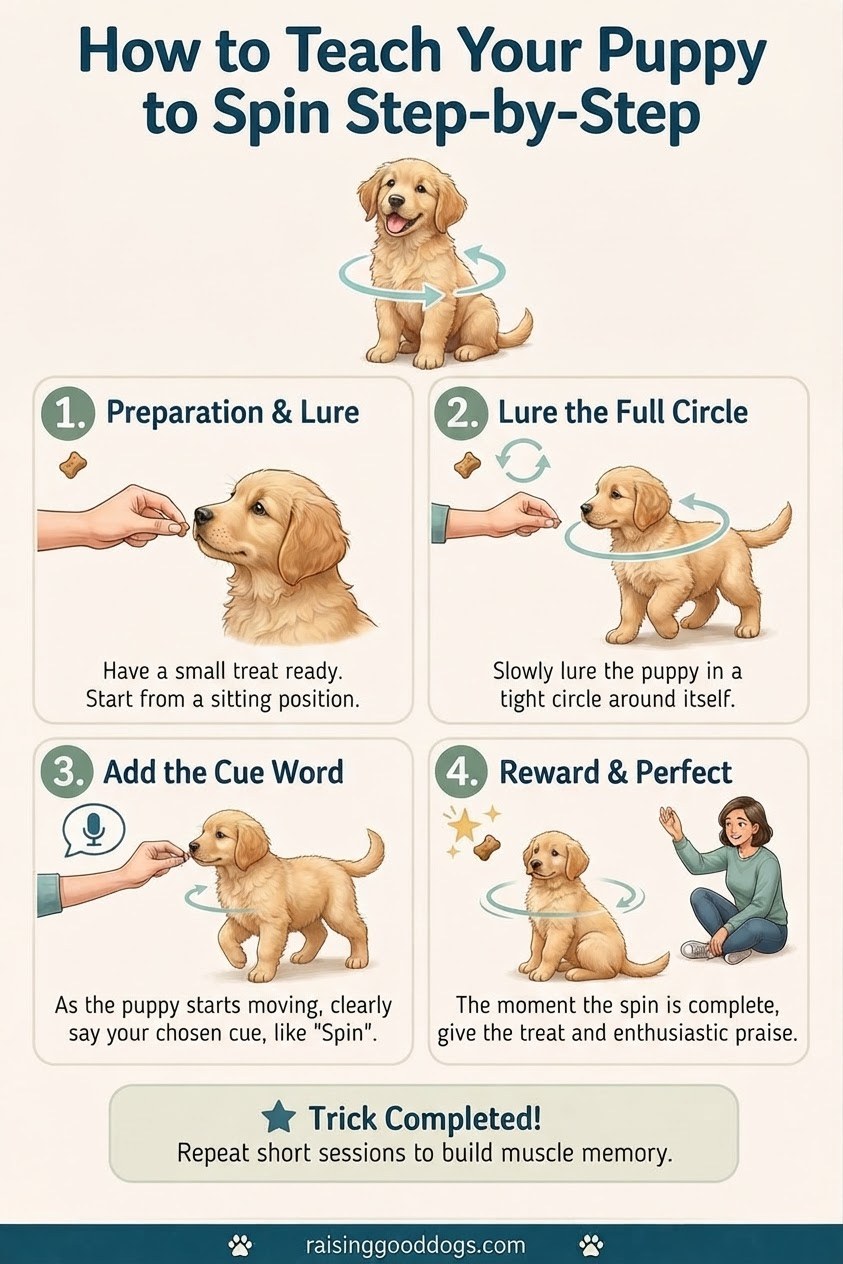
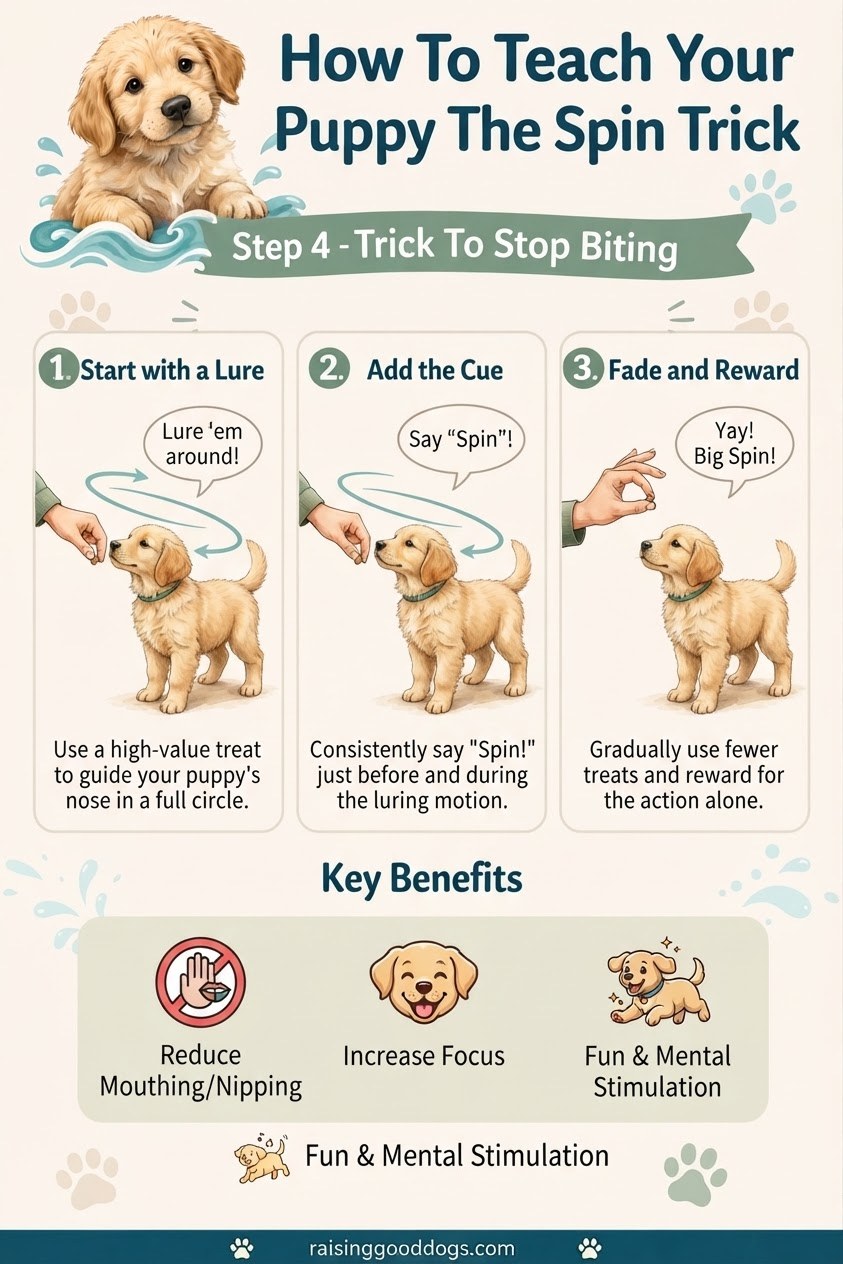
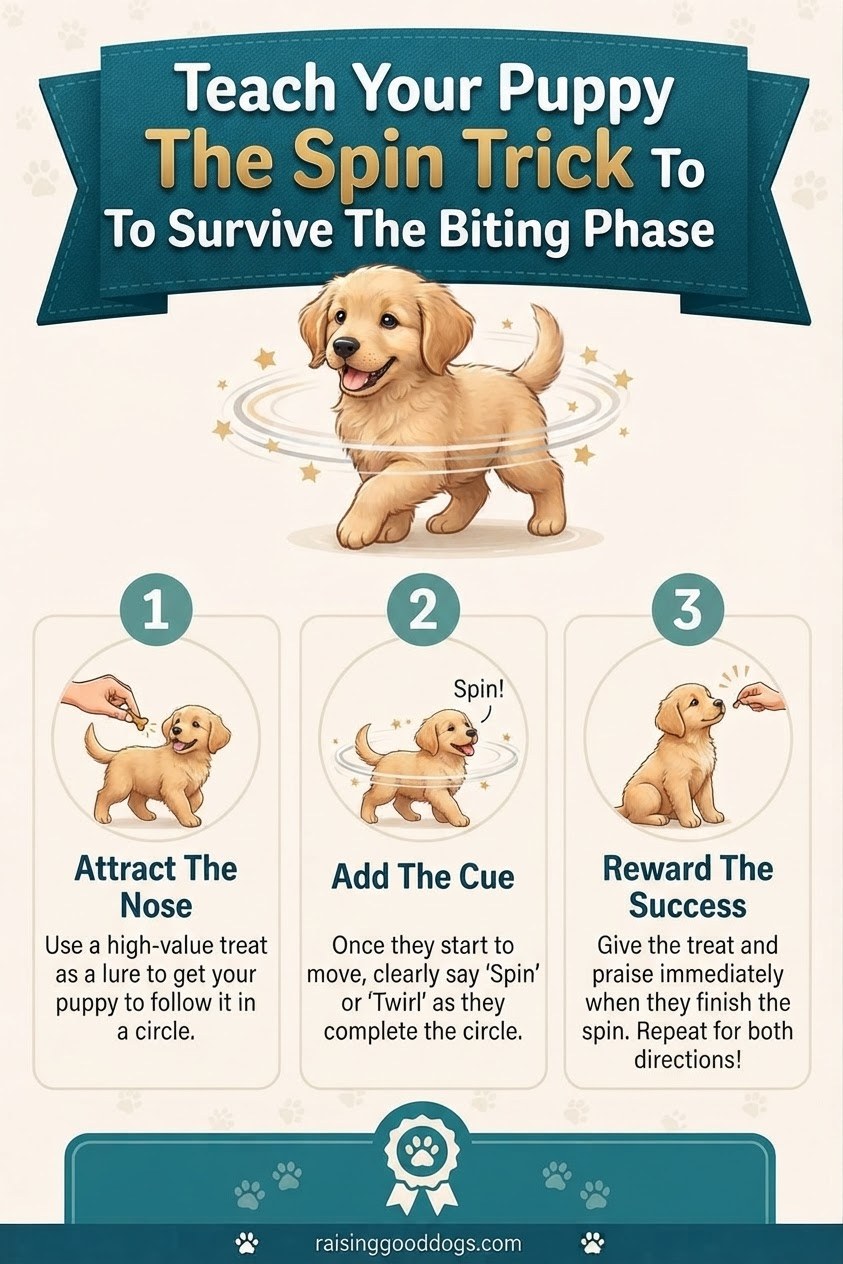
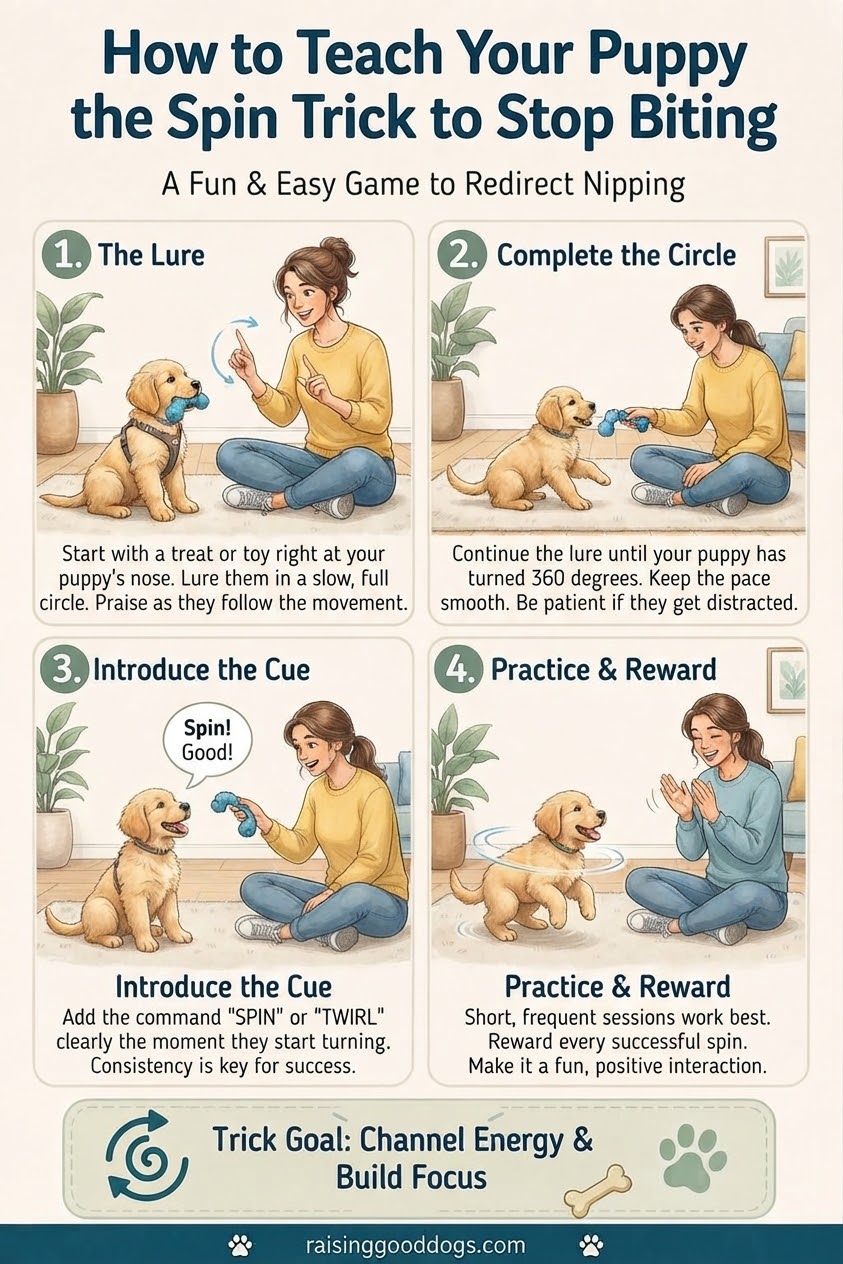
Once you know why your puppy is mouthing, the job gets simple: teach teeth that they belong on toys, not people. That only works if the toy is faster to grab than you are, so I tell clients to scatter two or three soft tugs and chews within arm's reach of wherever the puppy actually plays.
- Keep toys within reach. If you have to walk off to find one, the moment's already passed and skin has already been bitten.
- Swap skin for a toy. The instant those teeth land on a hand, sleeve or ankle, calmly offer the toy instead — no drama, just a trade.
- Choose the right chew. Teething puppies usually do best with something textured, or a chilled chew for sore gums.
- Praise the better choice. The second the teeth land on the toy instead of you, say so — a quiet 'good girl' and a beat of continued play tells the puppy exactly what worked.
This is the whole mechanism behind most bite-inhibition protocols I run with clients: redirect early and often, and the pattern rewires itself over a few weeks, not one lucky afternoon.
End the Frenzy Early
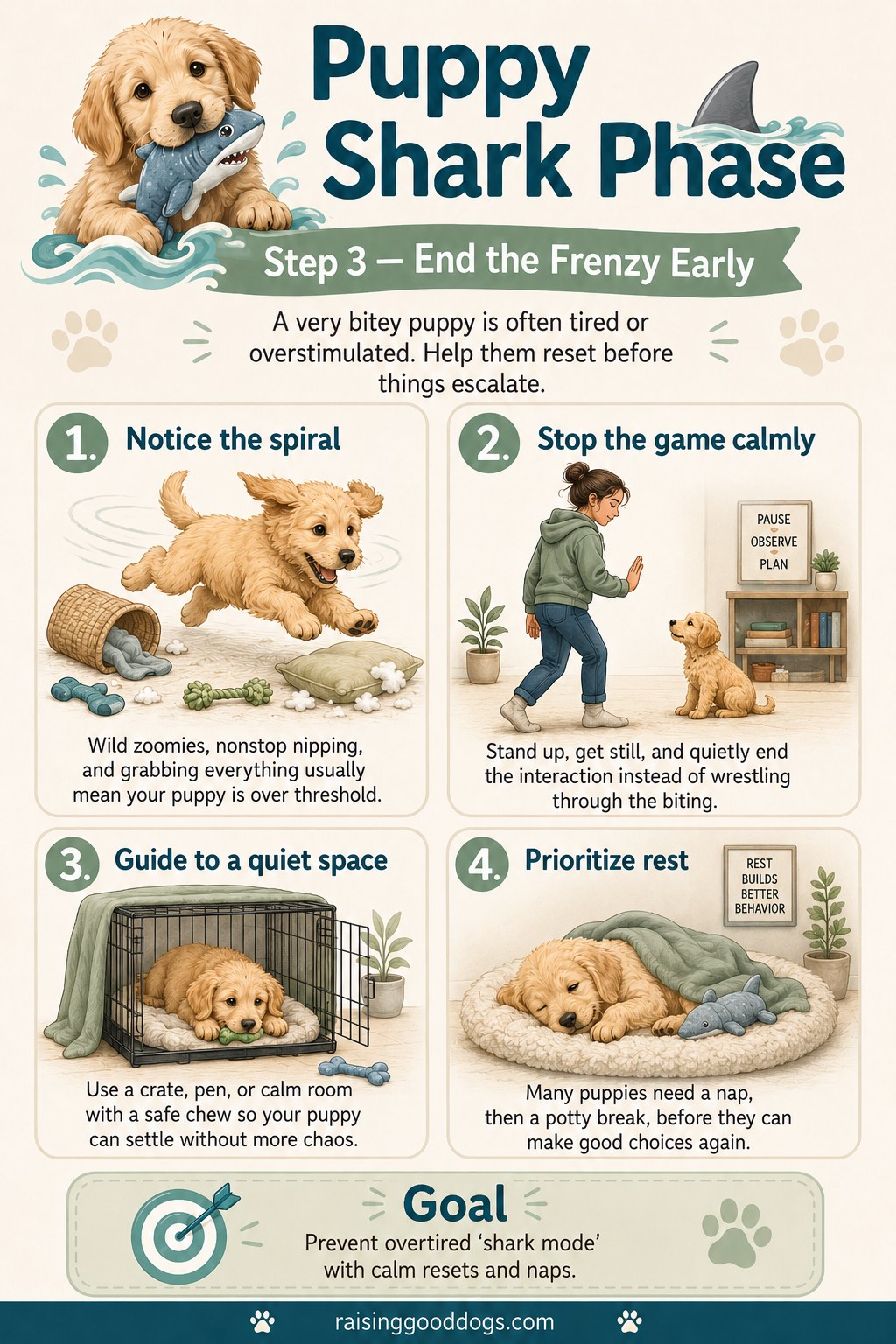
A very bitey puppy is almost never a badly behaved one — it's an overtired or overstimulated one, and the wild-eyed, nonstop-nipping, grab-everything spiral is your cue that the game needed to end two minutes ago.
Notice the spiral before it peaks. Zoomies, grabbing at clothing, nips getting harder instead of softer — that's the moment to intervene, not push through and hope it burns out.
When you see it, stand up, get still, and quietly end the interaction. No wrestling, no chasing, no raised voice — just calmly disengage and guide your puppy to a quiet space. A crate, a pen, or a calm room with a safe chew all work; the goal is a place to settle, not a timeout as punishment. If your puppy is distressed rather than settling in a crate, that's information worth listening to, and a pen or gated room is a perfectly good alternative.
The puppies who bite hardest in my sessions are almost always the ones who've been 'on' for two straight hours with no nap — not the ones with a behaviour problem.
Most puppies need a nap, then a potty break, before they're capable of making a better choice again. This is the step people skip because it feels like giving in, but preventing overtired shark mode is management, not defeat.
Teach Real Self-Control
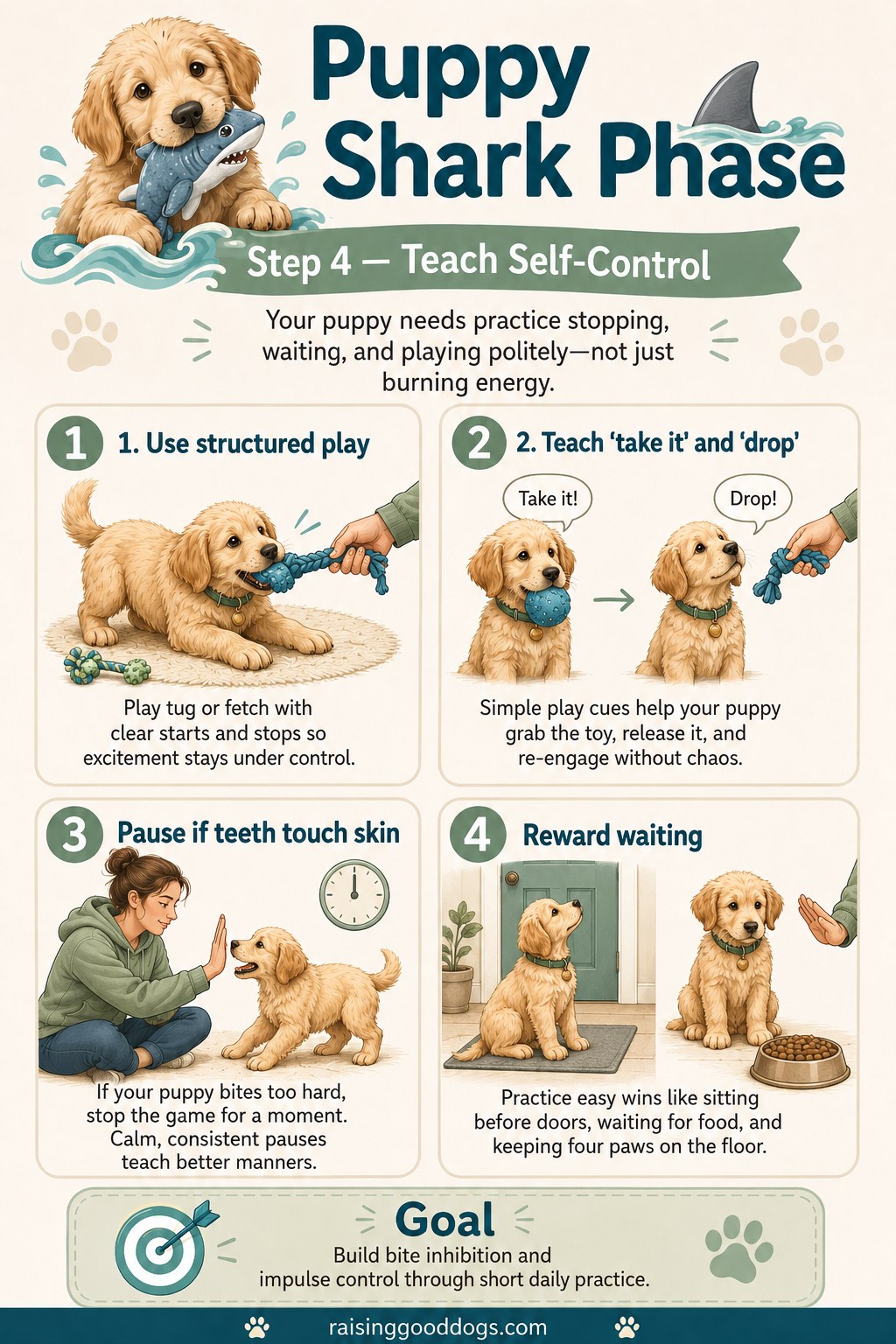
Redirecting bites buys you time; teaching self-control is what actually shortens the phase. Your puppy needs practice stopping, waiting, and playing politely — not just another lap of the yard to burn off energy.
- Use structured play. Tug and fetch with clear starts and stops keep excitement from tipping into a frenzy.
- Teach 'take it' and 'drop.' Simple play cues let your puppy grab a toy, release it on request, and re-engage on purpose instead of in chaos.
- Pause the instant teeth touch skin. No scolding, just a still, boring pause. Calm, consistent stops teach better manners far faster than any correction I've ever seen tried.
- Reward waiting. Easy wins — sitting before doors open, waiting for the food bowl, four paws on the floor before greeting — build the same impulse-control muscle from a different direction.
I run some version of this with nearly every young puppy I see, and the households that practice a few short reps several times a day are consistently the ones back in three weeks reporting a softer mouth — not because the puppy suddenly understood 'no,' but because self-control got practiced like the skill it is.
Set Up the Environment to Do Half the Work
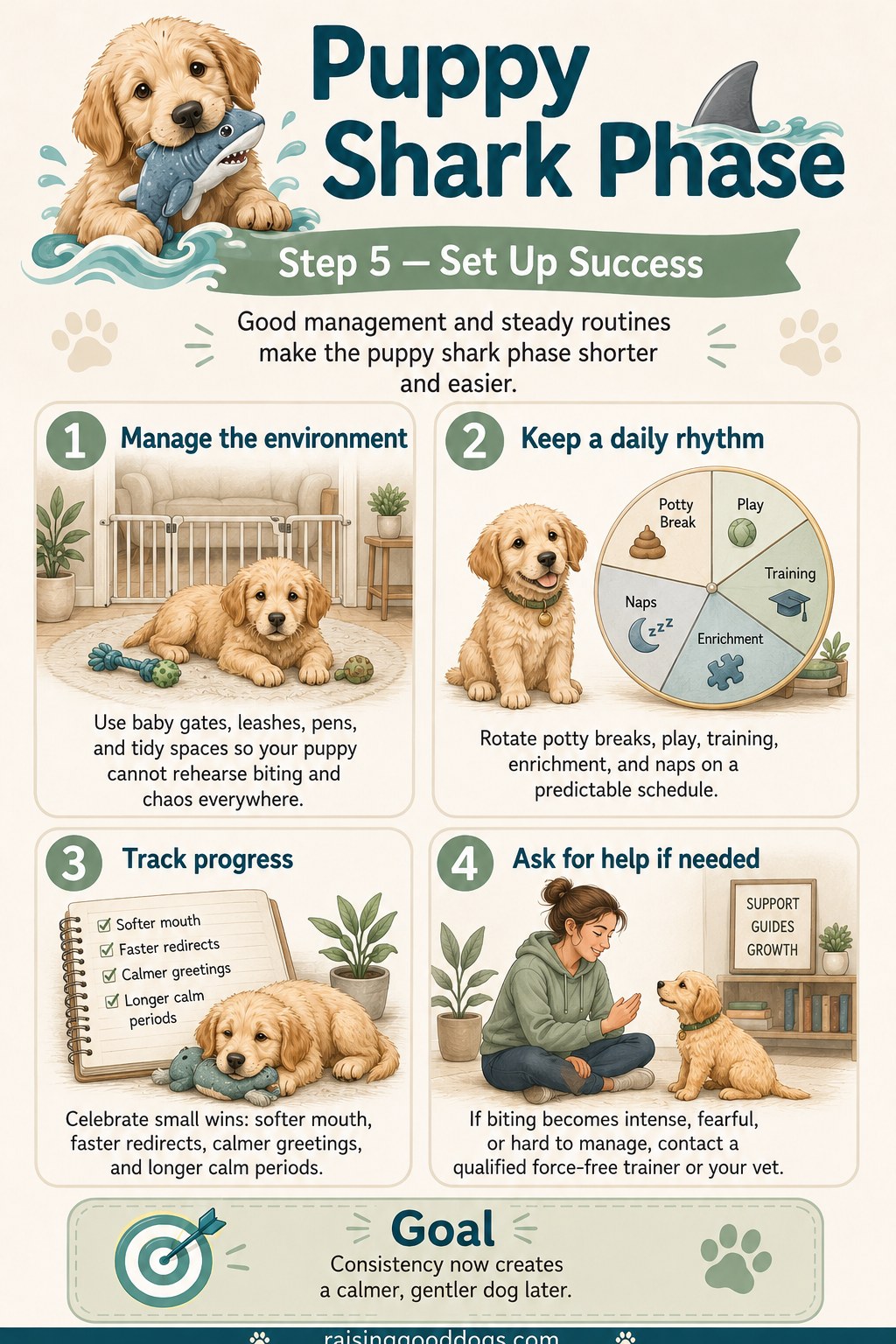
The single biggest factor in how long the puppy shark phase lasts isn't the puppy — it's the environment around them. Good management and a steady rhythm make this phase shorter and considerably easier on your hands.
Manage the space. Baby gates, leashes indoors, exercise pens and a genuinely tidied floor mean your puppy simply cannot rehearse grabbing shoelaces, cords or ankles fifteen times a day. Every rehearsal strengthens the habit, so removing the opportunity does training's job before training even starts.
Keep a daily rhythm. Rotate potty breaks, play, training, enrichment and naps on something close to a predictable schedule. Puppies who know rest is coming settle into it faster than puppies running on pure chaos.
Track the small wins, because they're easy to miss day-to-day: a softer mouth, faster redirects, calmer greetings, longer stretches of settled behaviour. Those are the real signs the phase is passing, long before biting stops completely.
And if the biting is intense, fearful, or genuinely hard to manage rather than just exhausting, that's worth a call to a qualified force-free trainer or your vet — not because you've failed, but because some puppies need an individualised plan, and there's no prize for muscling through it alone.
This phase is genuinely exhausting, and it does end. The puppies I see through it fastest aren't the ones with the most talented owners — they're the ones whose households stopped rehearsing the biting long enough for the training to catch up.





Common Questions
How long does the puppy shark phase actually last?
Most puppies bite hardest between eight and sixteen weeks, with the worst of it easing over the following couple of months as adult teeth come in and self-control develops. Consistent redirection and daily practice usually show a noticeably softer mouth within three to four weeks, but expect setbacks around growth spurts and new adult teeth.
Should I yelp or say 'ouch' when my puppy bites hard?
You can try it, but I don't rely on it — some puppies find the sound exciting and bite harder, which just fuels the game. A calm, immediate pause and redirect to a toy works more consistently across the puppies I've seen.
Is puppy mouthing ever a sign of aggression?
In young puppies, almost never — it's exploration, teething discomfort, and undeveloped impulse control, not aggression. If biting is paired with stiff body language, growling that doesn't stop with distance, or seems fear-driven rather than playful, that's worth a session with a qualified force-free trainer to look at properly.
My puppy is still very bitey around visitors — is that a problem?
It's common, especially with an overstimulated or under-socialised puppy. Keep greetings short, controlled and at the puppy's own pace rather than letting a crowd rush in, and have a toy ready before the doorbell rings so the mouth has somewhere better to go.