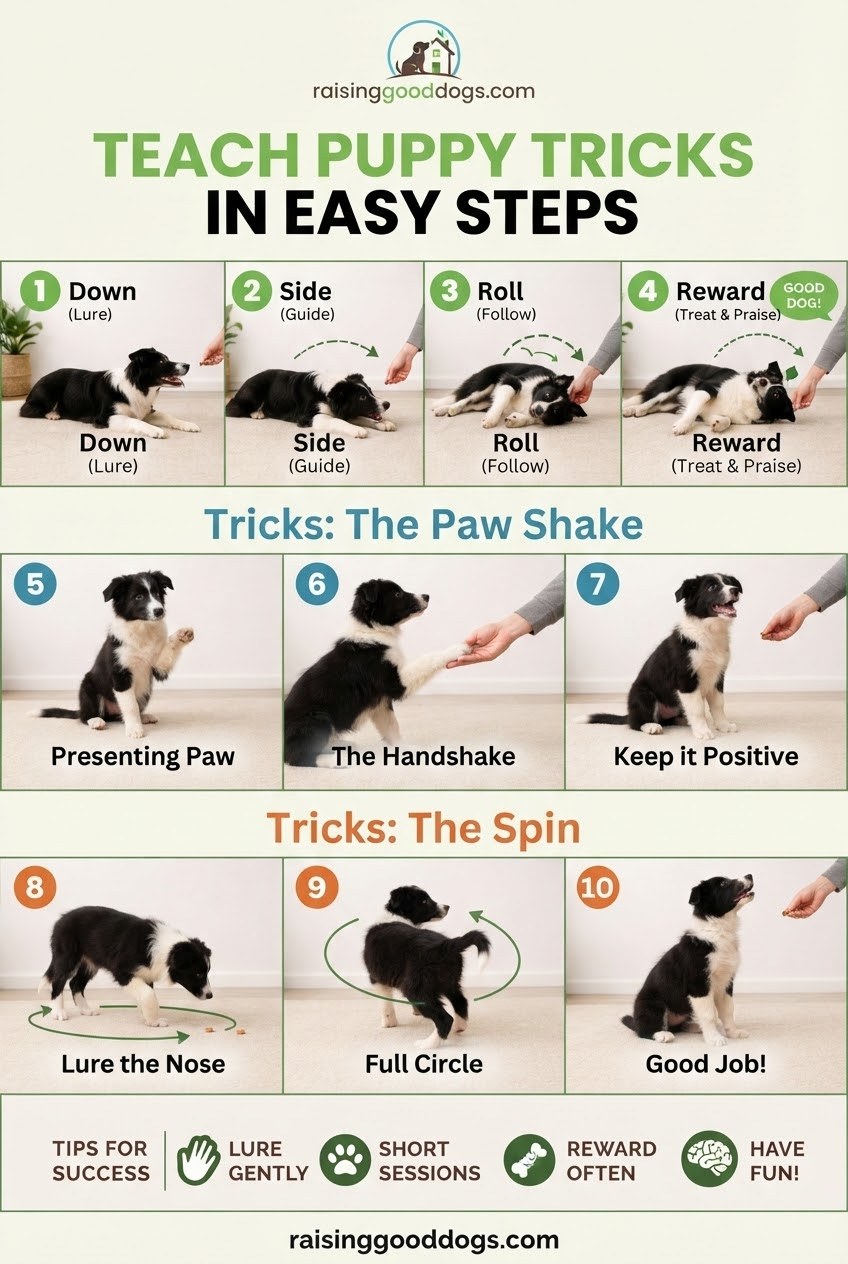
Teaching a puppy tricks should feel like a conversation, not a performance test. I have seen plenty of owners arrive worried that their puppy is stubborn when the real problem is usually that we asked for too much too quickly.
I start with short sessions, clear rewards, and a puppy who is comfortable enough to think. These five beginner tricks build attention, confidence, and the habit of checking in with you.
What you will need for puppy trick training
- Small rewards your puppy values
- A quiet place with few distractions
- Five-minute practice sessions
Teach Your Puppy to Sit Step by Step
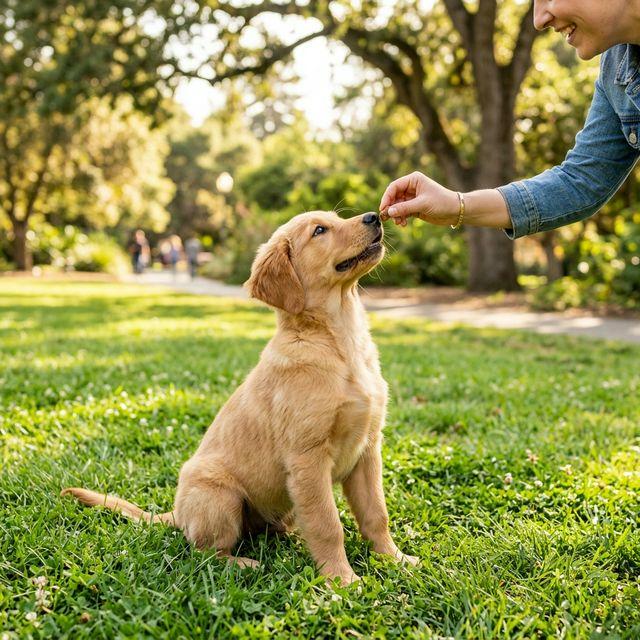
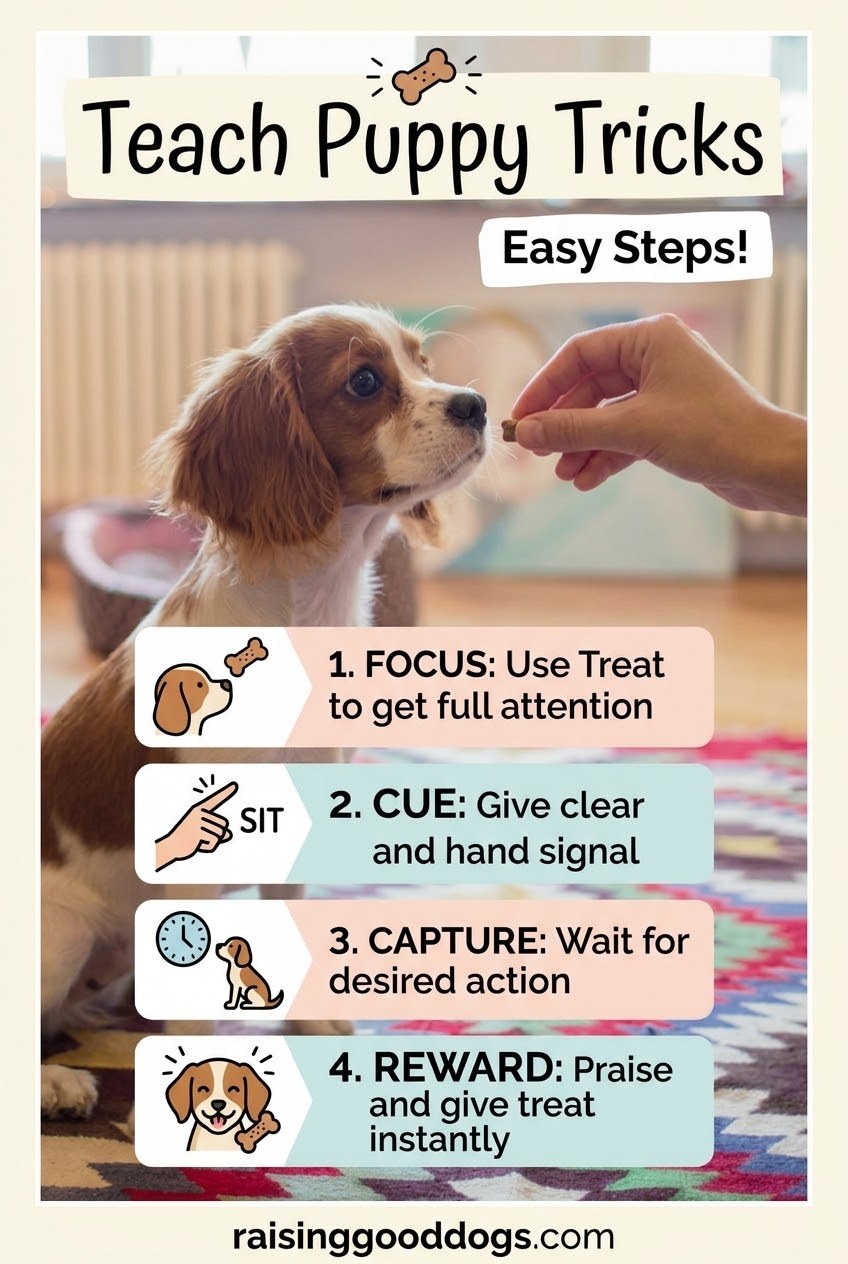
I like starting with sit because it teaches puppies that calm choices pay. I hold a treat near the nose, guide the head slightly upward, and reward the moment the puppy's bottom touches the floor. Training resources commonly recommend rewarding the behavior rather than forcing the position.
The prerequisite is simple: your puppy should be able to focus for a few seconds. If your puppy is bouncing off the walls, I shorten the session rather than repeating the cue louder.
- Hold. Place a treat near your puppy's nose and let them follow the movement.
- Reward. Mark the instant their rear reaches the floor.
- Repeat. Add the word "sit" once the movement is predictable.
Training tip
End while your puppy is still successful. A puppy who wants one more turn is easier to train tomorrow.
Train Your Puppy to Stay With Simple Commands
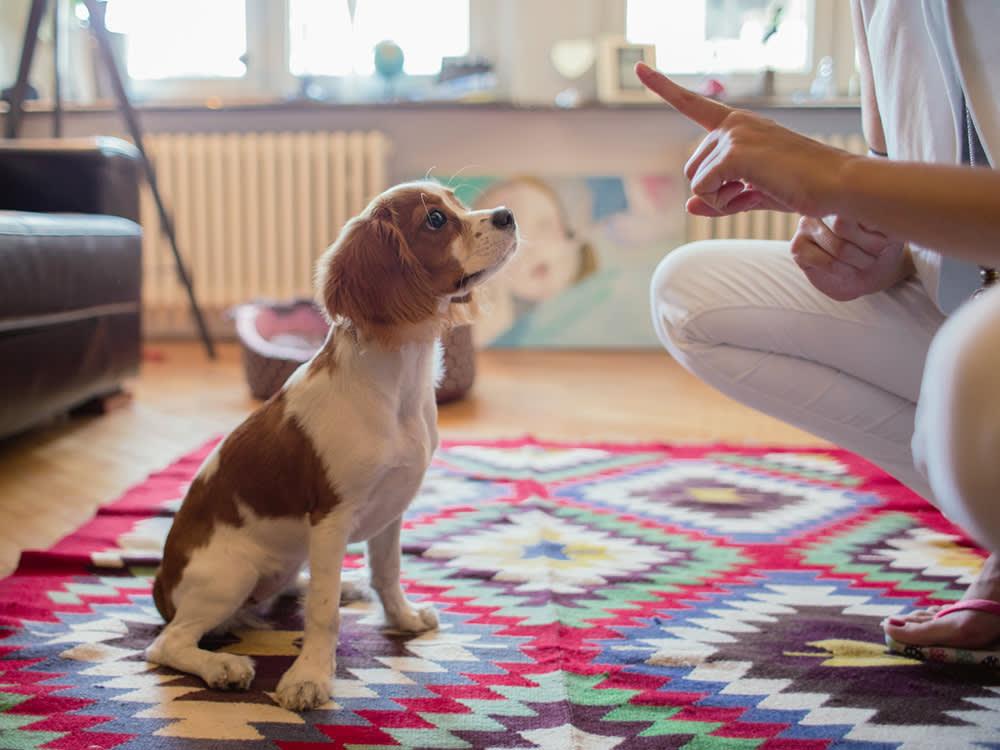
Stay is not about making a puppy freeze; it is about teaching self-control in small pieces. I begin with one second of success, then slowly increase the time. Puppies are not born understanding that a word means waiting for a release cue.
I avoid practicing stay when a puppy is already overwhelmed. A tired brain, too many distractions, or a busy environment can make a simple exercise suddenly impossible.
| Stage | Goal |
|---|---|
| Beginning | Stay for one or two seconds nearby |
| Building | Add time before adding distance |
| Advanced | Practice around mild distractions |
Common mistake
Walking away too soon teaches your puppy that staying is confusing. Make success easy first.
Teach Your Puppy to Come When Called
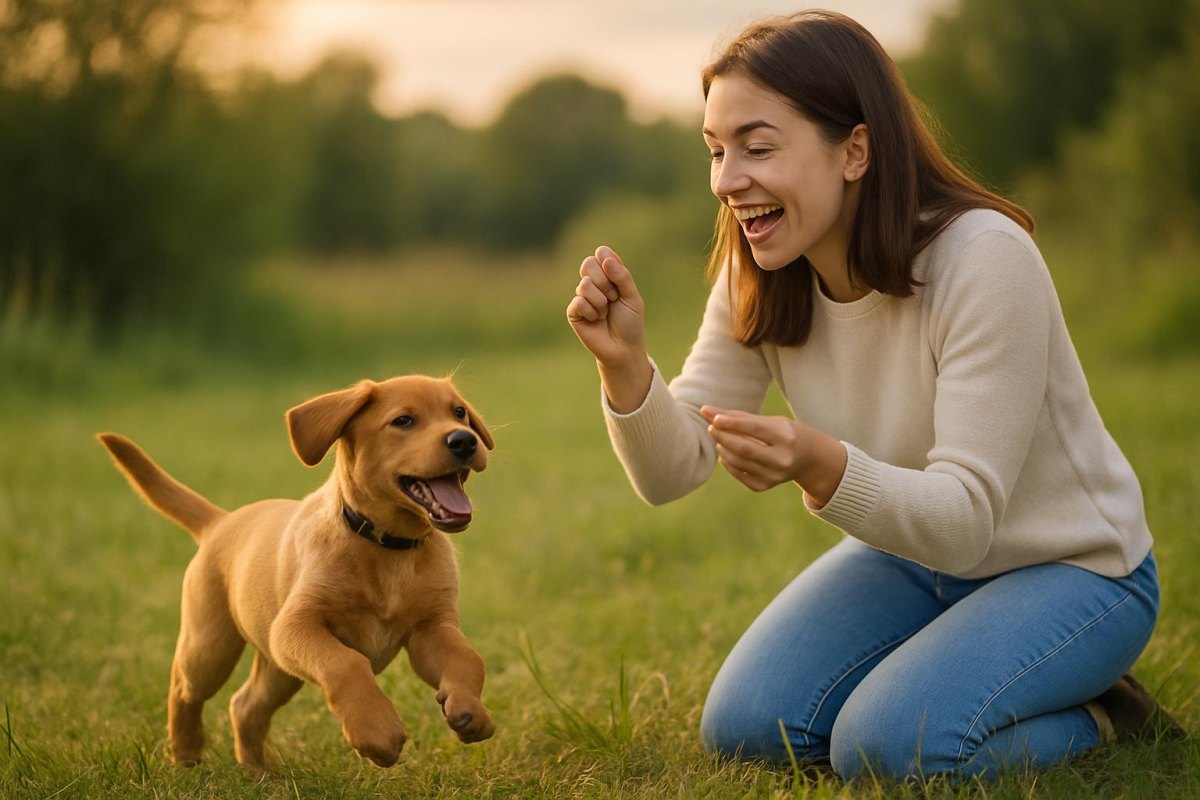
Recall is one of the tricks I care about most because it can become a real safety skill, not just a party trick. I make coming to me predict good things, never a scolding or the end of every fun activity.
For beginner puppies, I practice indoors, in fenced areas, or with appropriate management before expecting a reliable response outside. A puppy ignoring a cue in a distracting field is not being difficult; the environment may simply be too hard.
- Use an upbeat voice when calling your puppy.
- Reward every good return during early practice.
- Do not call your puppy only for things they dislike.
Come" should become a word your puppy loves hearing.
Marisa Cole, Raising Good Dogs
Help Your Puppy Learn the Shake Trick
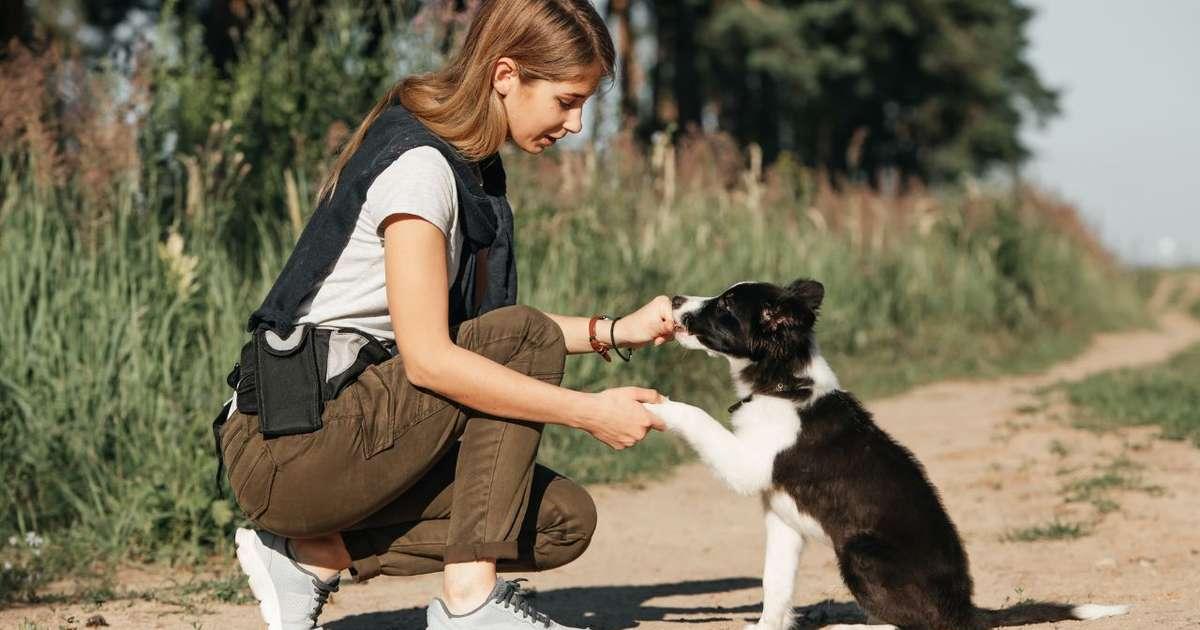
Shake is a fun trick because it builds voluntary cooperation. I do not grab a puppy's paw and move it for them. Instead, I reward small movements until the puppy discovers what earns a treat.
This is a good place to watch body language. If your puppy pulls away, licks their lips repeatedly, or looks worried, I make the exercise easier. Training should create confidence, not pressure.
My approach to trick training
I want the puppy thinking, "What can I try?" That curiosity is where learning happens.
- Reward: Mark gentle paw lifts and build gradually.
- Timing: Keep sessions short before attention fades.
Teach Your Puppy to Roll Over Easily
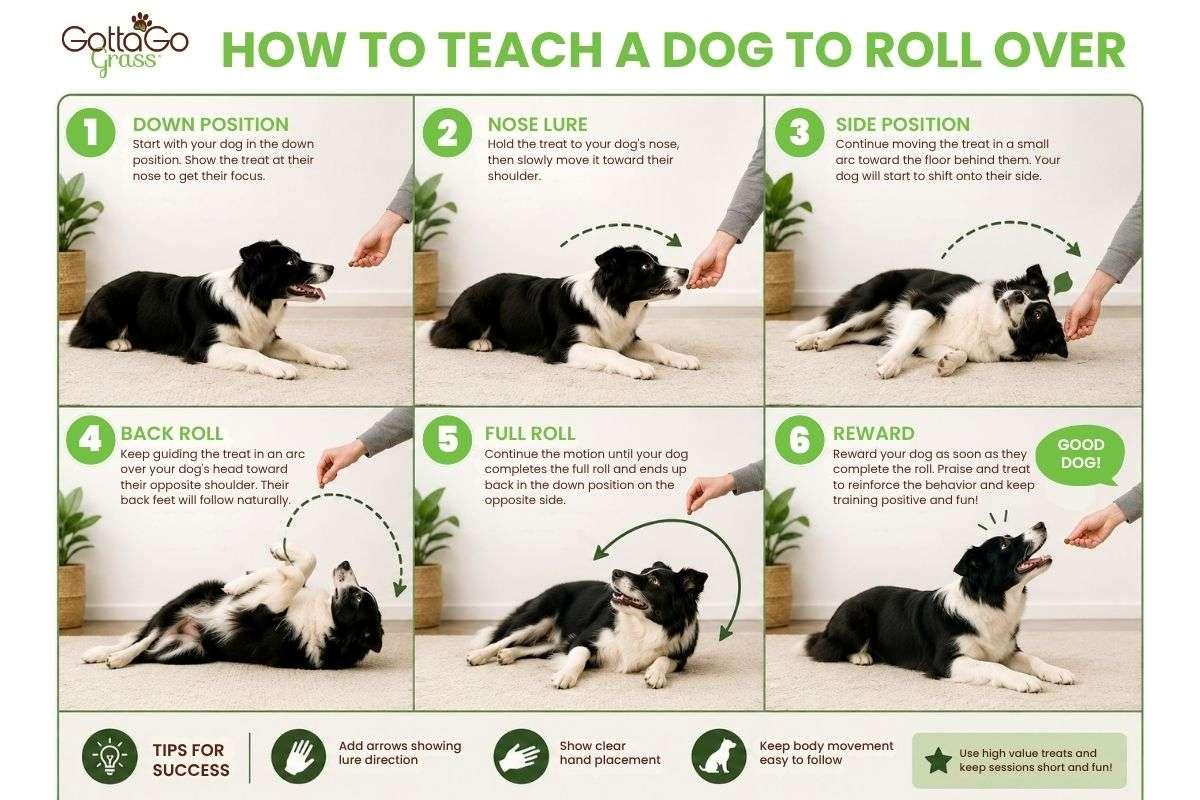
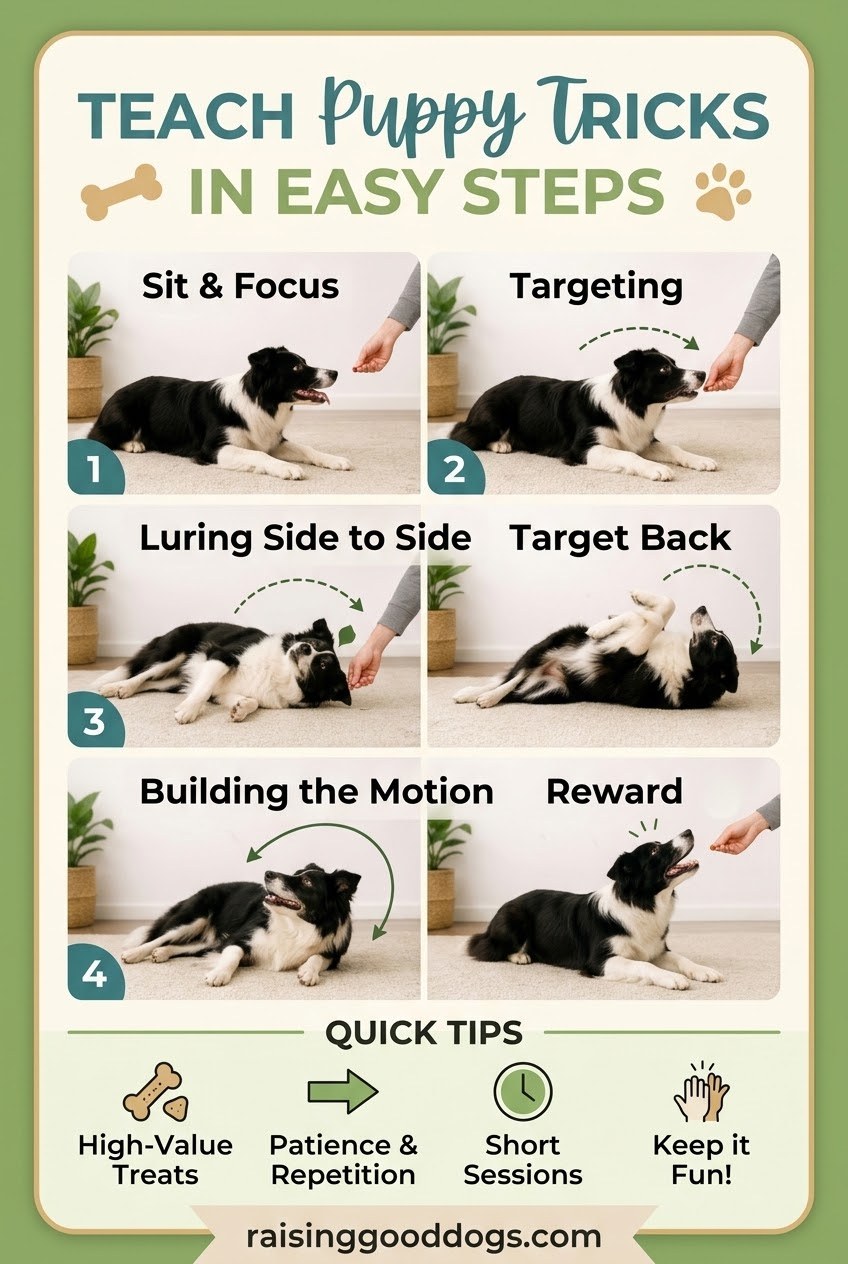
Roll over looks impressive, but I teach it as a series of tiny movements. The biggest mistake I see is trying to spin the whole dog at once instead of rewarding small pieces of progress. Step-by-step lure and reward methods are commonly used for this trick.
Before teaching this one, I make sure the puppy is comfortable lying down and moving onto their side. Some dogs simply dislike exposing their belly, and that is information I respect.
Good signs
- Your puppy follows the reward willingly.
- Your puppy stays relaxed during practice.
Slow down if
- Your puppy seems uncomfortable moving.
- Your puppy avoids the position repeatedly.
Safety note
If a dog suddenly avoids movement, seems painful, or changes behavior quickly, I recommend checking with a veterinarian before continuing training.




More Pinterest Visuals