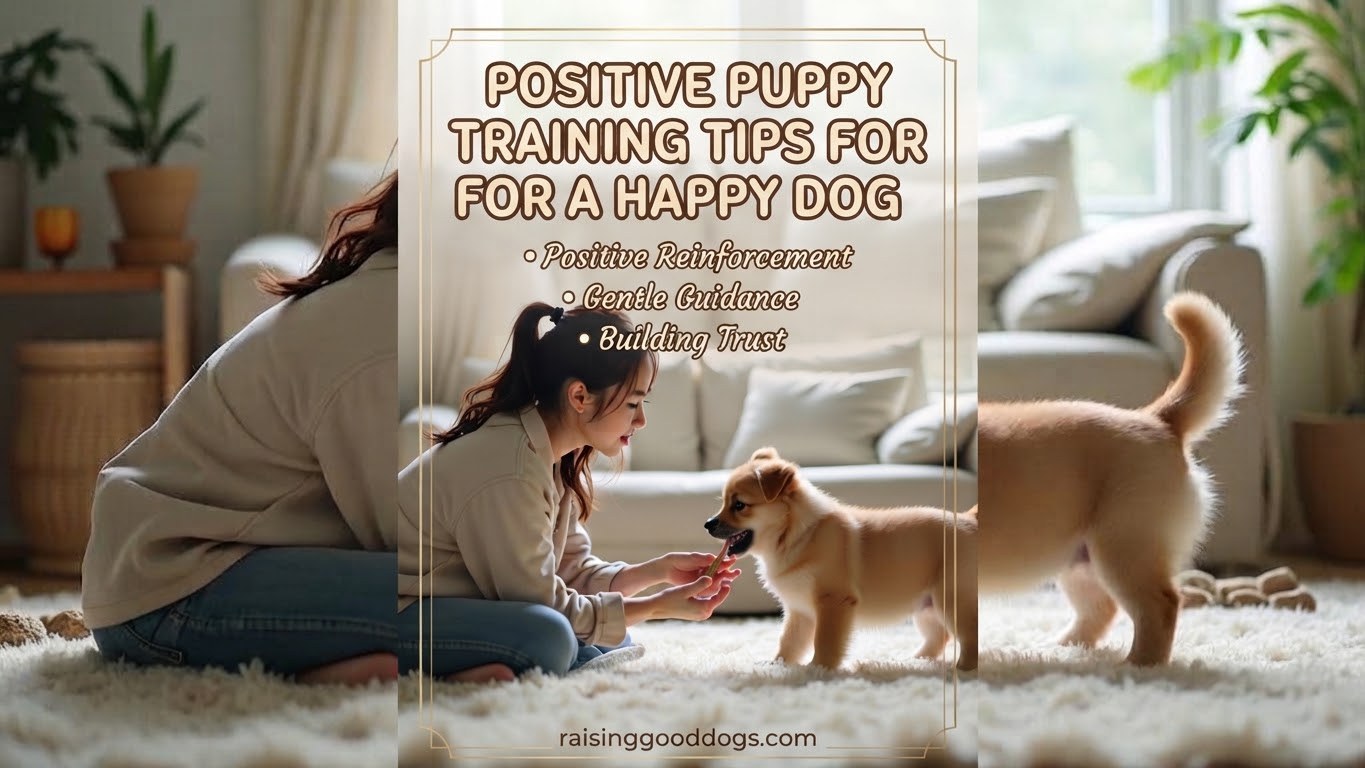
Most puppies are not difficult; they are learning a brand-new world one muddy paw at a time. I have seen owners worry that they are doing something wrong when their puppy chews a shoe, forgets a cue, or has a wild Tuesday evening. My approach is simple: prevent rehearsing unwanted habits, teach what you want to see, and make the right choice easy. Reward-based training is also the approach recommended by veterinary behaviour organizations including AVSAB.
What this guide covers
- Reward-based puppy training that builds trust
- Practical routines for everyday life
- Ways to teach skills without fear or punishment
Start Training With Positive Reinforcement
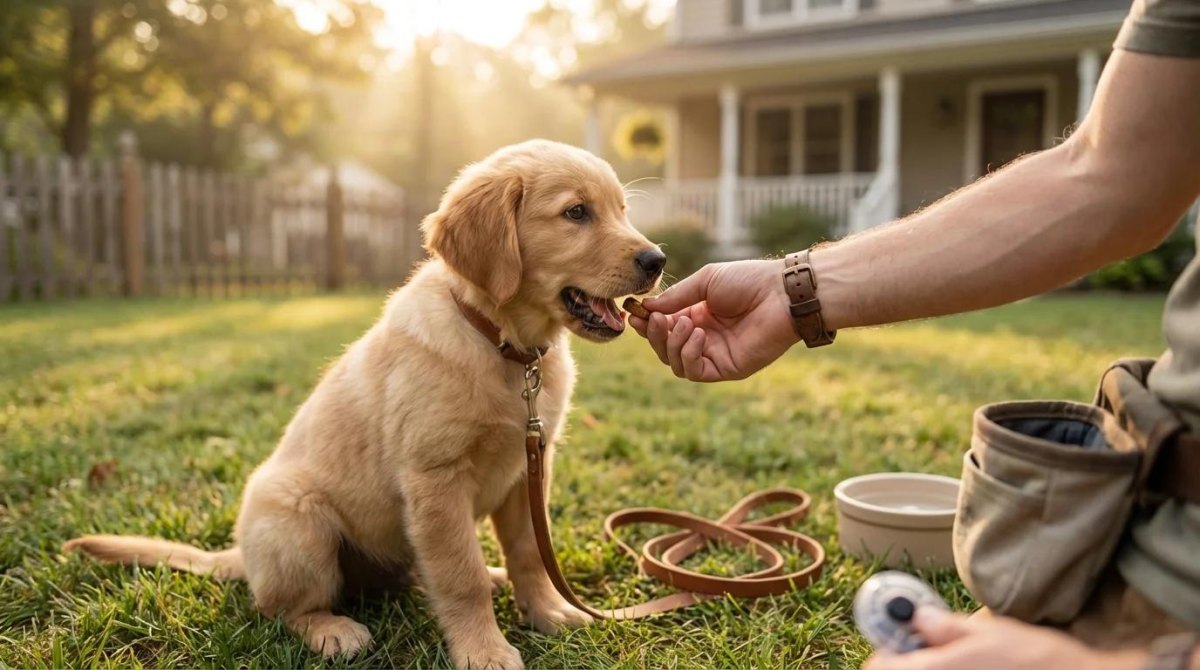
I begin with rewarding behaviours I want, not correcting mistakes I dislike. A puppy who gets paid for sitting, looking at me, or choosing calm behaviour learns faster because the lesson makes sense.
My first sessions are tiny. I want the puppy leaving the room thinking training is enjoyable.
Build Trust Through Gentle Interactions
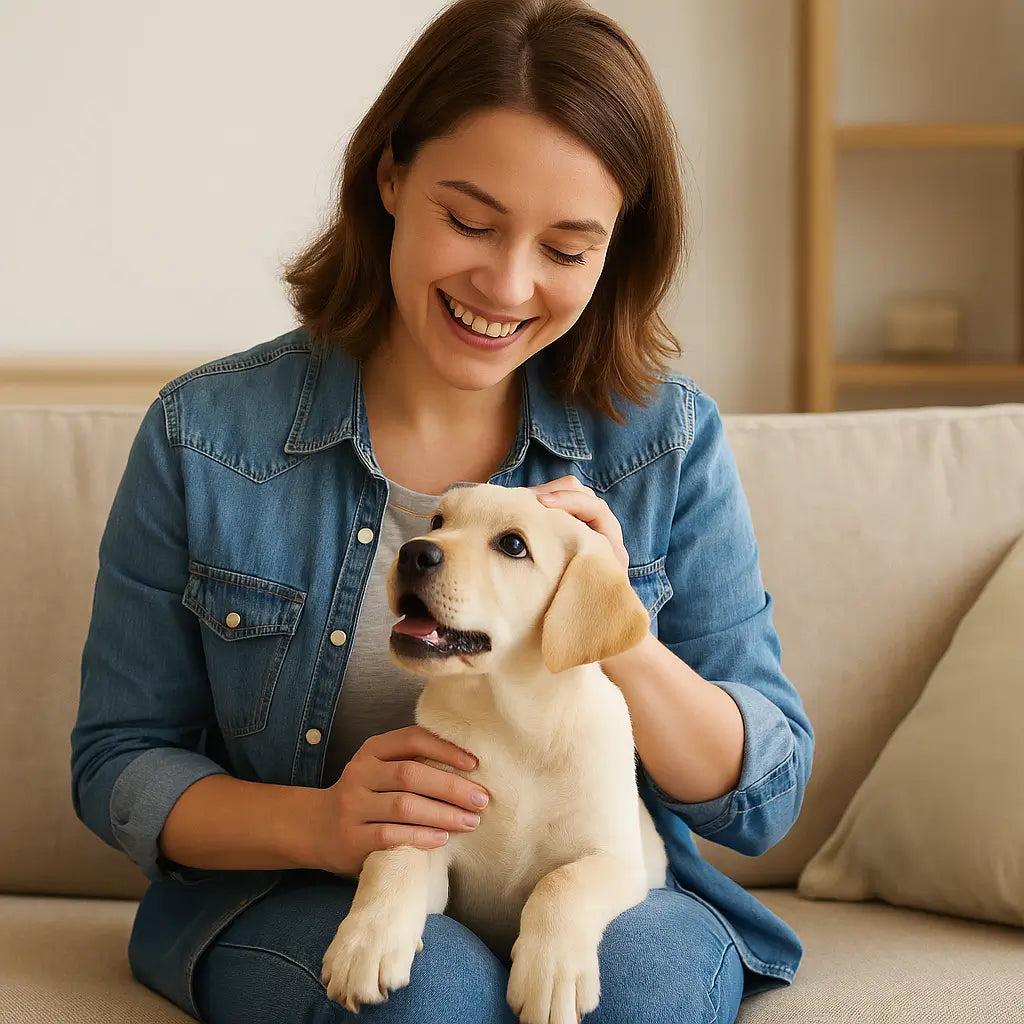
Trust comes before precision. I watch for body language signals like a tucked tail, lip lick, turning away, or stiff posture because those moments tell me when to slow down.
A puppy who feels safe is much easier to teach.
Use Rewards to Encourage Good Behavior
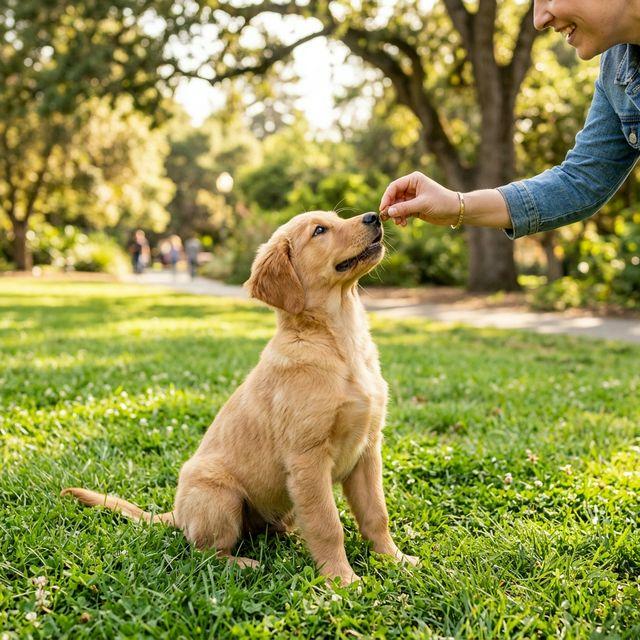
Treats are not bribery when used correctly; they are information. I use clear rewards for choices that make family life easier.
Rewards can include food, play, praise, or access to something the puppy loves.
Teach Basic Commands Step by Step
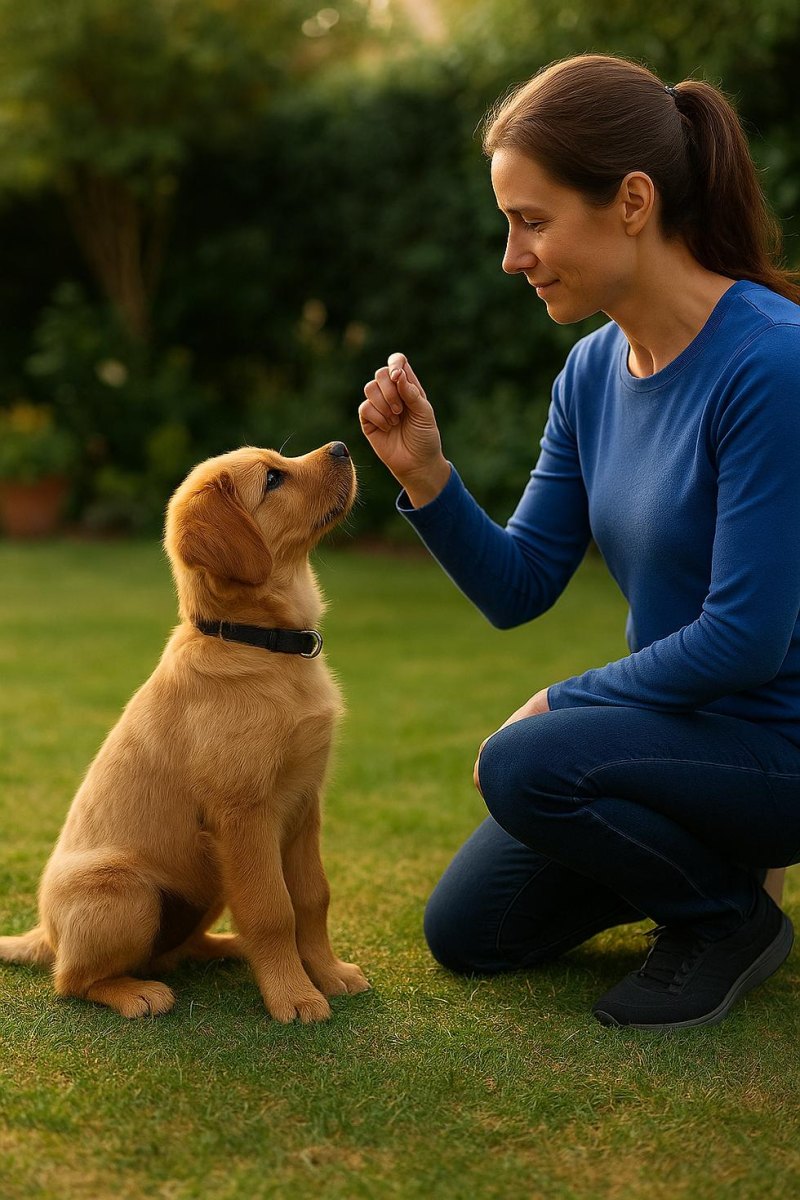
I teach cues in small pieces because simple training steps work. Sit, down, recall, and leave it are built through repetition, not one long lesson.
My rule is to practise before you need the skill in a difficult situation.
Keep Training Sessions Short and Fun
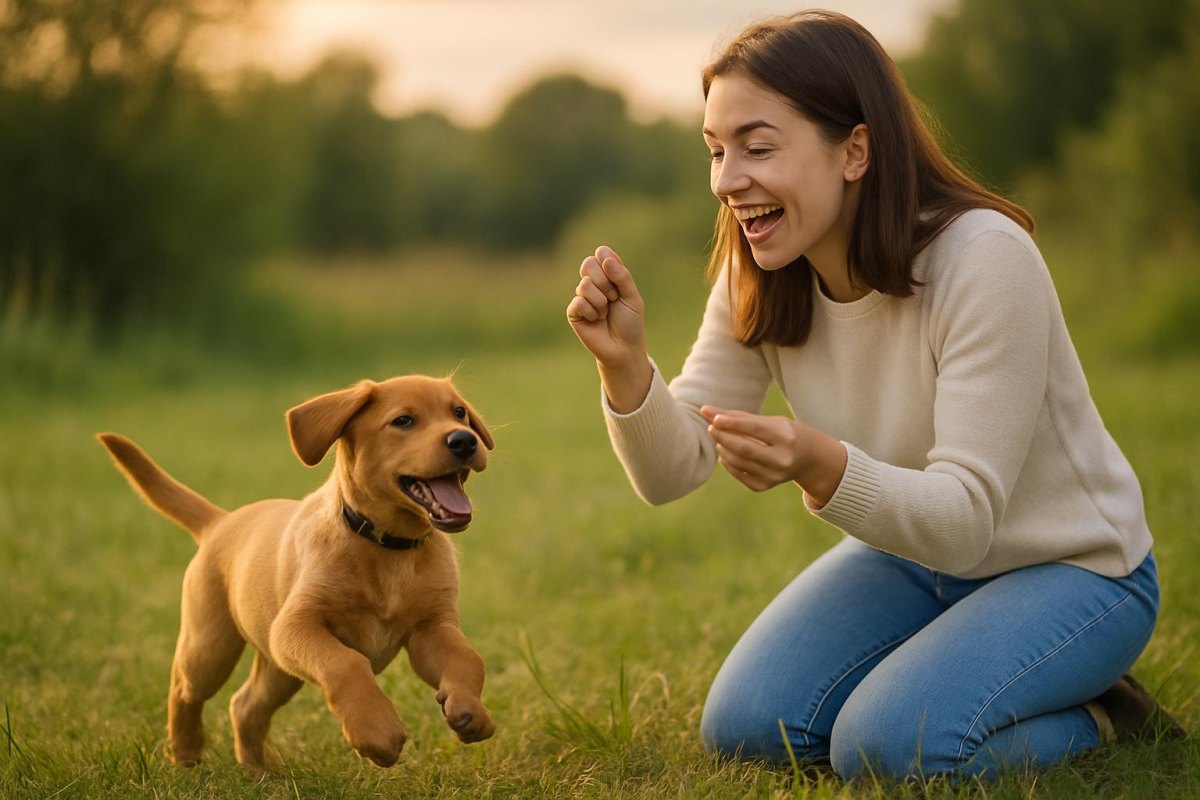
Puppies have tiny attention spans. I prefer short successful sessions over pushing until everyone is frustrated.
Five good minutes can teach more than thirty distracted ones.
Create a Calm Training Environment
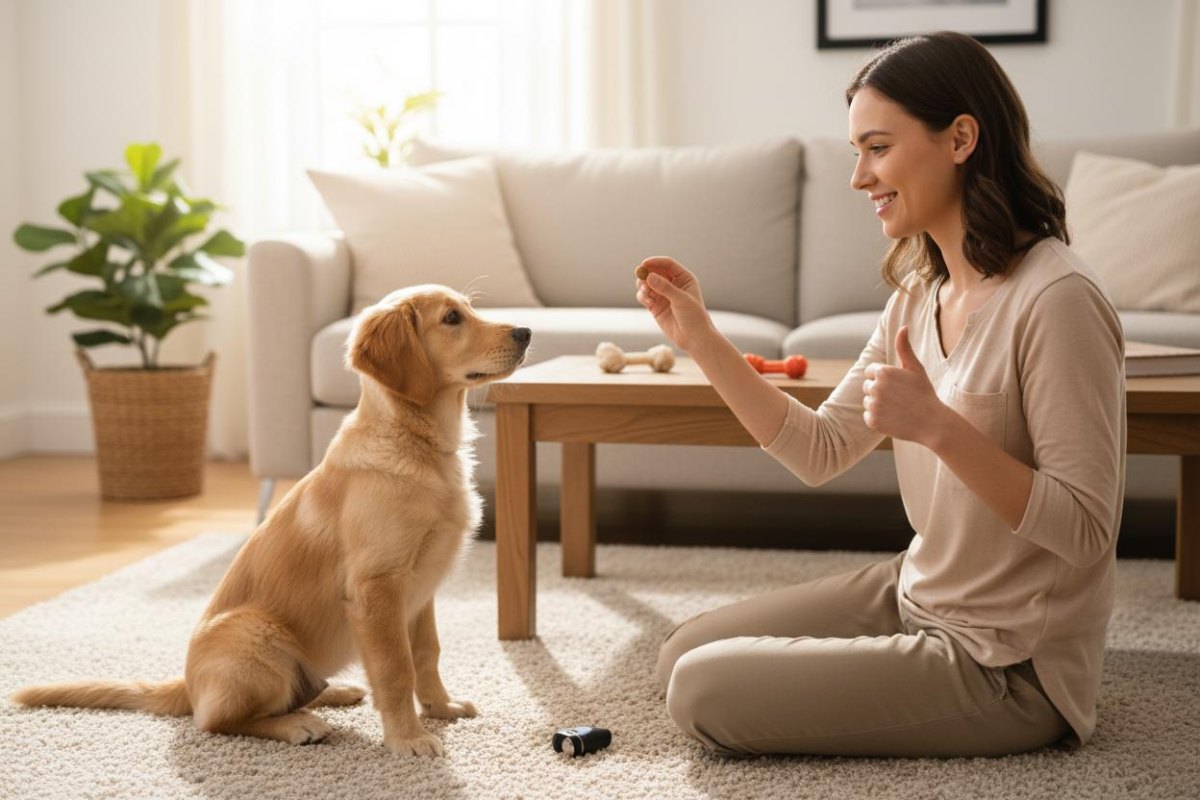
Before asking a puppy to learn, I remove distractions. Managing the environment first prevents the puppy from practising habits I do not want.
A quiet room, fewer interruptions, and realistic expectations make learning easier.
Reward Calm and Relaxed Behavior
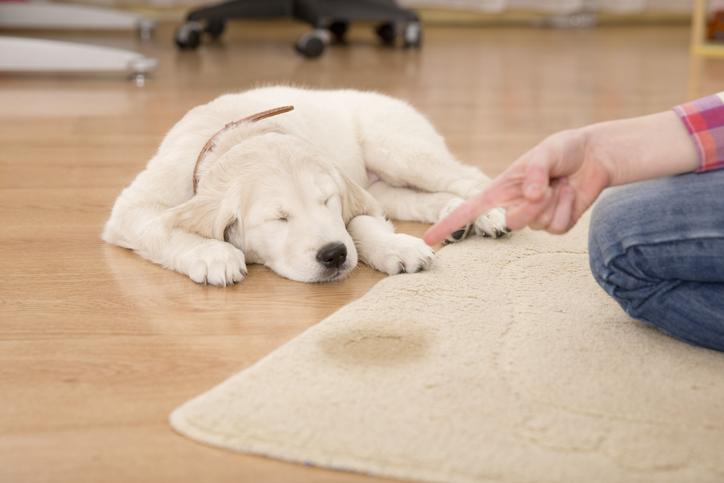
I do not wait only for exciting tricks. I also reward quiet moments of calm, because relaxation is a skill.
That means noticing when your puppy settles instead of only interacting when they demand attention.
Practice Consistent Daily Routines
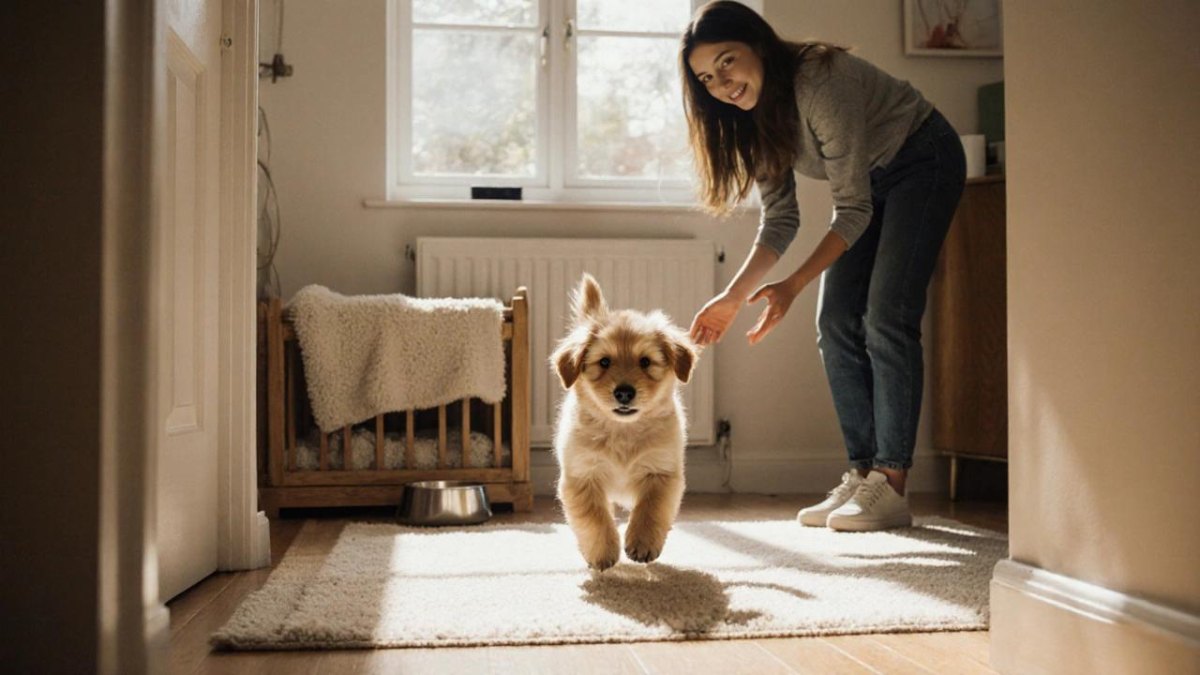
Puppies thrive when life is predictable. A steady daily routine helps with sleep, potty training, and knowing what happens next.
Consistency does not mean perfection. Real homes are messy, and dogs can handle that.
Socialize Your Puppy Positively
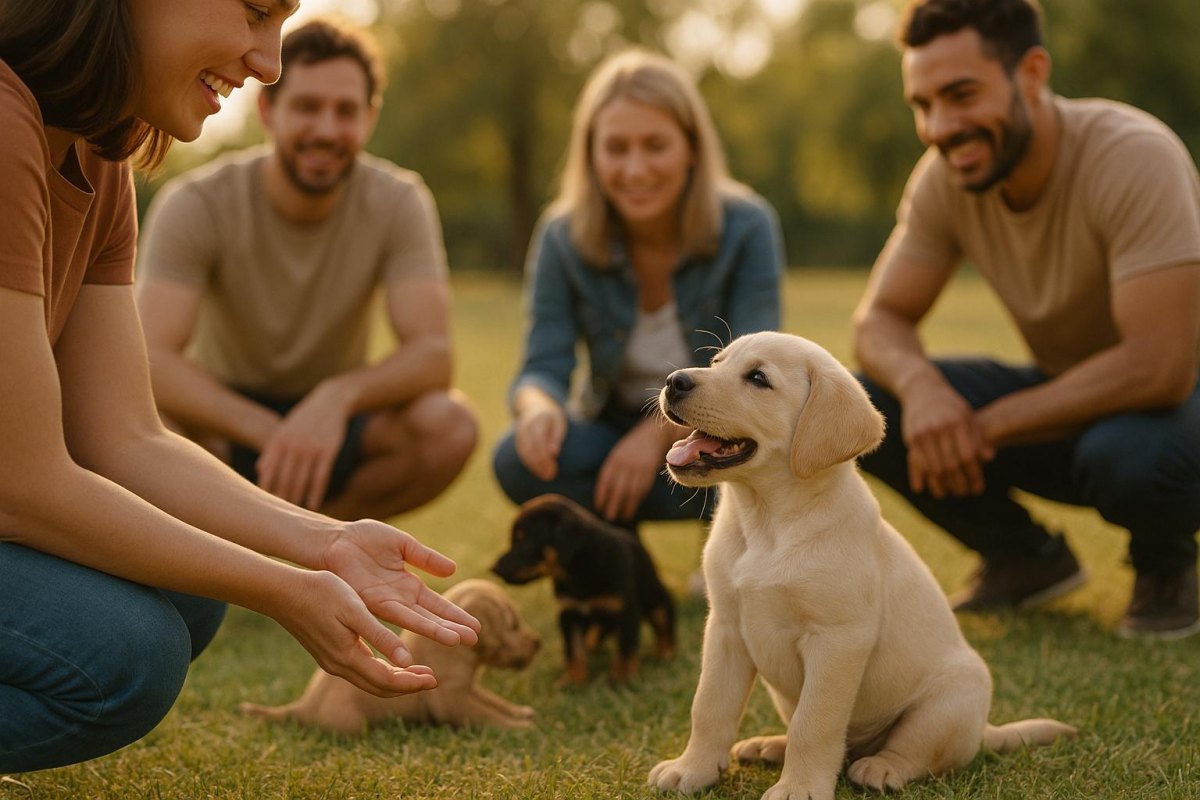
Socialisation is not forcing a puppy to greet everything. It is safe positive exposure at the puppy’s pace.
I look for relaxed curiosity, not a puppy who is overwhelmed and coping.
Introduce New Experiences Slowly
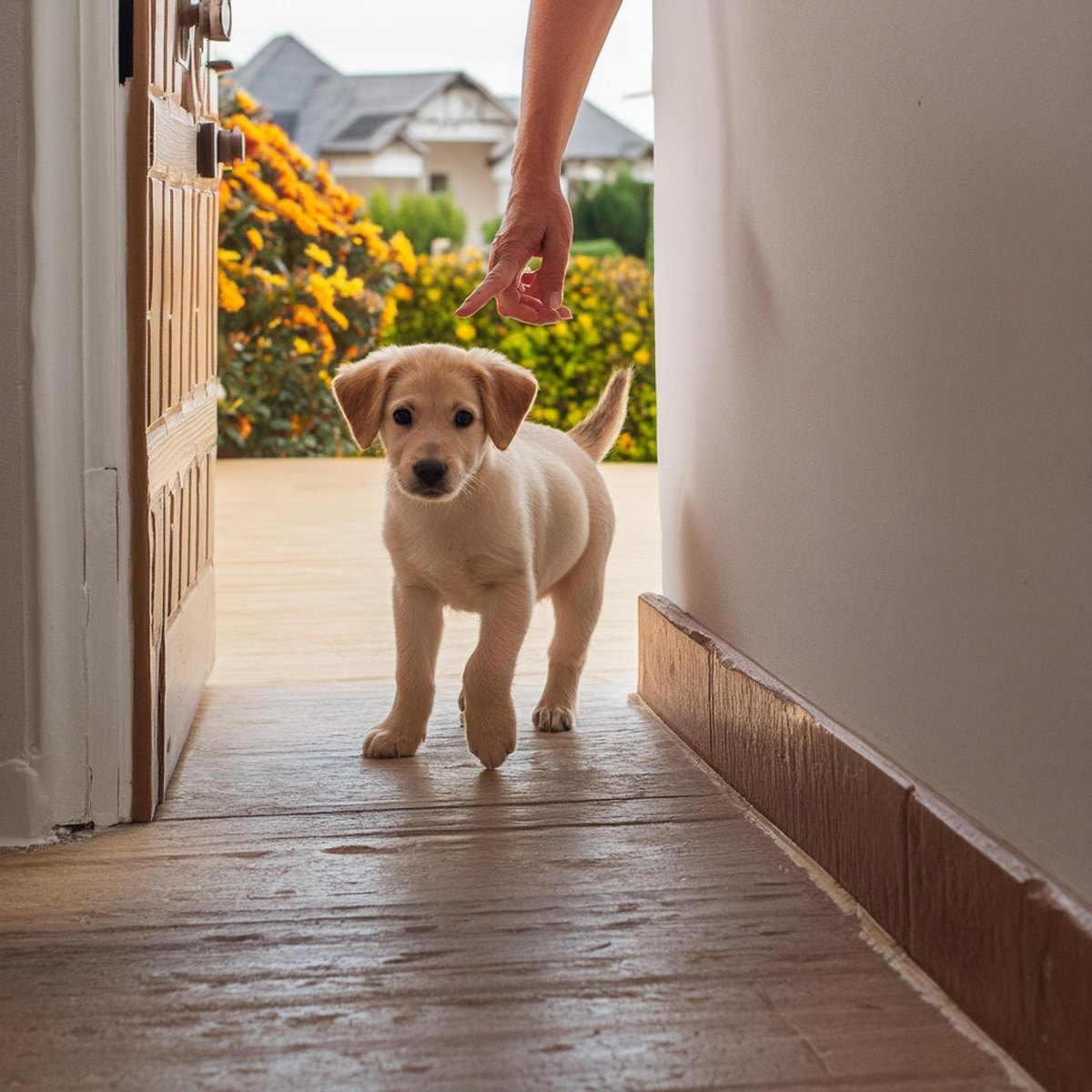
New sounds, places, and surfaces should arrive gradually. Controlled introductions build confidence better than flooding a puppy with too much too soon.
If your puppy freezes, hides, or cannot eat treats, the experience is too difficult.
Teach Your Puppy Name Recognition
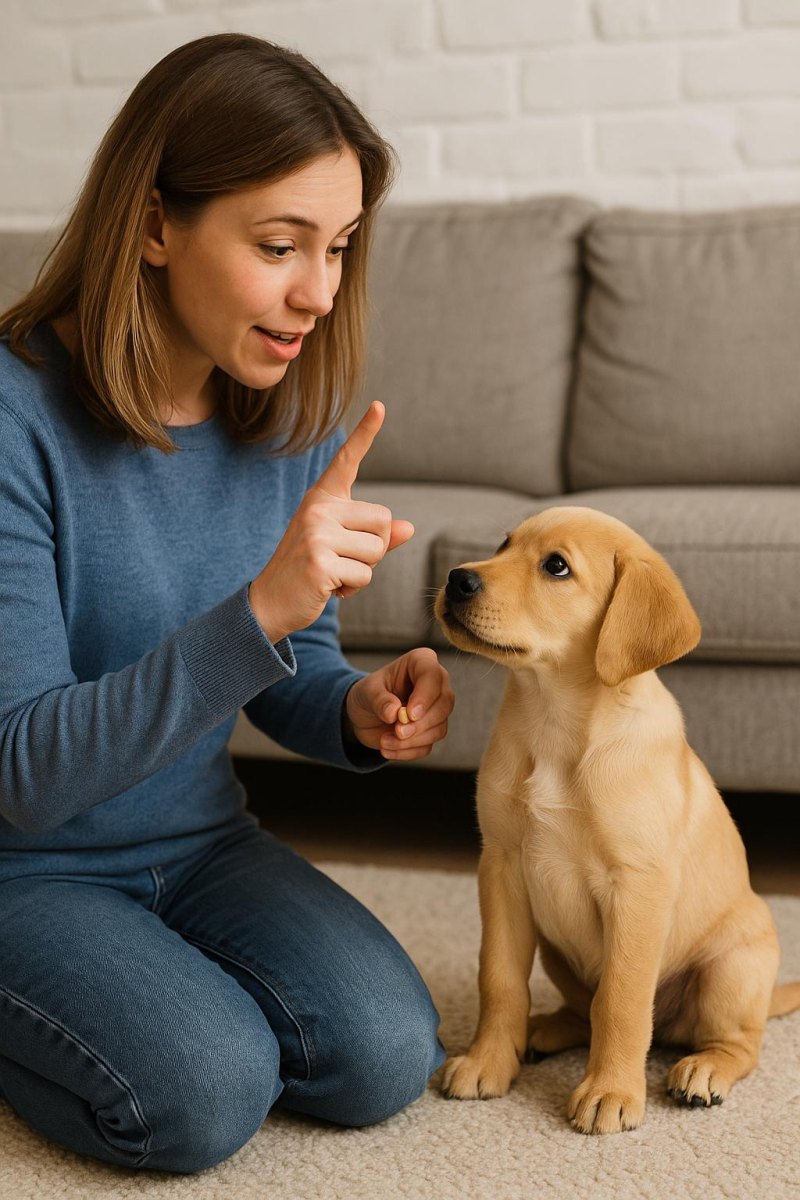
Your puppy’s name should predict good things. I start with name recognition games where looking at me earns a reward.
This becomes the foundation for attention around distractions later.
Encourage Good Leash Walking Habits
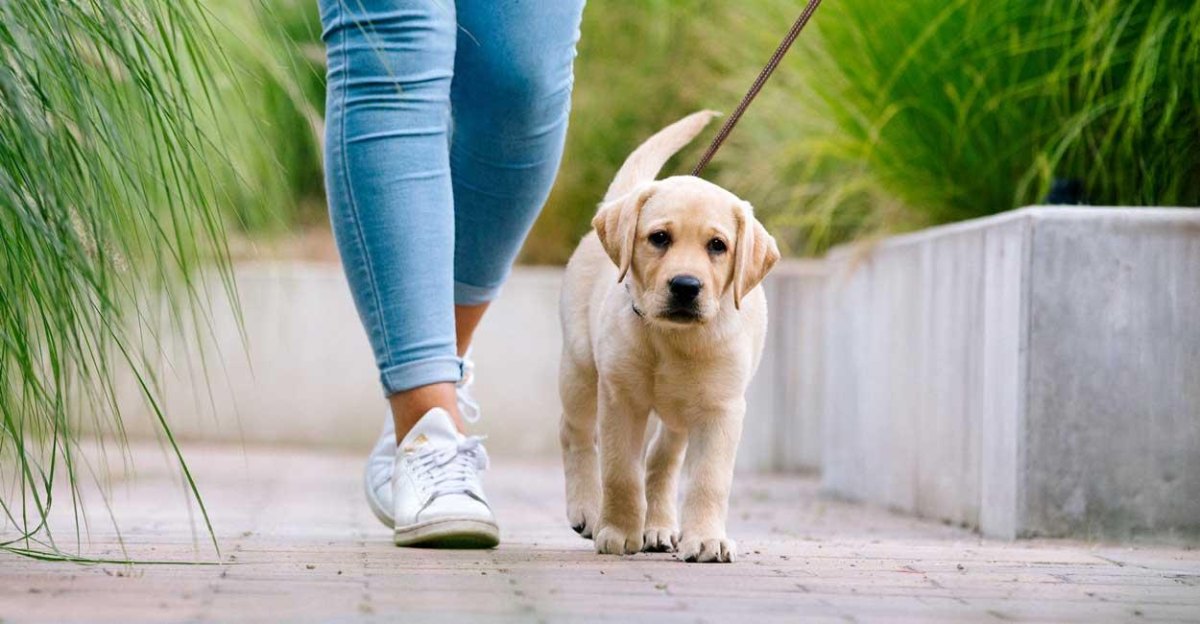
Loose leash walking takes practice because pulling has a long reinforcement history. I start with rewarding a loose leash before expecting perfect walks.
The first few weeks may feel slow. That is normal learning, not failure.
Make Potty Training Positive
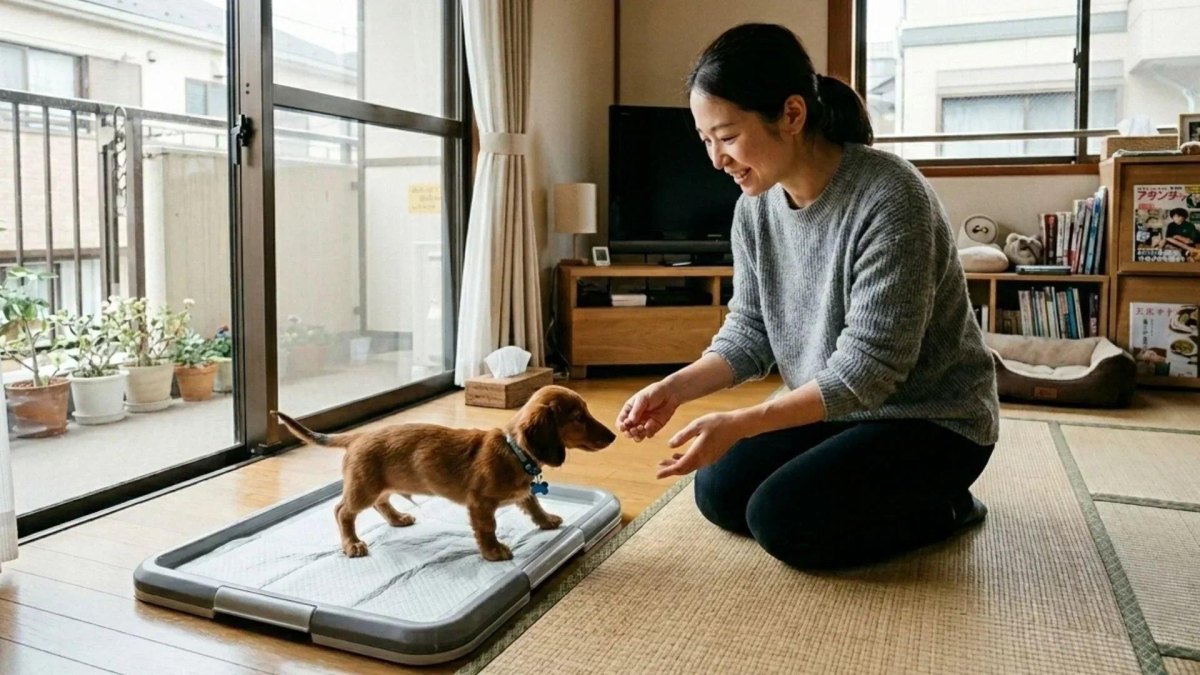
Potty training improves when success is rewarded immediately. I focus on preventing accidents and rewarding outside rather than punishing mistakes.
Any sudden regression in a previously trained dog deserves a veterinary check before assuming behaviour is the cause.
Use Toys for Healthy Learning
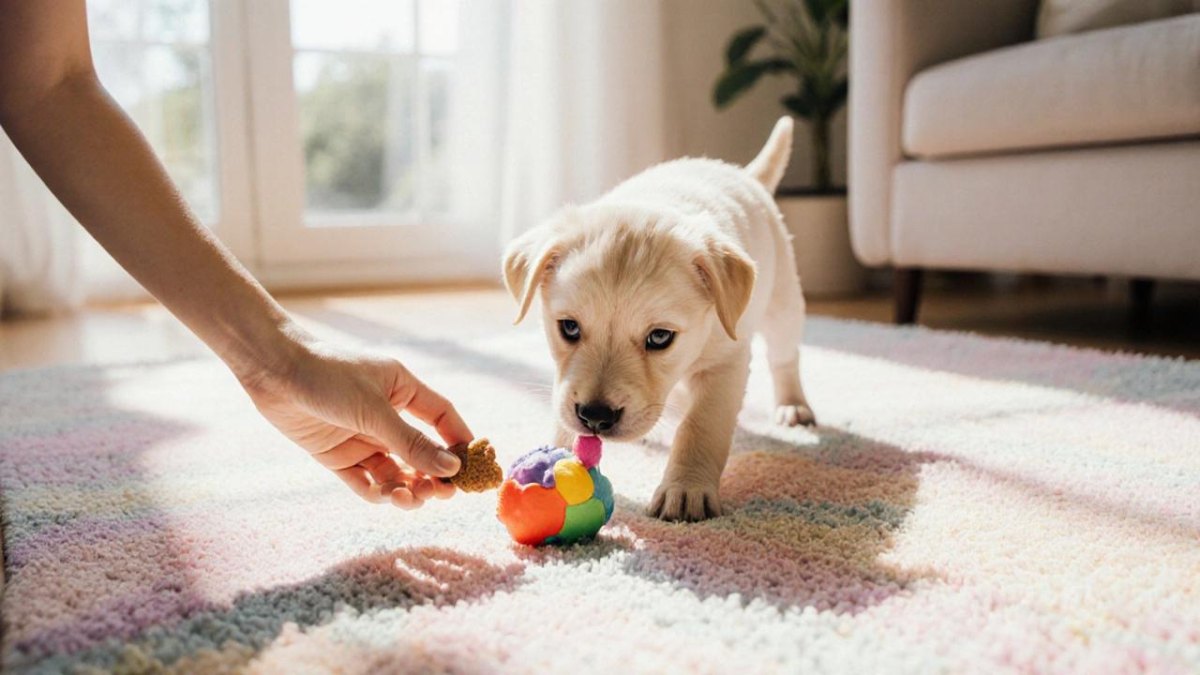
Toys give puppies appropriate outlets for chewing, exploring, and problem solving. I choose healthy enrichment activities that match the puppy.
If a toy is being destroyed and swallowed, it is time to change the option.
Teach Bite Inhibition Gently
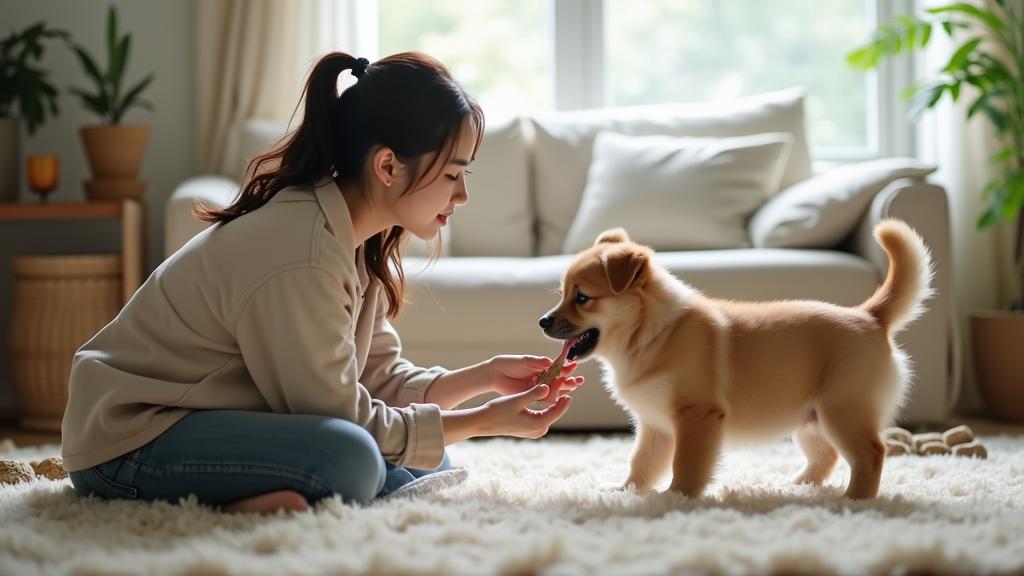
Puppy biting is normal development, not a sign your puppy is aggressive. I teach gentle mouth habits through redirection and appropriate play.
Punishment often adds confusion when a puppy is simply learning.
Prevent Jumping With Positive Training
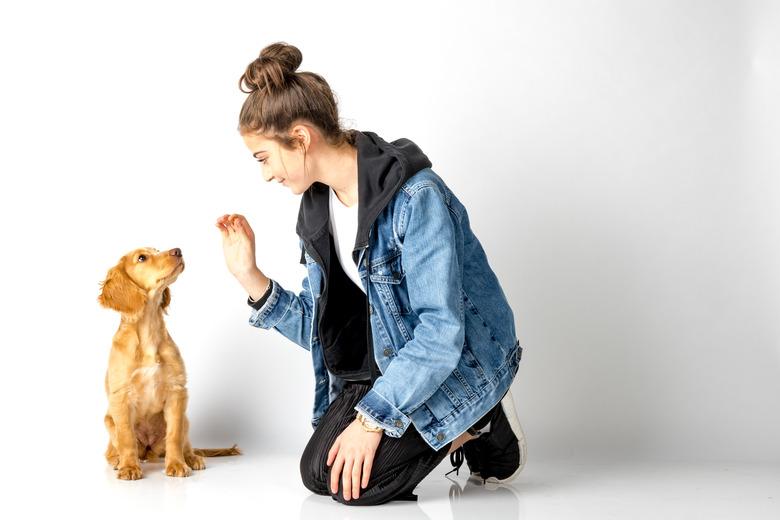
Jumping works because it often gets attention. I teach polite greetings instead by rewarding paws on the floor.
Management matters here: ask visitors to avoid accidentally rewarding the behaviour.
Build Confidence With Praise
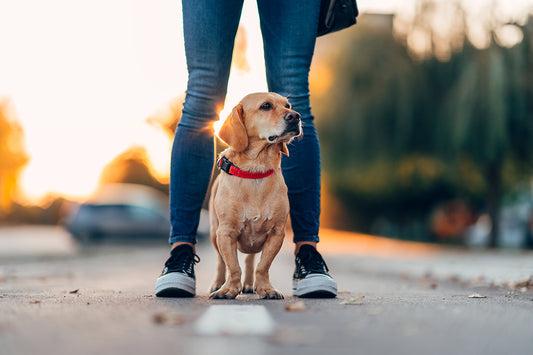
A confident puppy is not created by forcing bravery. I build confidence through small wins and letting the puppy succeed.
Bruno taught me this years ago: slower progress is still progress.
Train Using Clear Communication
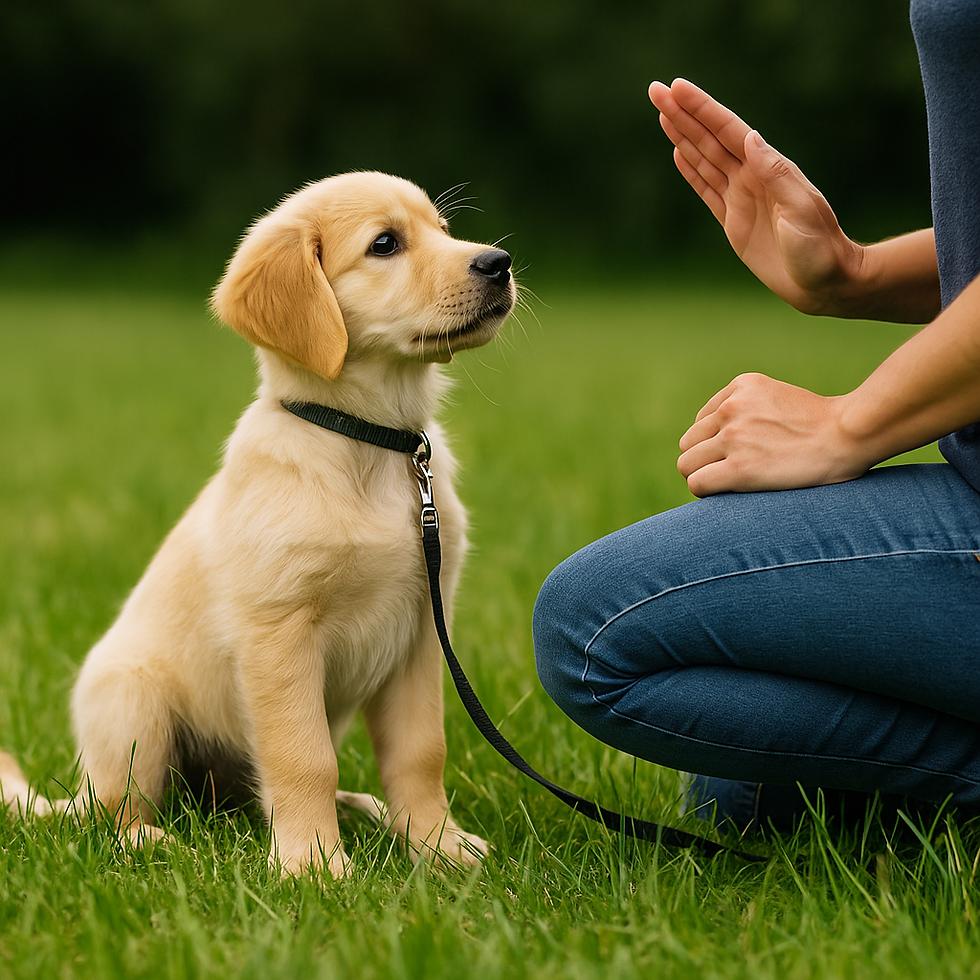
Dogs are excellent at noticing patterns, but they cannot read minds. I use clear consistent signals so the puppy understands what earns rewards.
Everyone in the home should use the same cues whenever possible.
Encourage Independent Puppy Skills
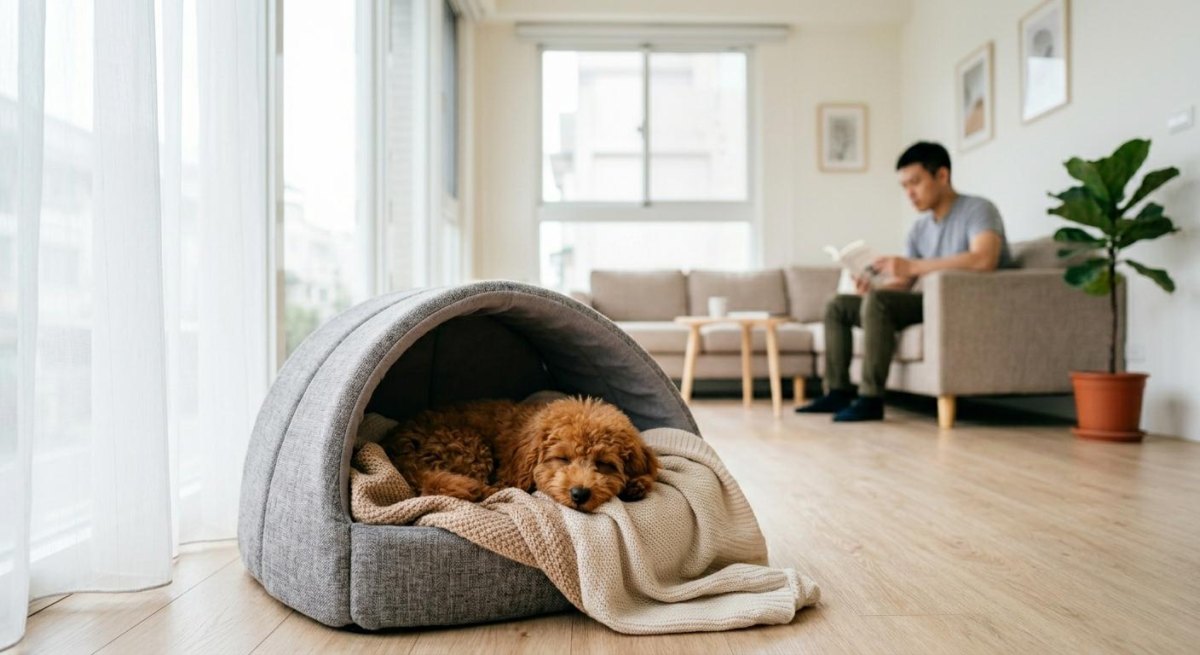
A puppy should learn that relaxing alone is safe. I create independent settling habits with enrichment and calm spaces.
This is especially helpful for preventing a puppy from needing constant entertainment.
Practice Patience During Training
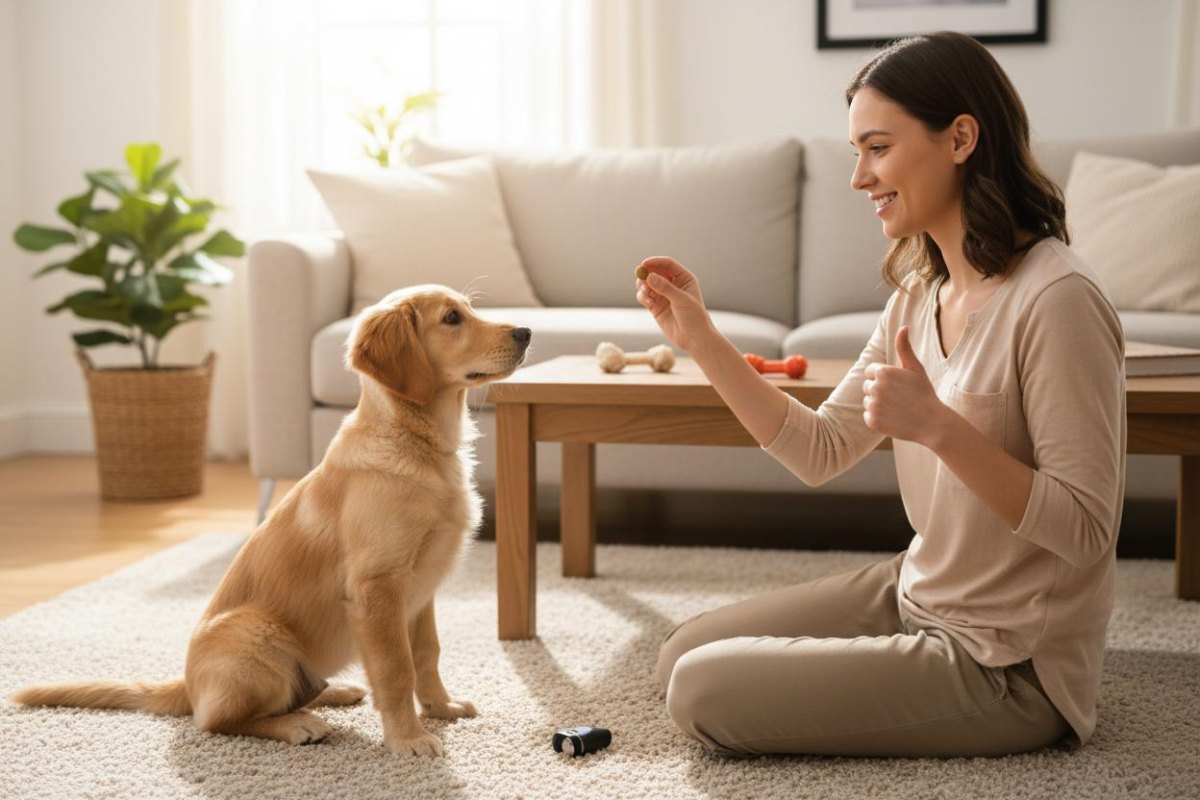
Training is measured in weeks and months, not overnight transformations. I remind clients that setbacks are part of learning.
A difficult day does not erase the good work already done.
Turn Training Into Playtime
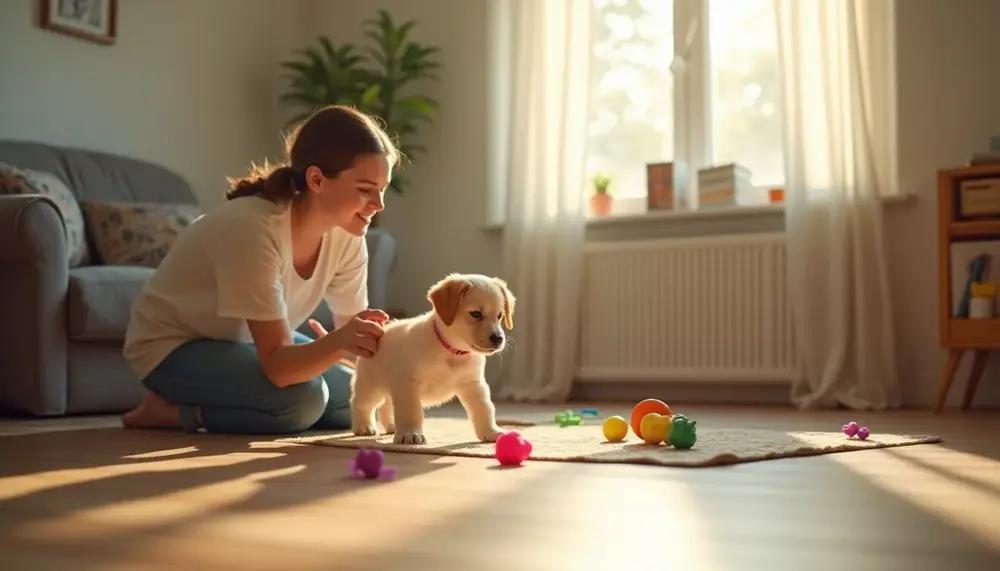
The best training often looks like a game. I use playful learning opportunities because puppies repeat what feels rewarding.
Recall games, searching games, and simple tricks can all build cooperation.
Use Positive Crate Training Methods
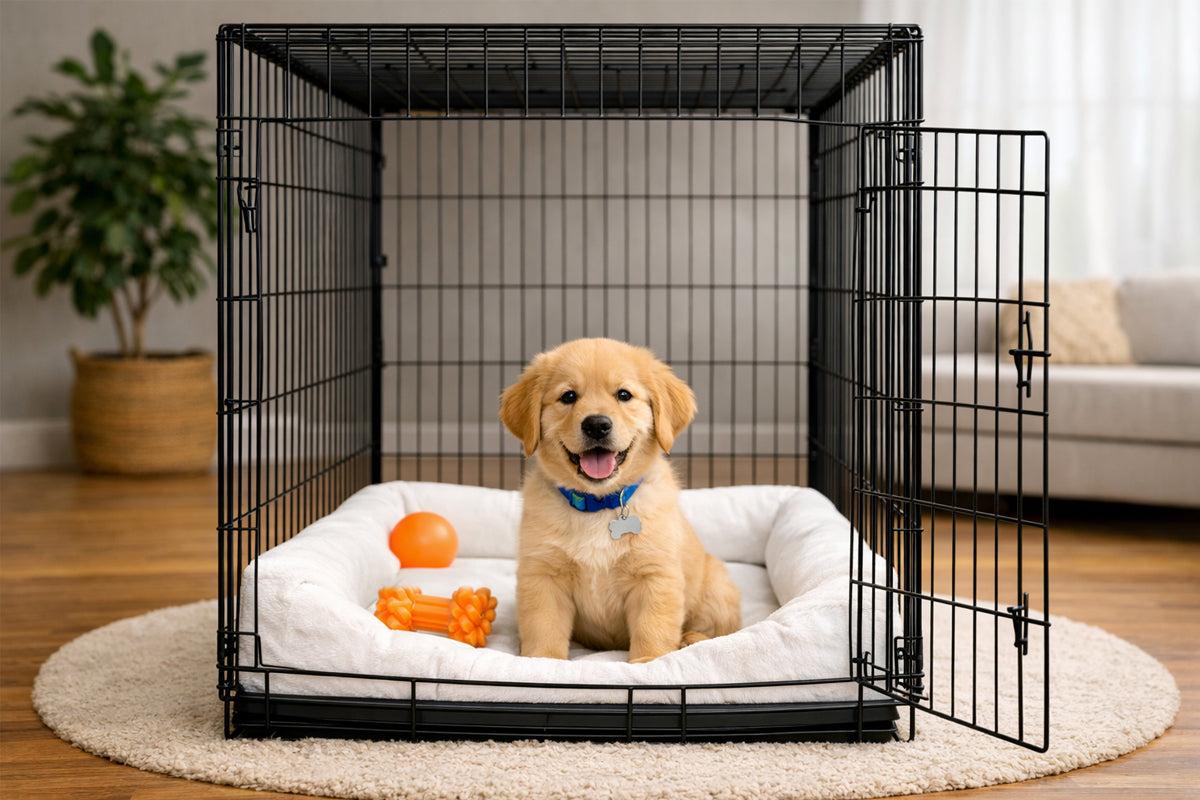
A crate should be a safe resting place, never punishment. I build positive crate associations slowly and respect signs of distress.
Some dogs love crates; some families need alternatives. The goal is comfort.
Reinforce Good Manners Around Guests
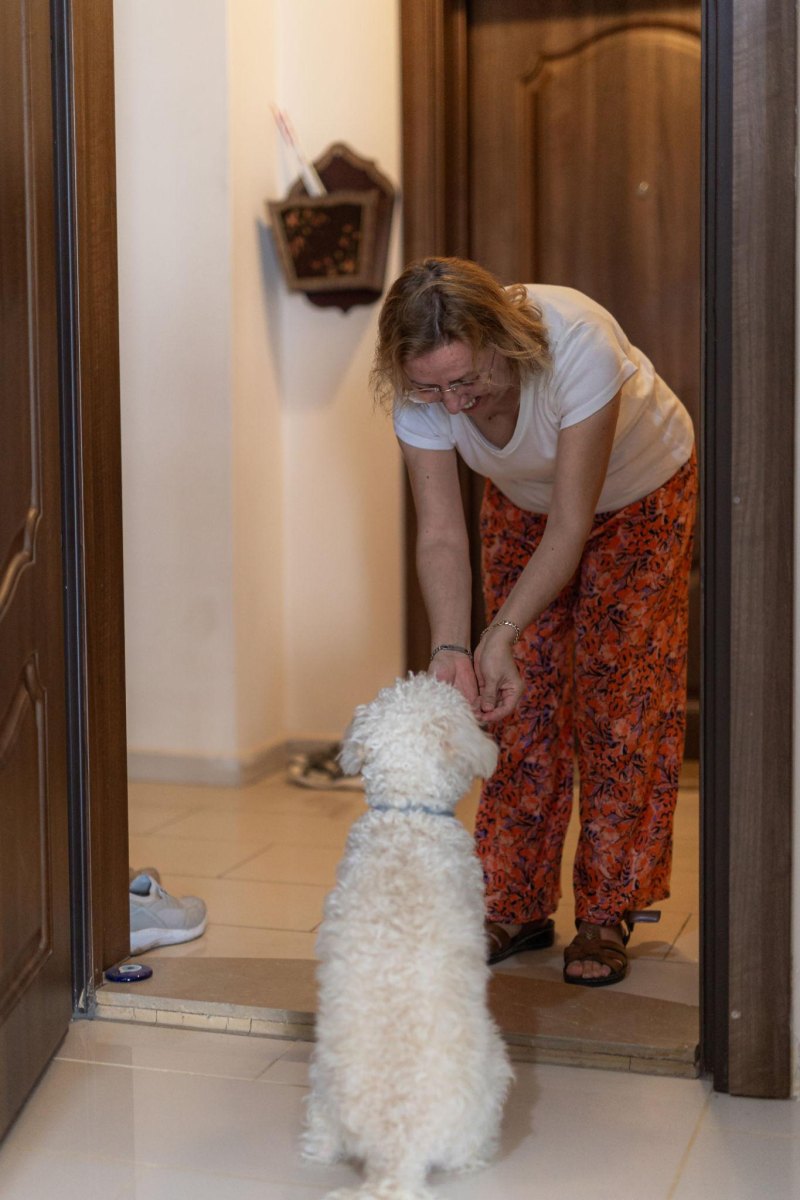
Visitors can be exciting. I prepare puppies with practised greeting skills before expecting perfect manners.
Distance, gates, and treats are often more useful than repeating a cue a hundred times.
Adapt Training to Your Puppy’s Personality
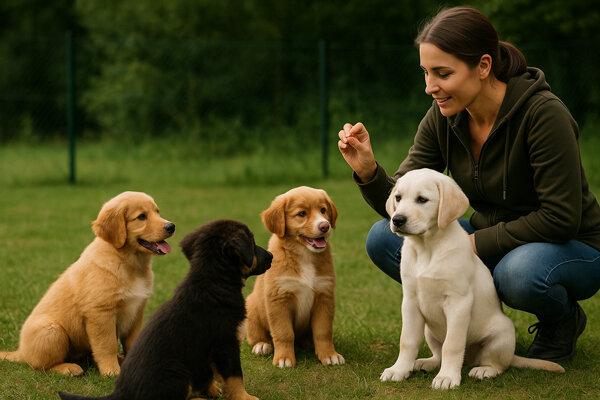
Every puppy brings a different temperament. I adjust for the individual dog in front of me, not an imaginary perfect puppy.
A shy puppy and a fearless puppy may need completely different pacing.
Celebrate Progress With Encouragement
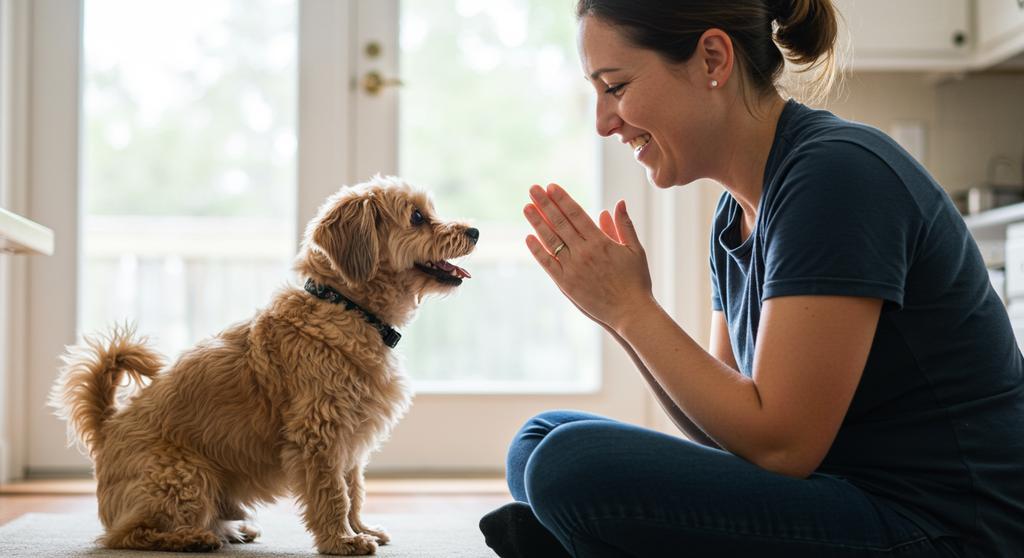
I celebrate tiny improvements because they add up. Noticing progress matters for both ends of the leash.
The puppy who finally checks in with you on a walk has learned something valuable.
Continue Learning Throughout Your Puppy’s Life
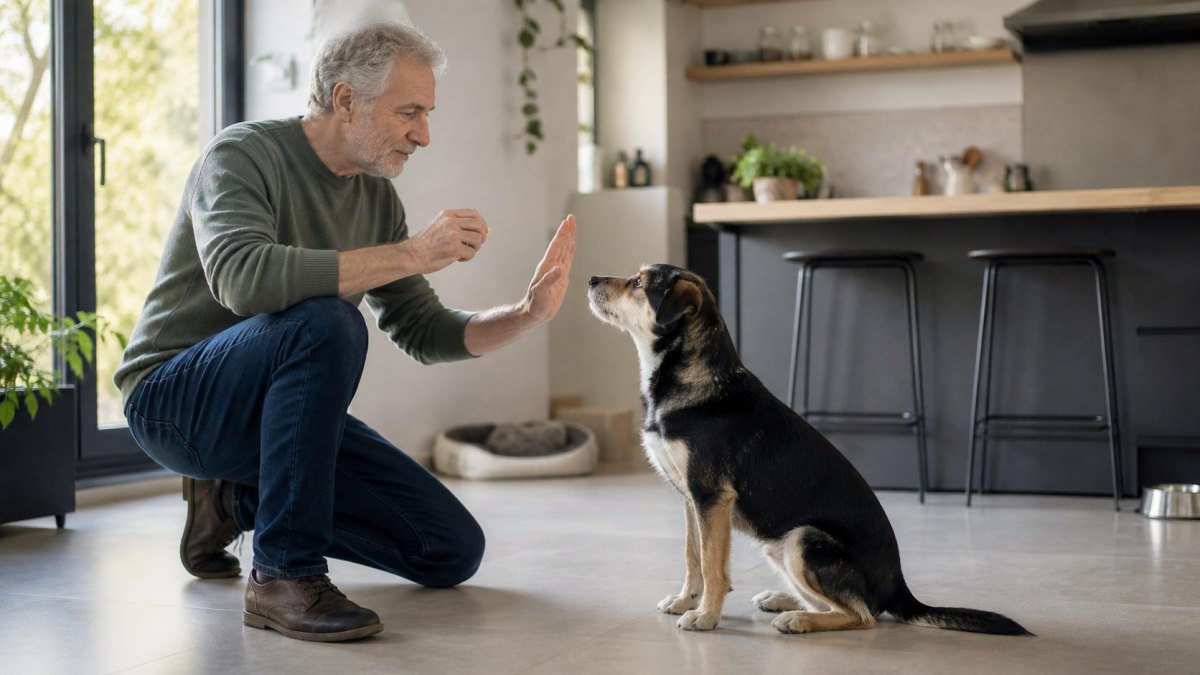
Training does not end when puppyhood ends. Dogs keep learning, and I keep adjusting plans as they age and change.
The best goal is a lifelong partnership built through communication, trust, and realistic expectations.




More Pinterest Visuals